
From the archives of political satire
these works preserve a tradition of dissent—
continuing its vigilance in the present.
From the archives of political satire
these works preserve a tradition of dissent—
continuing its vigilance in the present.
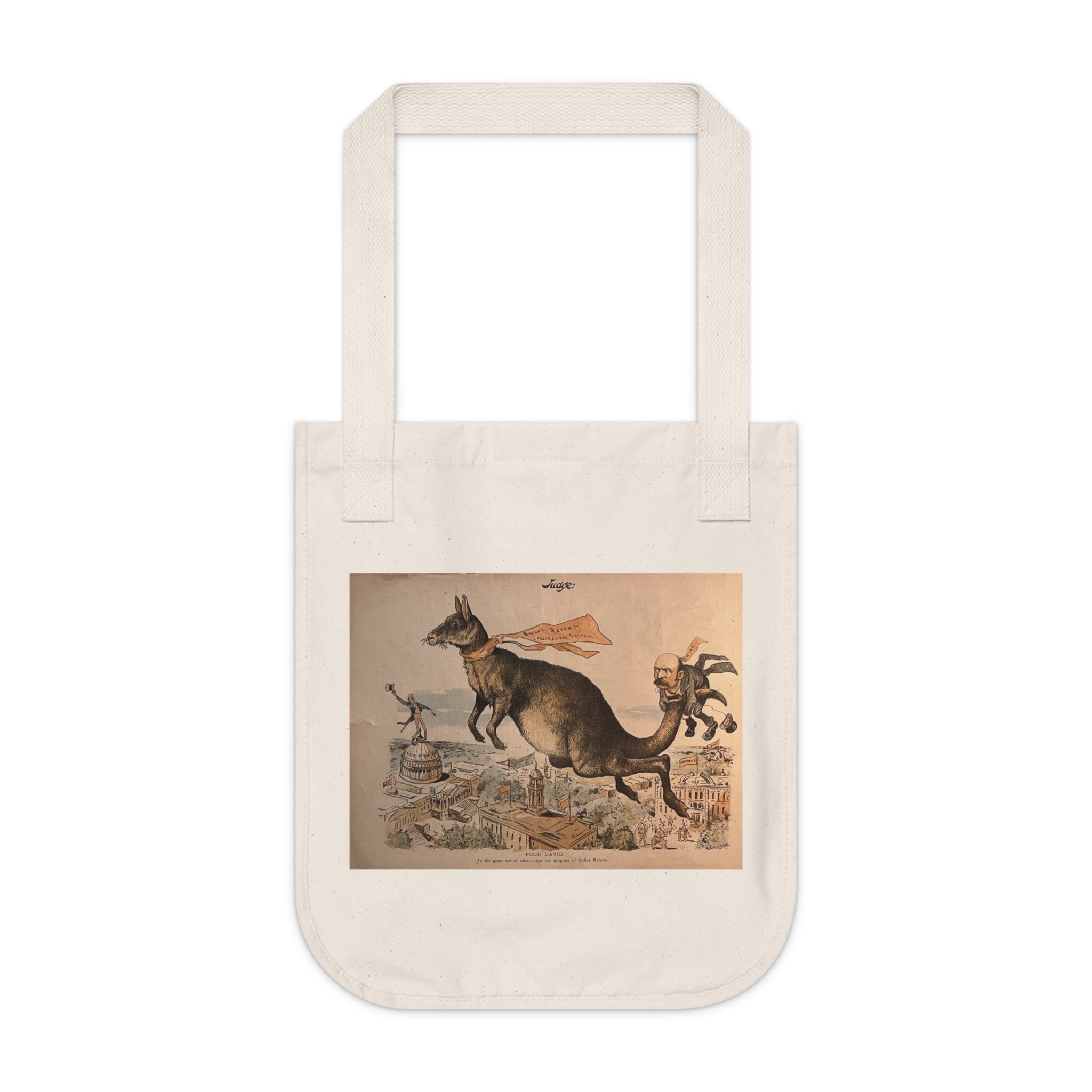
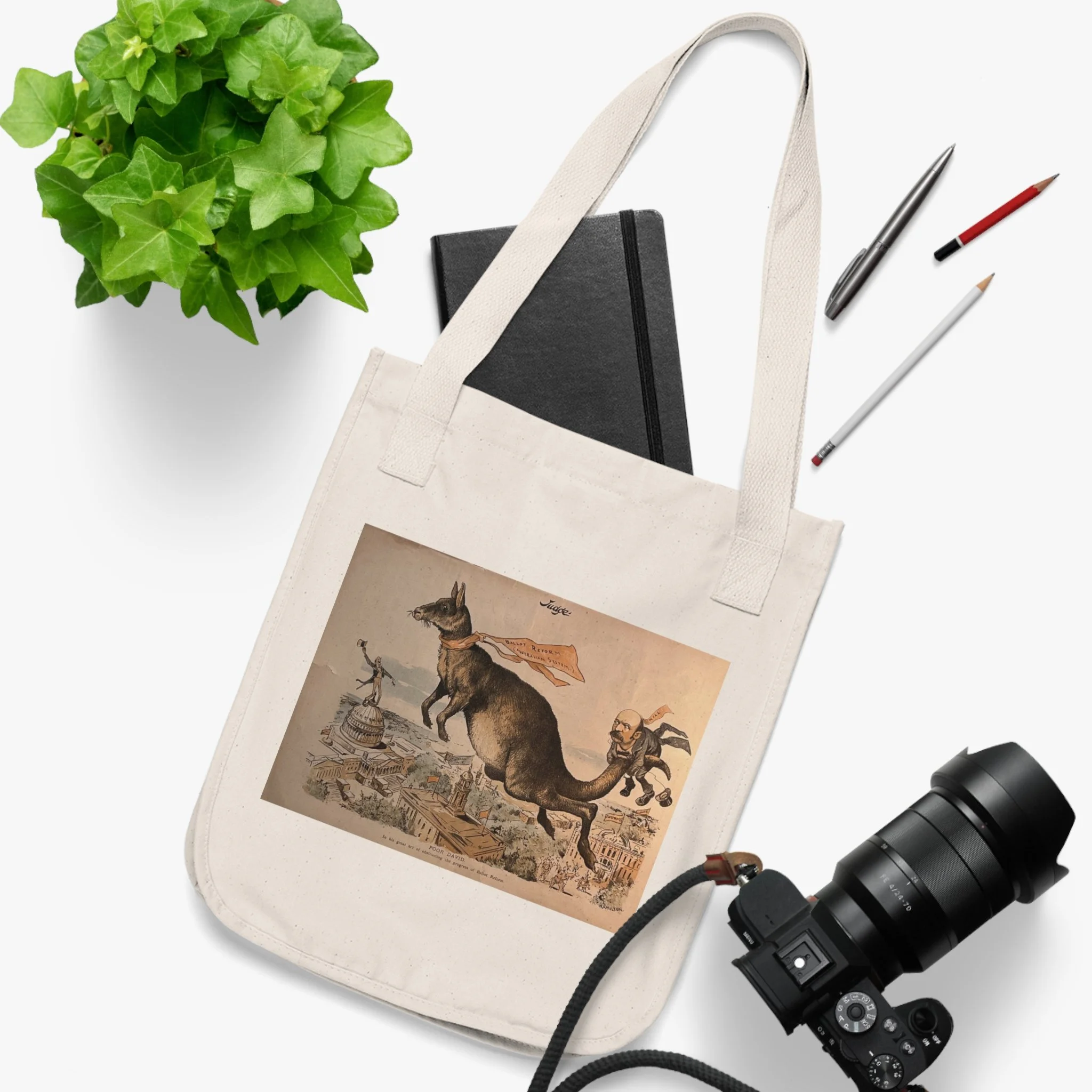

A satirical treatment of electoral reform and the fear it provokes among entrenched power.
The image frames democracy as something actively resisted by those who benefit from its distortion. Reform pulls forward while corruption clings behind, exposing how threats to rigged systems trigger panic rather than adaptation. The message is structural rather than partisan: fair rules are dangerous to those who depend on unfair advantage.
Historical Note
This cartoon appeared in an 1890s issue of Judge magazine and was illustrated by Grant E. Hamilton. It satirizes political machines’ resistance to ballot reform, portraying corruption struggling to hold on as fair elections move beyond its reach.
100% certified organic ring-spun cotton | Tear-away label and Econscious tag
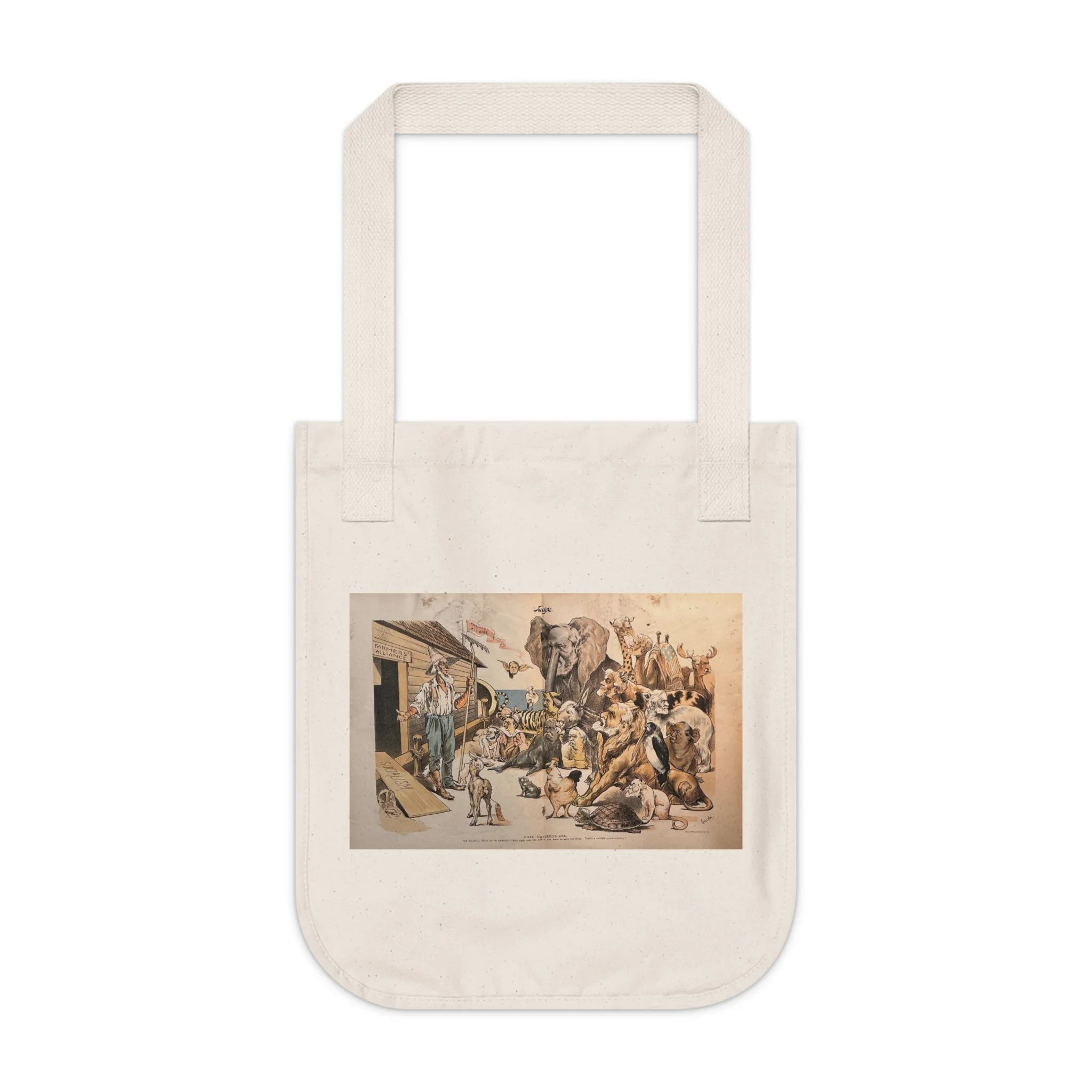
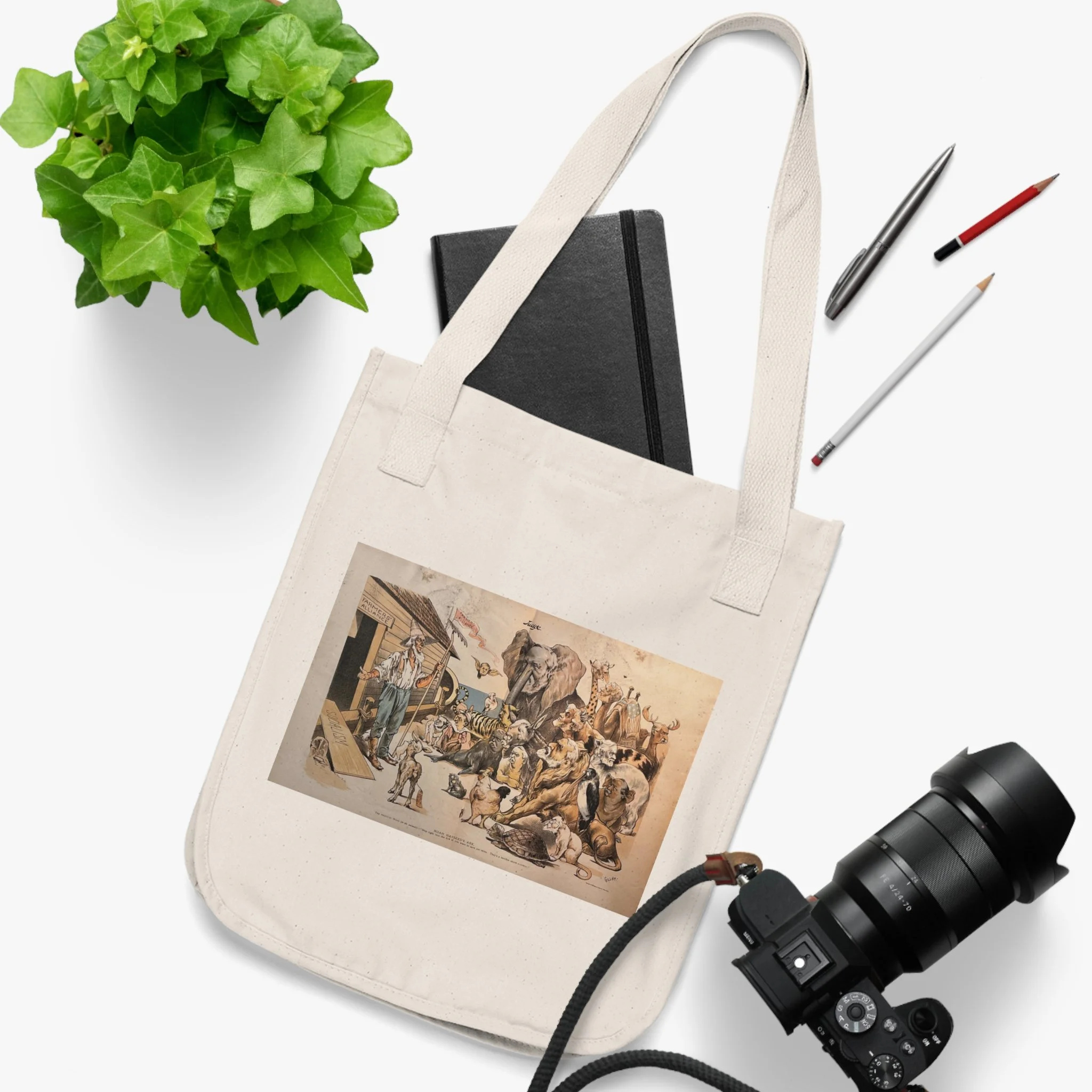
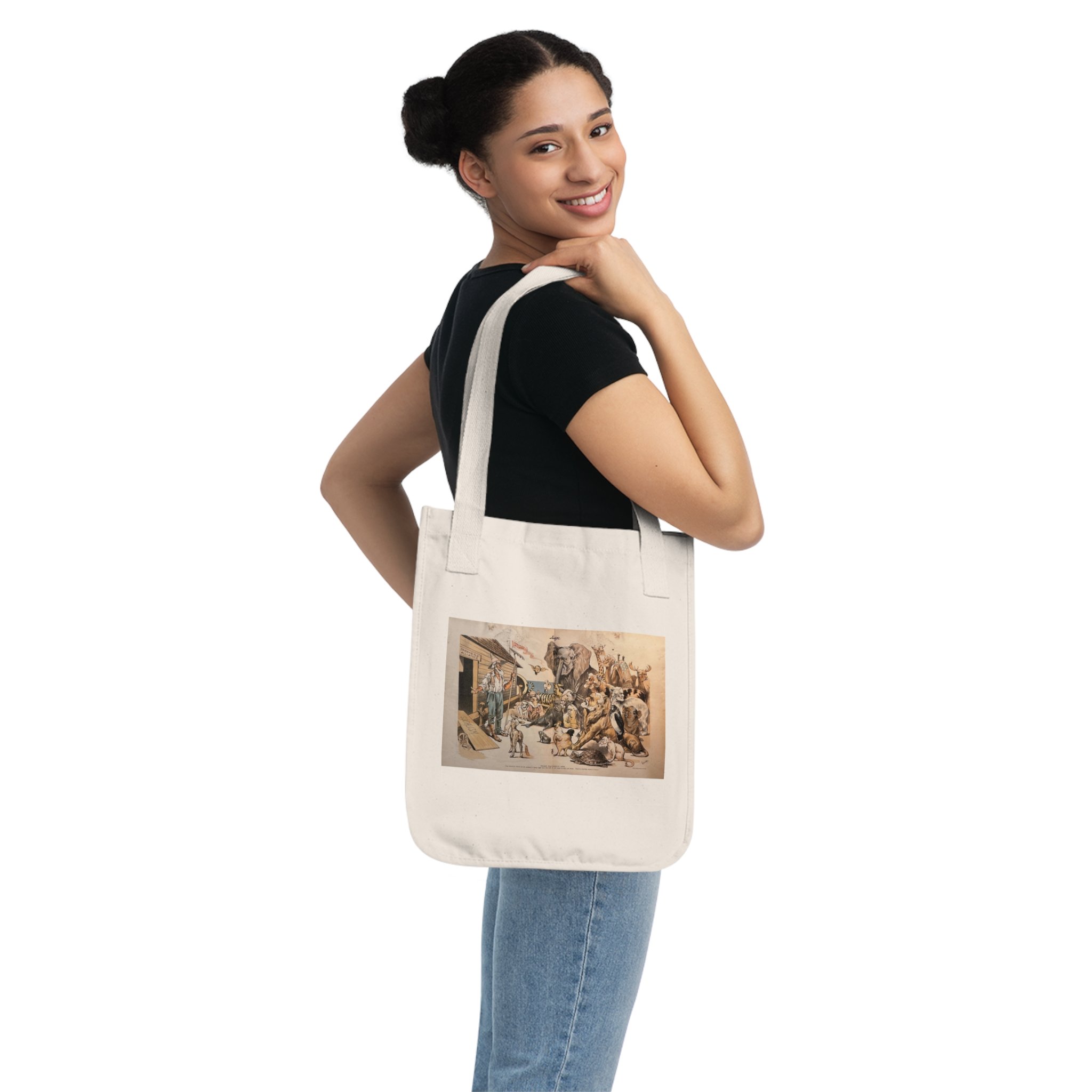
A depiction of opportunism, coalition panic, and the instinct to flee accountability.
The image frames politics as a collective rush for safety, where rivals abandon principle in favor of proximity to power. Unity emerges not from conviction but from fear, exposing how coalitions rearrange themselves when public mood turns and consequences approach.
Historical Note
This satirical spread appeared in an 1891 issue of Judge magazine and was illustrated by Bernhard Gillam. Using the allegory of Noah’s Ark, it portrays America’s major political factions as anxious animals crowding toward the Farmers’ Alliance, critiquing opportunism during a period of corruption and economic upheaval.
100% certified organic ring-spun cotton | Grown without pesticides
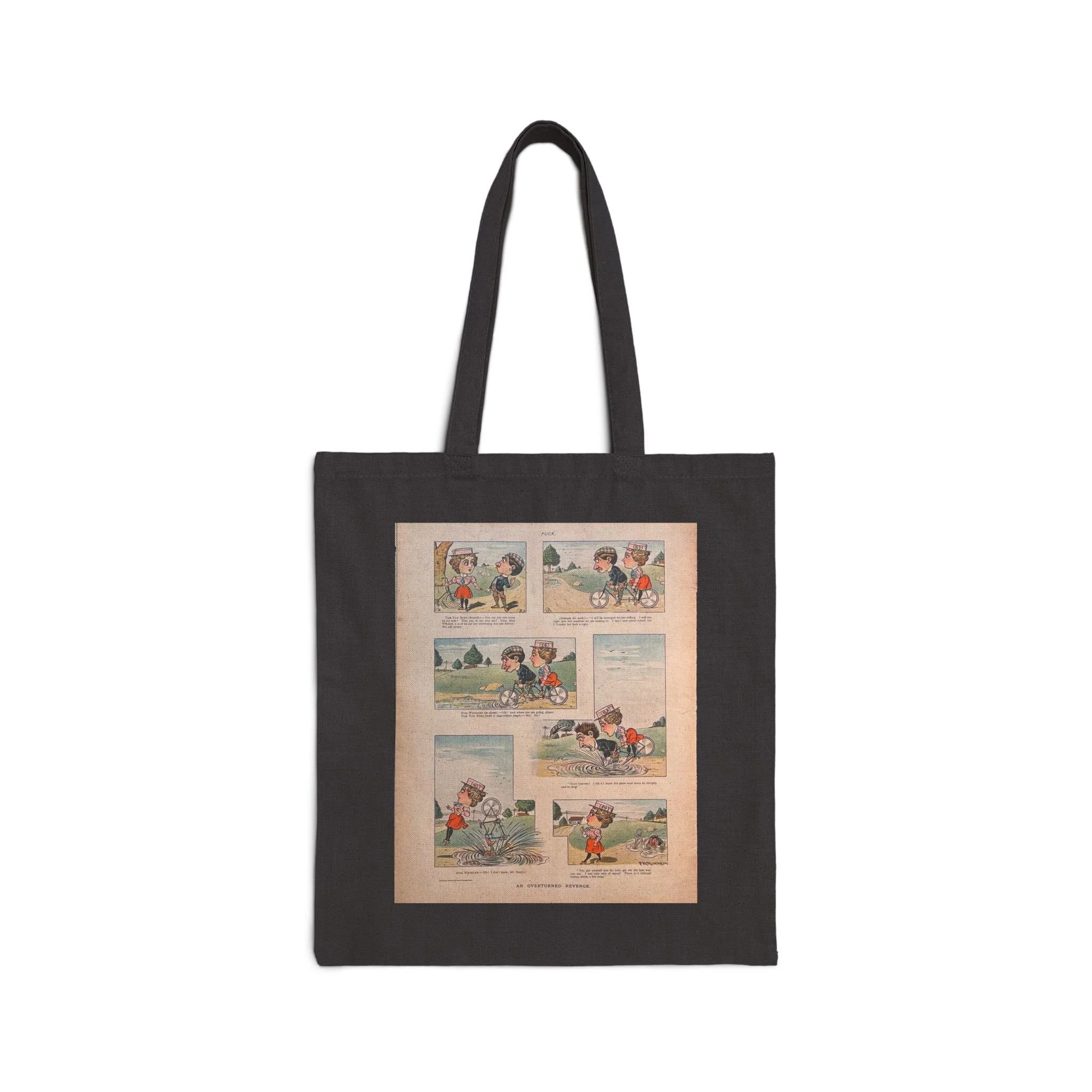

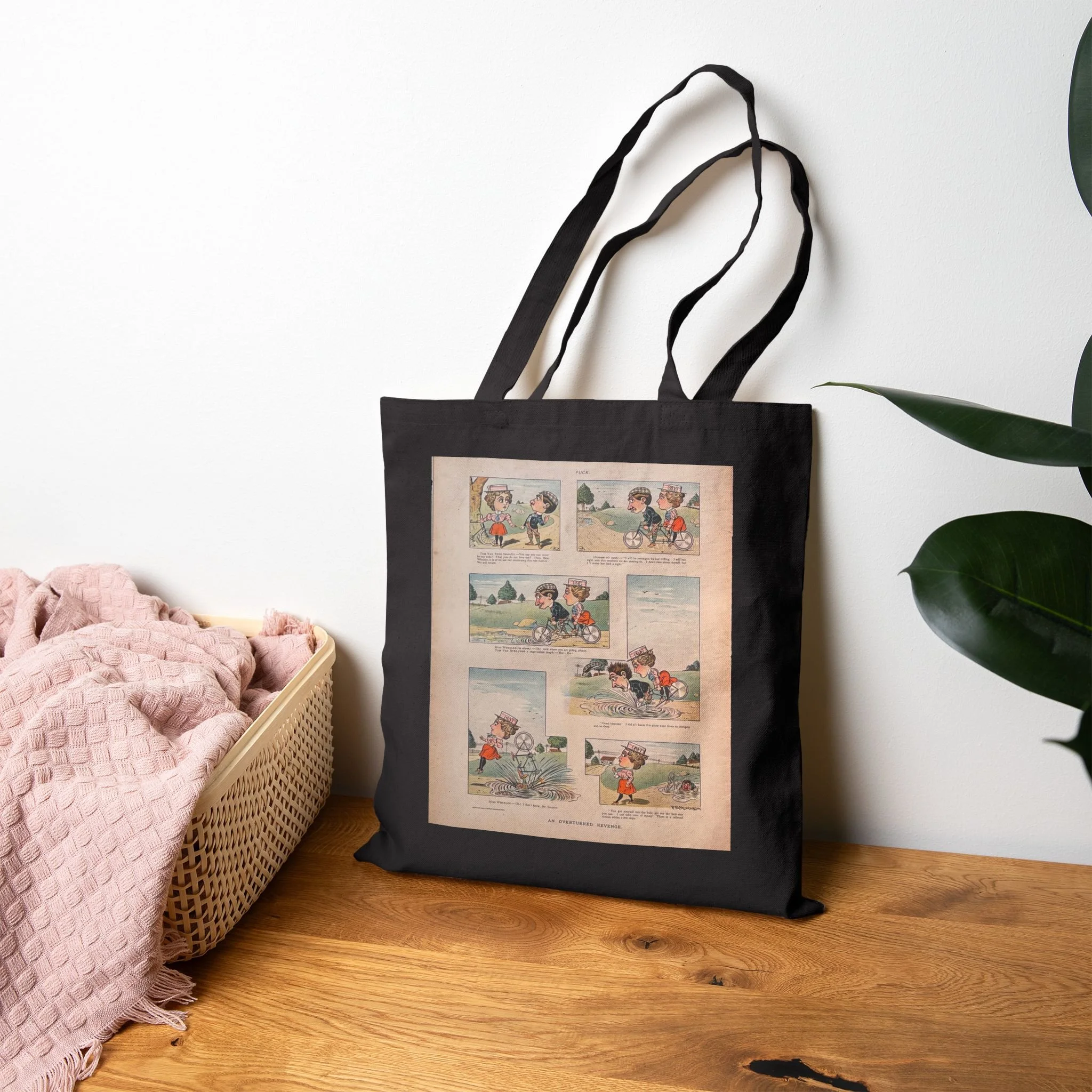
A study in ego, petty scheming, and the predictable collapse of self-assurance.
The image traces how control imagined in advance unravels in motion. Confidence curdles into spectacle as minor cruelty rebounds on its author, exposing how small plans built on vanity so often end in public embarrassment.
Historical Note
This page appeared on July 6, 1898 in Puck and was illustrated by F. M. Howarth. Told across sequential panels, it uses gentle humor to critique overconfidence and the way bravado collapses under its own momentum.
100% heavy cotton canvas | Flat corners and sewn construction with reinforced stitching
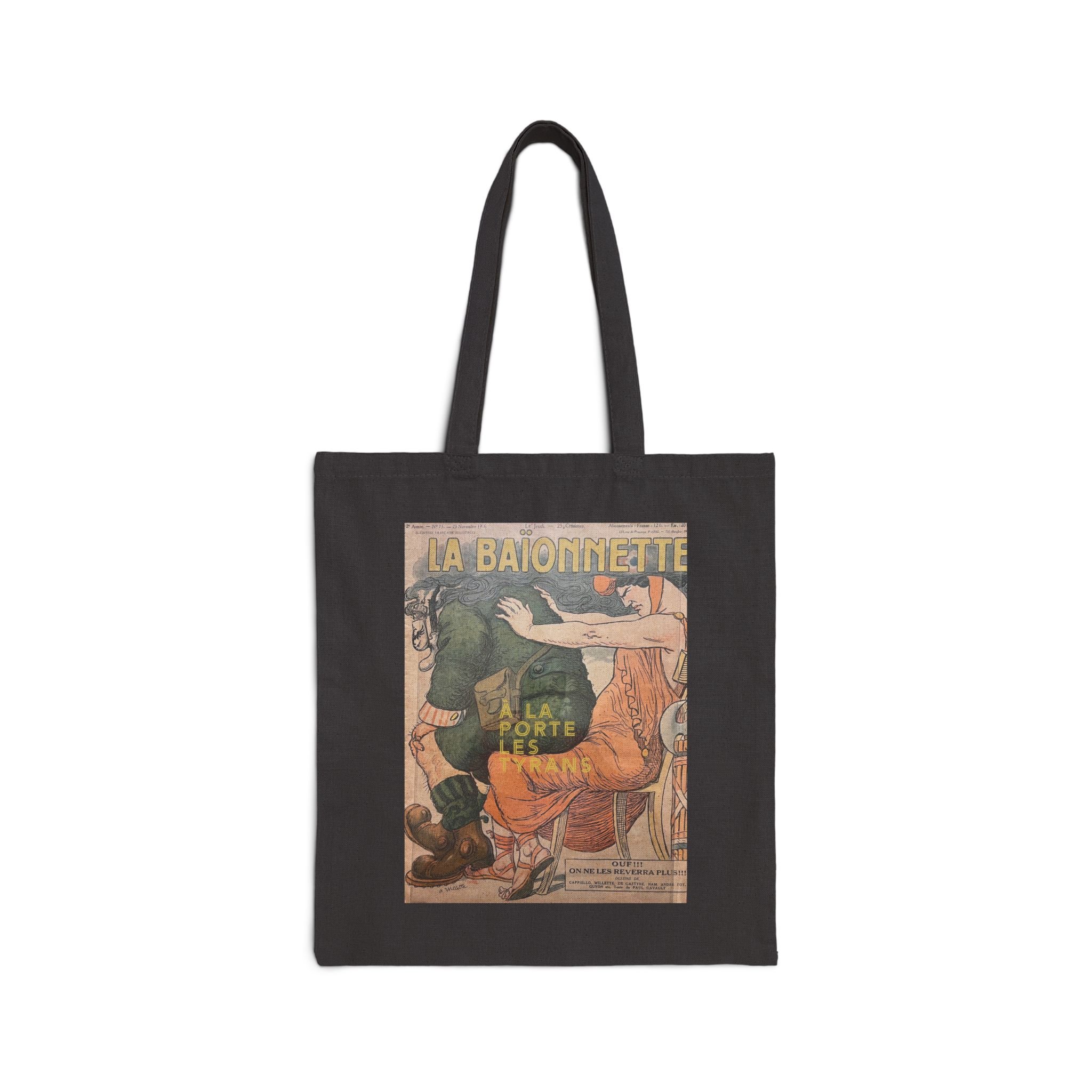
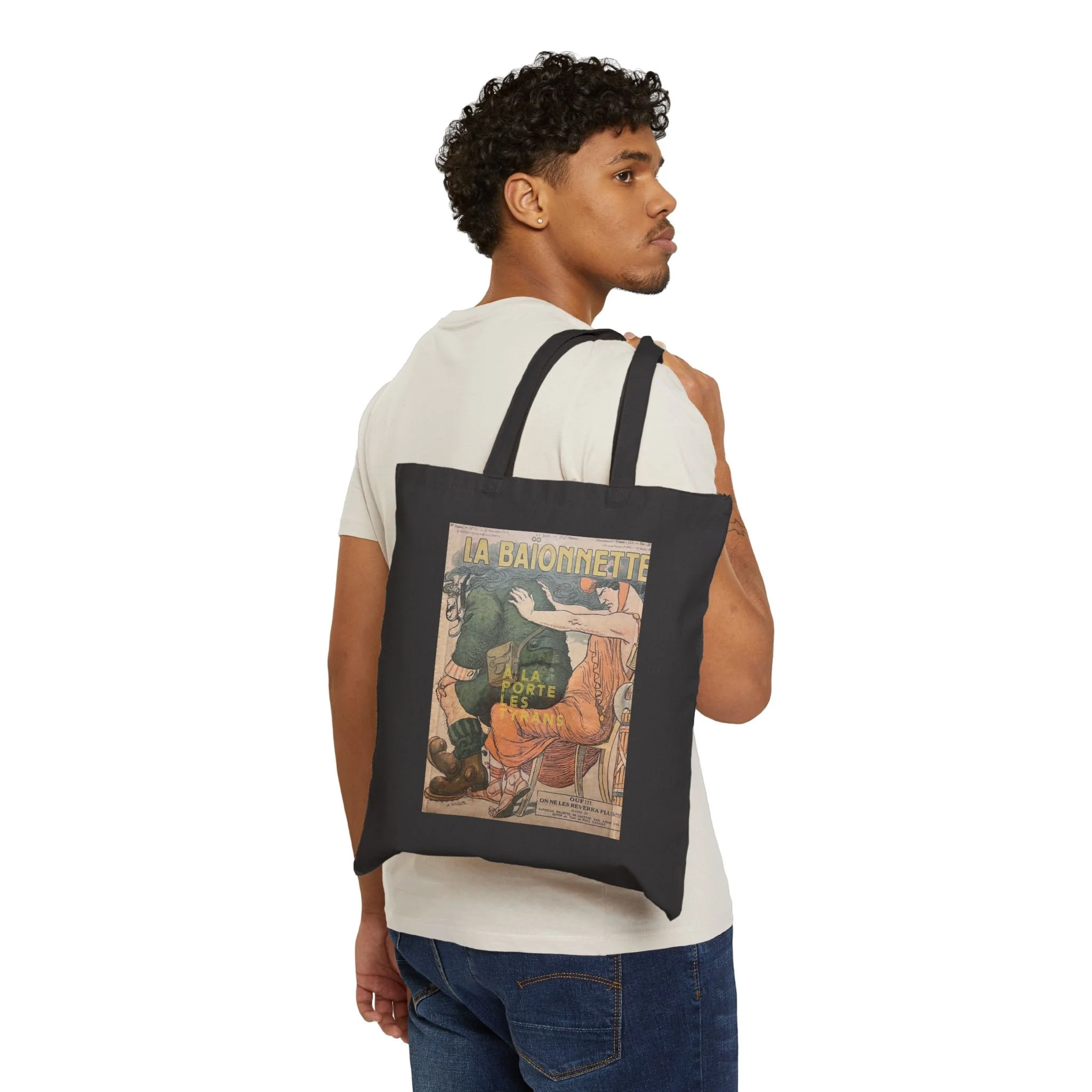

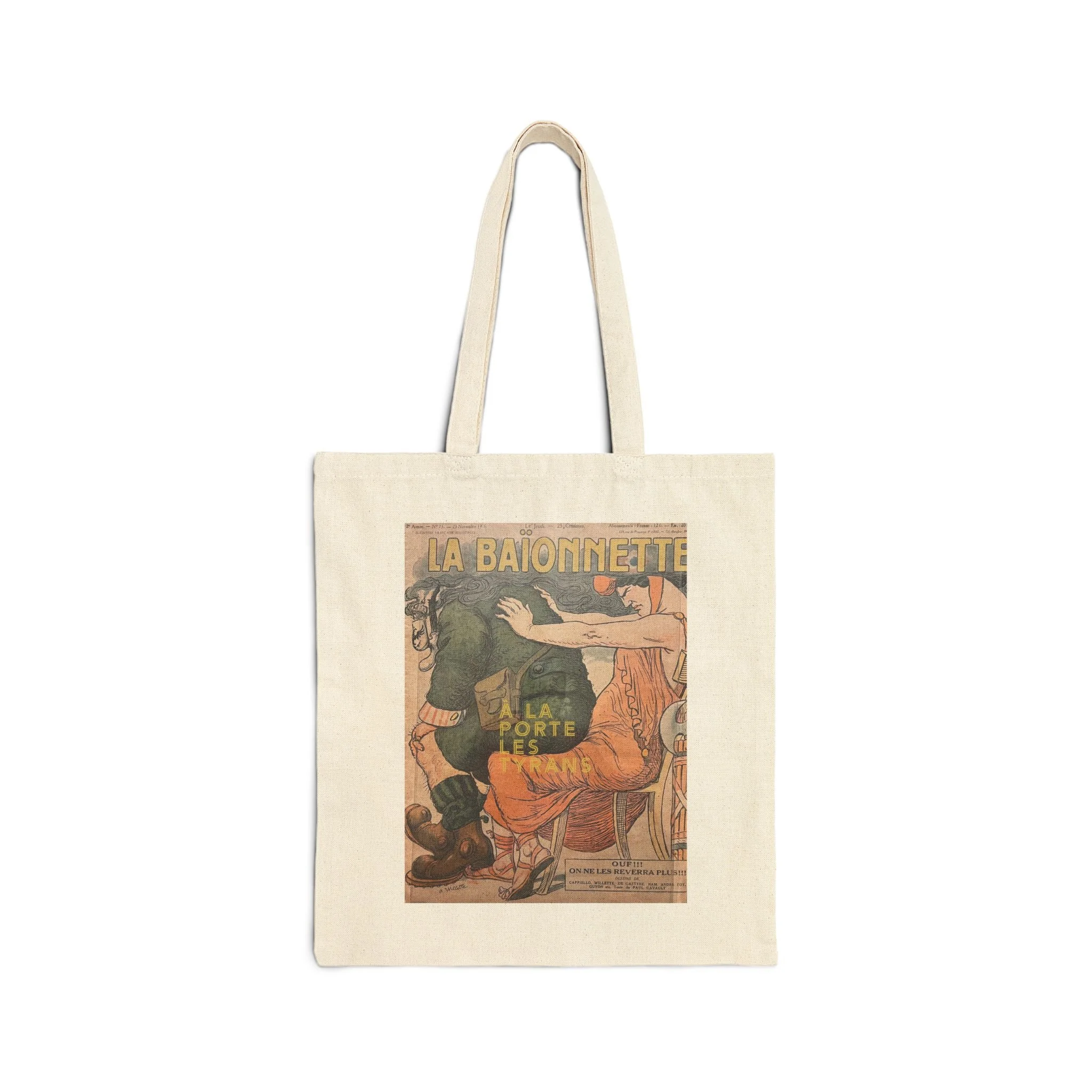
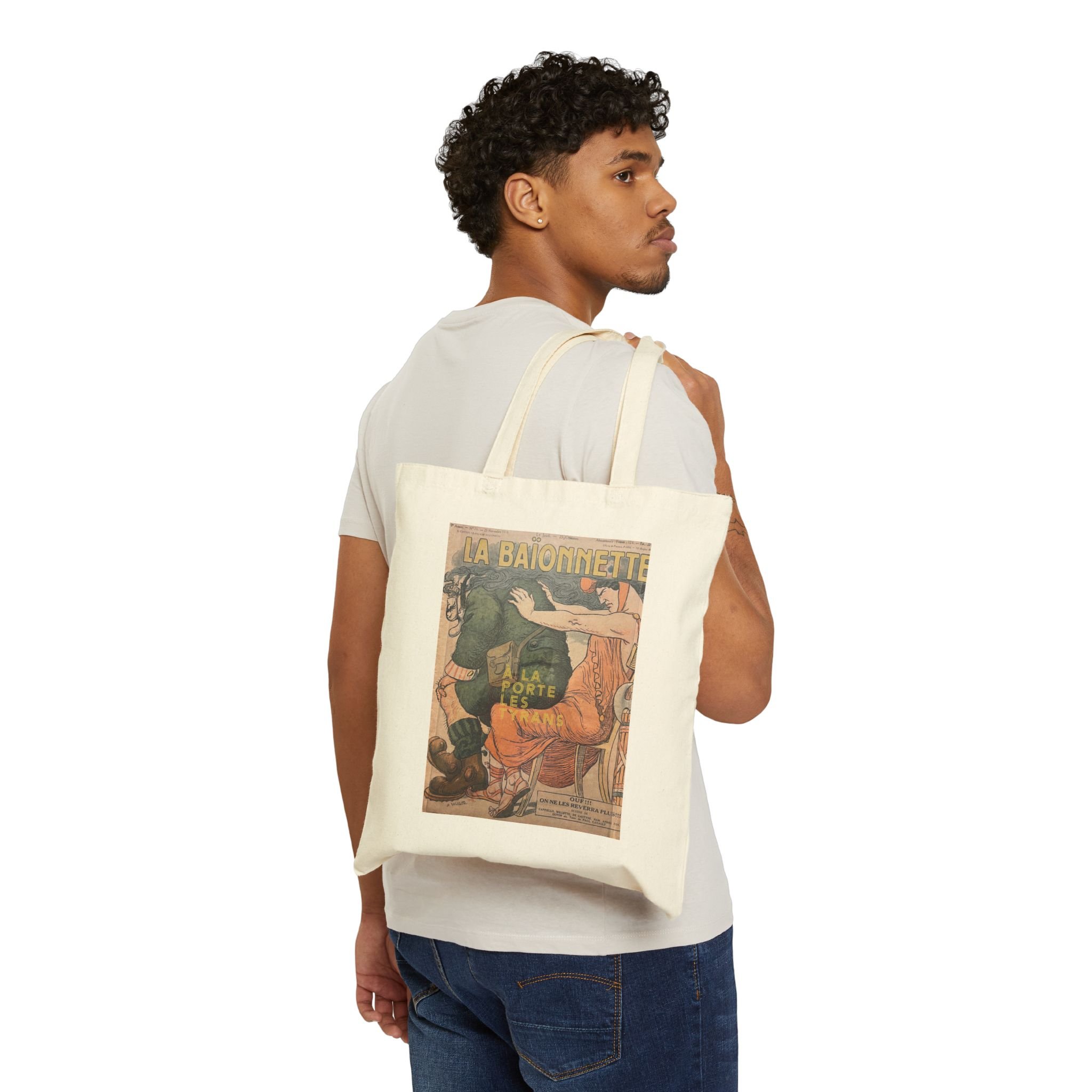

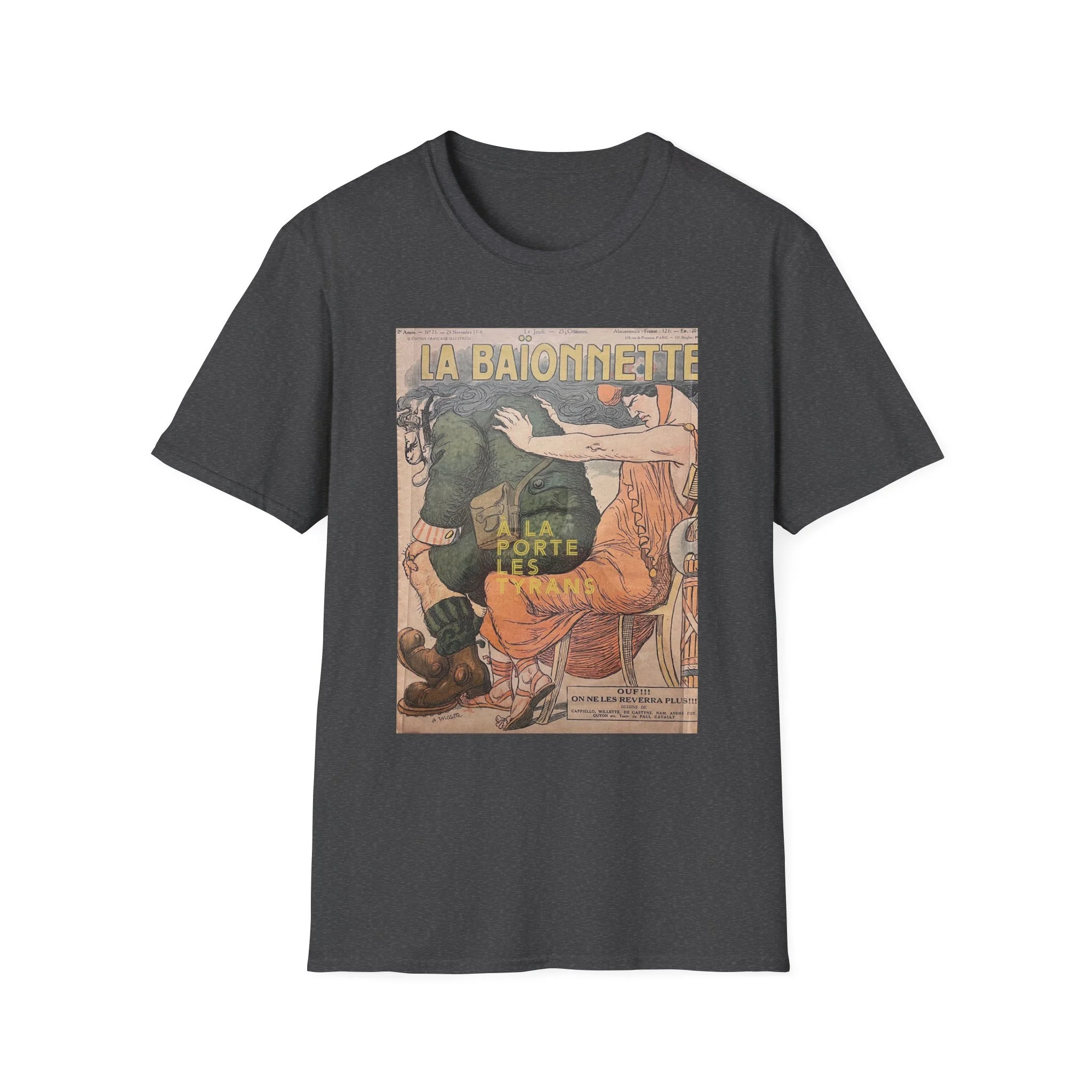
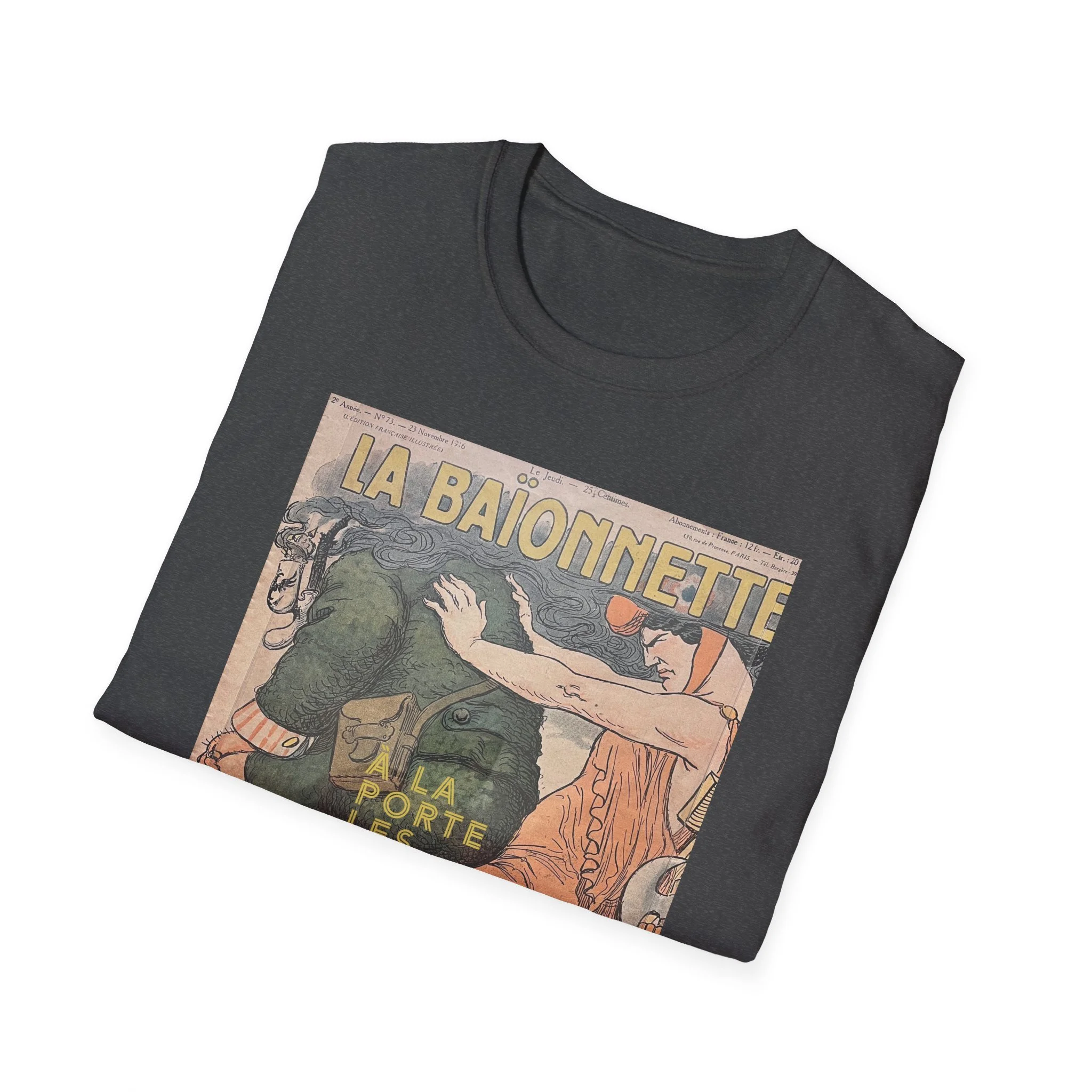
A study in popular resistance and the refusal to negotiate with authoritarian power.
The image presents expulsion rather than persuasion as the only response to tyranny. Authority is not corrected or reasoned with, but physically removed, underscoring the idea that entrenched power rarely relinquishes control without forceful opposition.
Historical Note
This illustration appeared during the First World War in La Baïonnette and was drawn by A. Willette. Titled “À la porte les tyrans” (“Out with the tyrants”), it channels public anger into a direct visual command, reflecting wartime French satire’s blunt rejection of authoritarian rule.
100% heavy cotton canvas | Flat corners and sewn construction with reinforced stitching
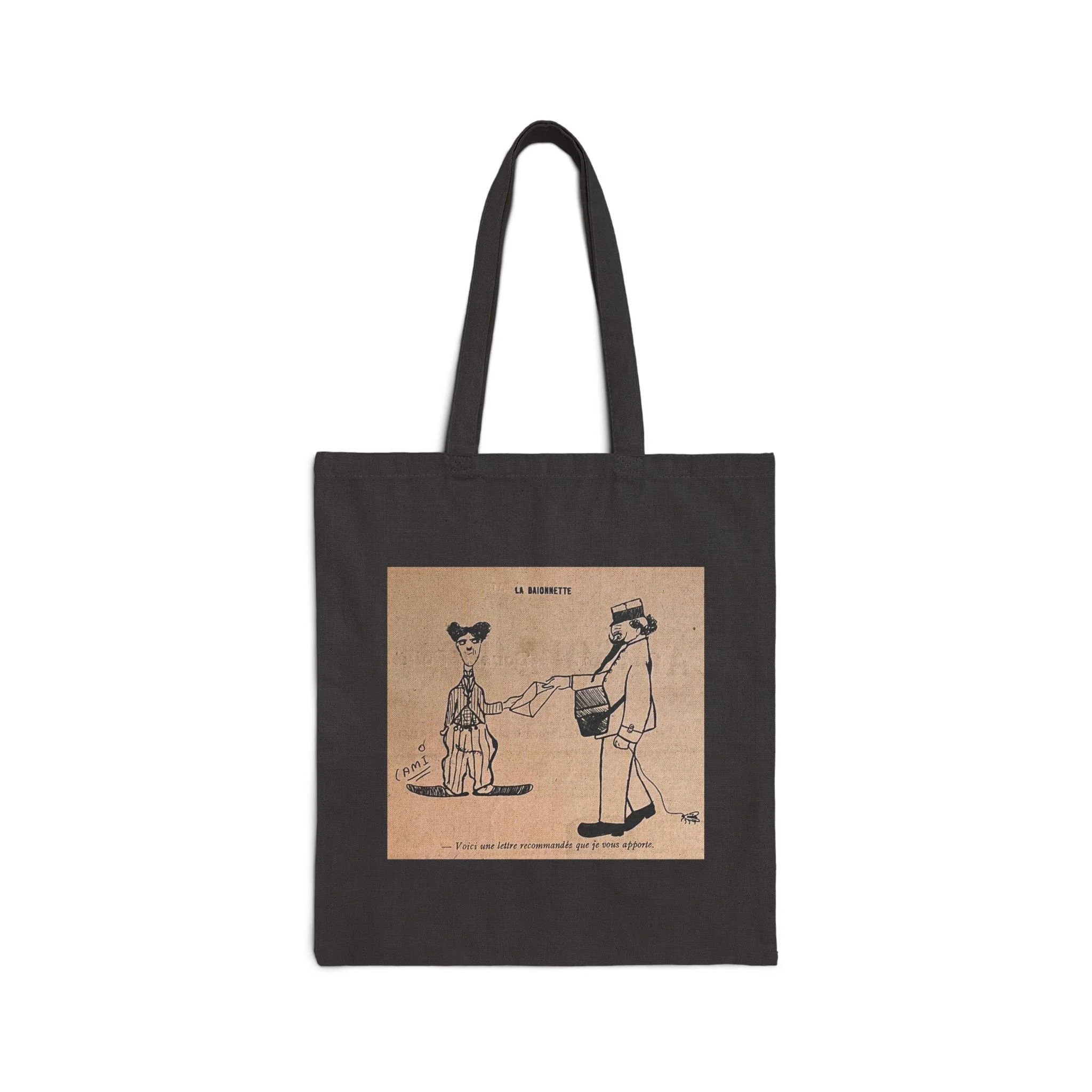
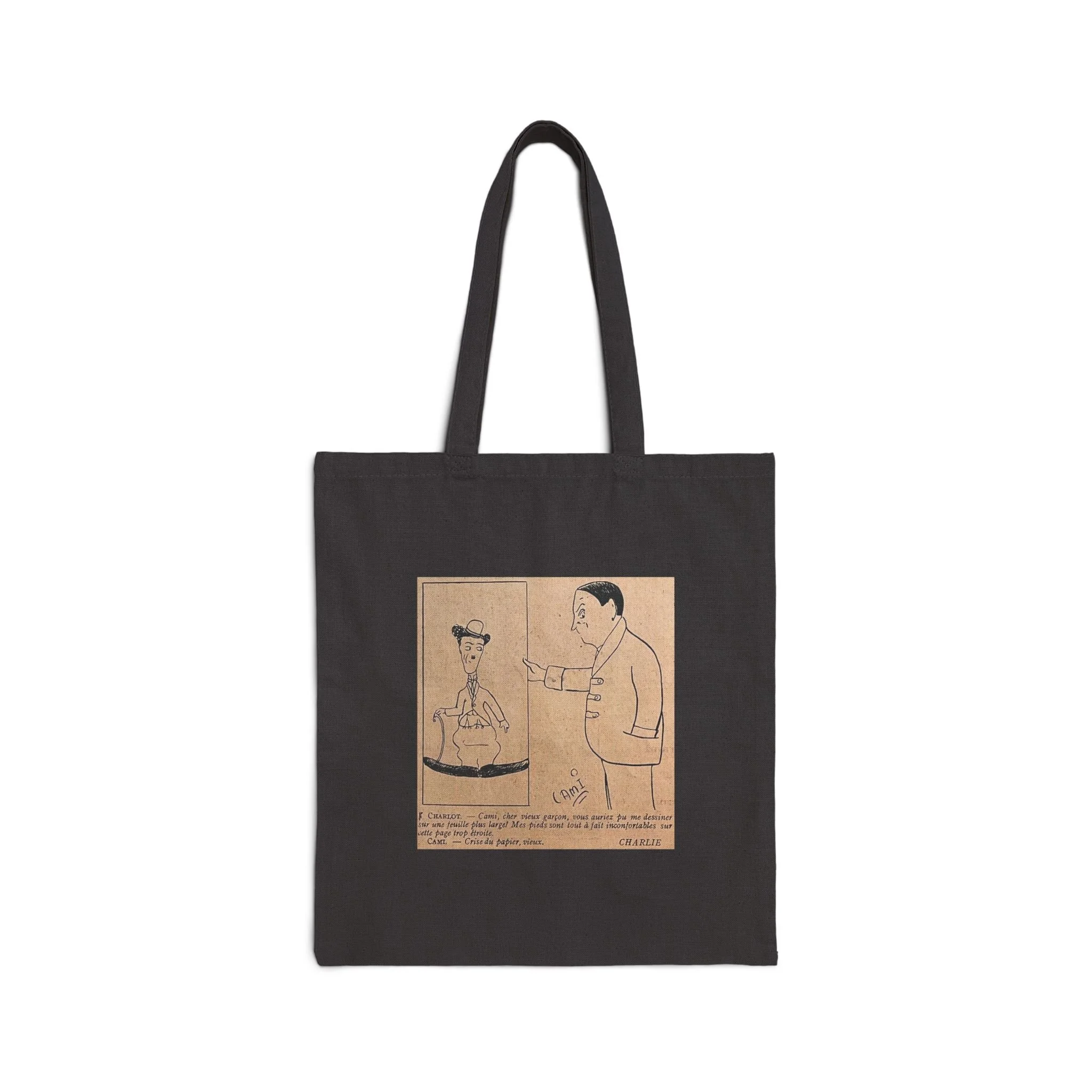
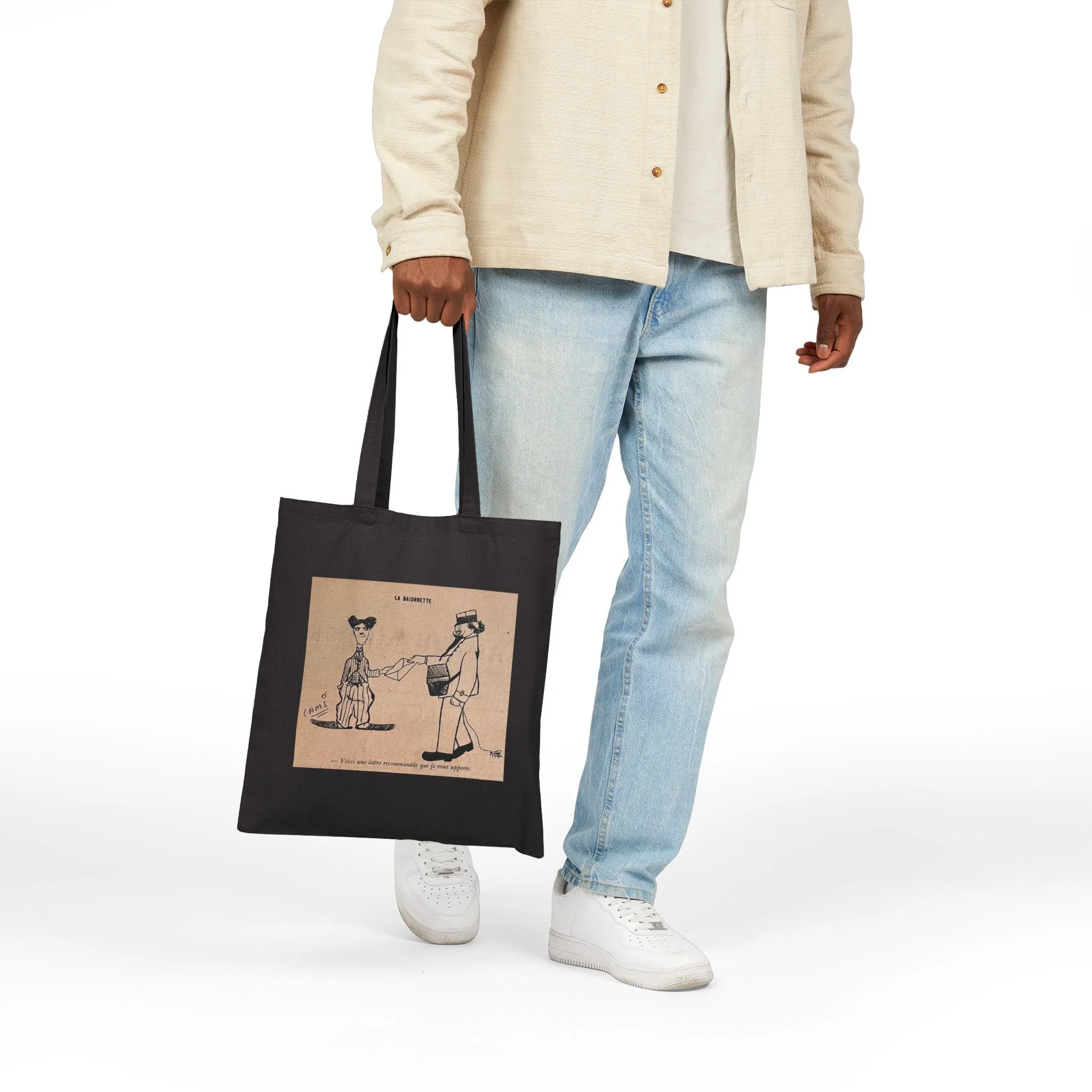

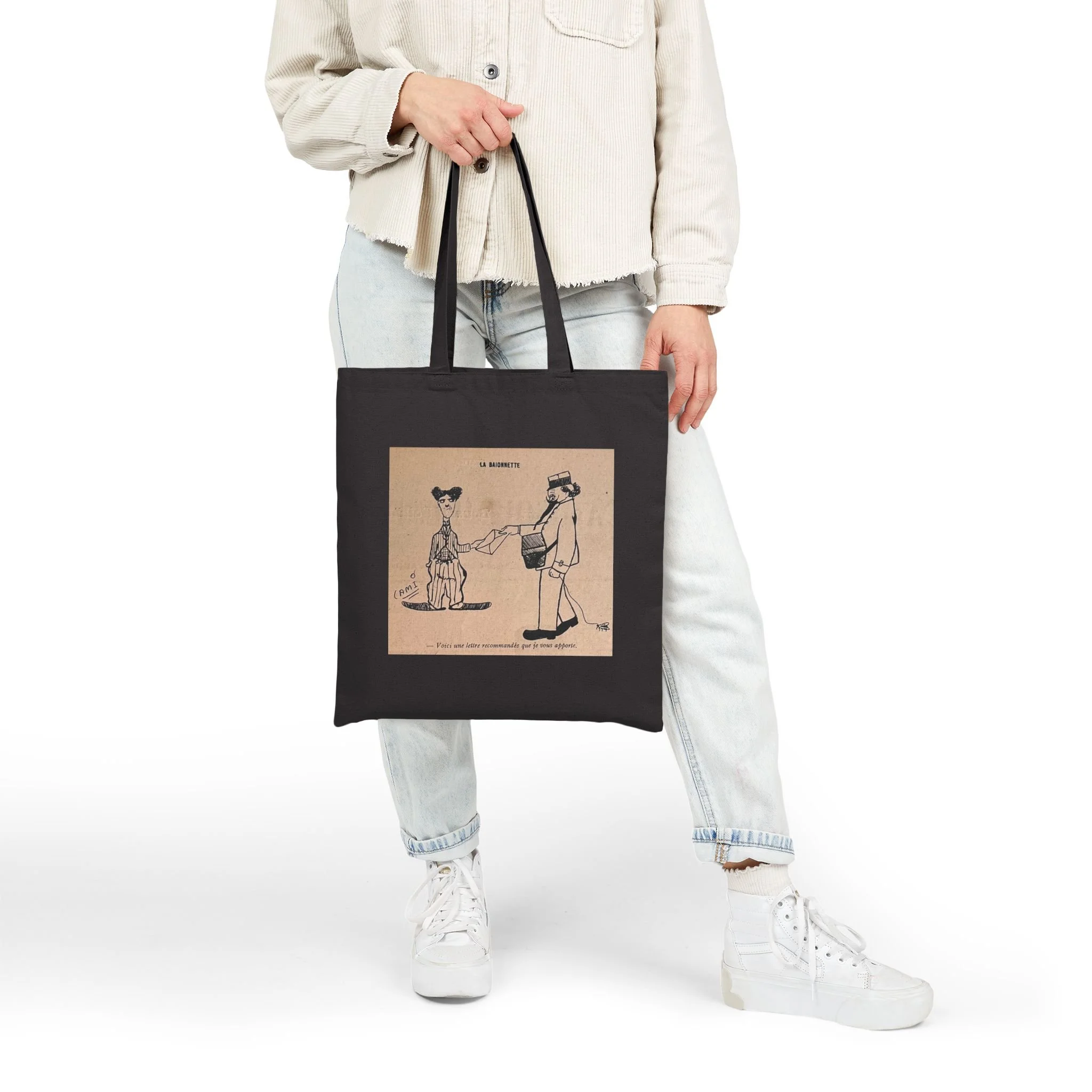
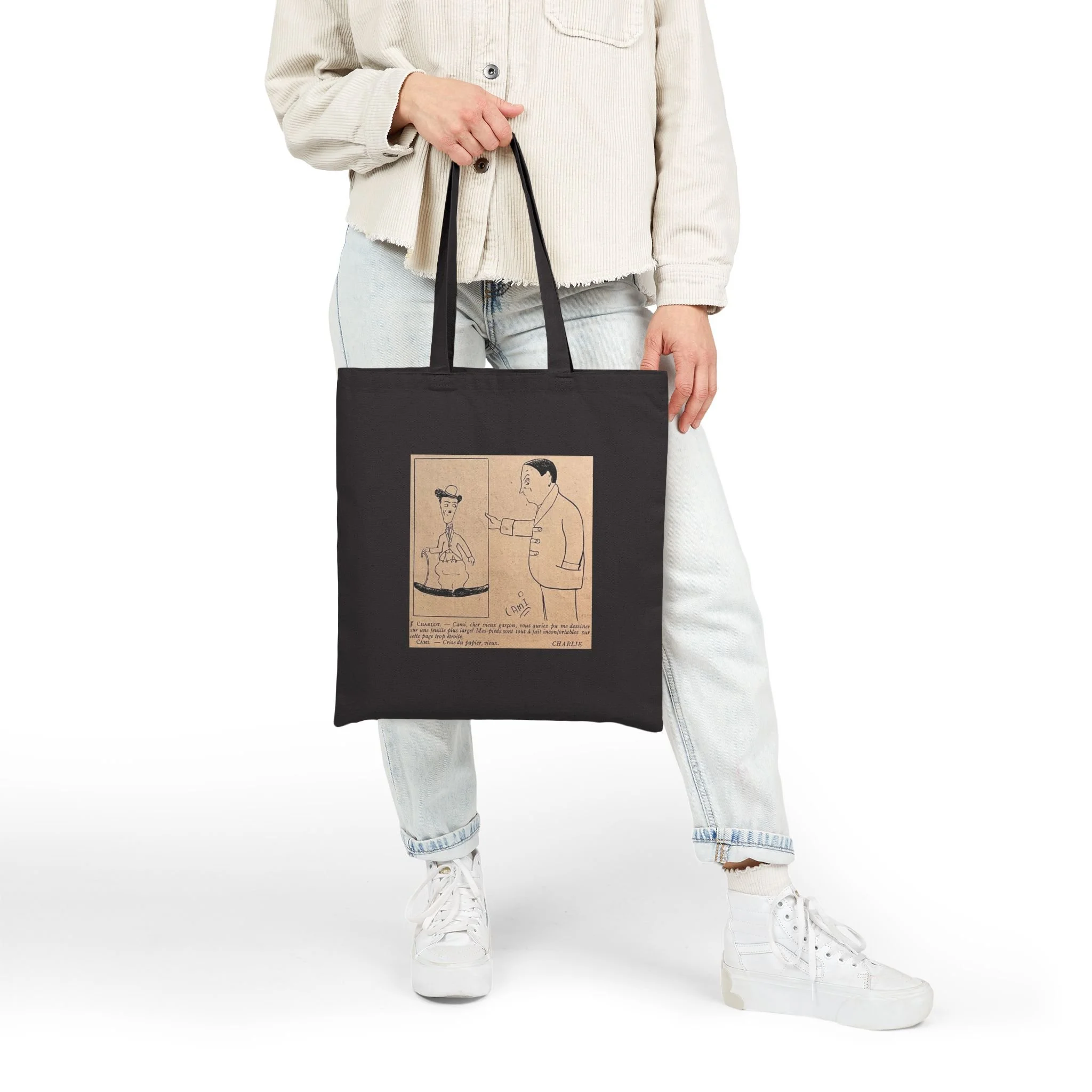
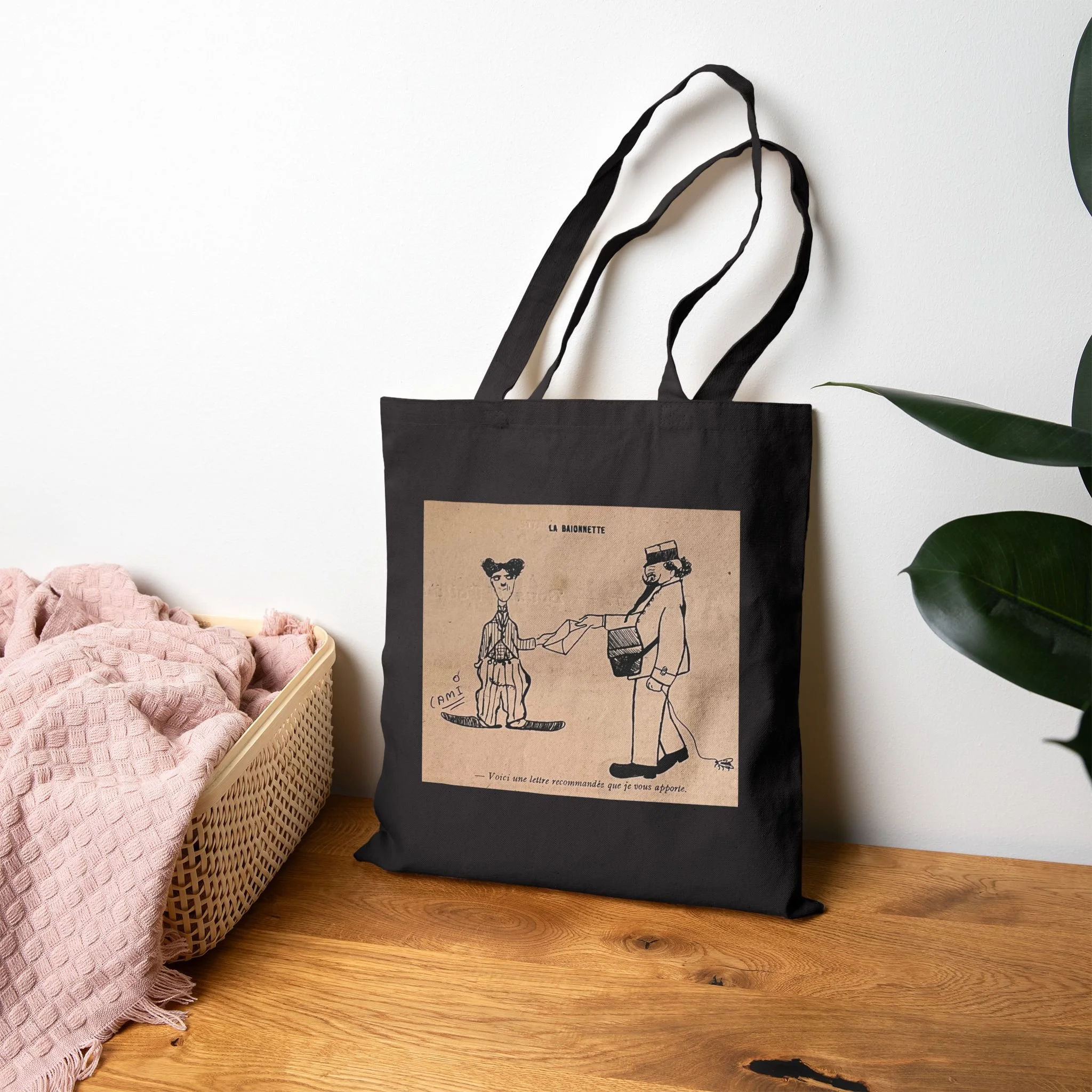
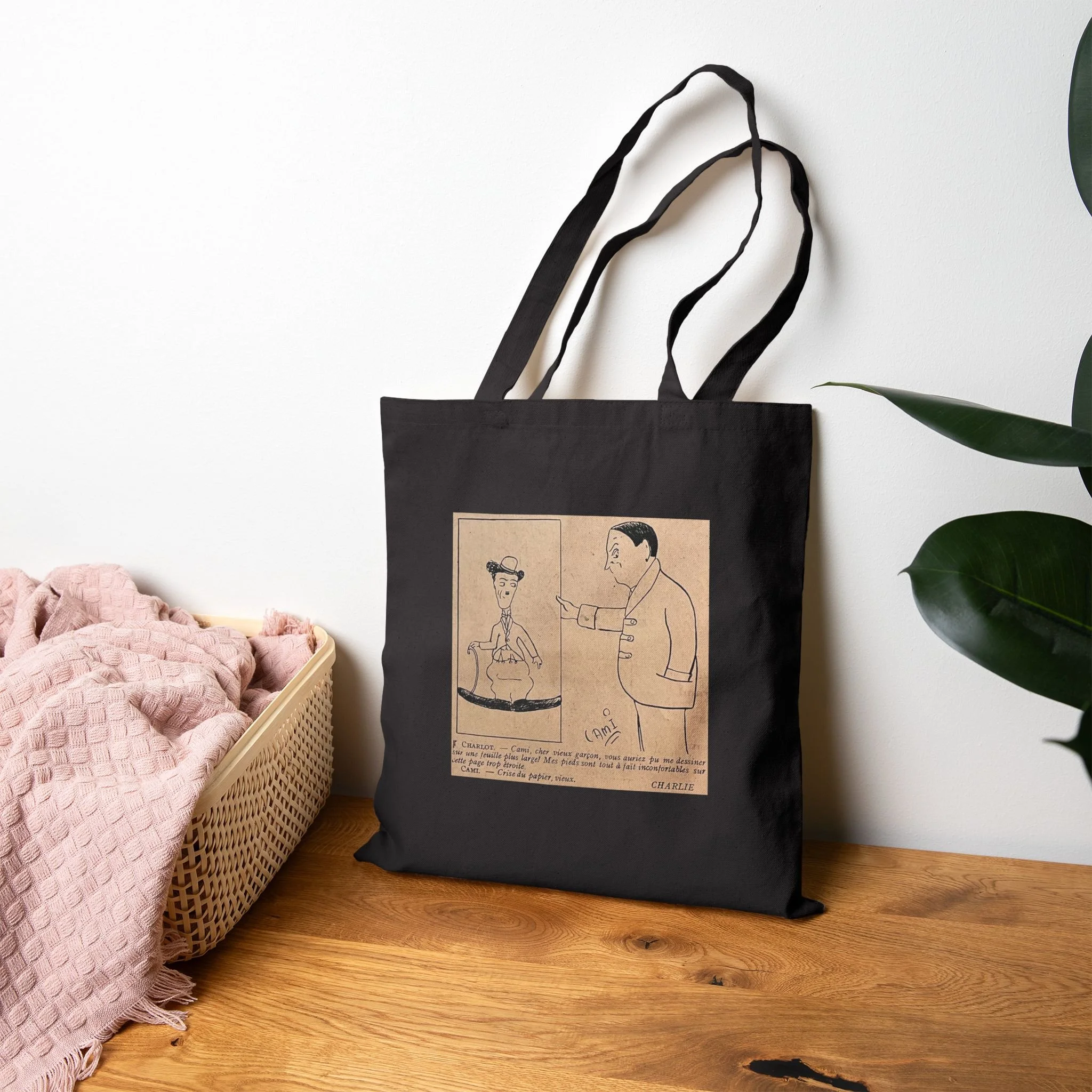
An examination of paperwork, authority, and the everyday absurdities of military life.
The paired images treat command and compliance as theater, where official gestures carry more weight than outcomes. Bureaucracy appears intimate and intrusive at once, revealing how wartime power asserts itself through forms, orders, and anxious ritual rather than clarity or purpose.
Historical Note
These illustrations appeared in a 22 March 1917 issue of La Baïonnette as part of Pierre-Henri Cami’s feature Charlot correspondant de Guerre. Using Charlie Chaplin’s screen persona, the drawings satirize military paperwork, official posturing, and the small humiliations of life under wartime authority.
See the full Cami: Charlie Chaplin Collection here
100% heavy cotton canvas | Flat corners and sewn construction with reinforced stitching
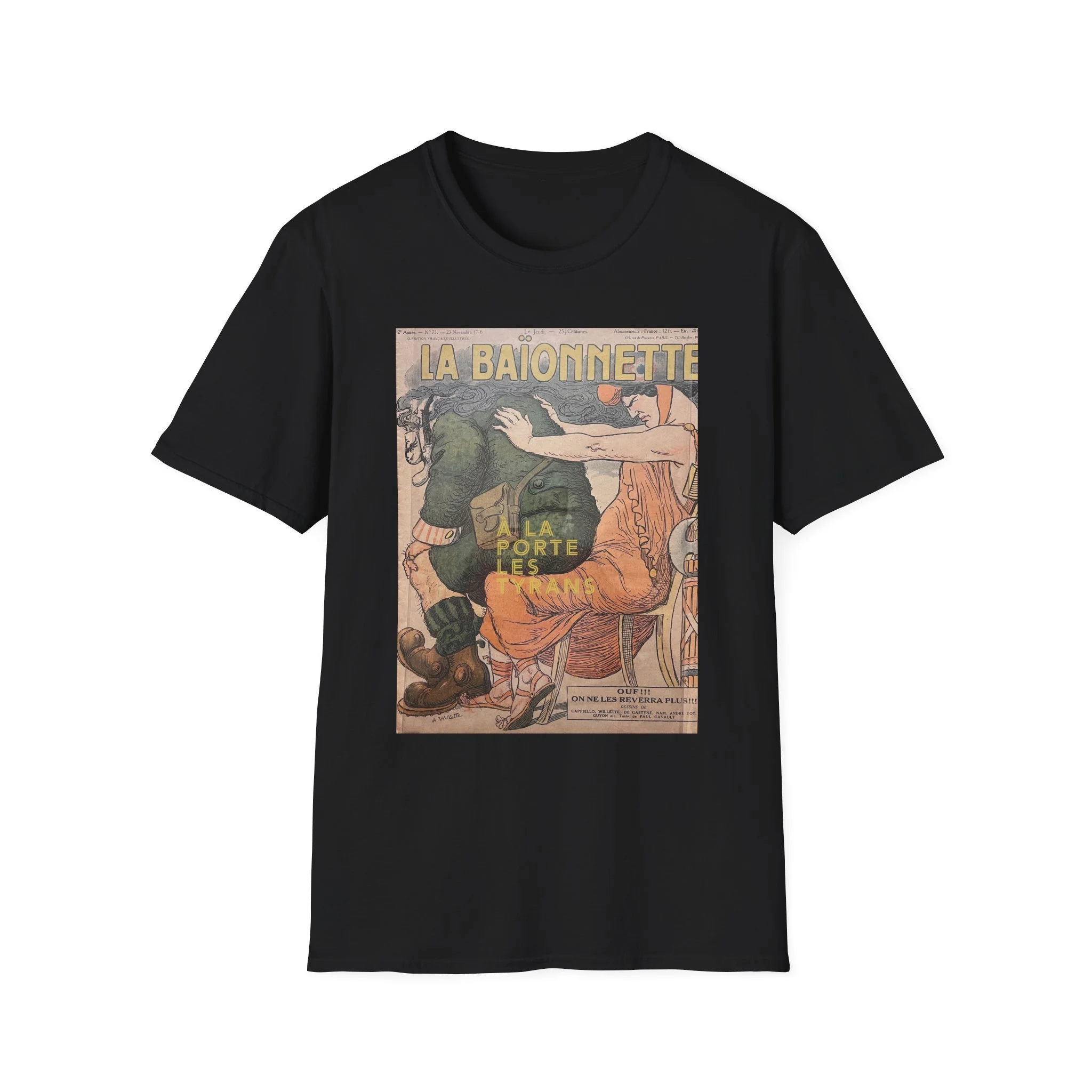
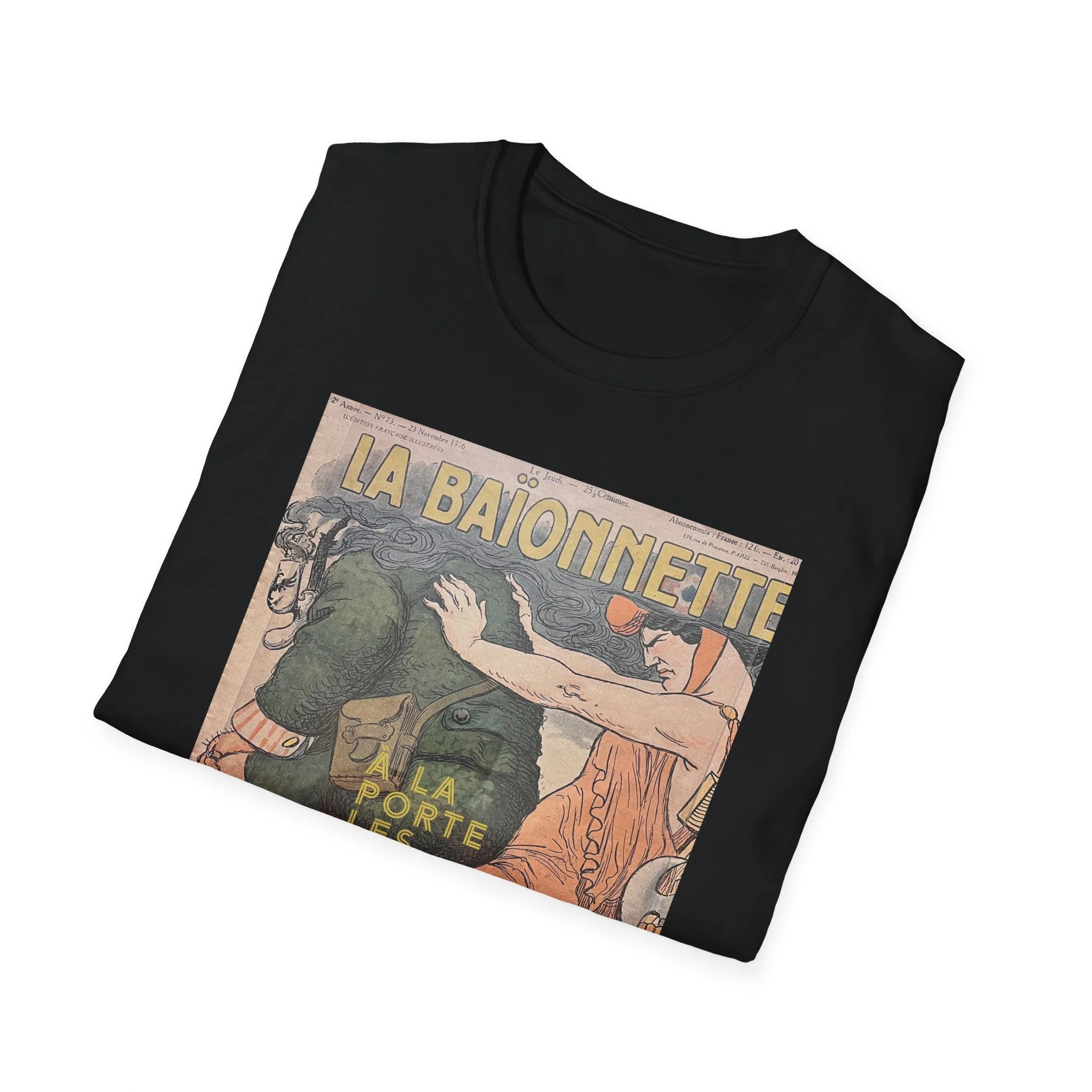
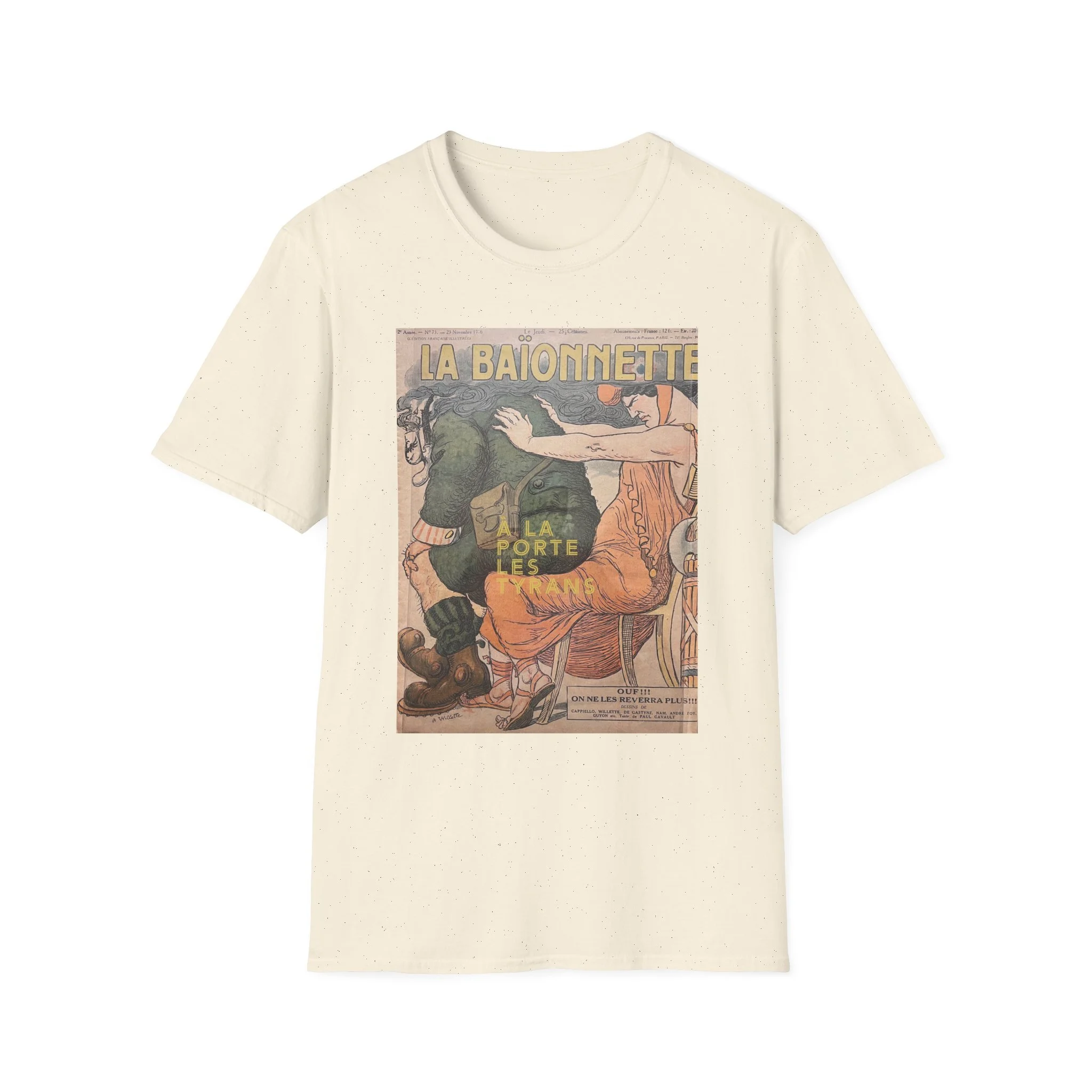
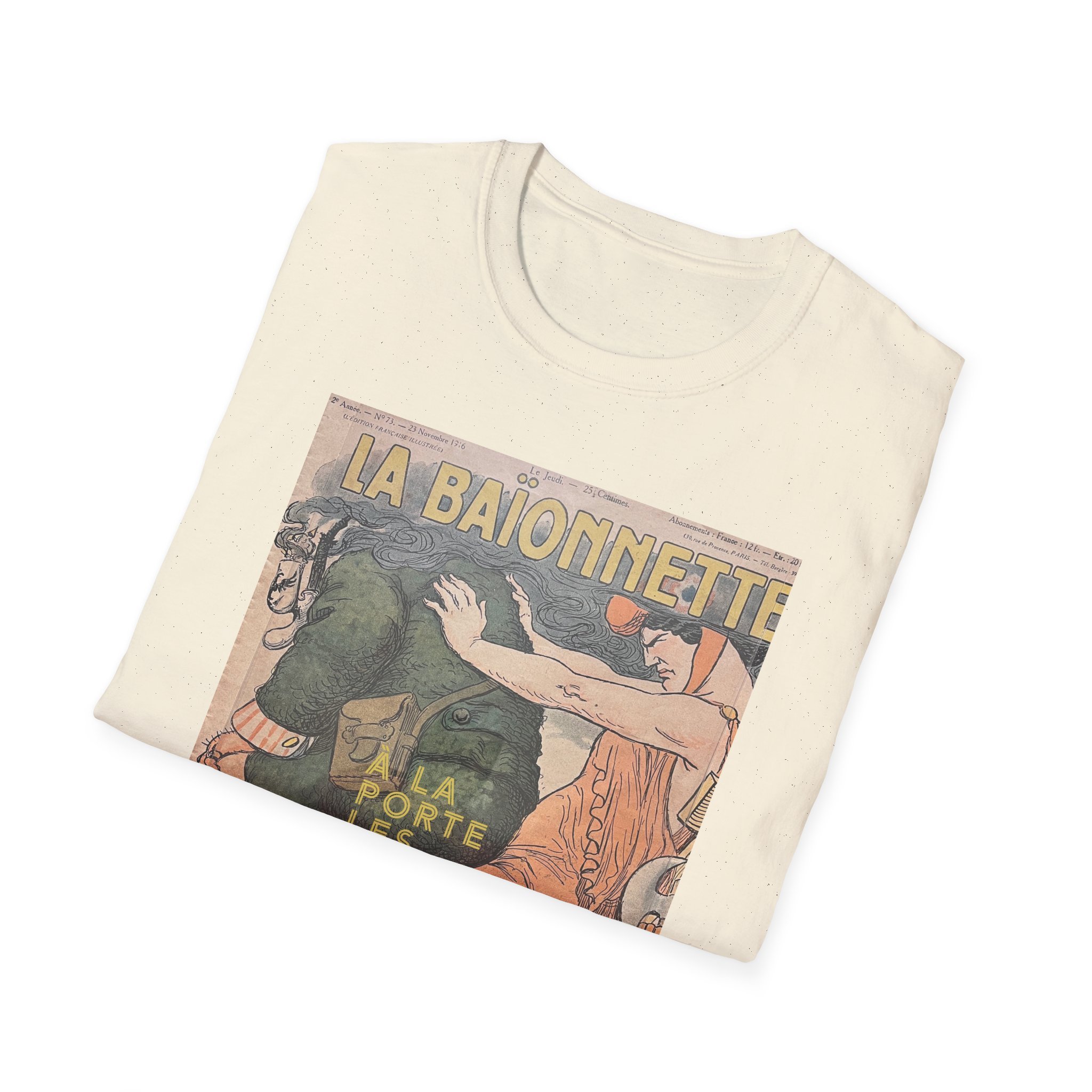
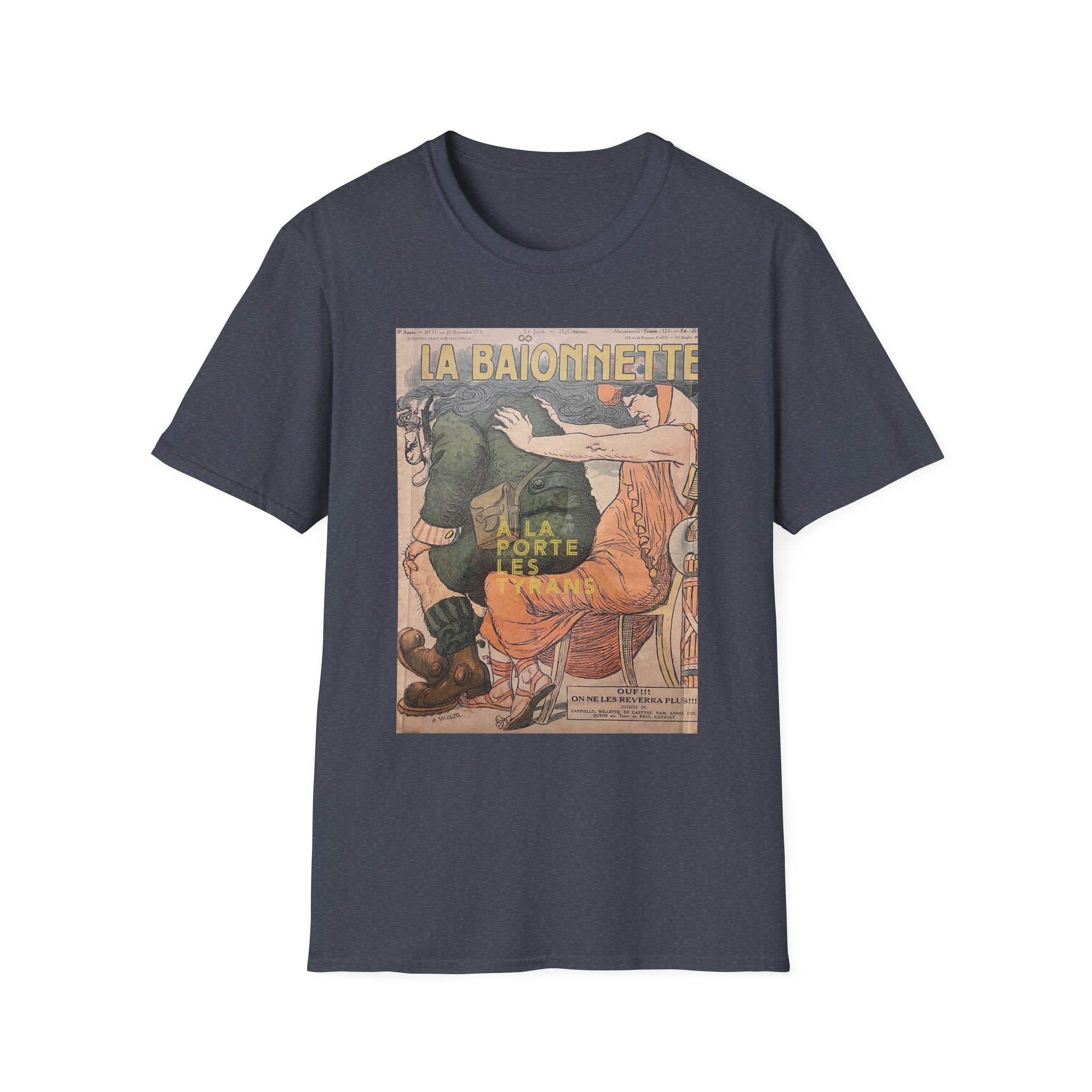
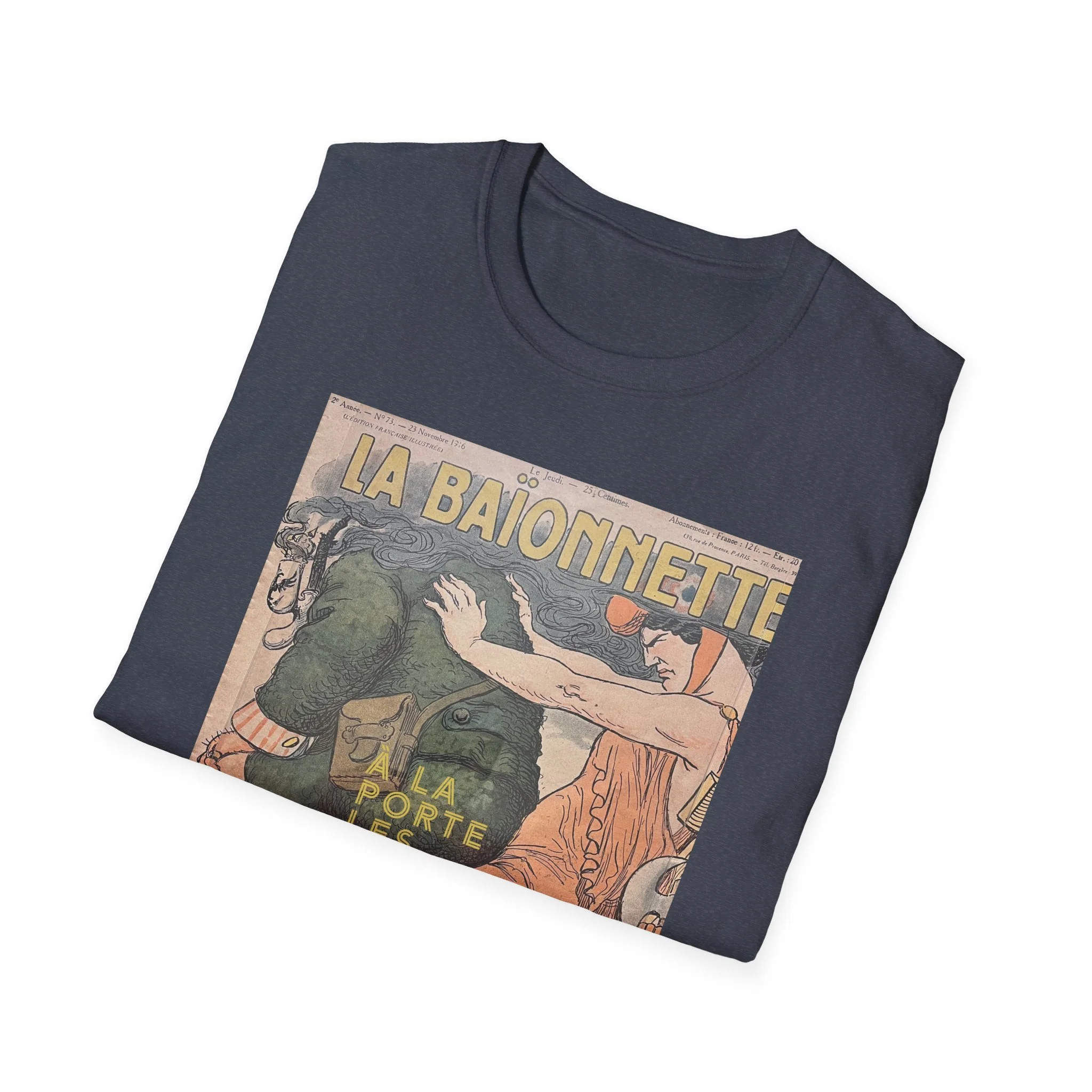
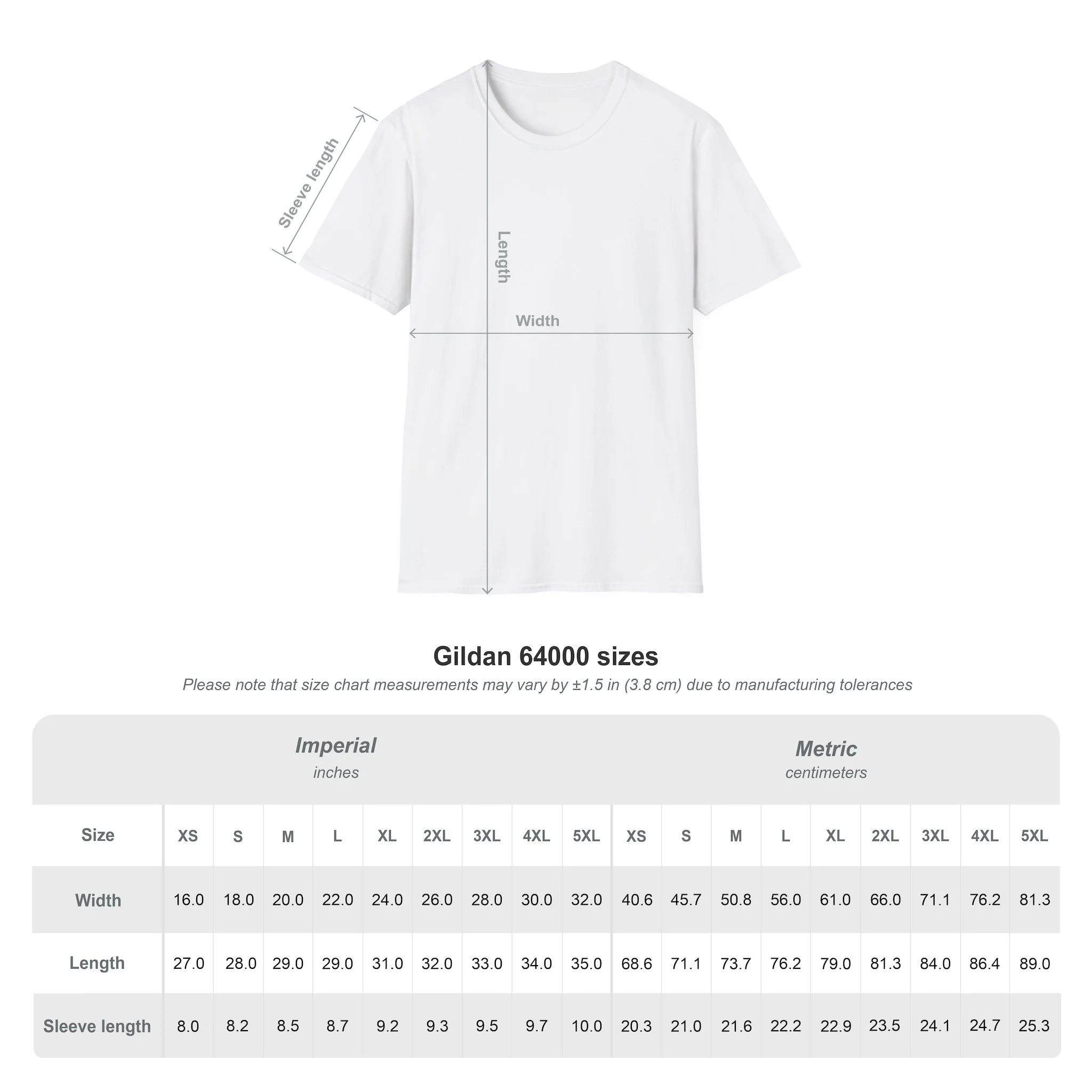
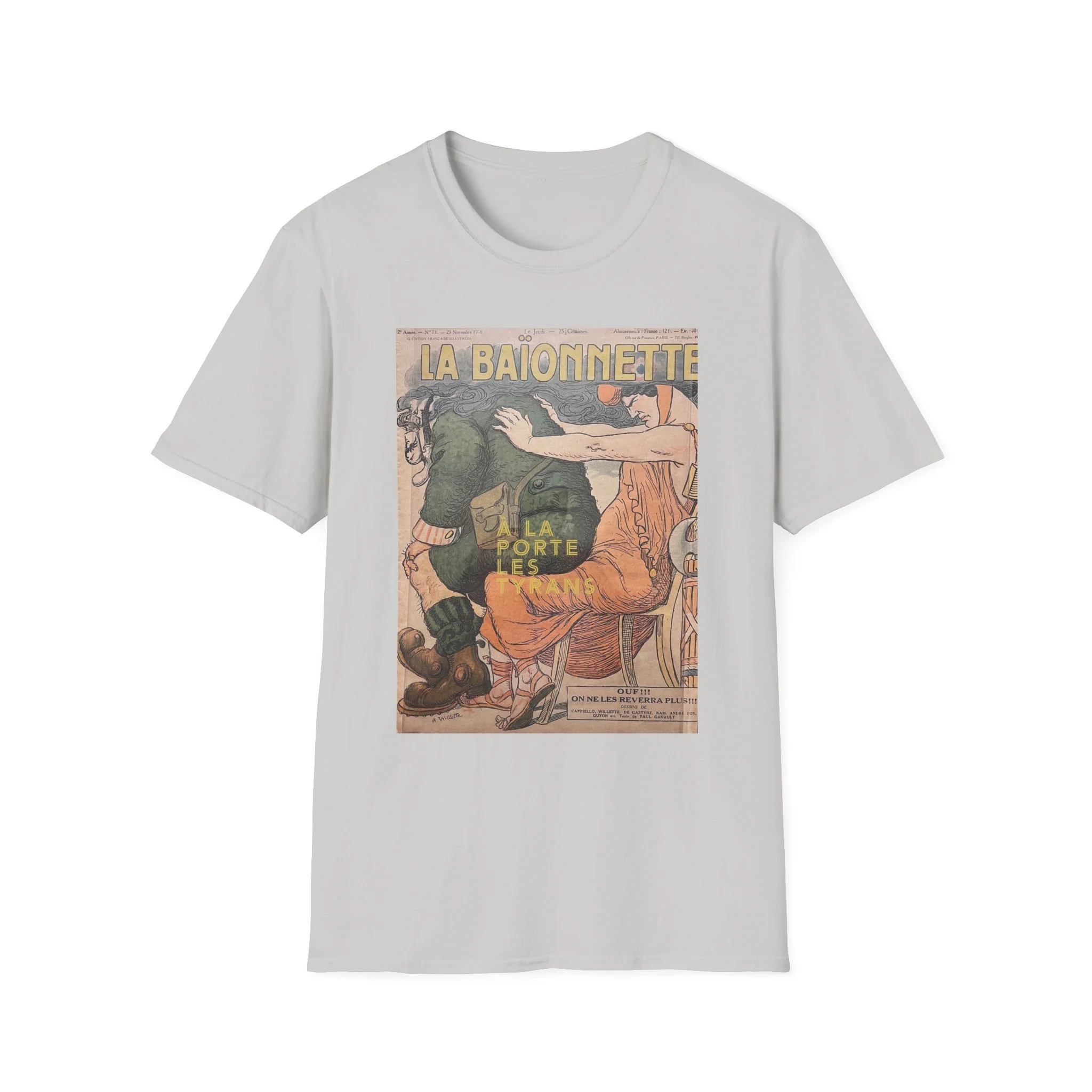
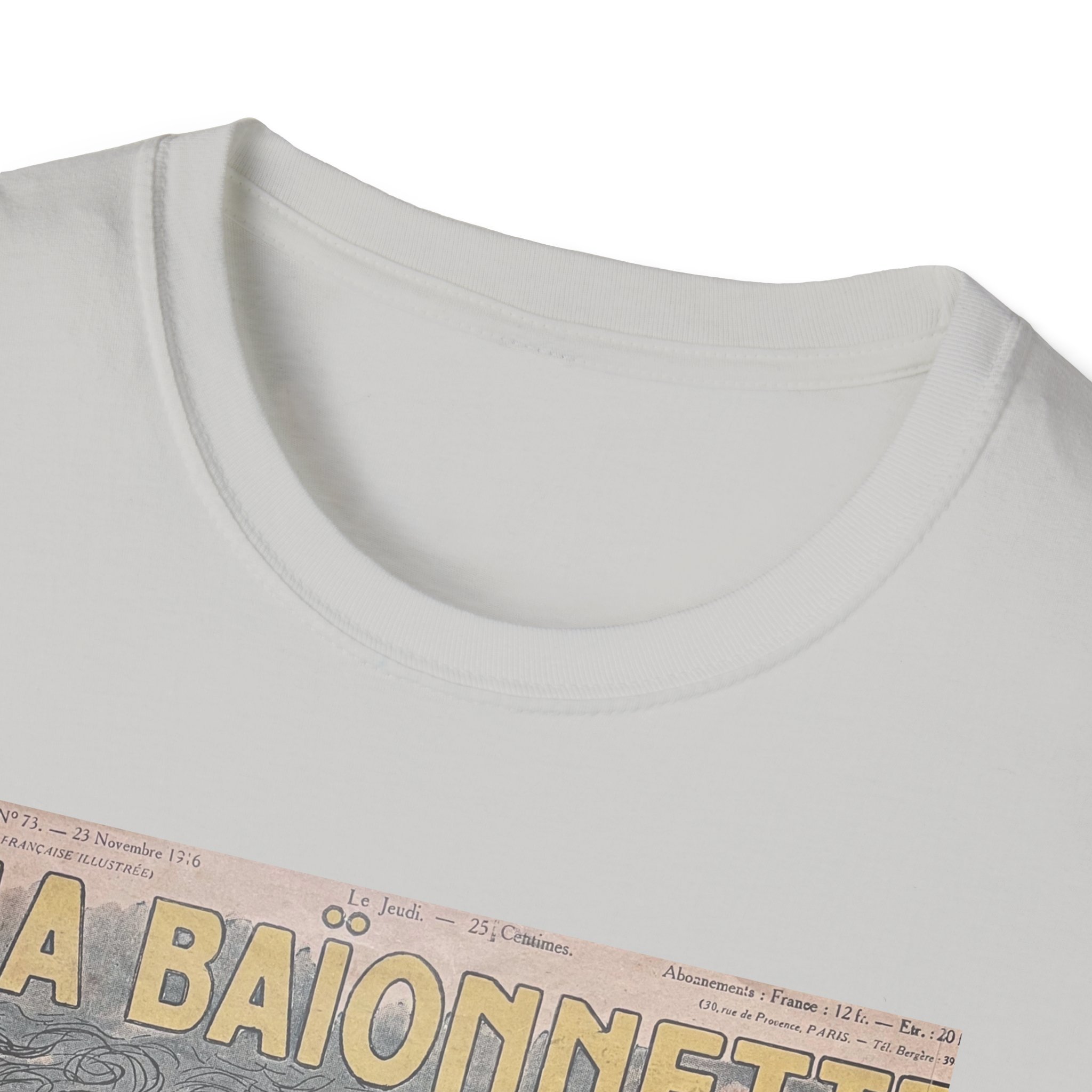
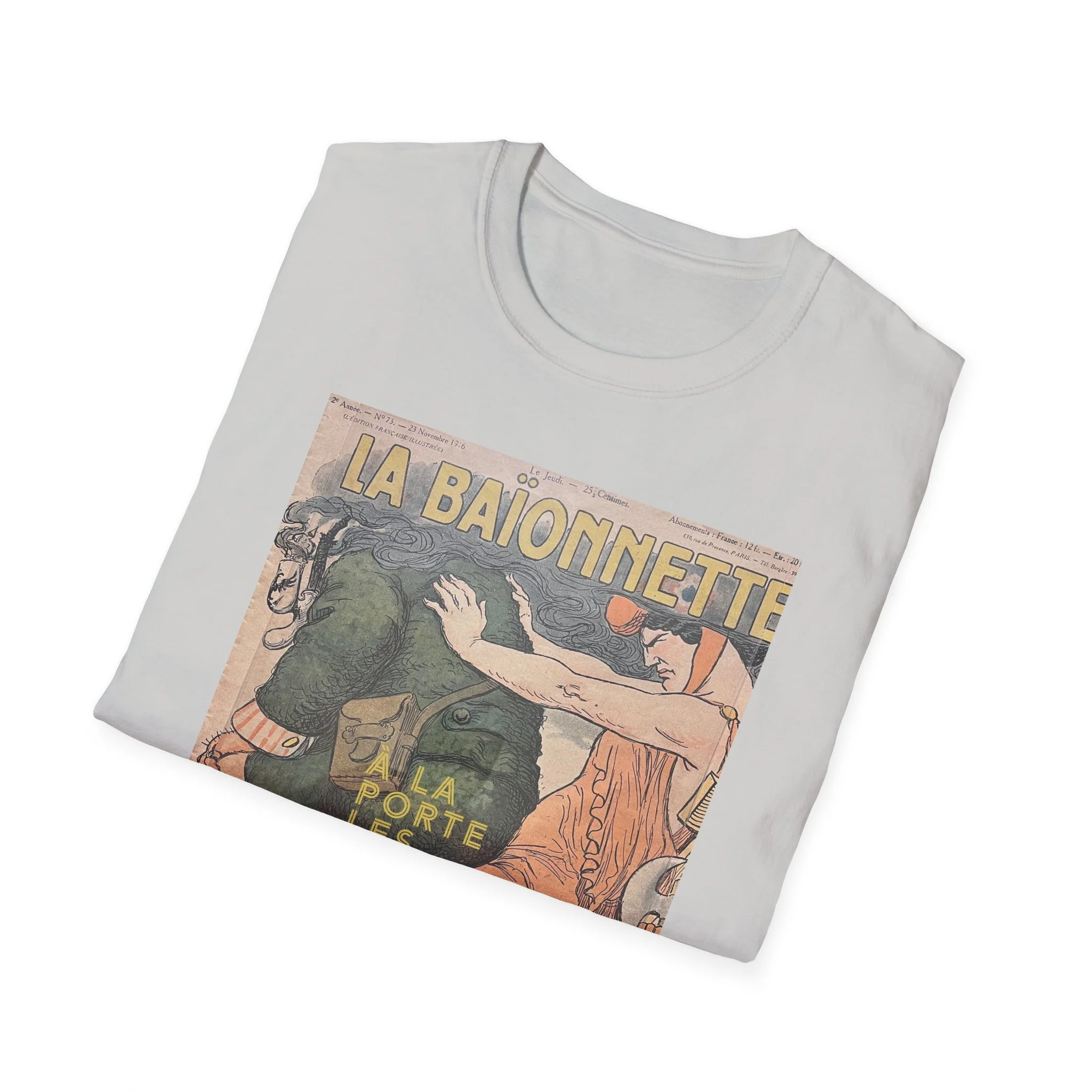
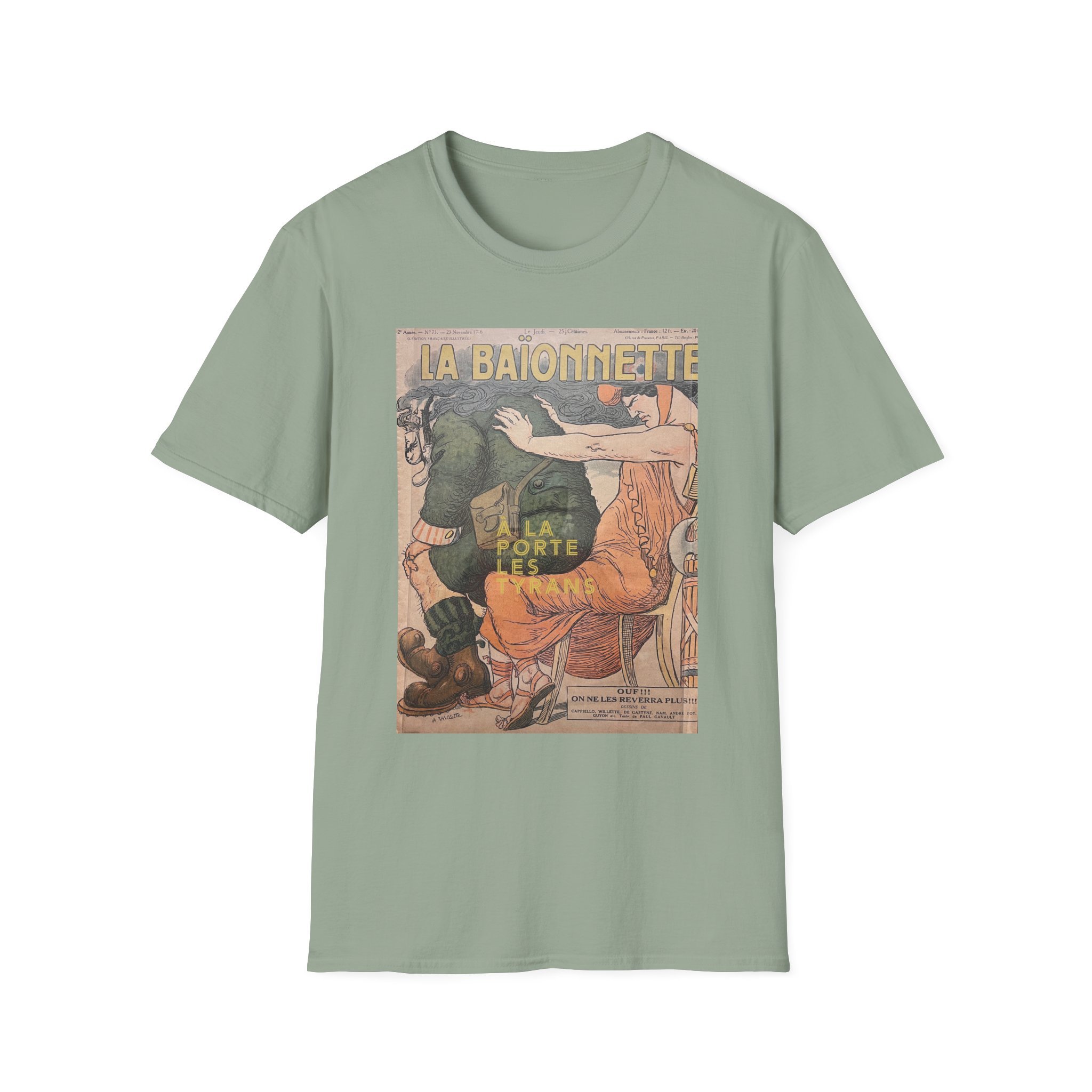
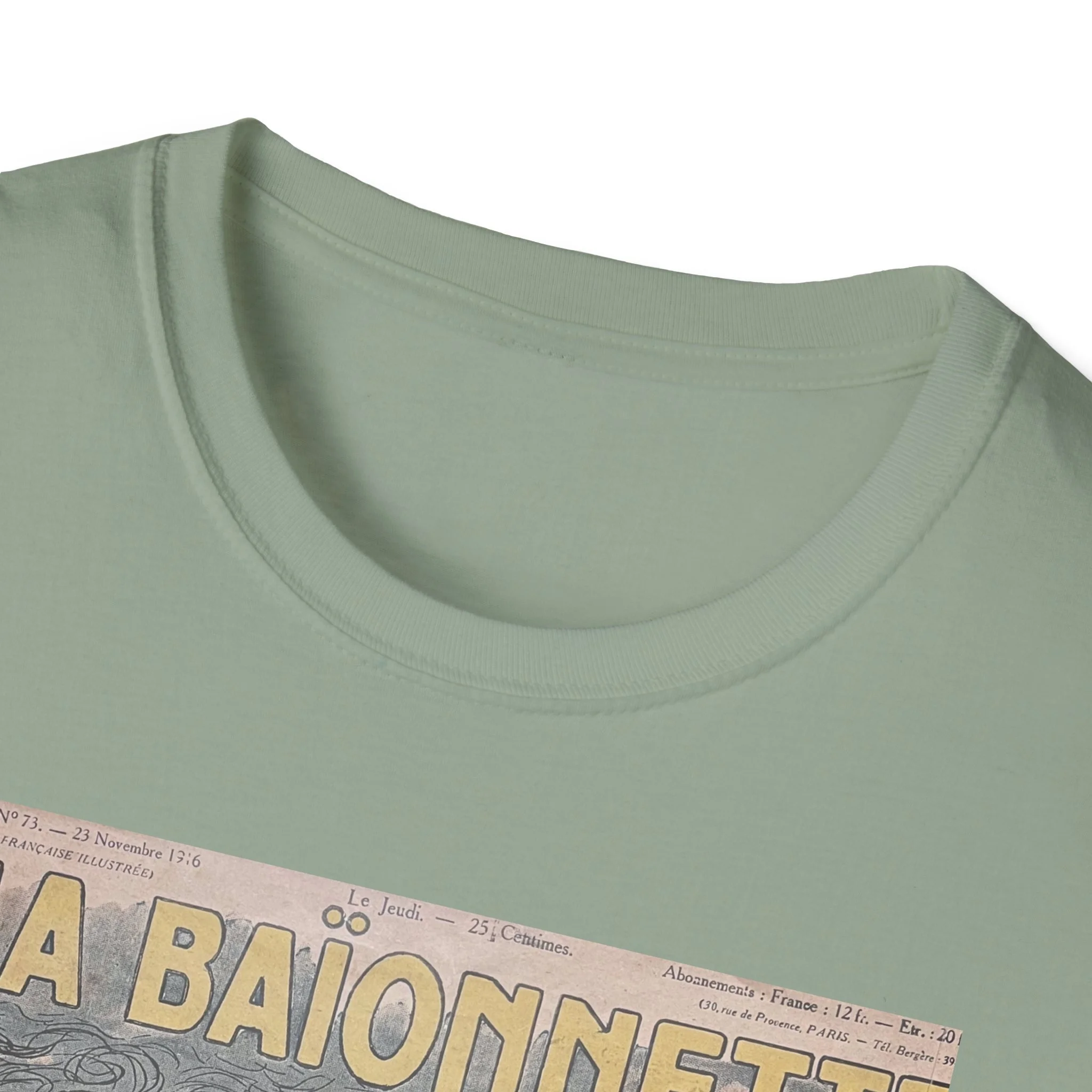
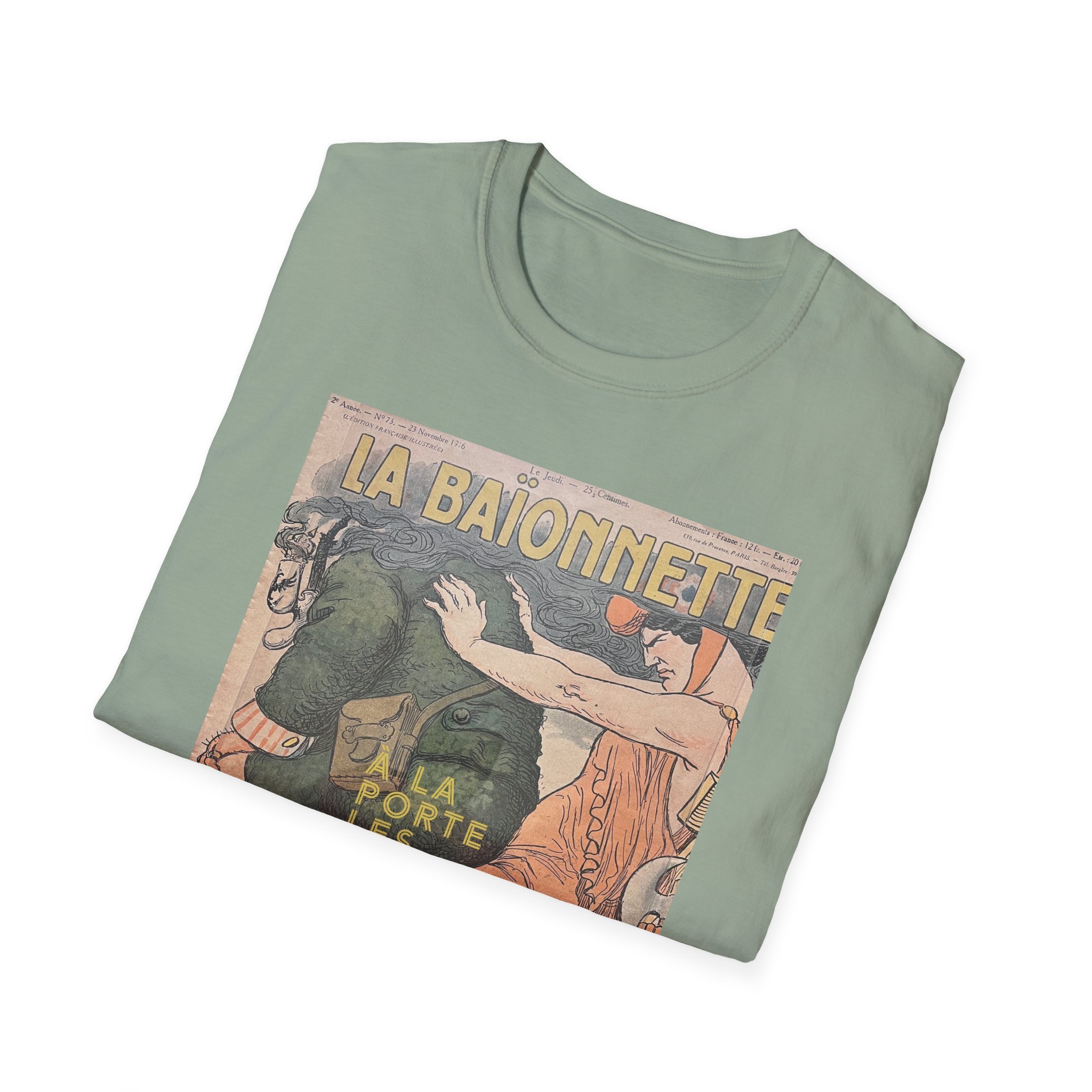
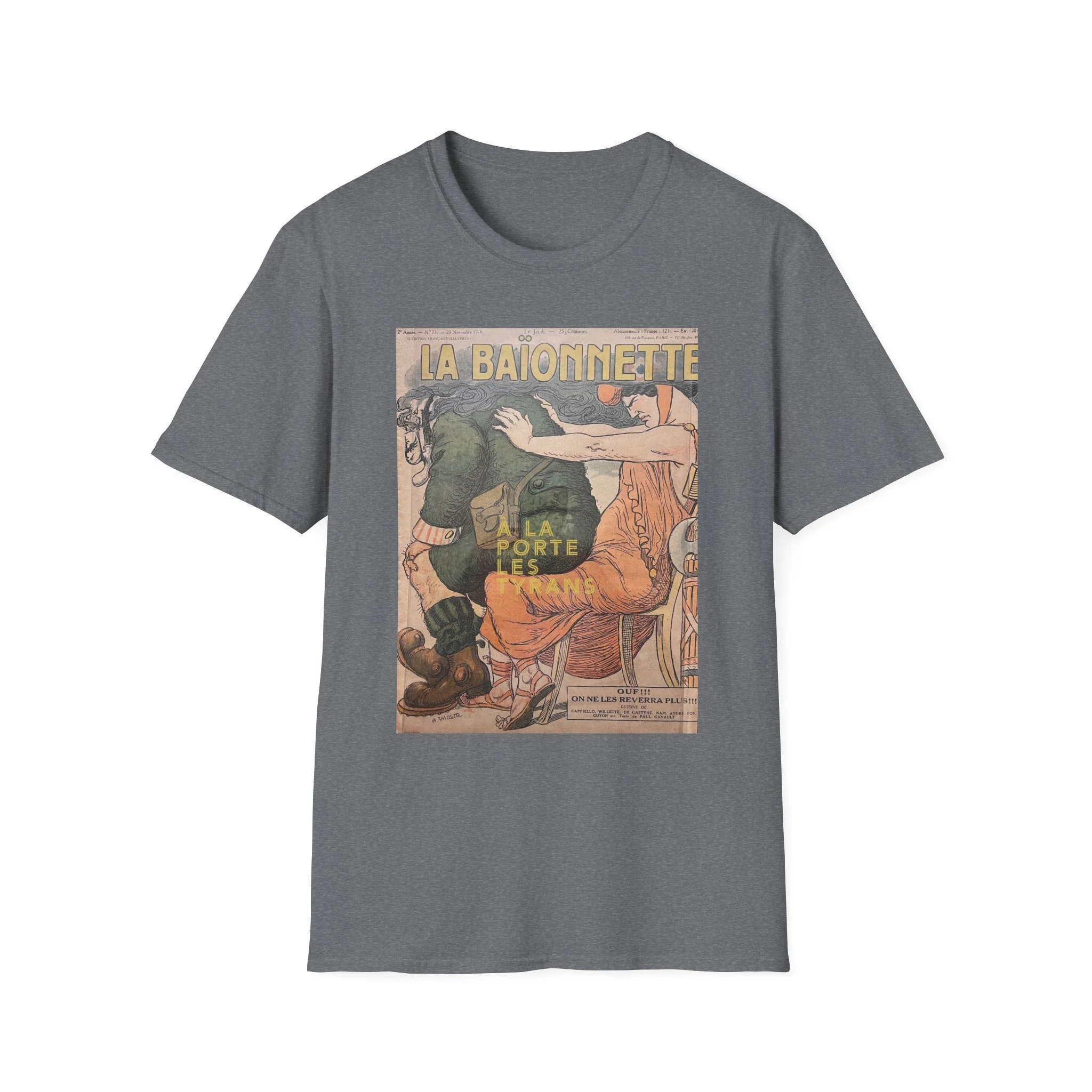
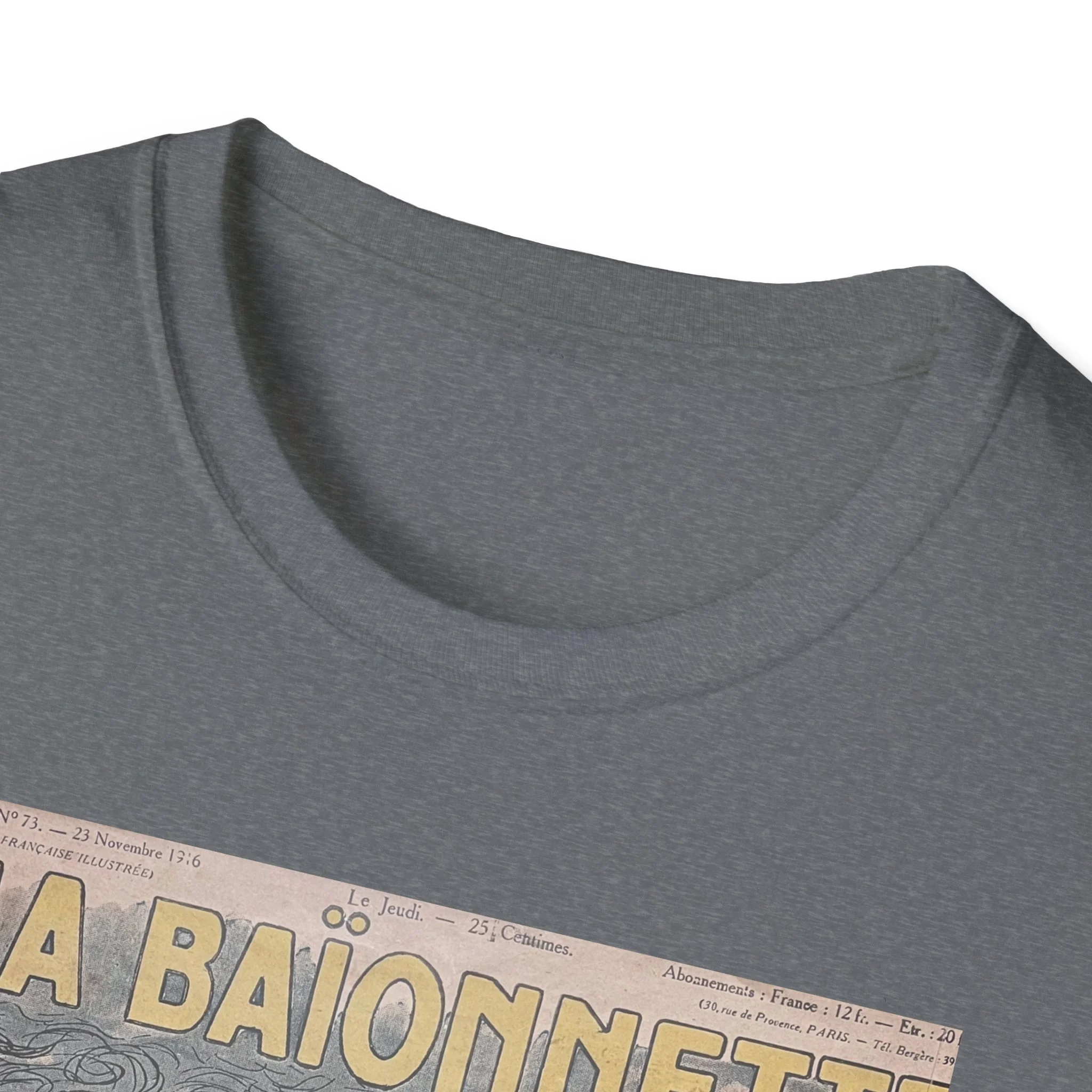
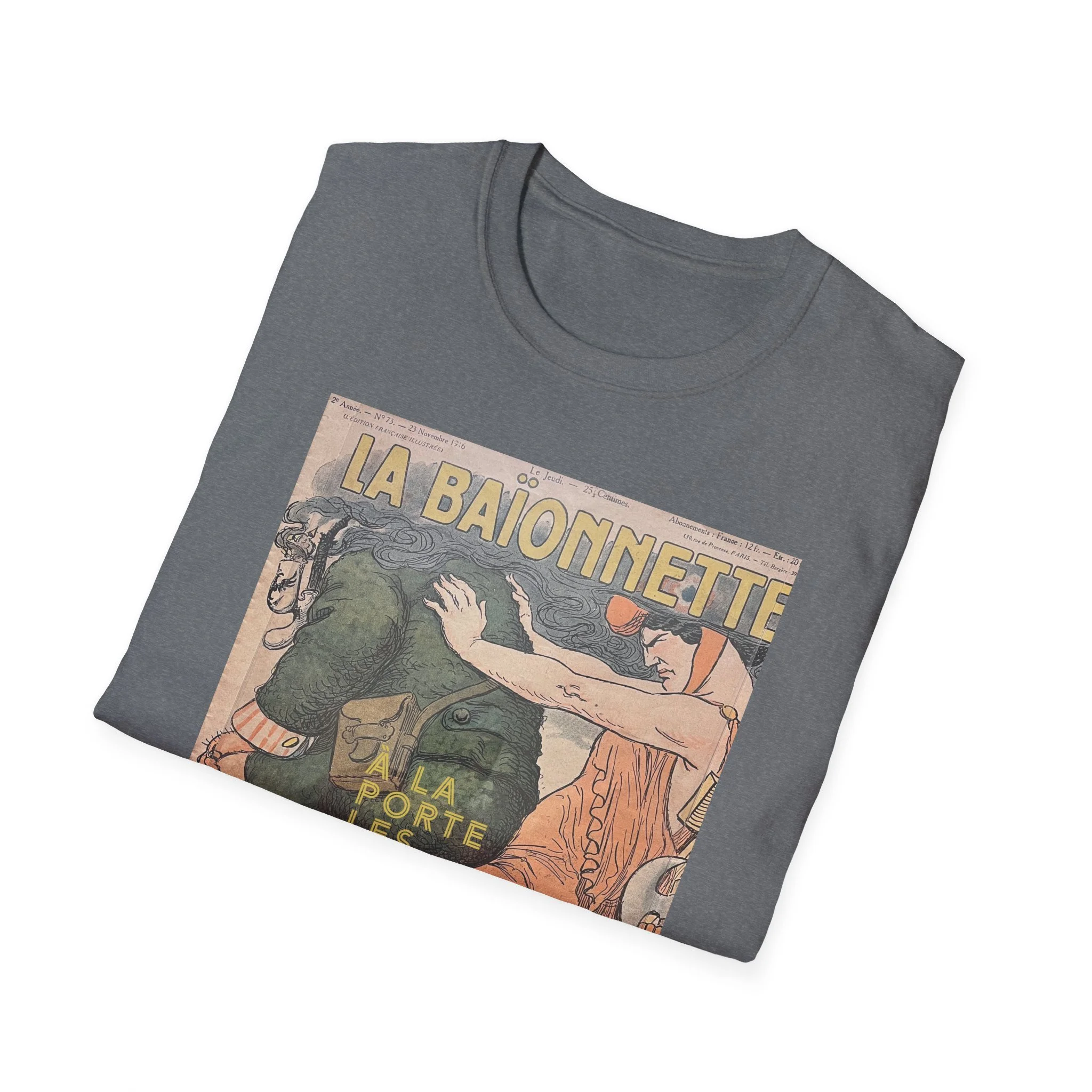
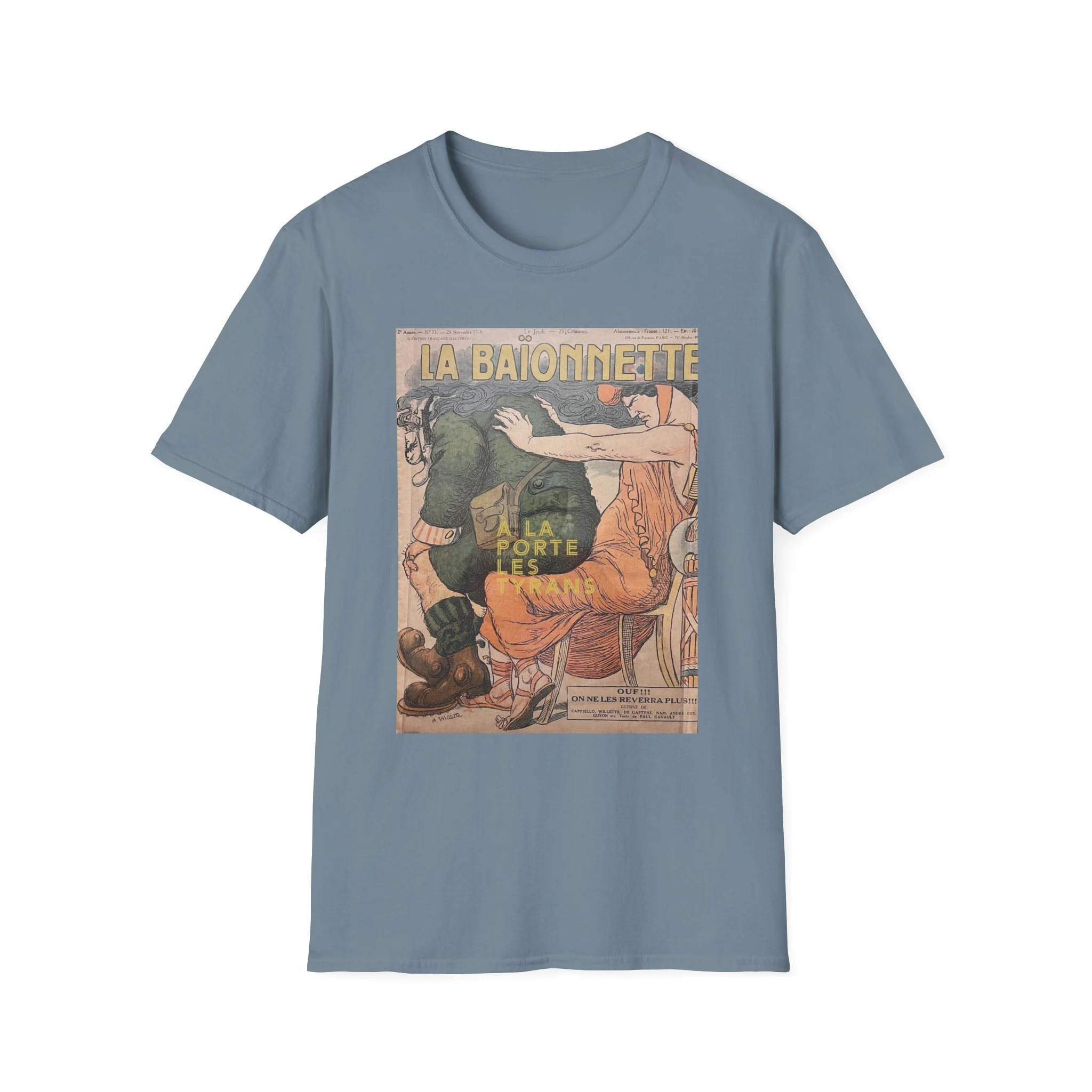
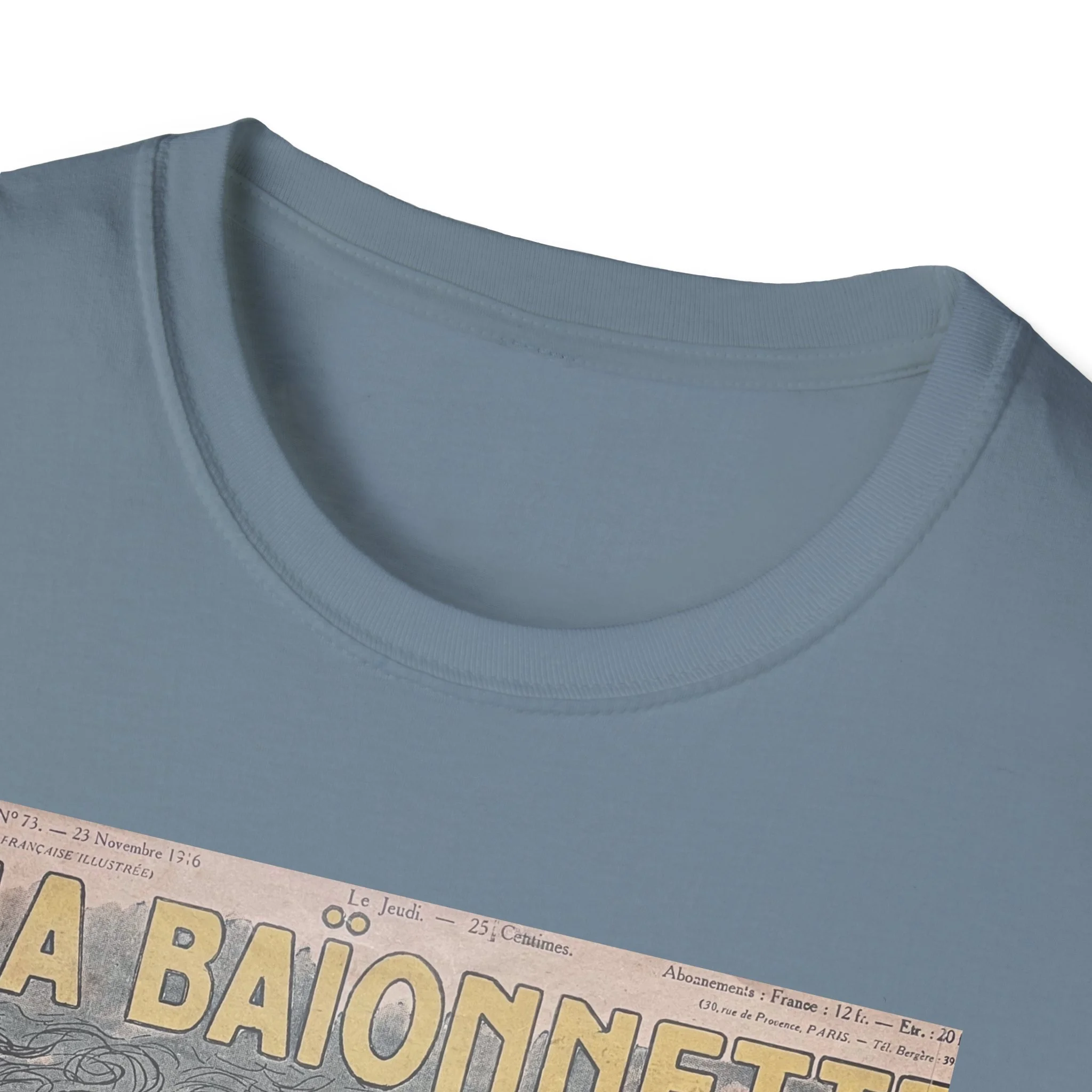
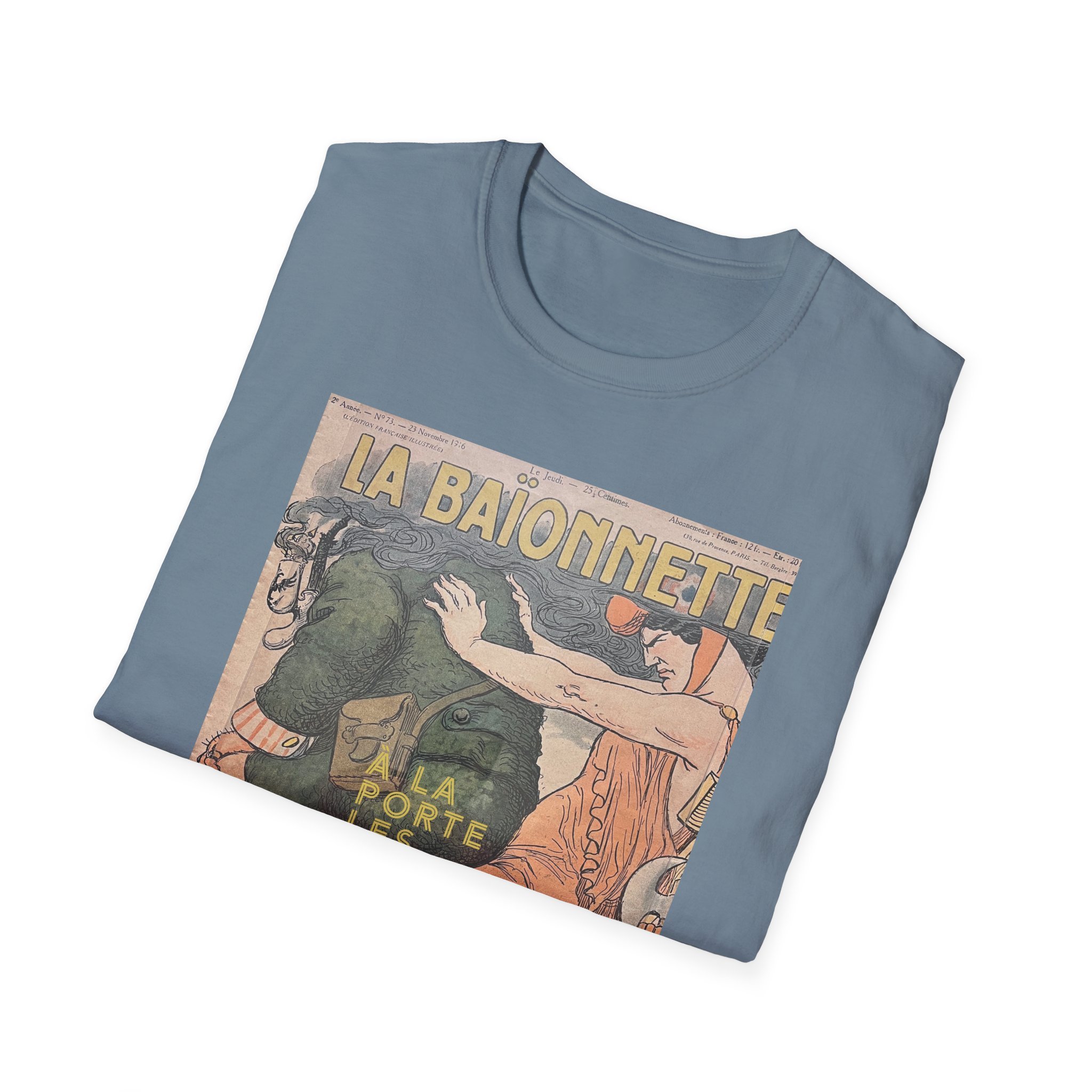
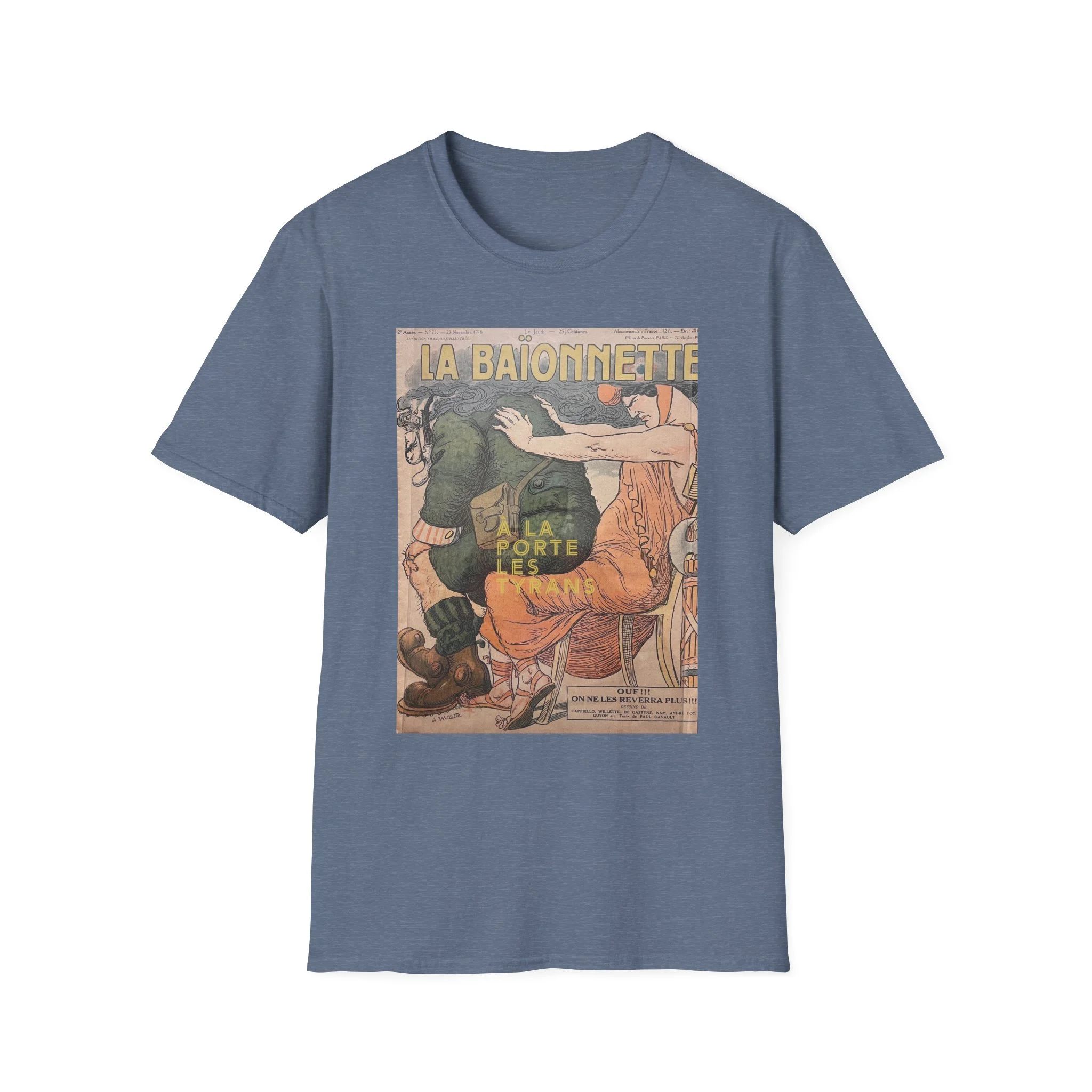
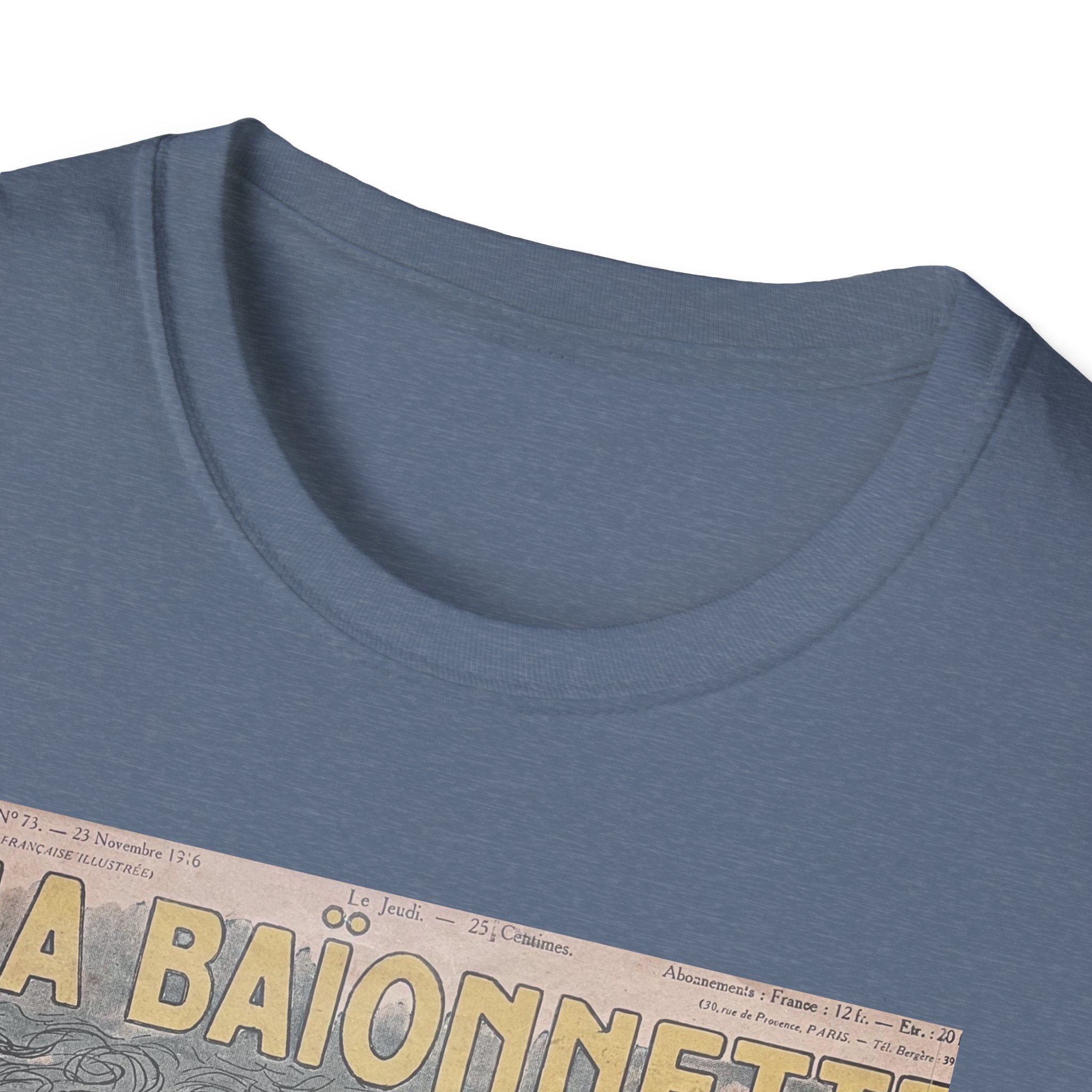
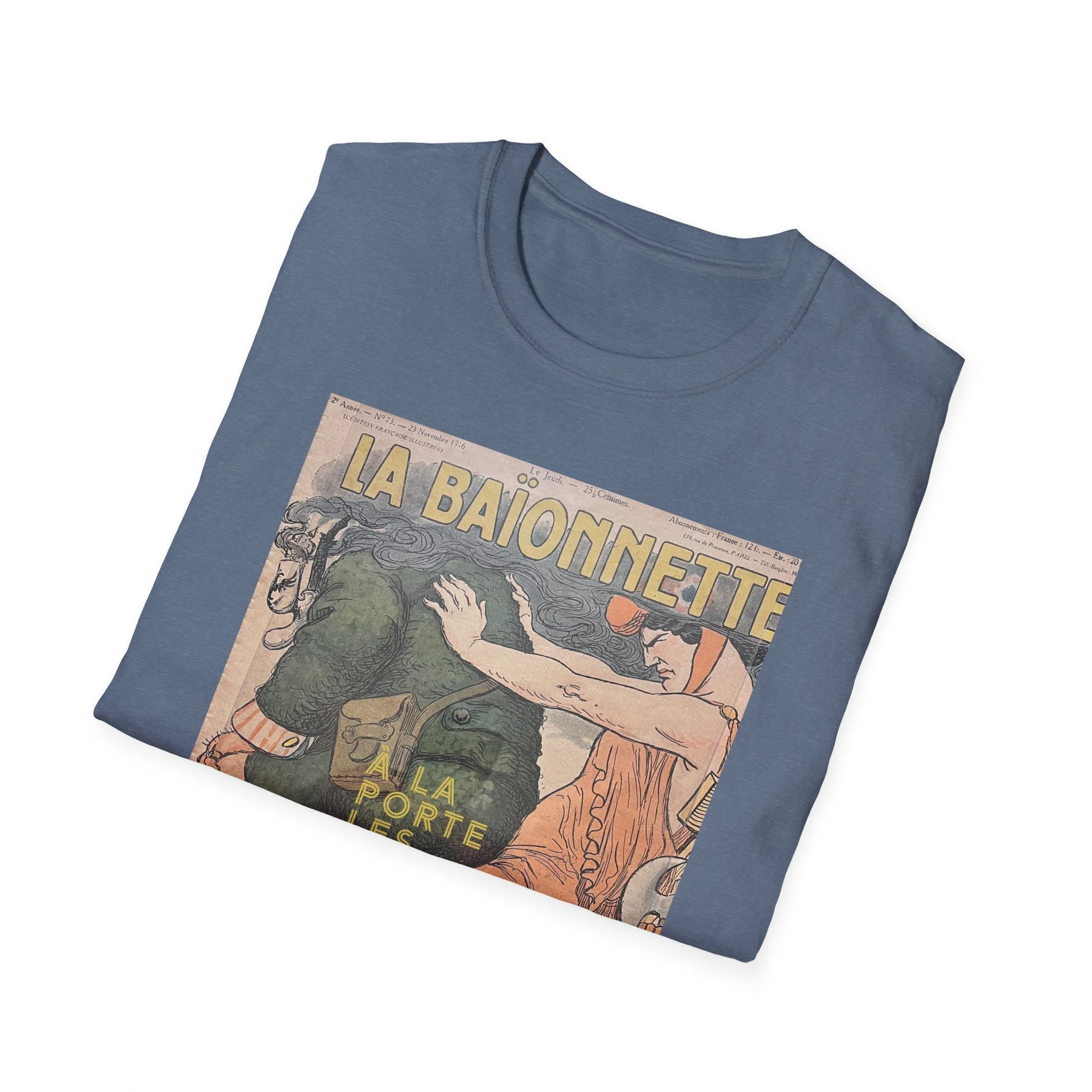
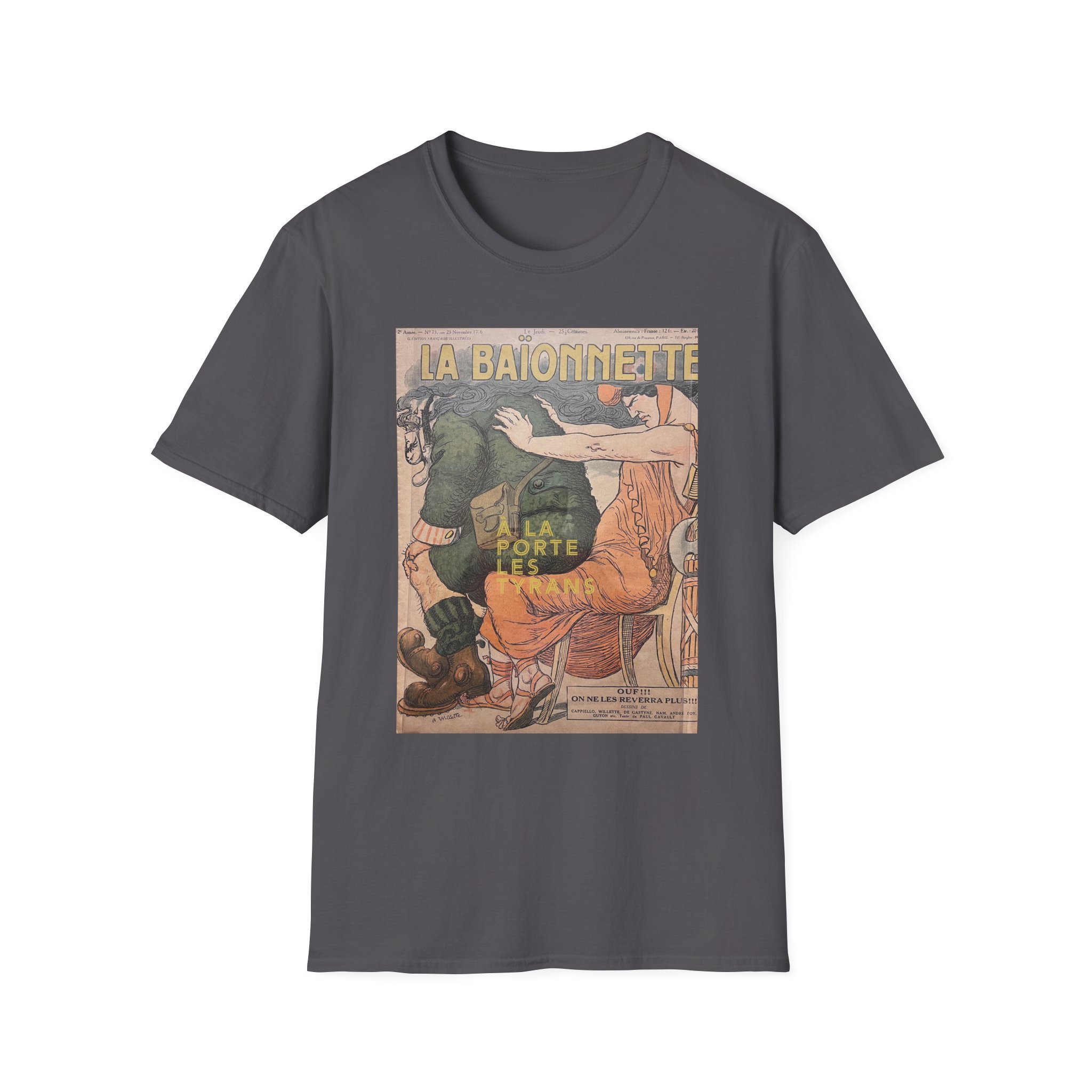

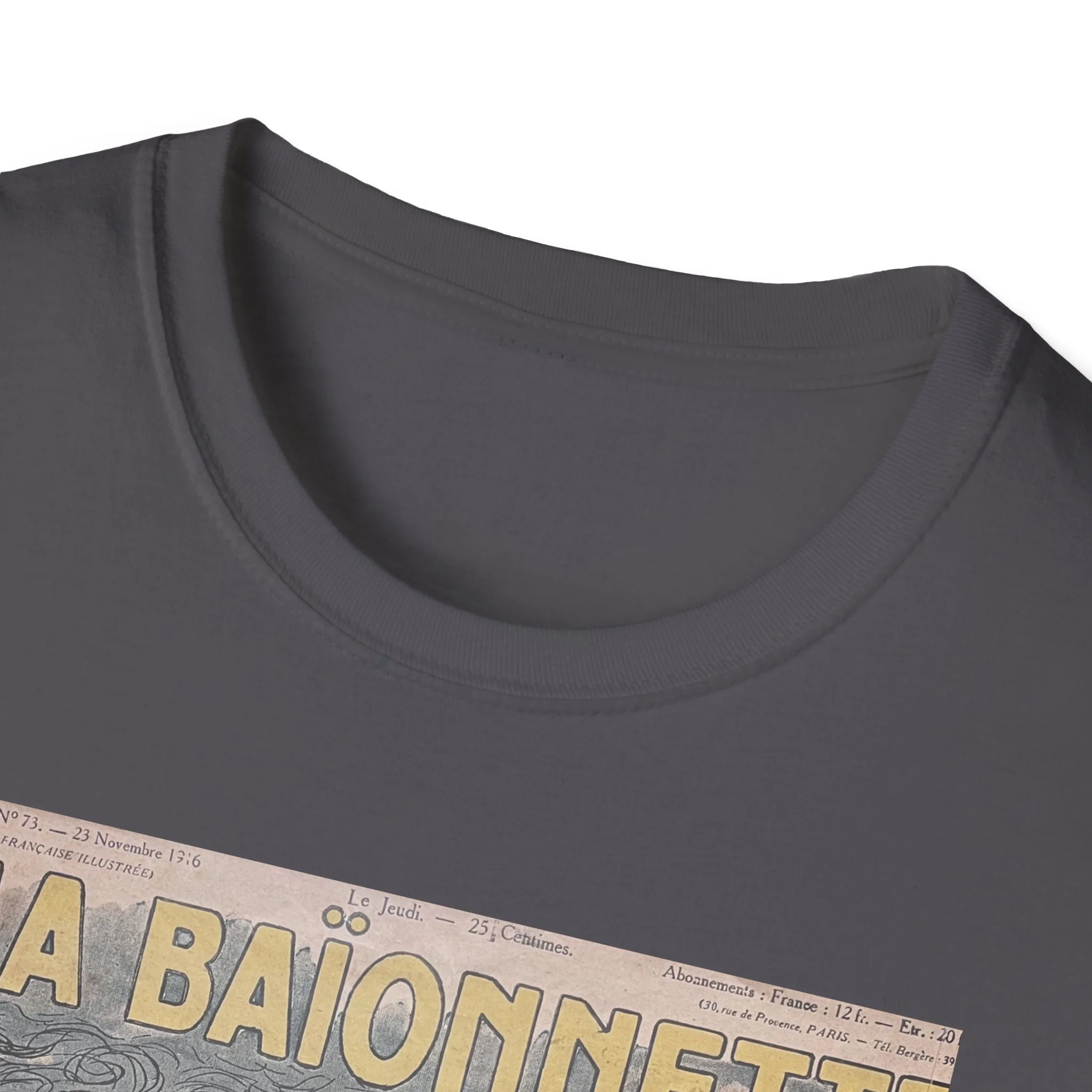
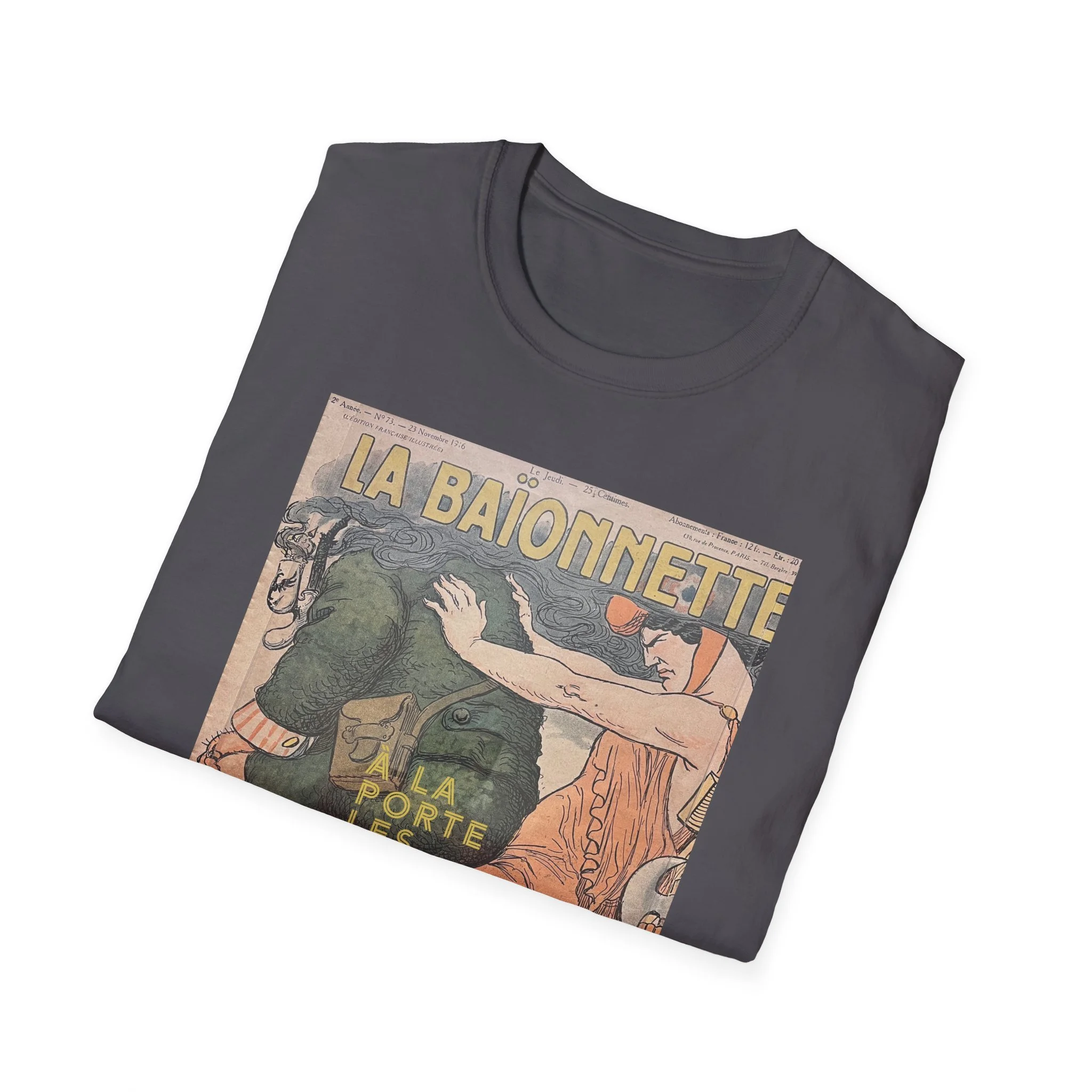
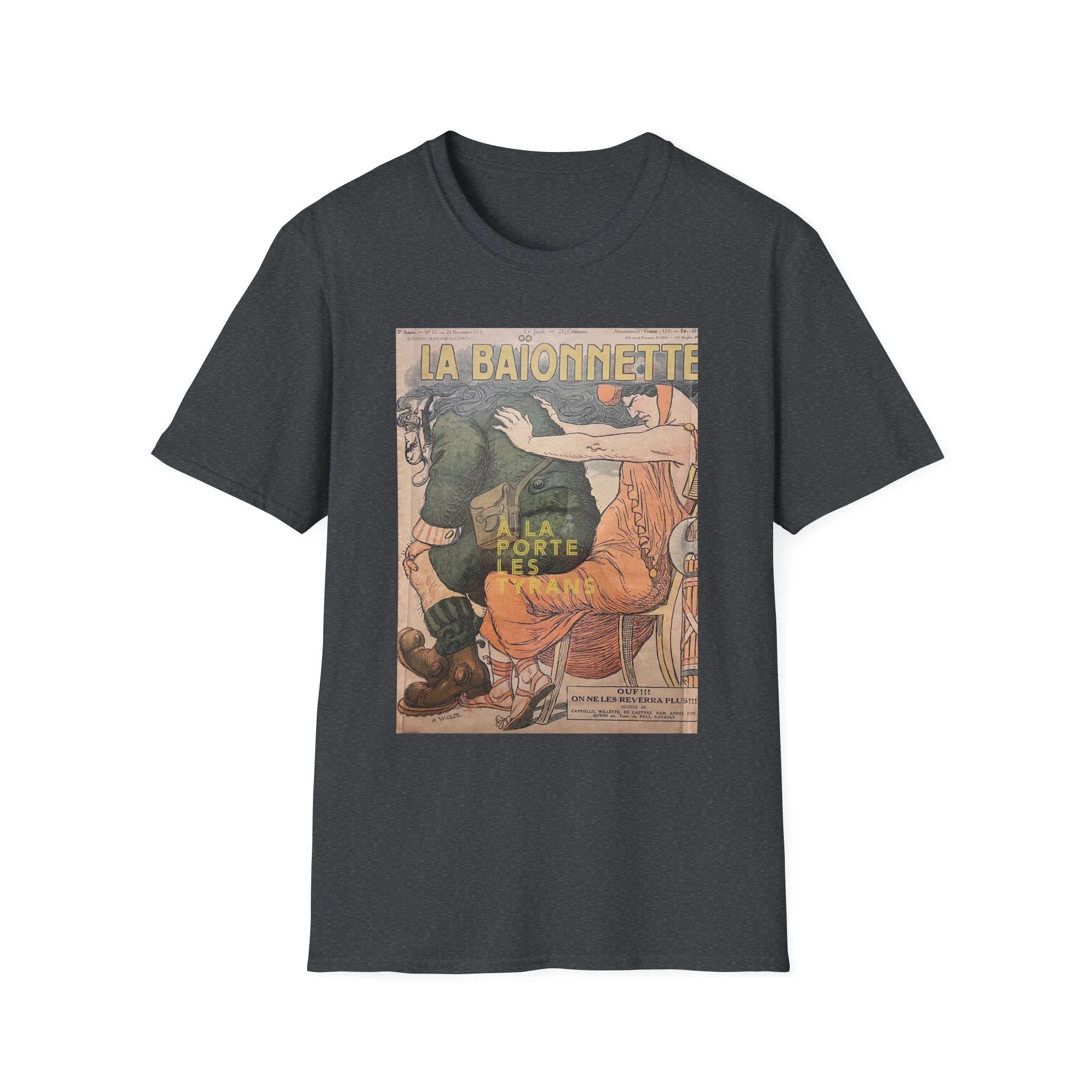
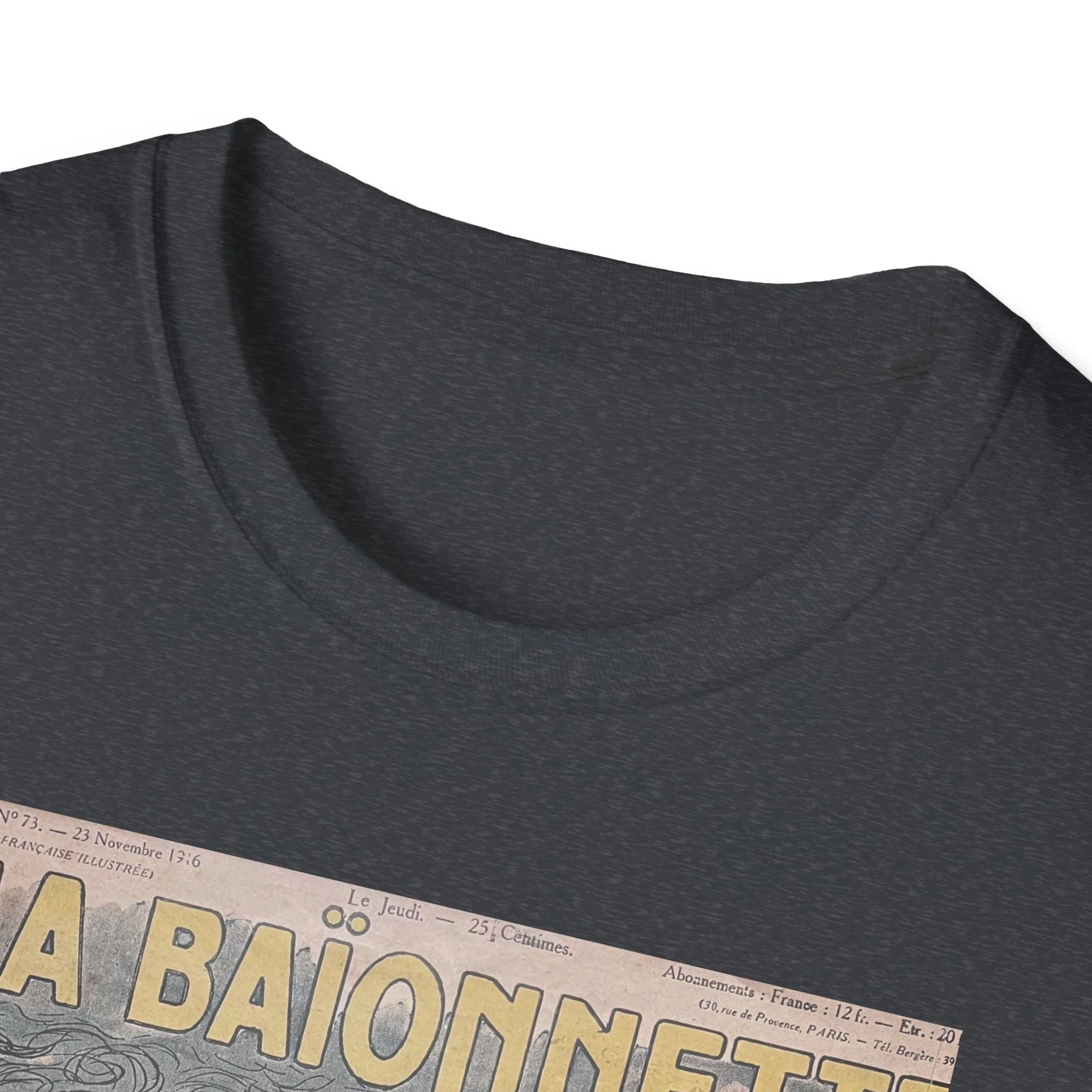
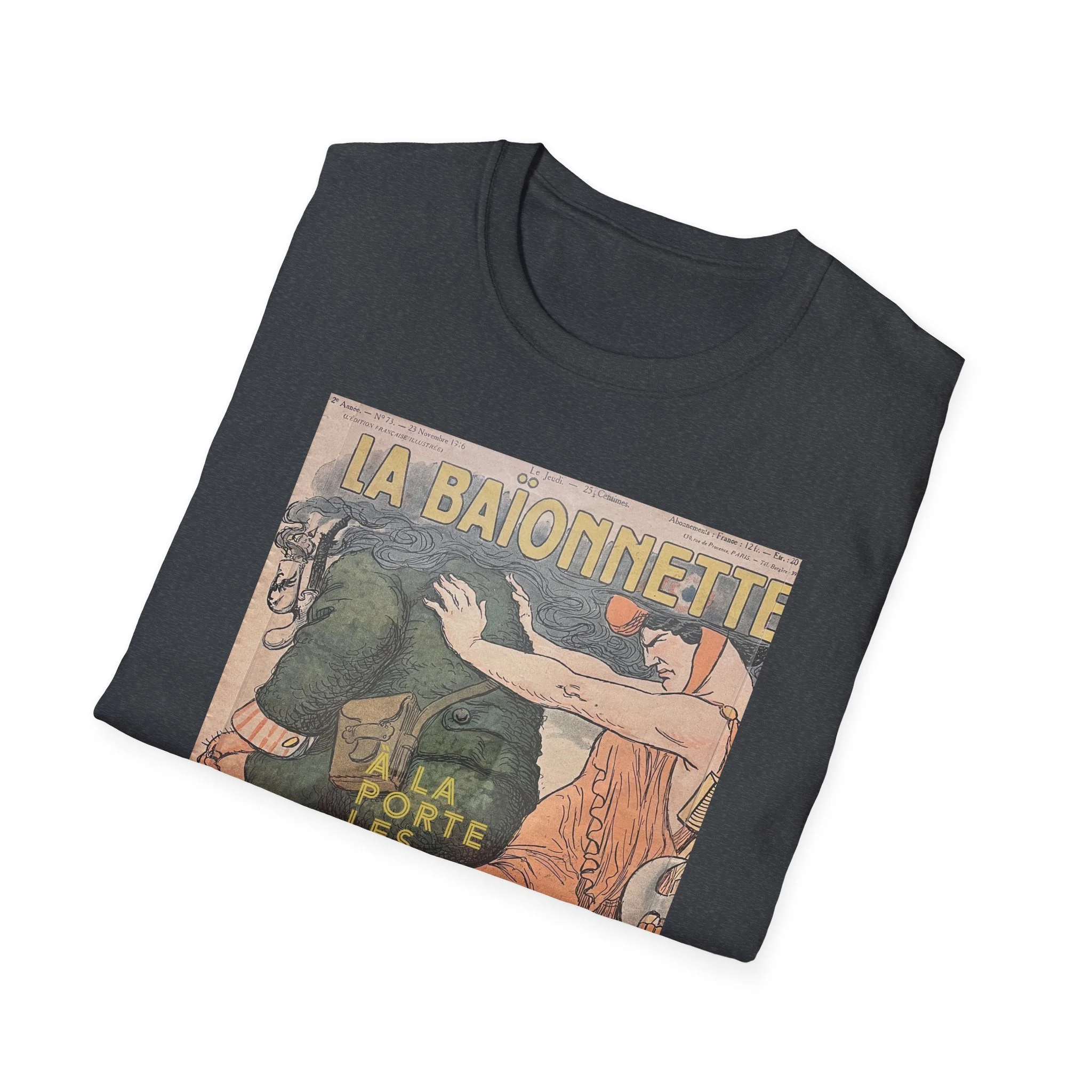
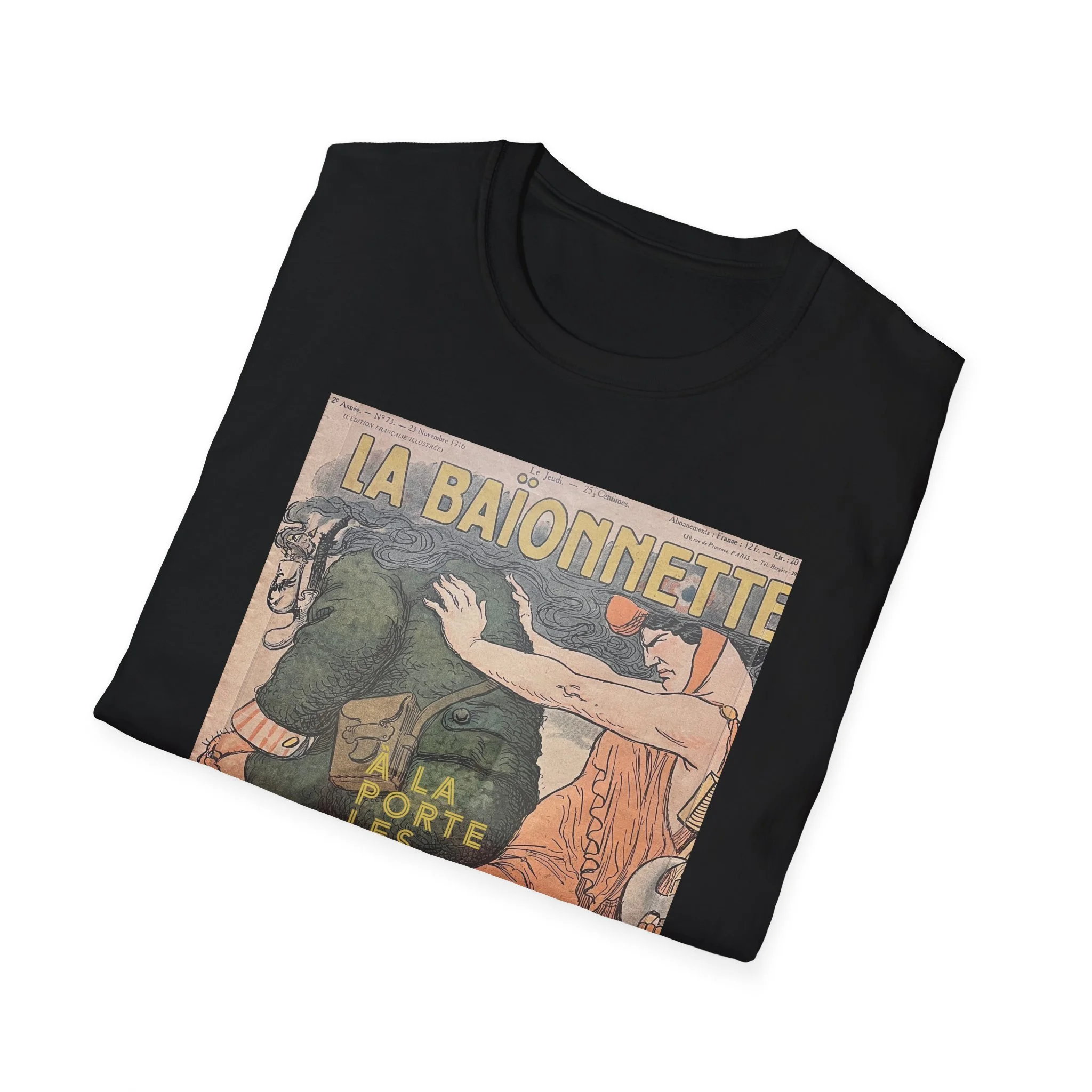
An examination of collective force and the removal of unaccountable power.
The image presents political change as a physical and communal act rather than a procedural appeal. Authority is not persuaded or reformed; it is displaced. Power gives way only when pressure gathers from below, exposing accountability as something enforced, not granted.
Historical Note
This illustration appeared in a 1916 issue of La Baïonnette and was drawn by A. Willette. Created amid the collapse of old European empires during the First World War, it reflects a moment when public patience with authoritarian bravado had worn thin.
100% ring-spun cotton | Pearlized tear-away label | Unisex
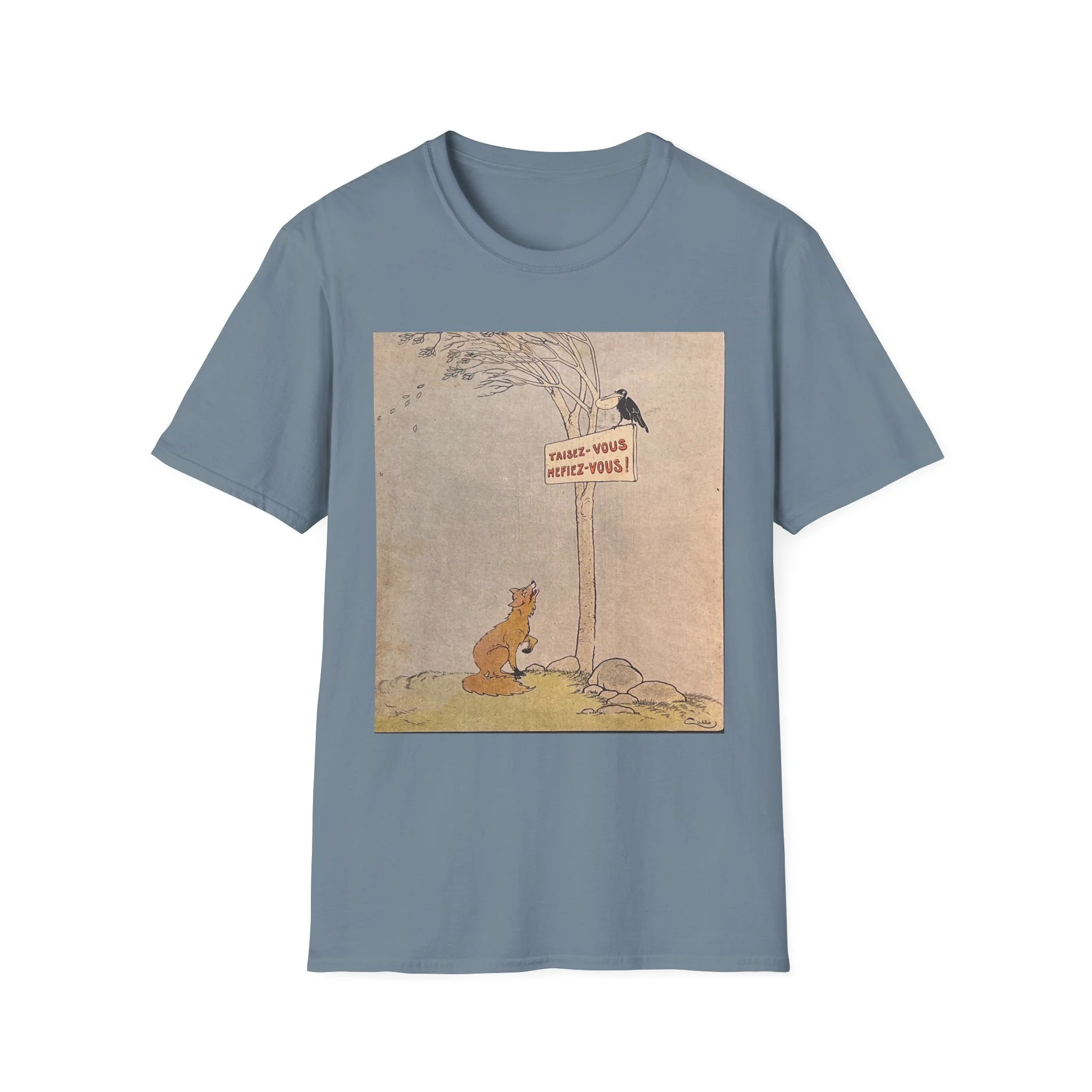
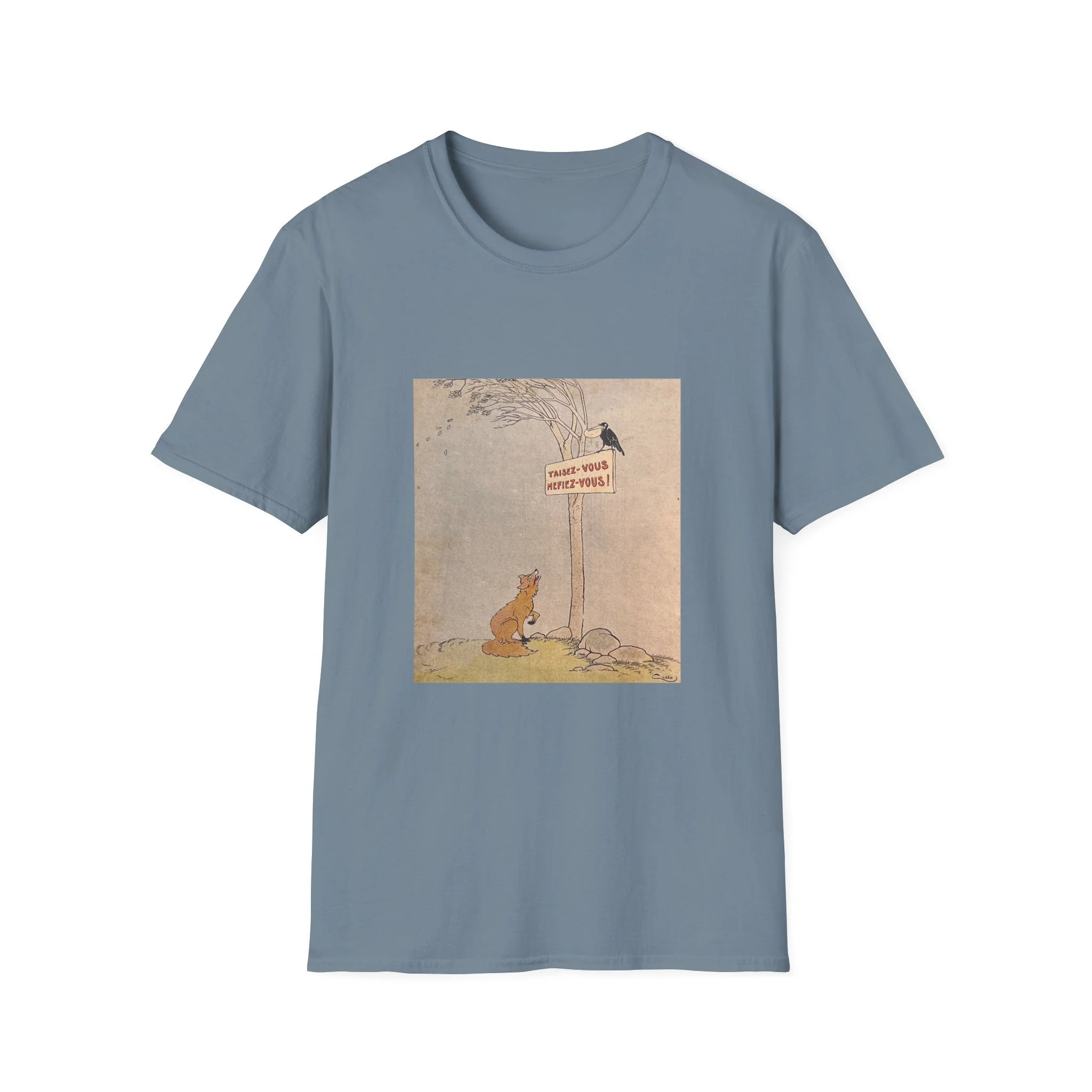
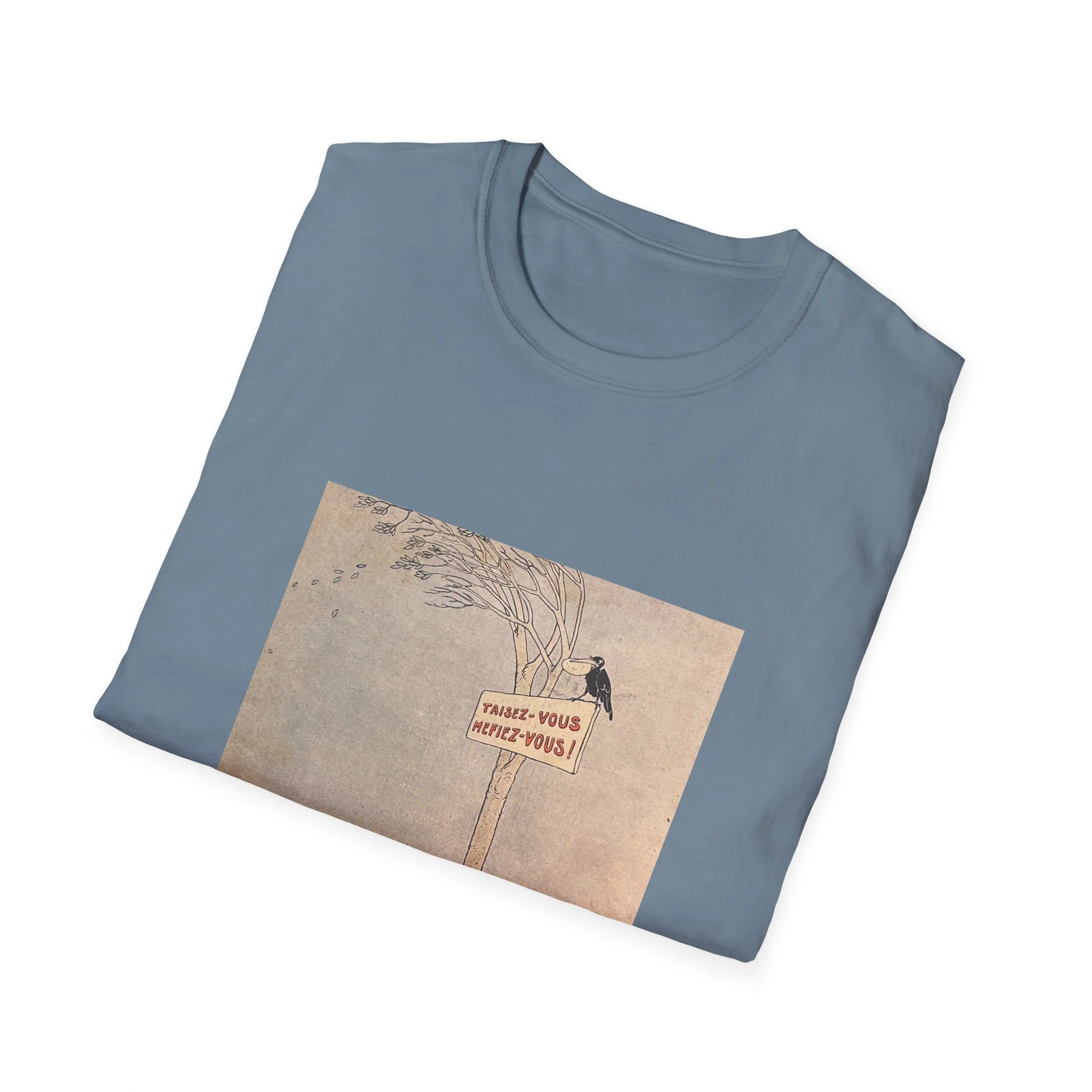
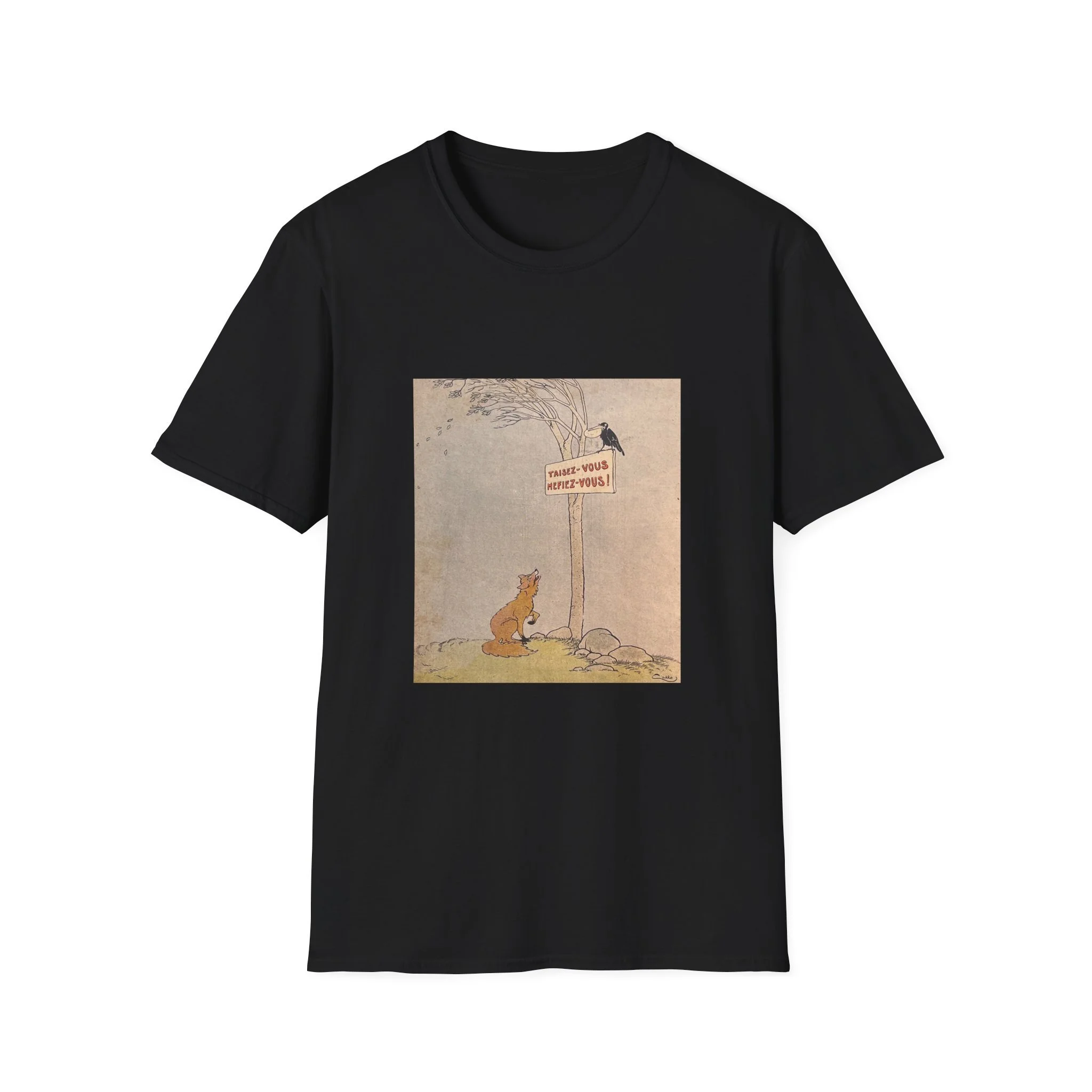
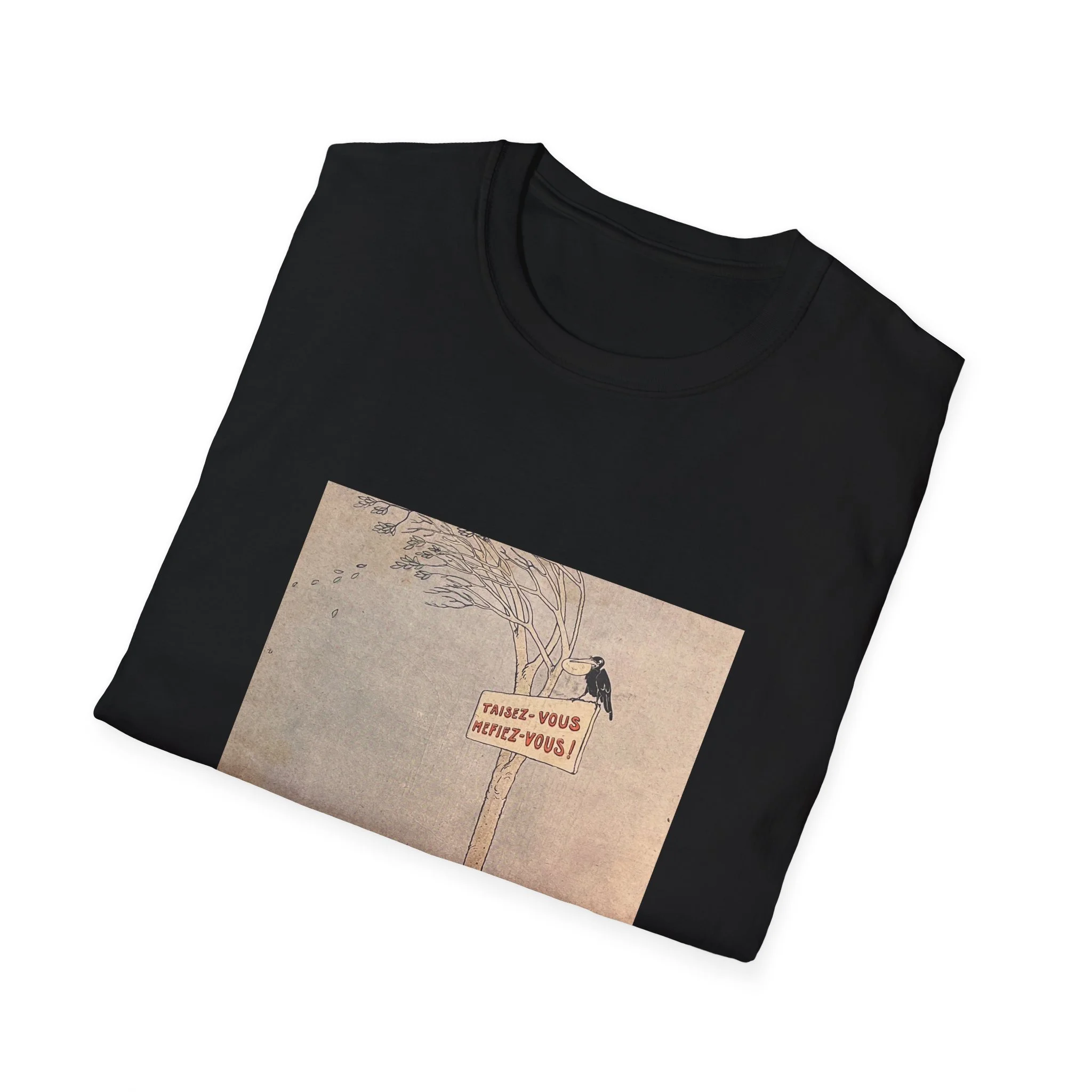
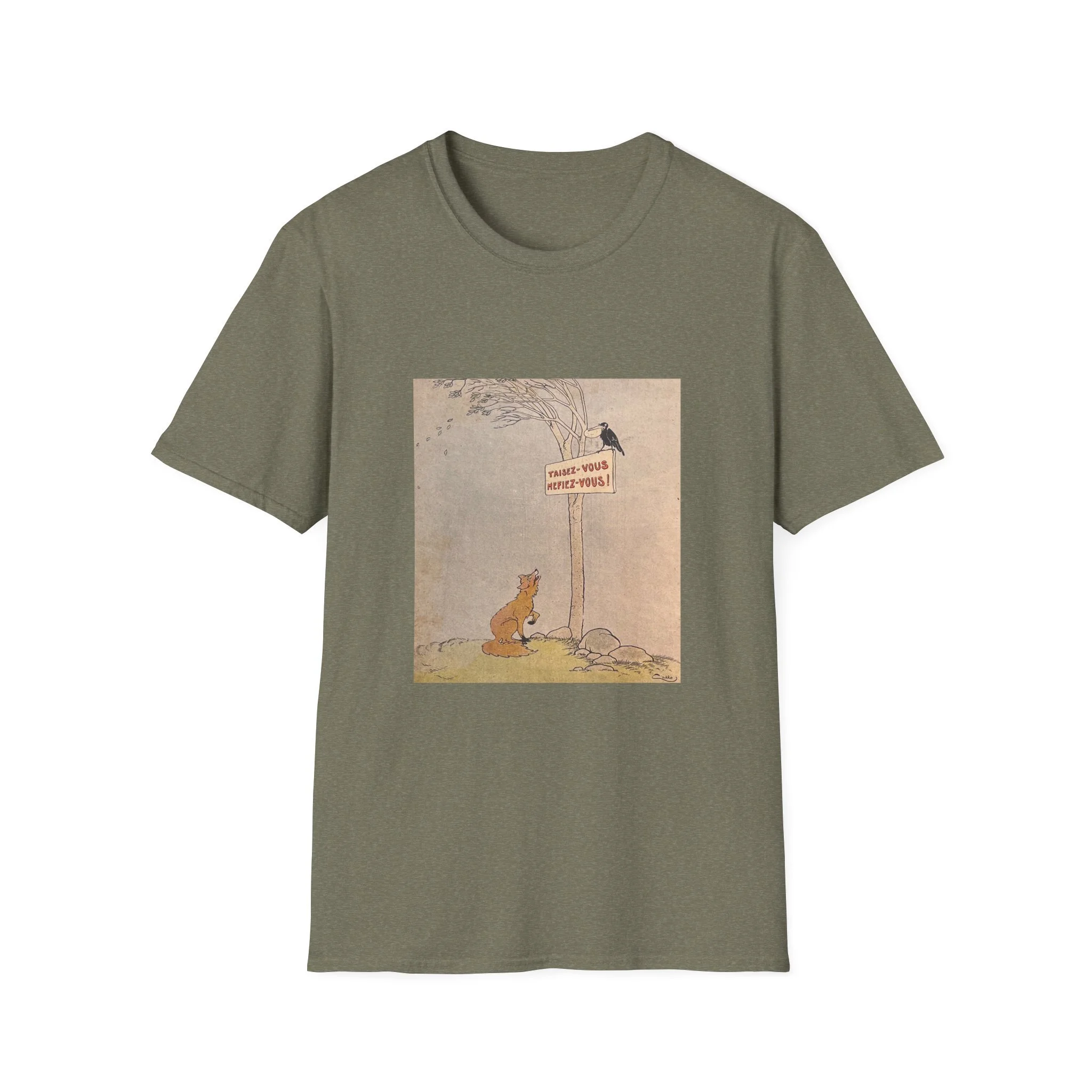
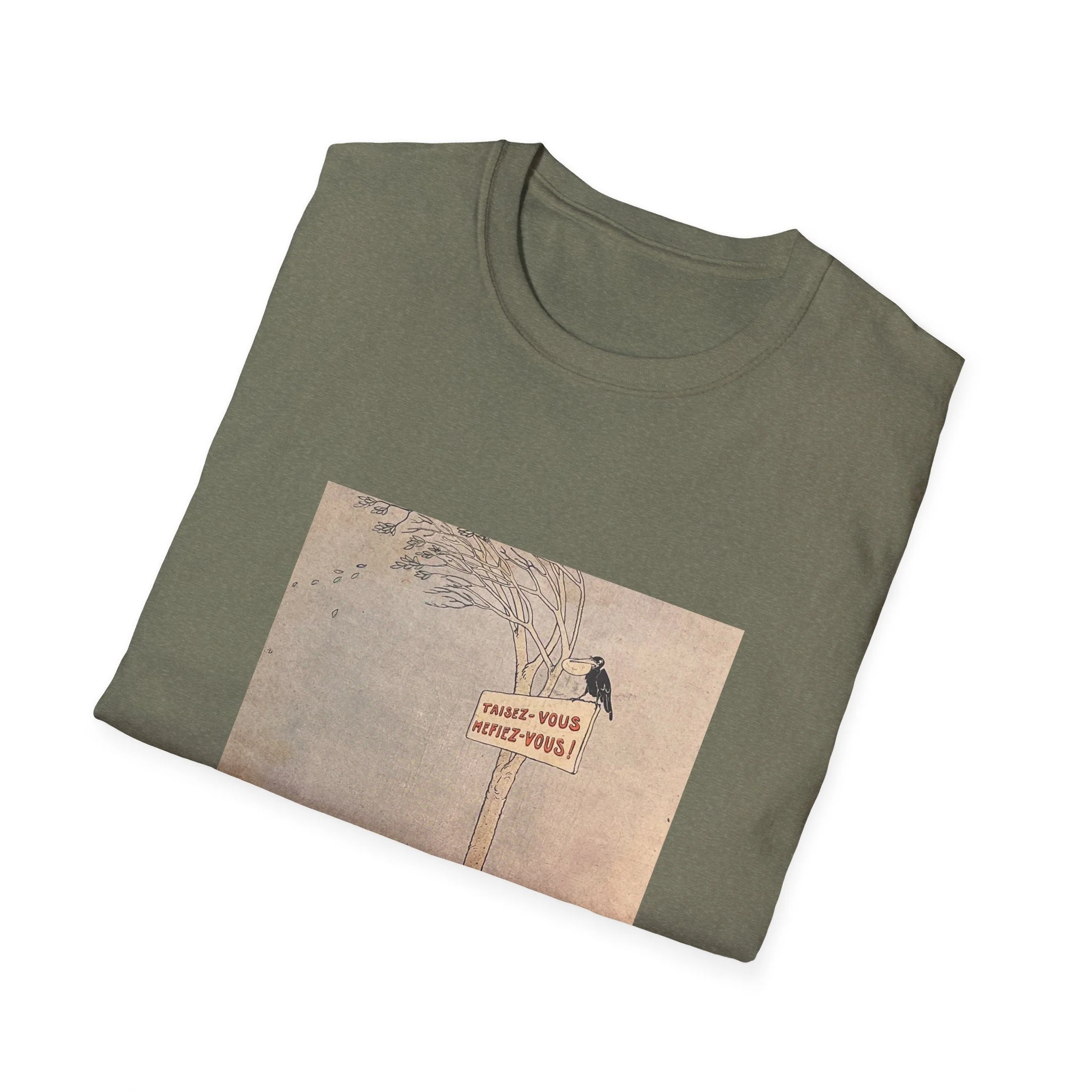
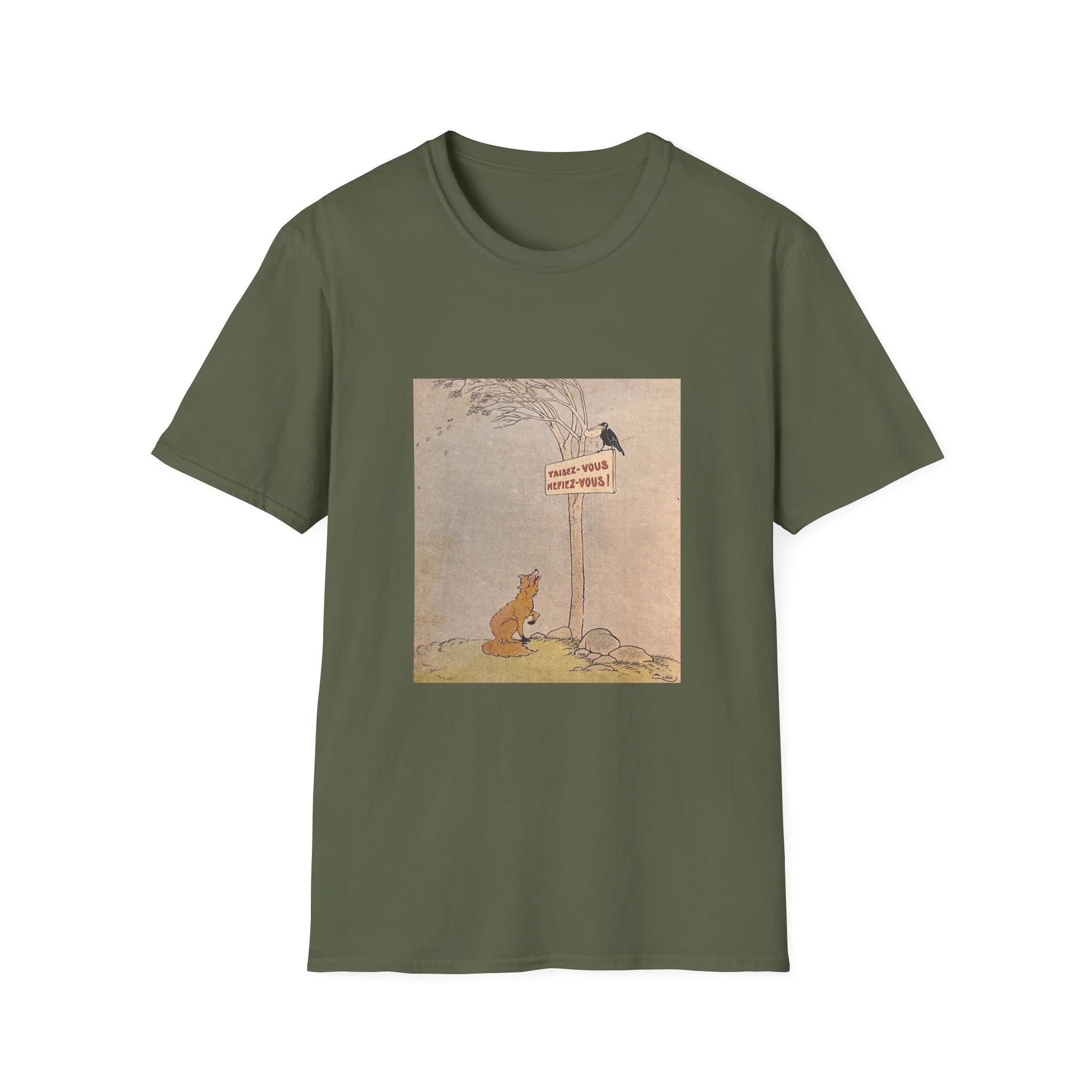
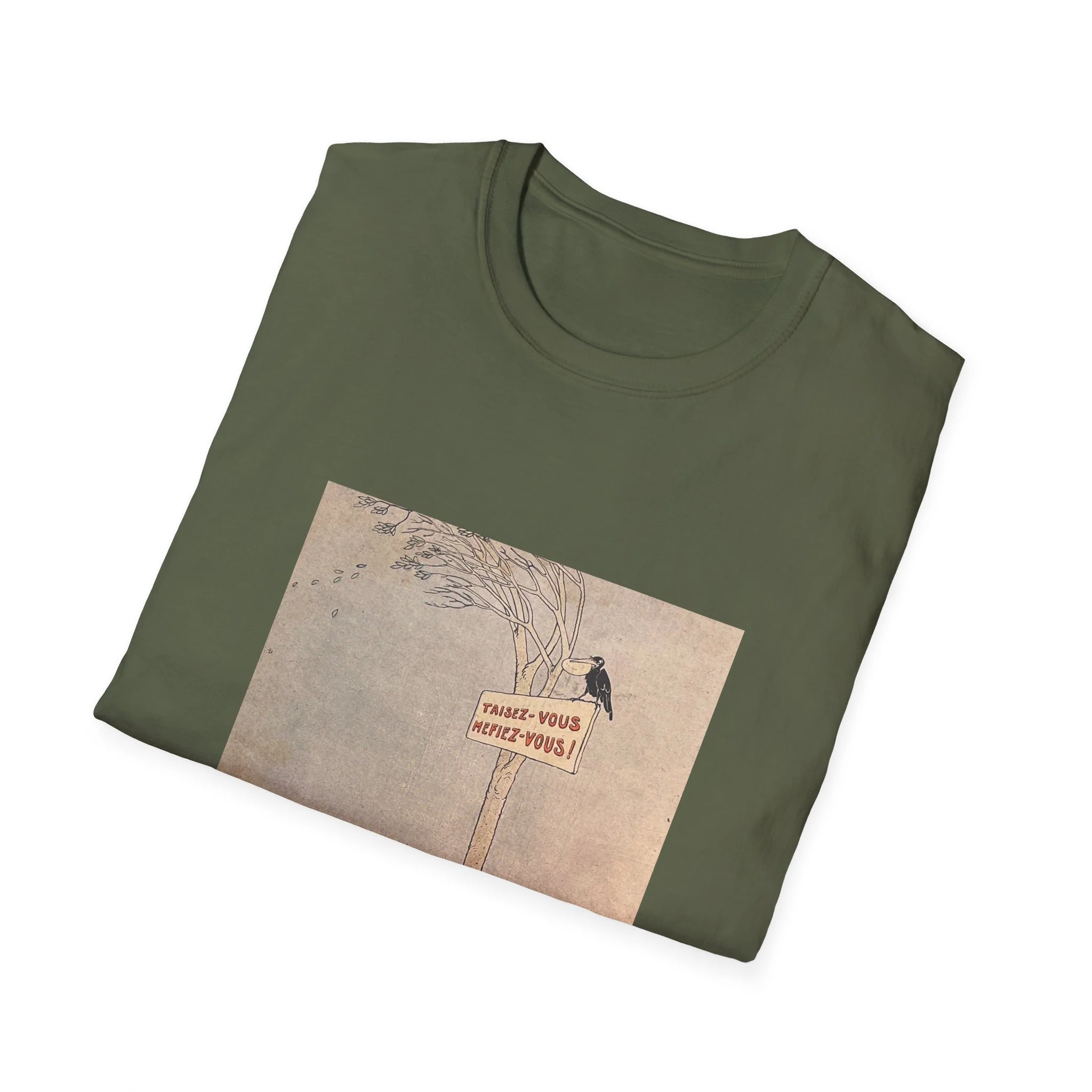
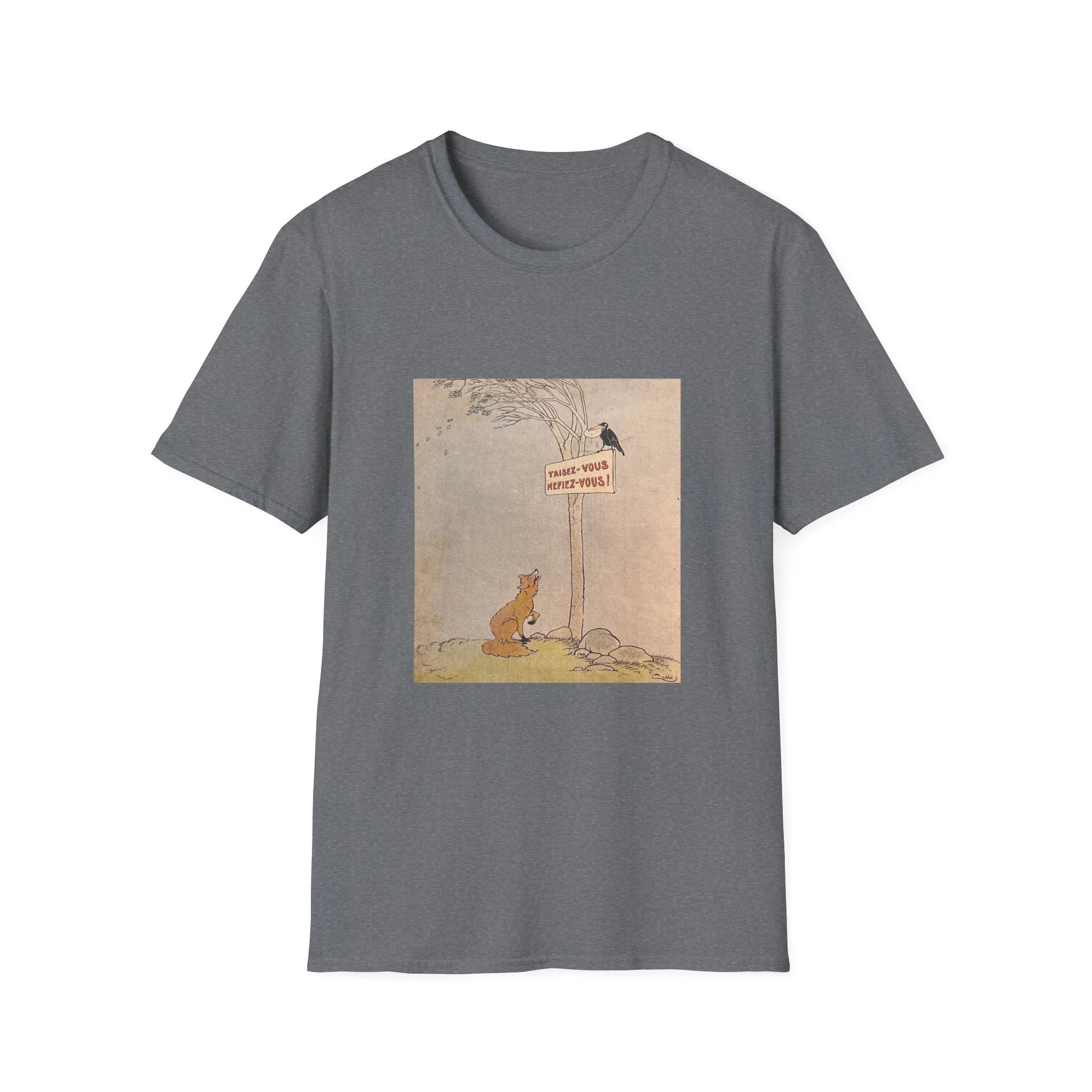
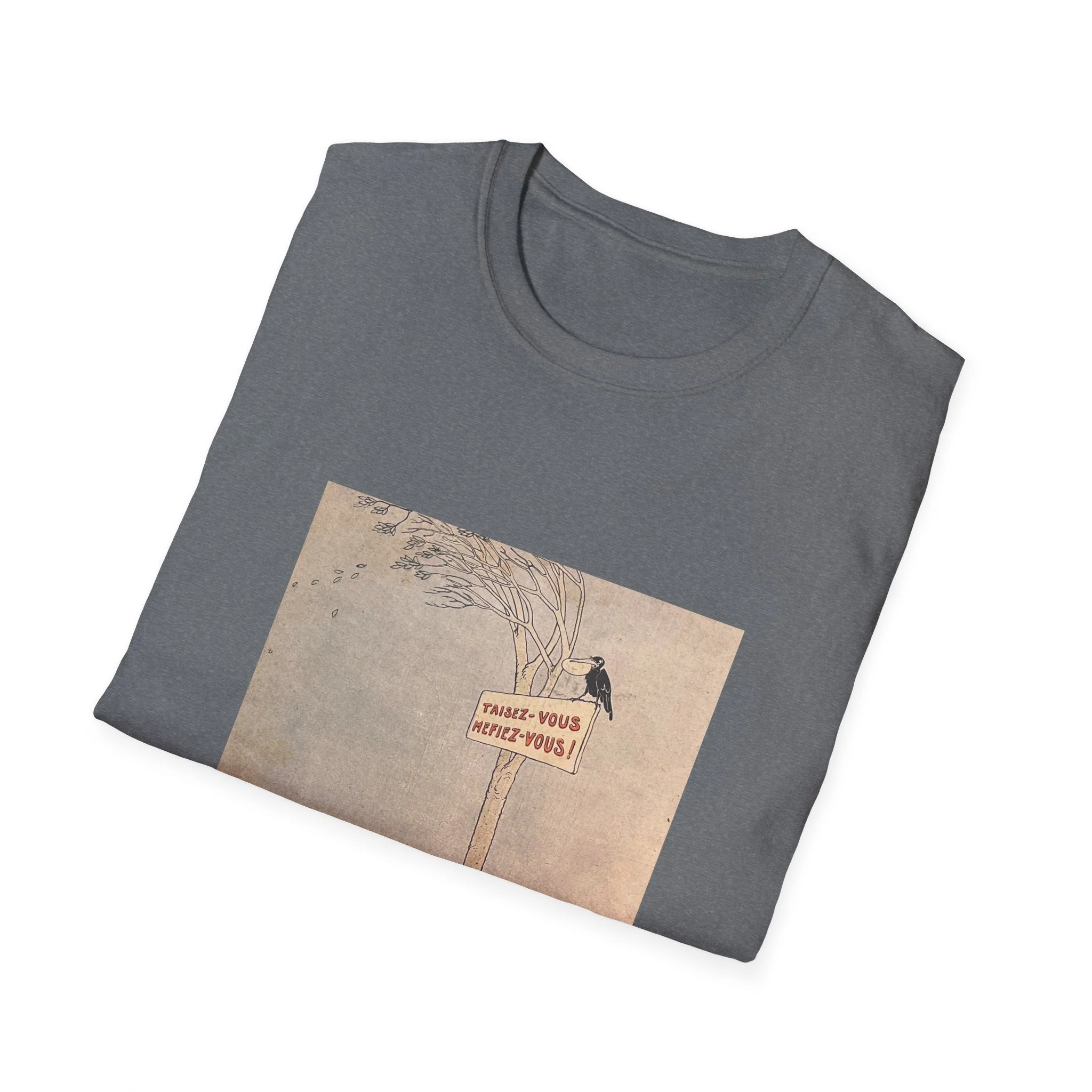
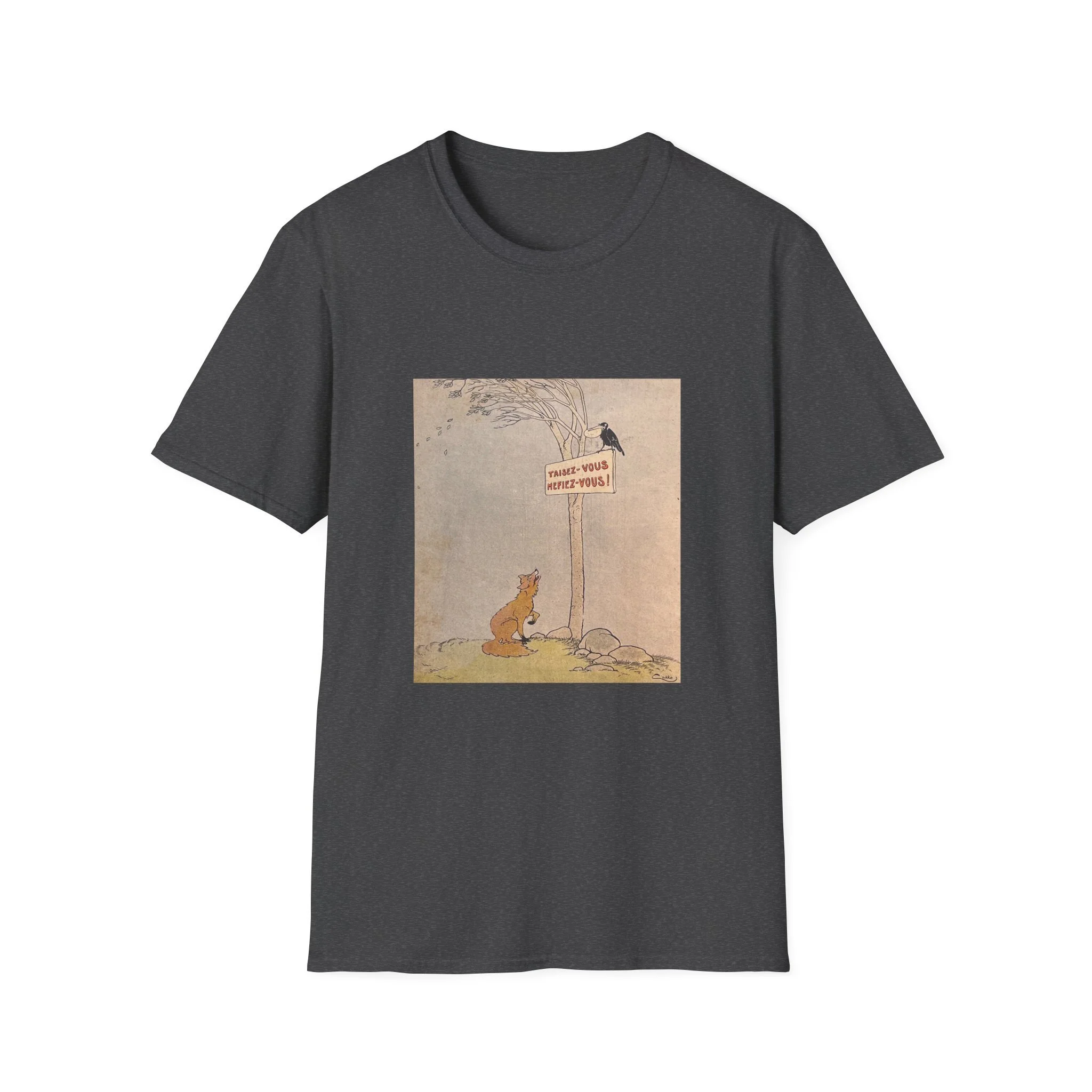
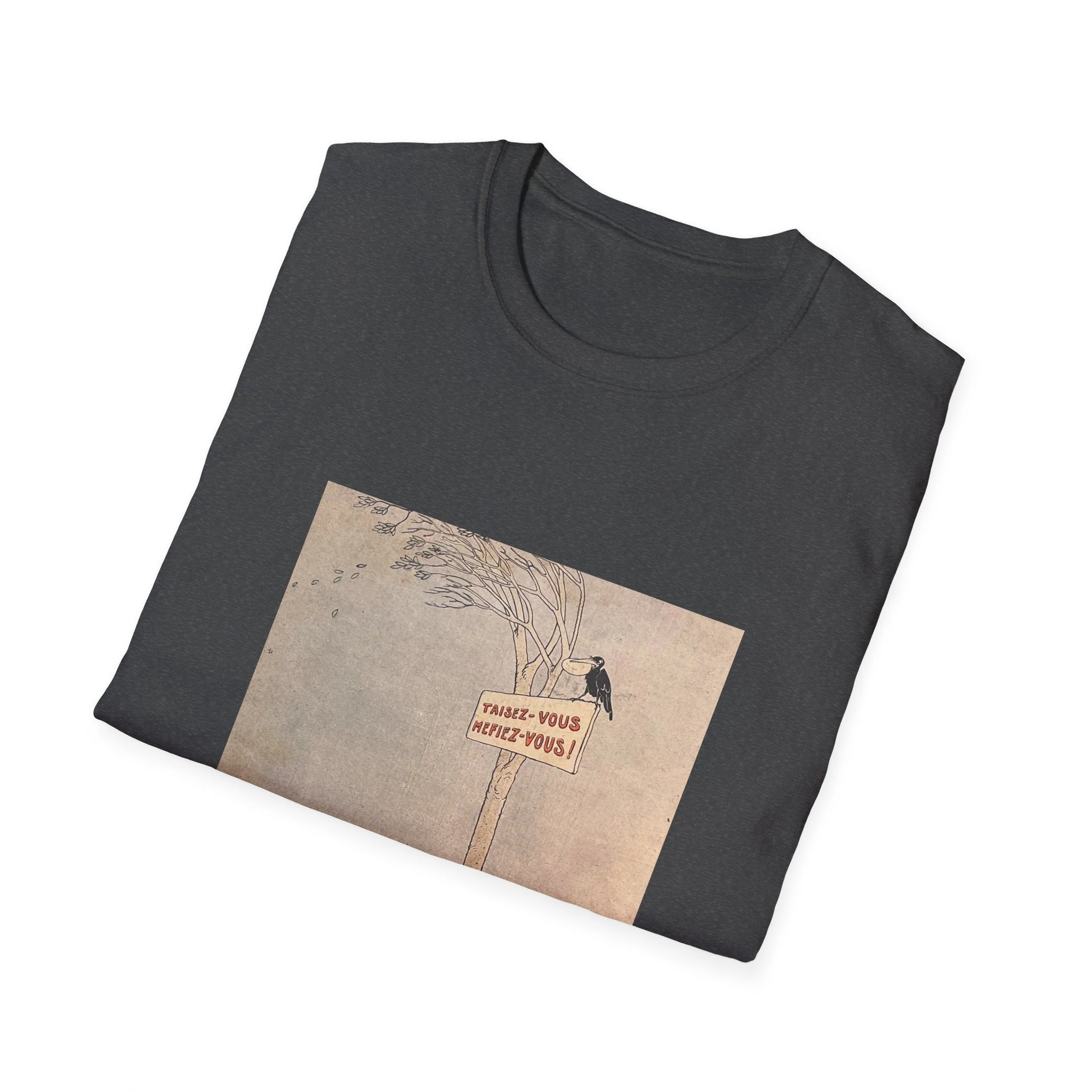
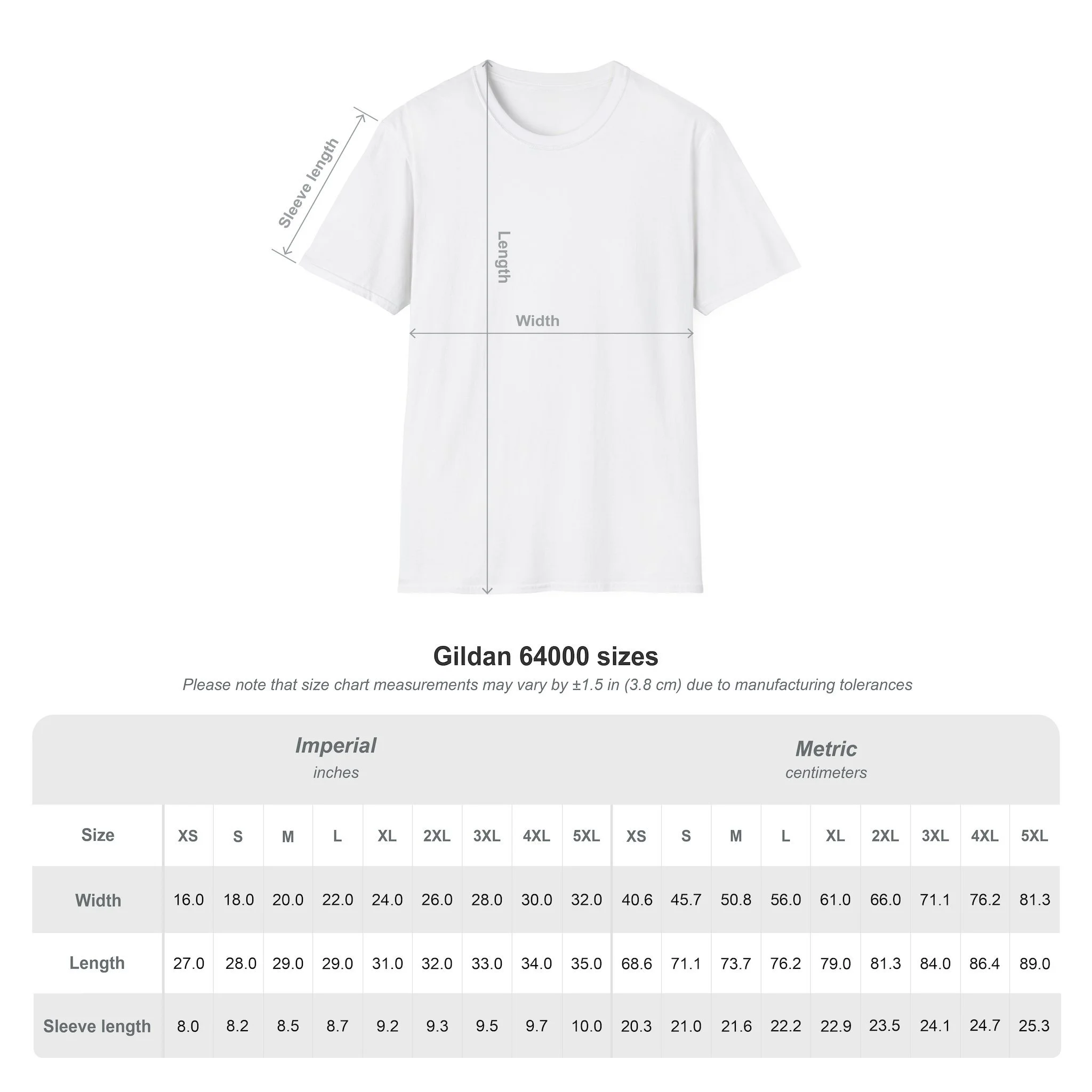
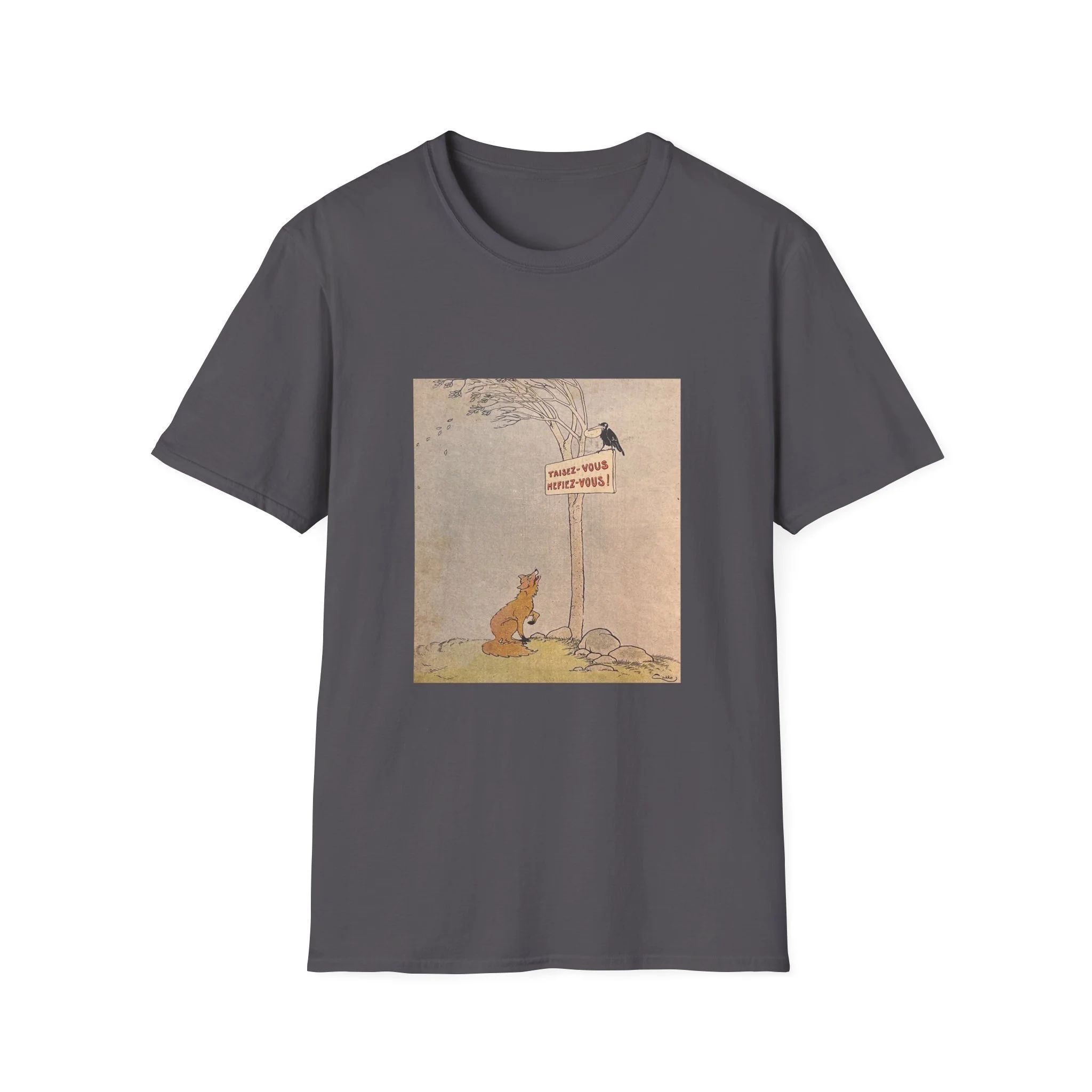

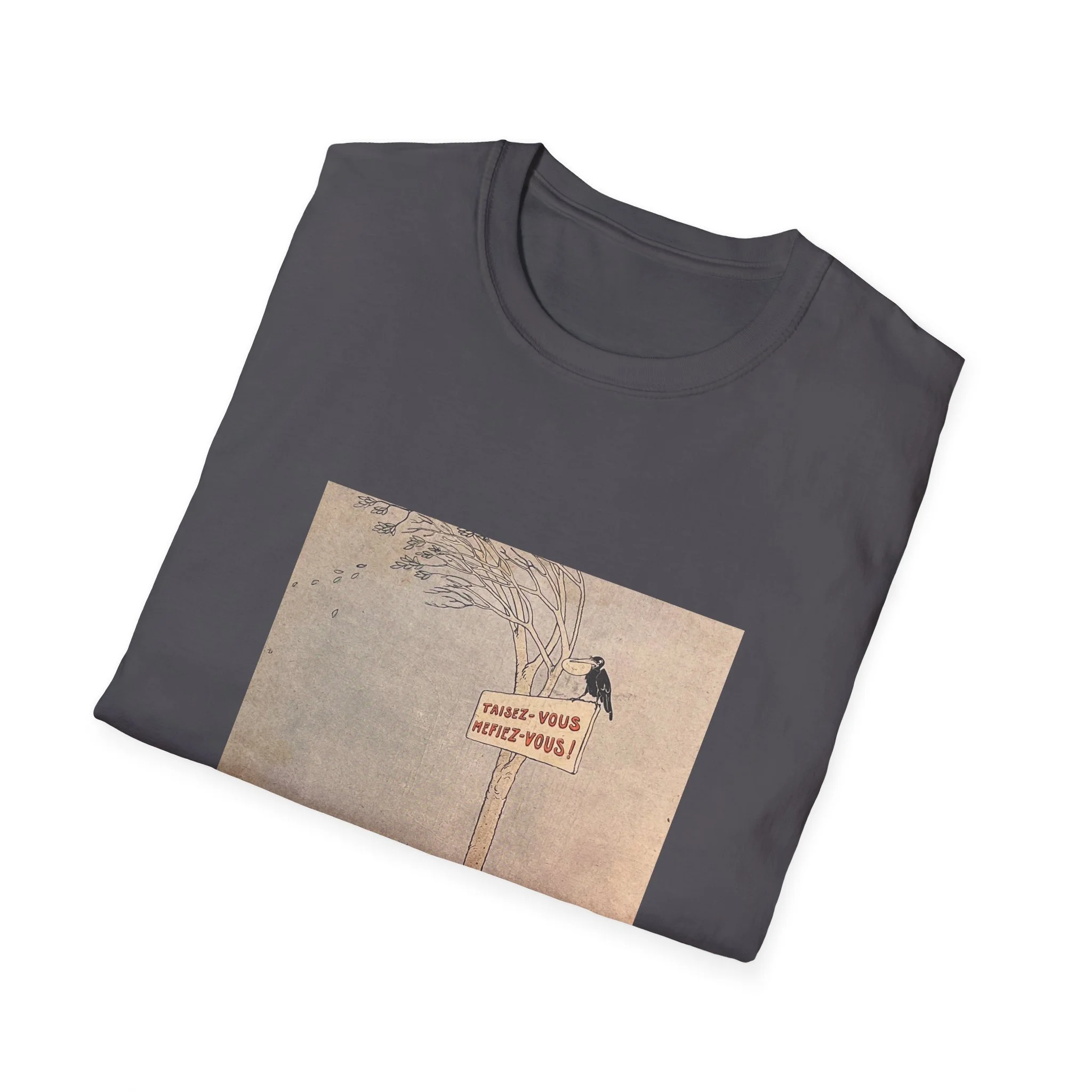
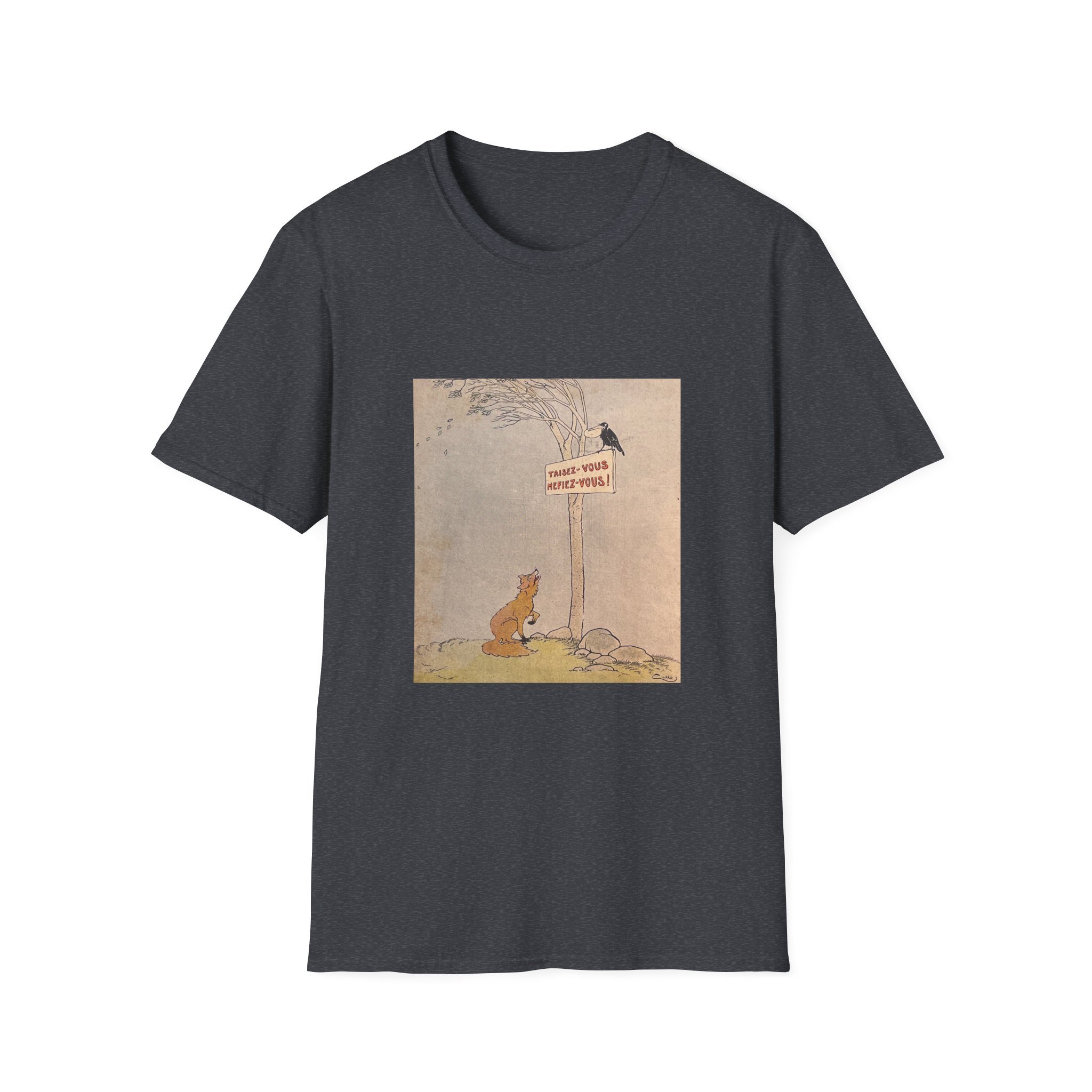
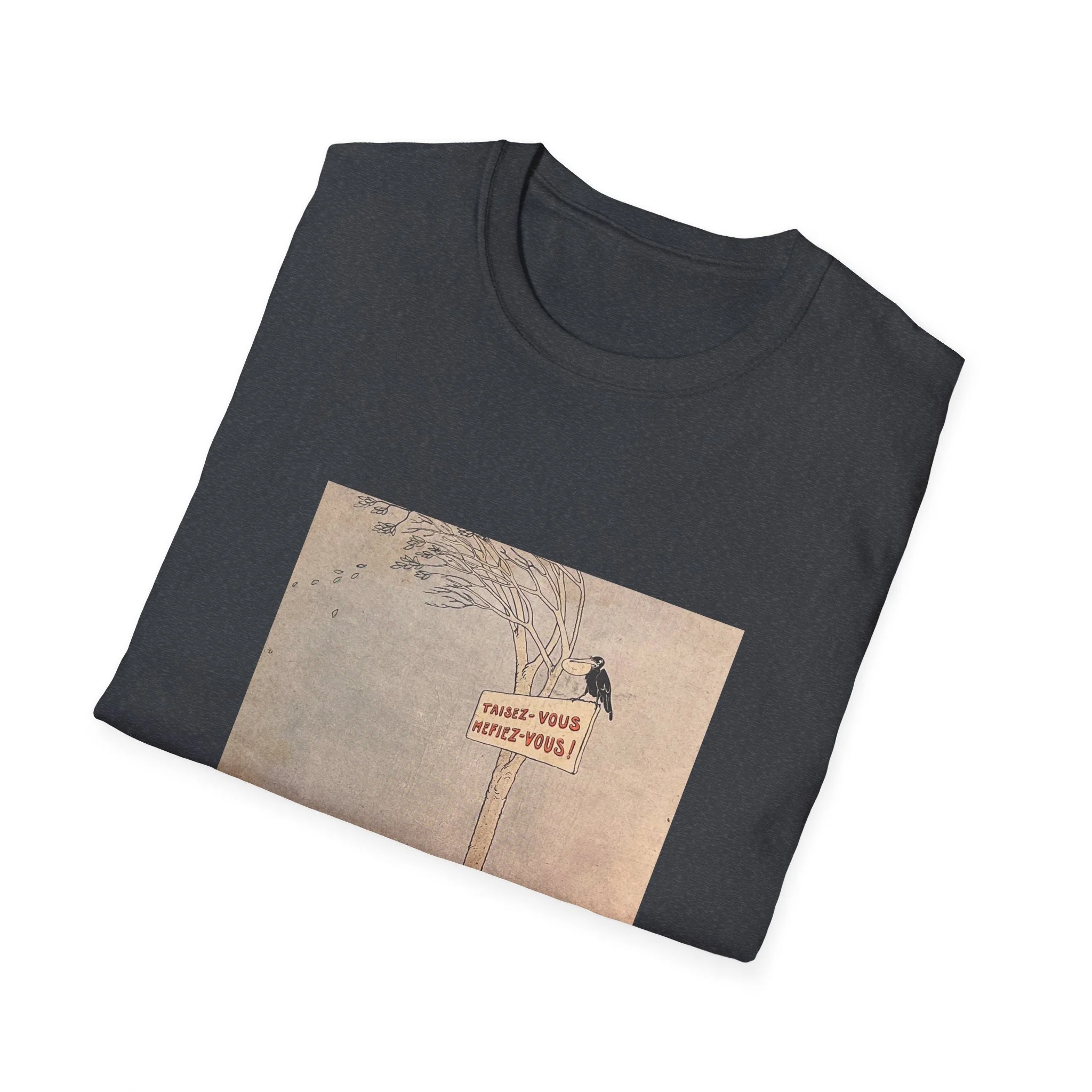
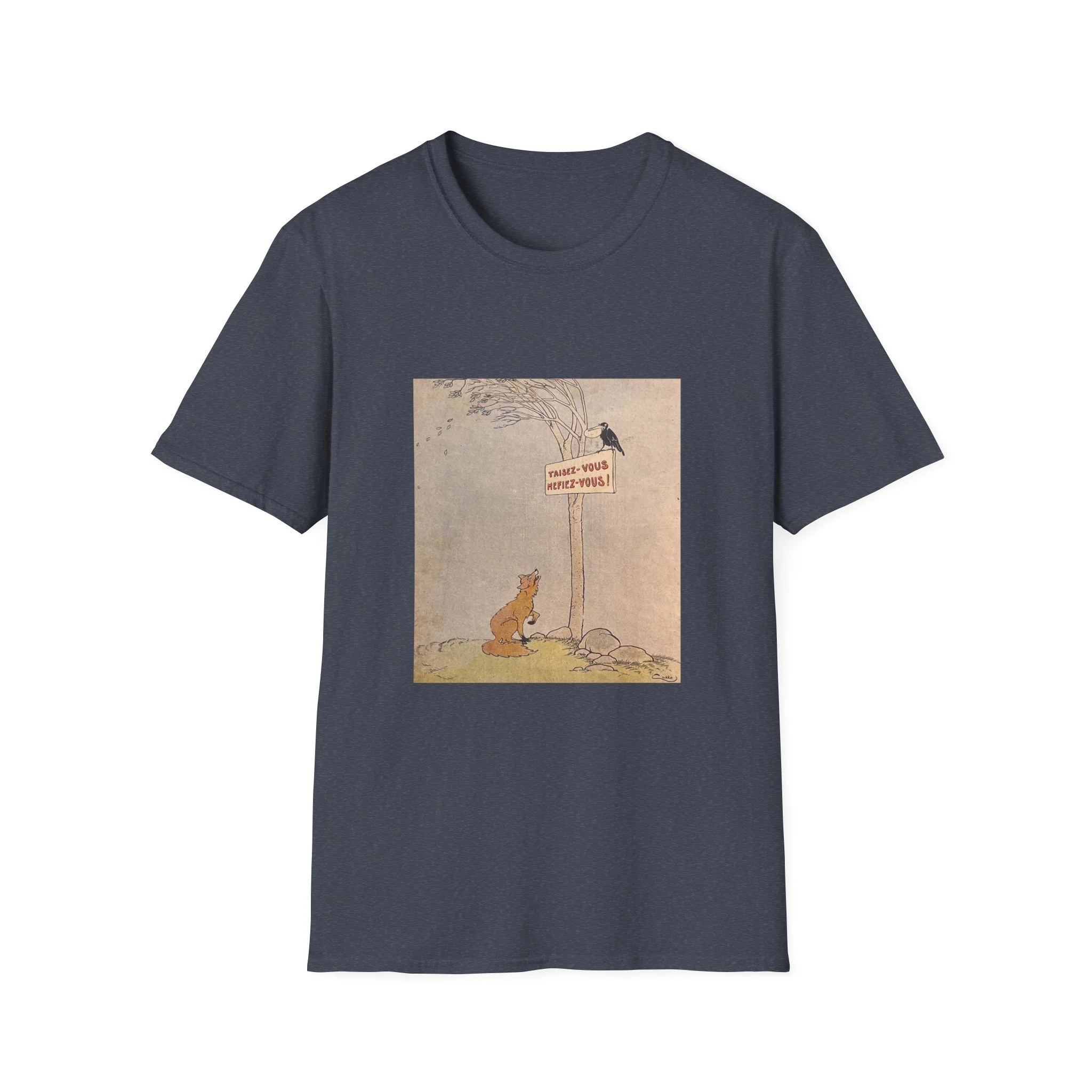
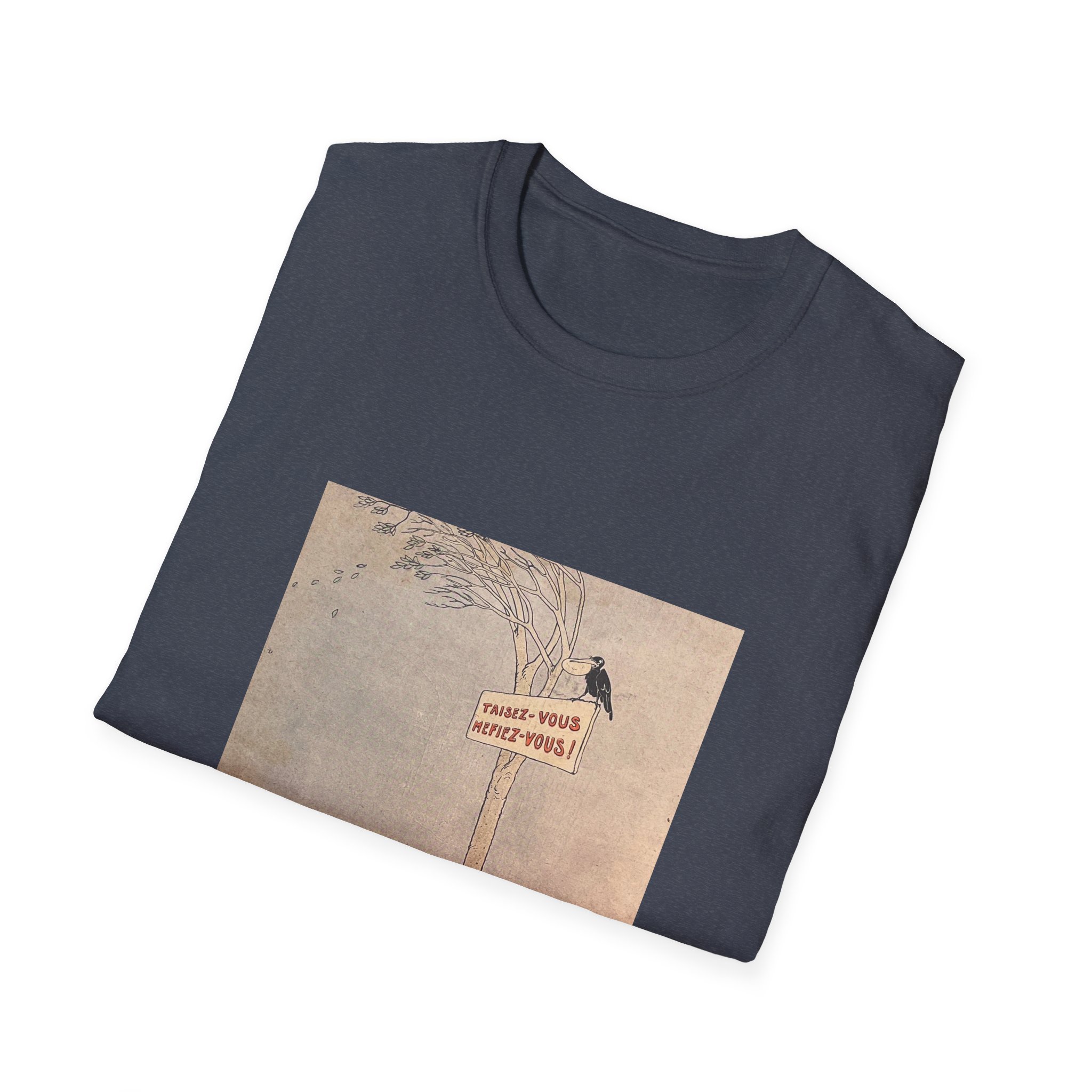
Illustrated by Armand Gallo, this La Baïonnette image, published during the First World War, turns wartime censorship into quiet satire. A fox looks upward while a crow perches above beside a warning nailed to a tree: “Taisez-vous — Méfiez-vous!” (“Keep quiet — be on your guard”).
Rather than depicting battle or heroism, the image shows authority as atmosphere—posted warnings, enforced vigilance, and speech reduced to risk. Using animal figures, the cartoon exposes how obedience takes hold not through force, but through fear made routine.
Original illustration from the French political magazine La Baïonnette, preserved as an archival artifact of wartime control and dissent.
100% ring-spun cotton | Pearlized, tear-away label | Oeko-Tex certified | Unisex
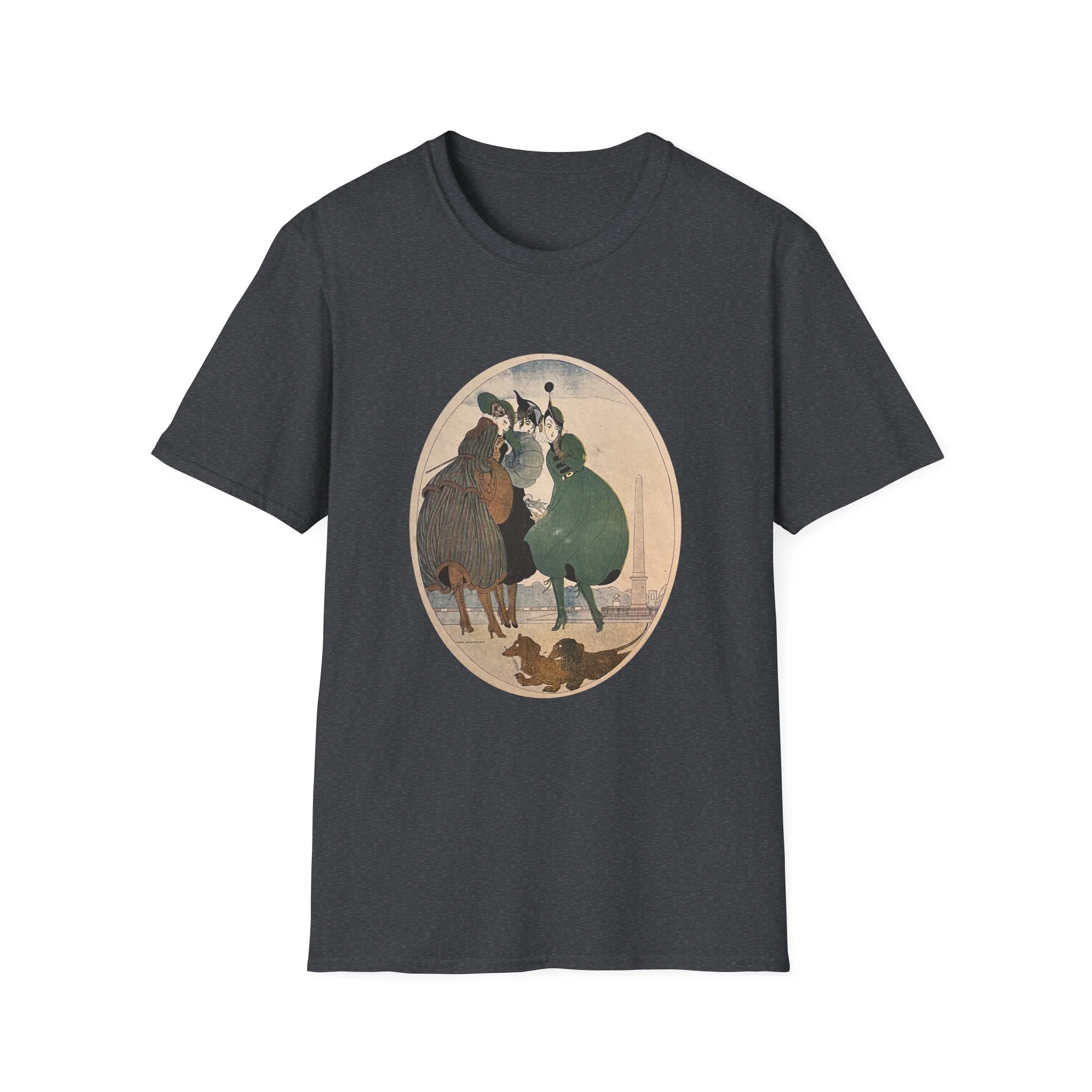
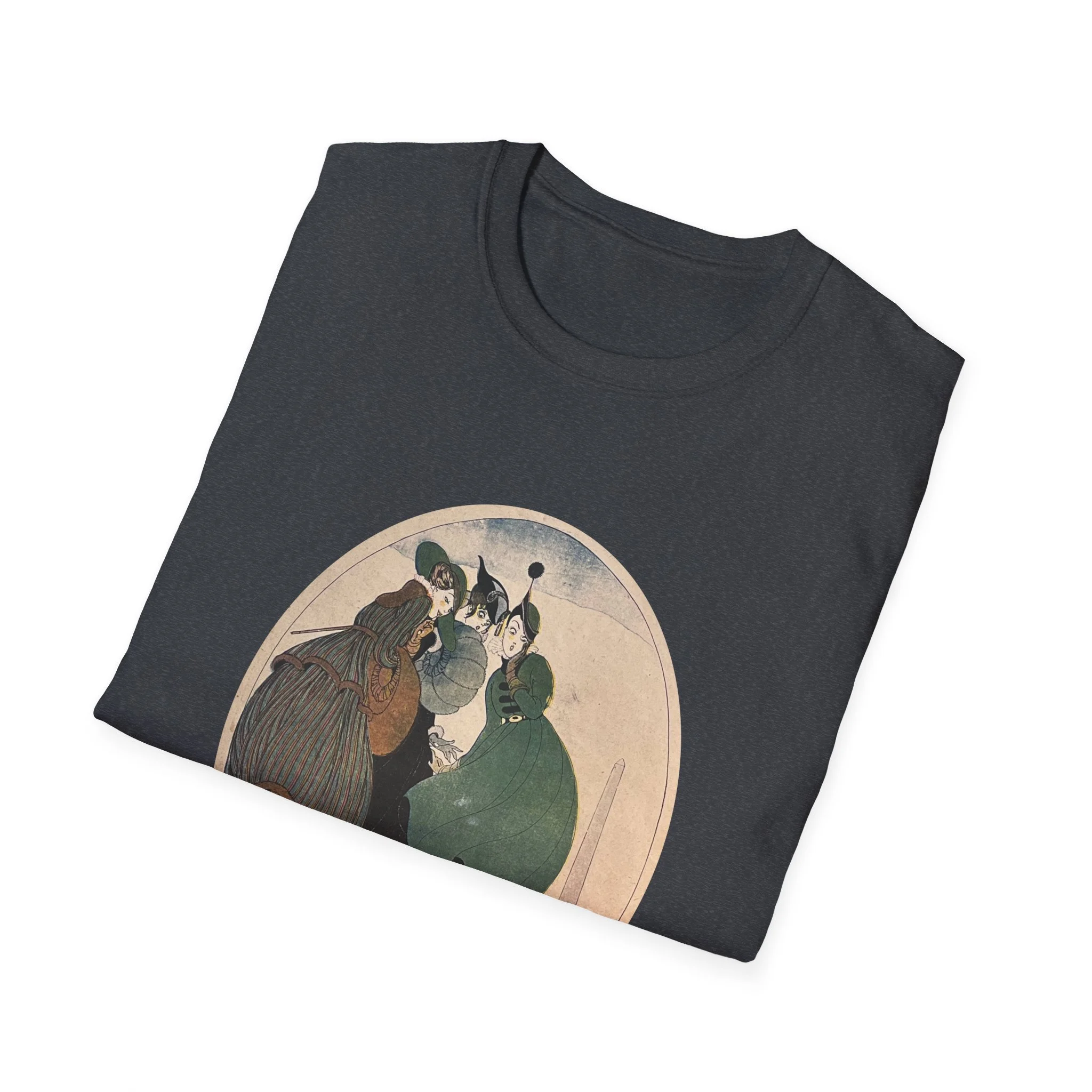
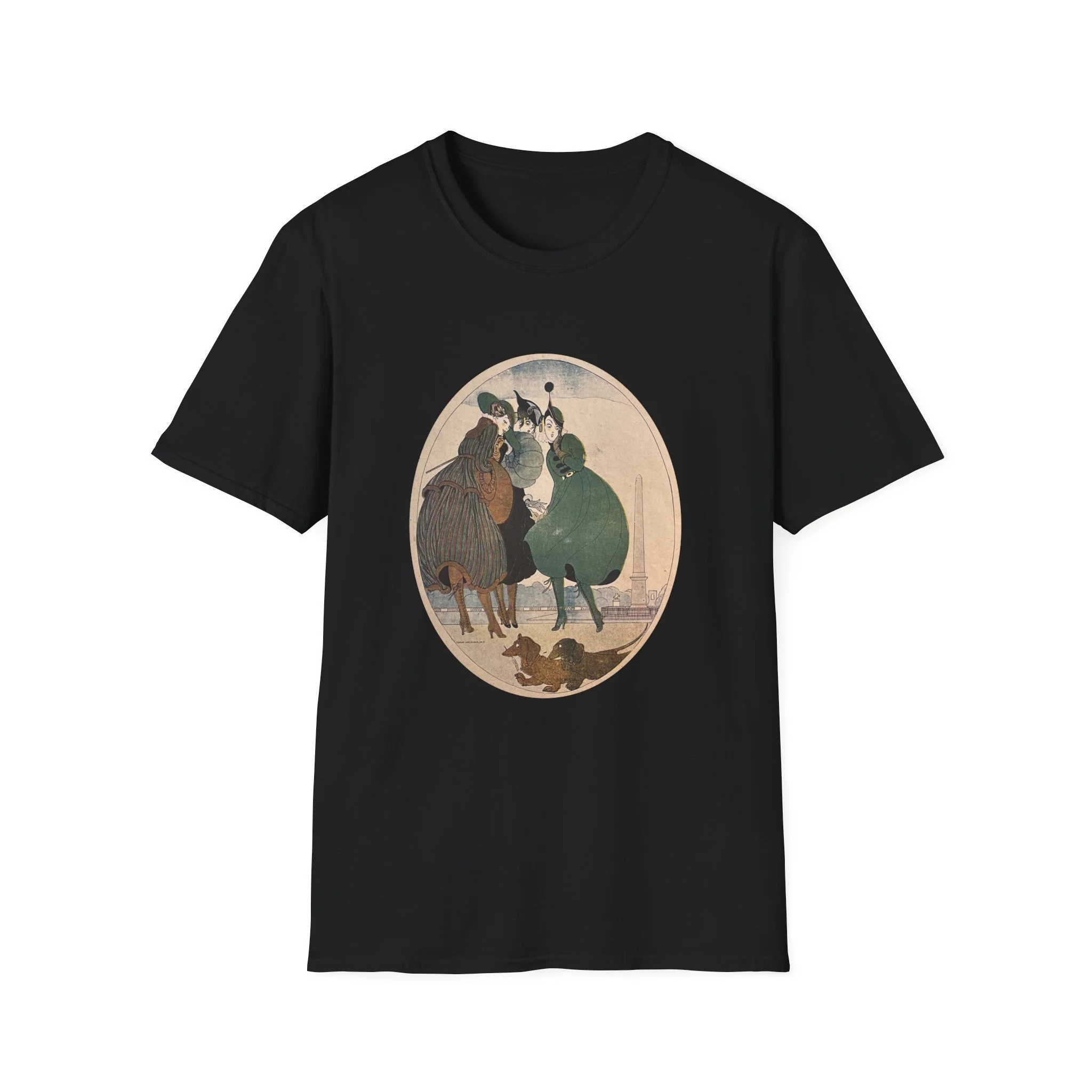
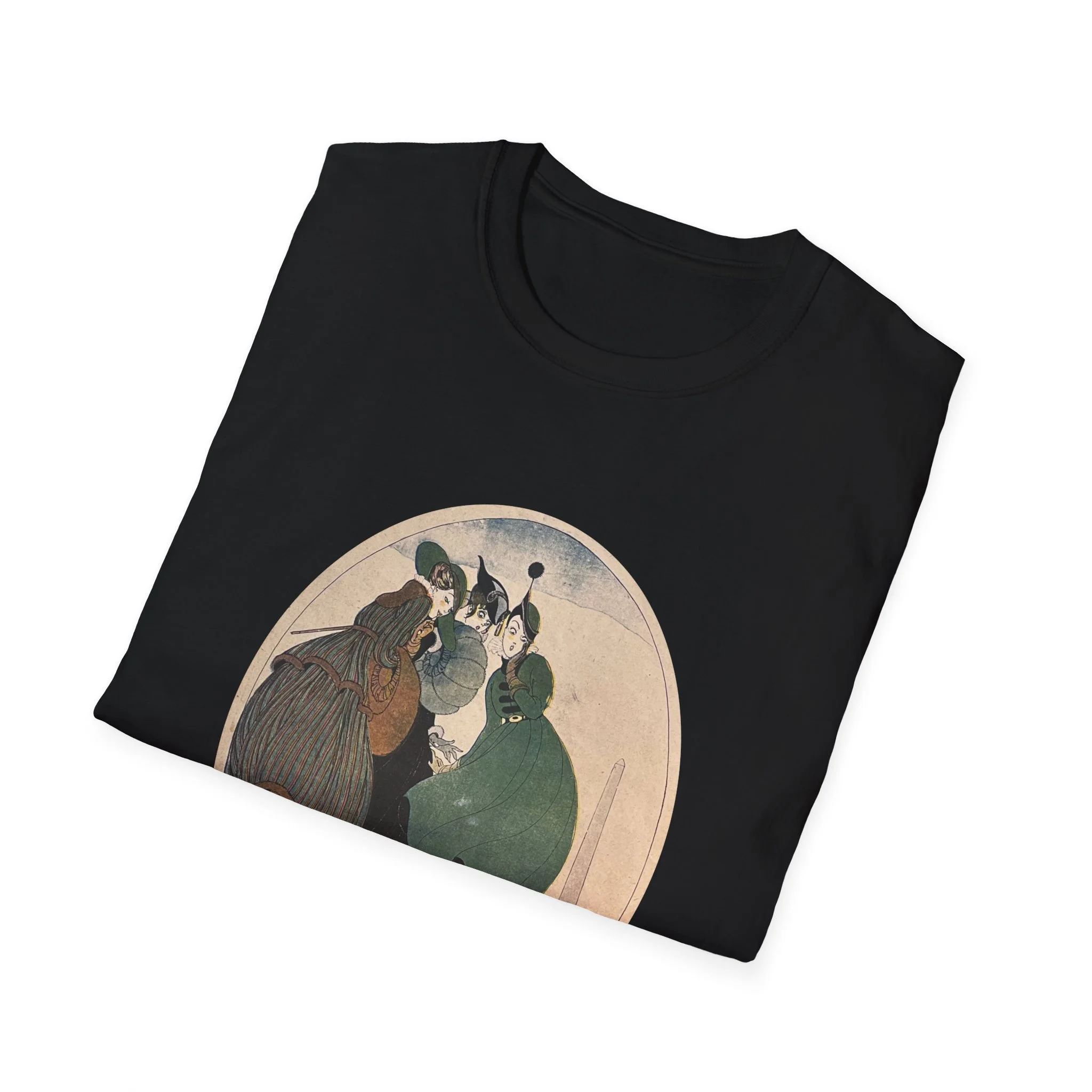
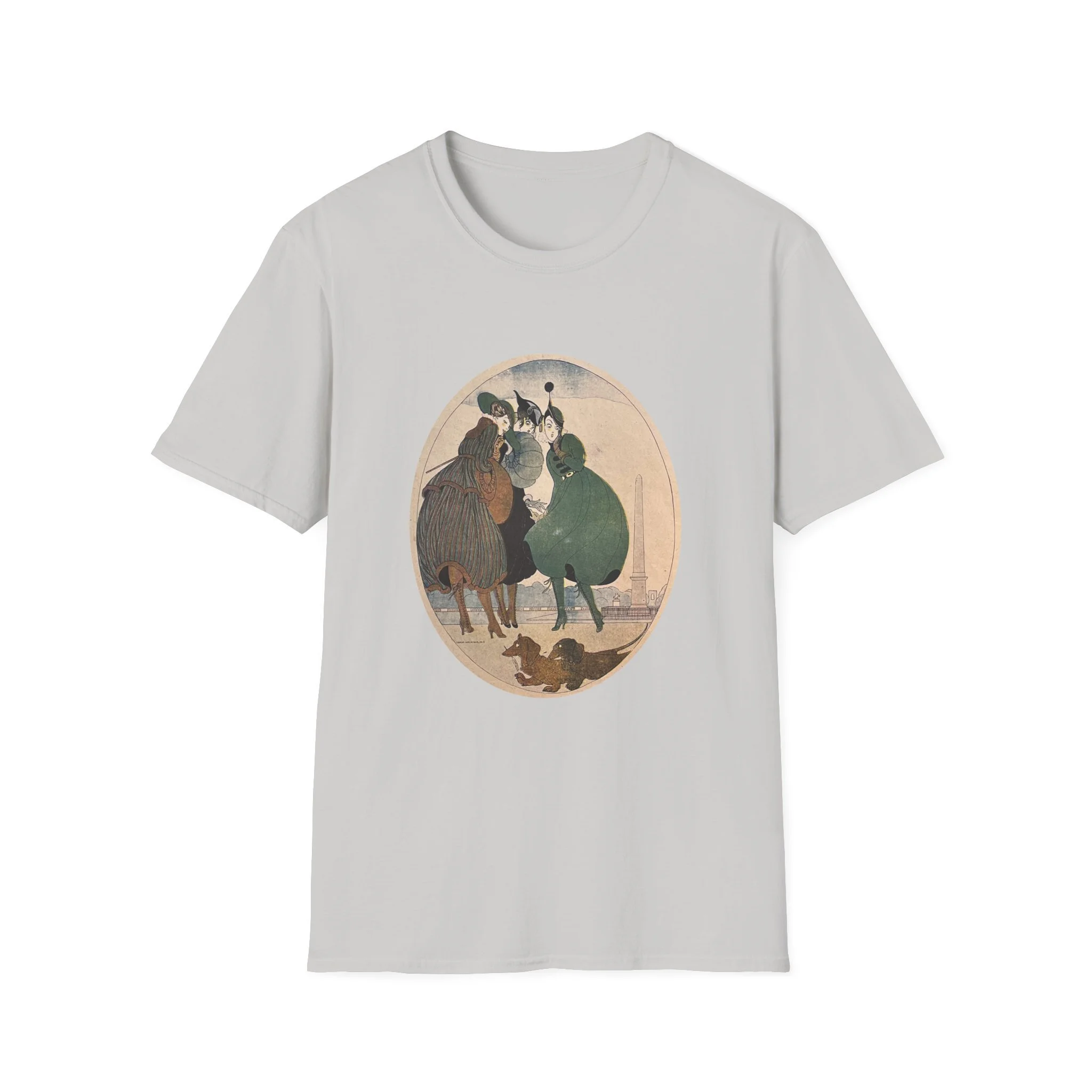
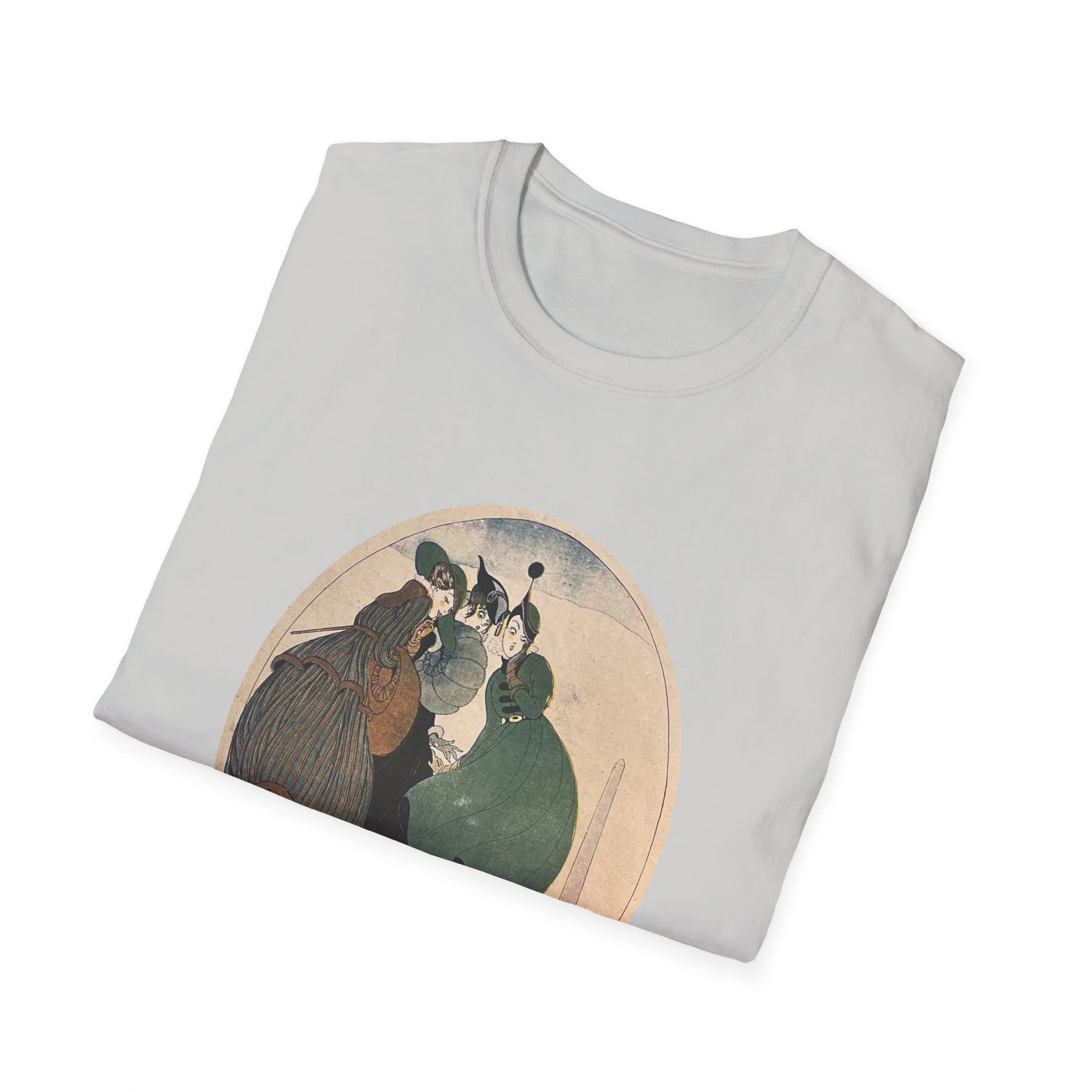
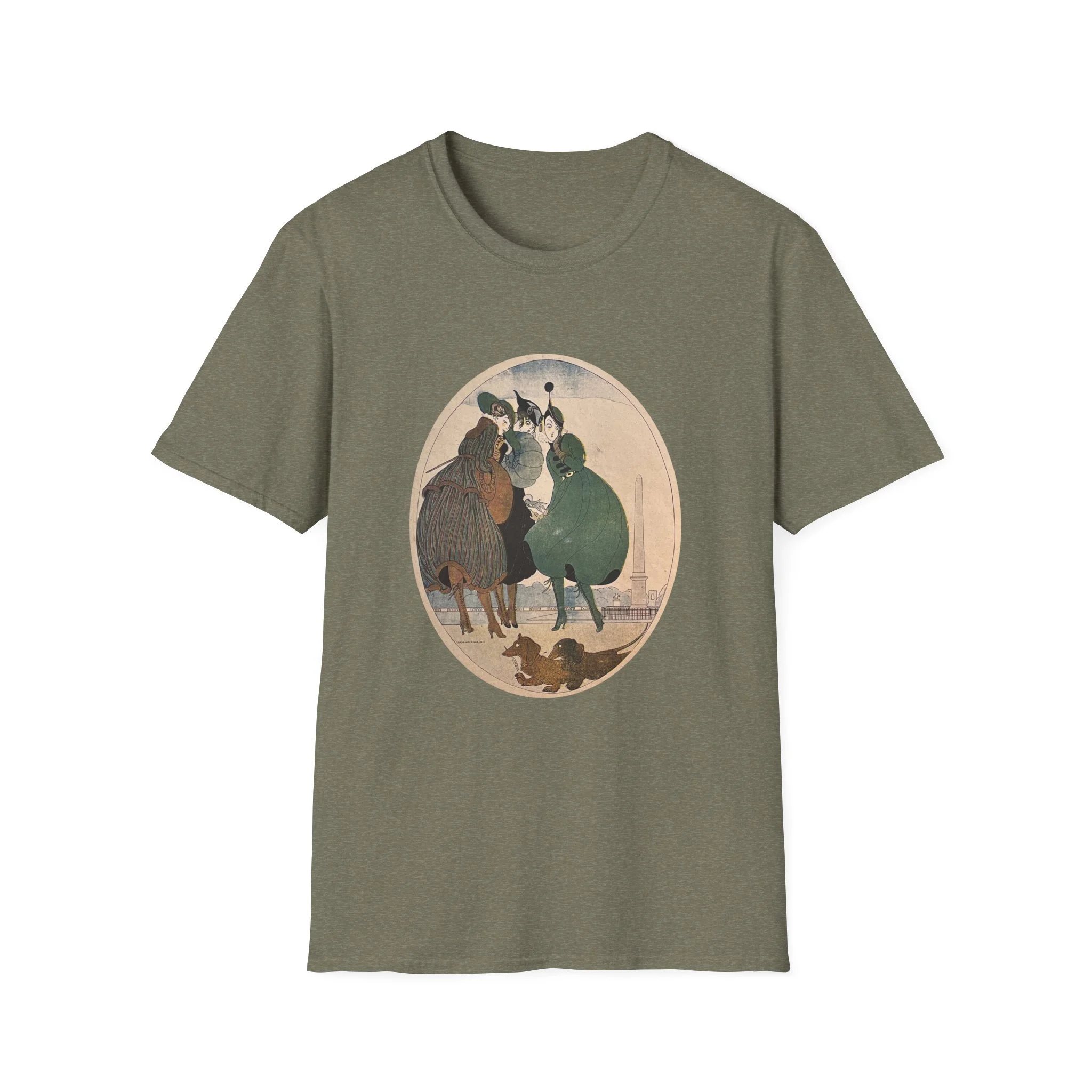
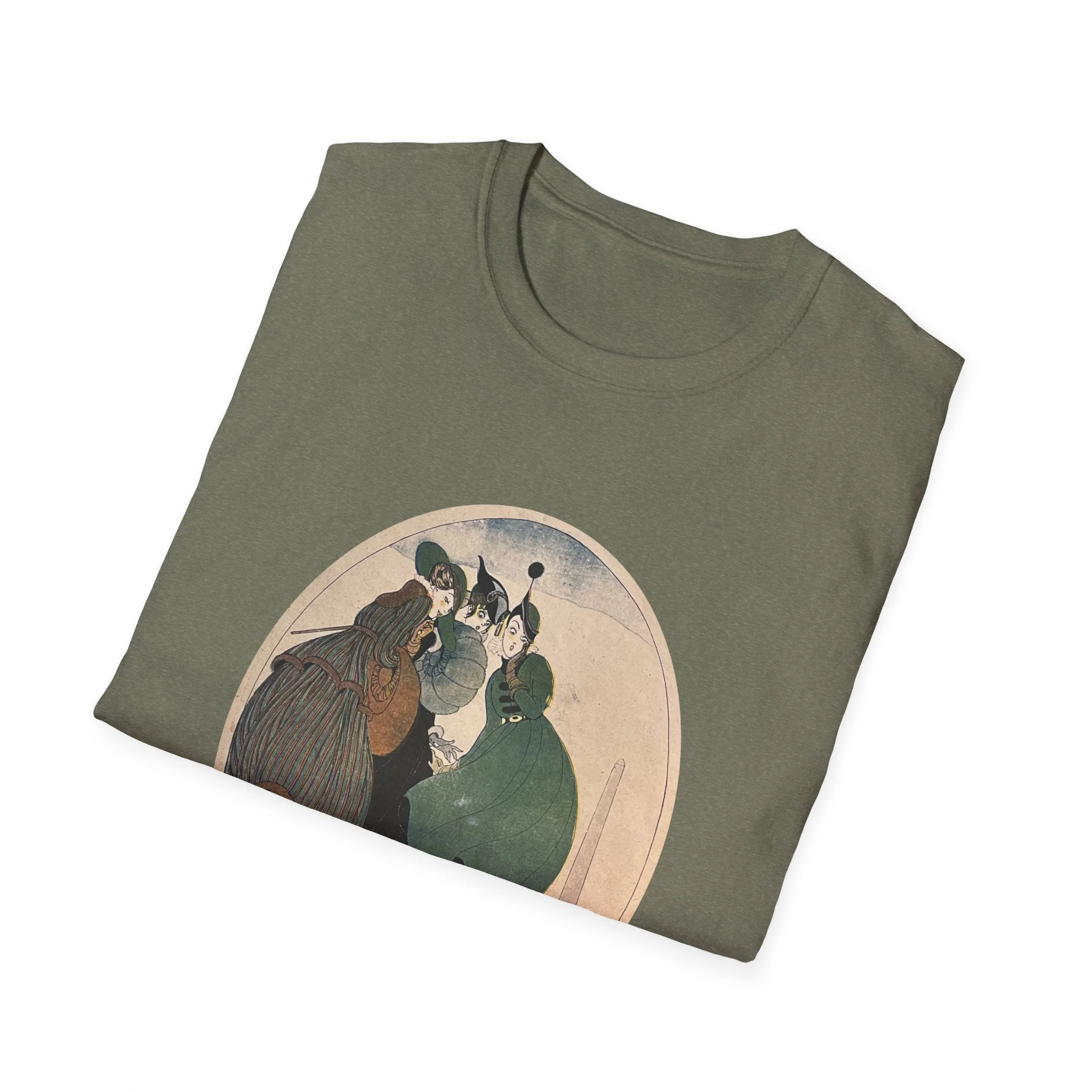
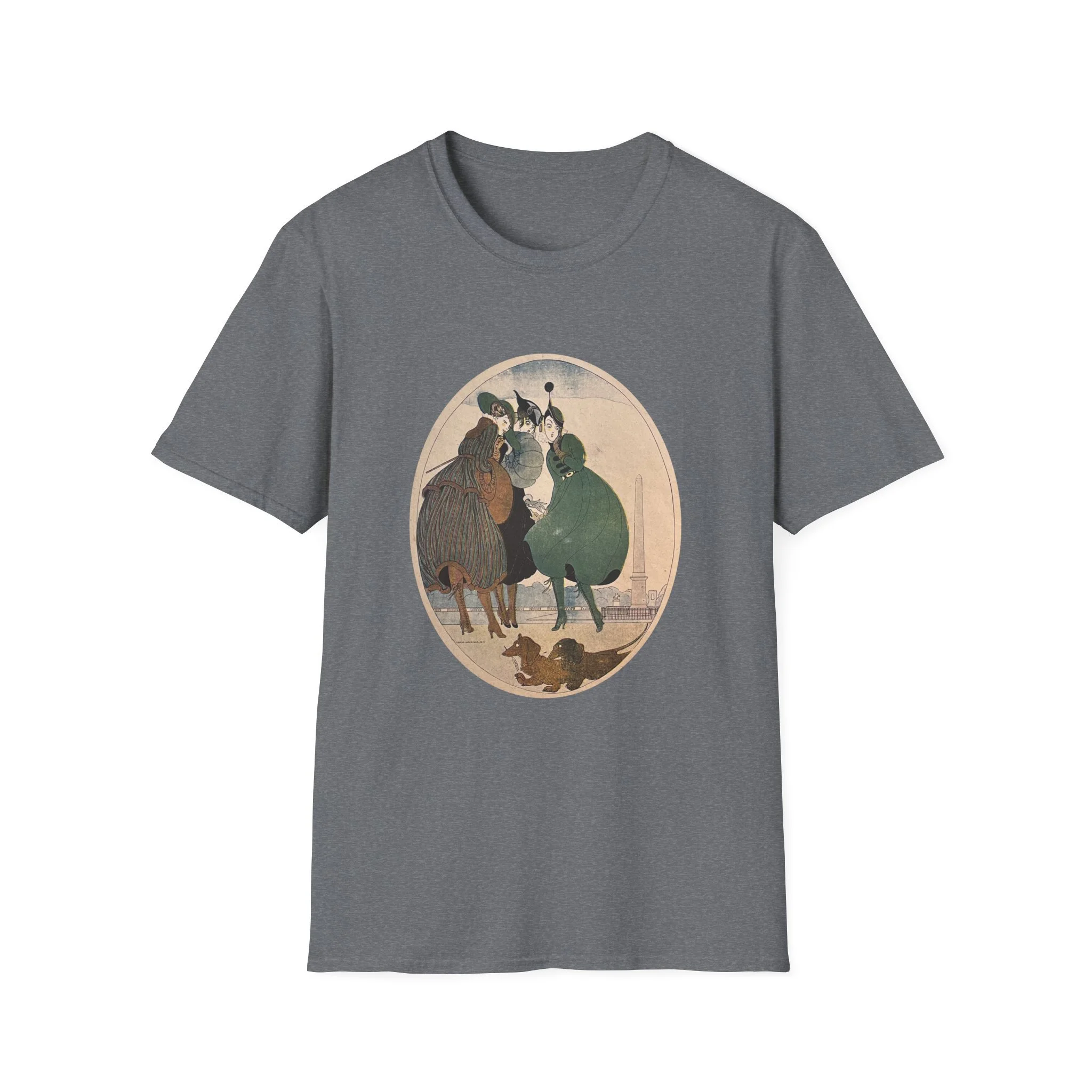
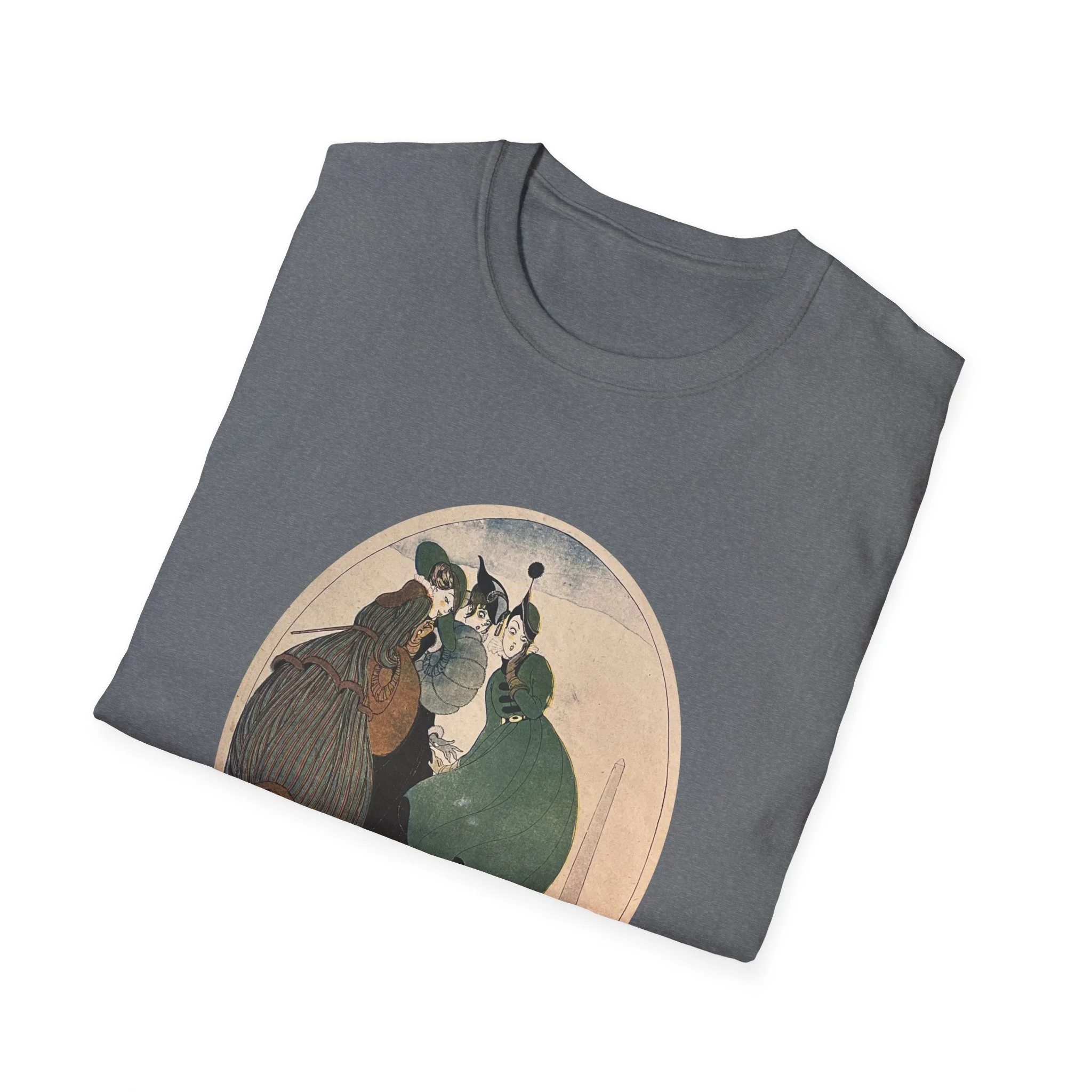
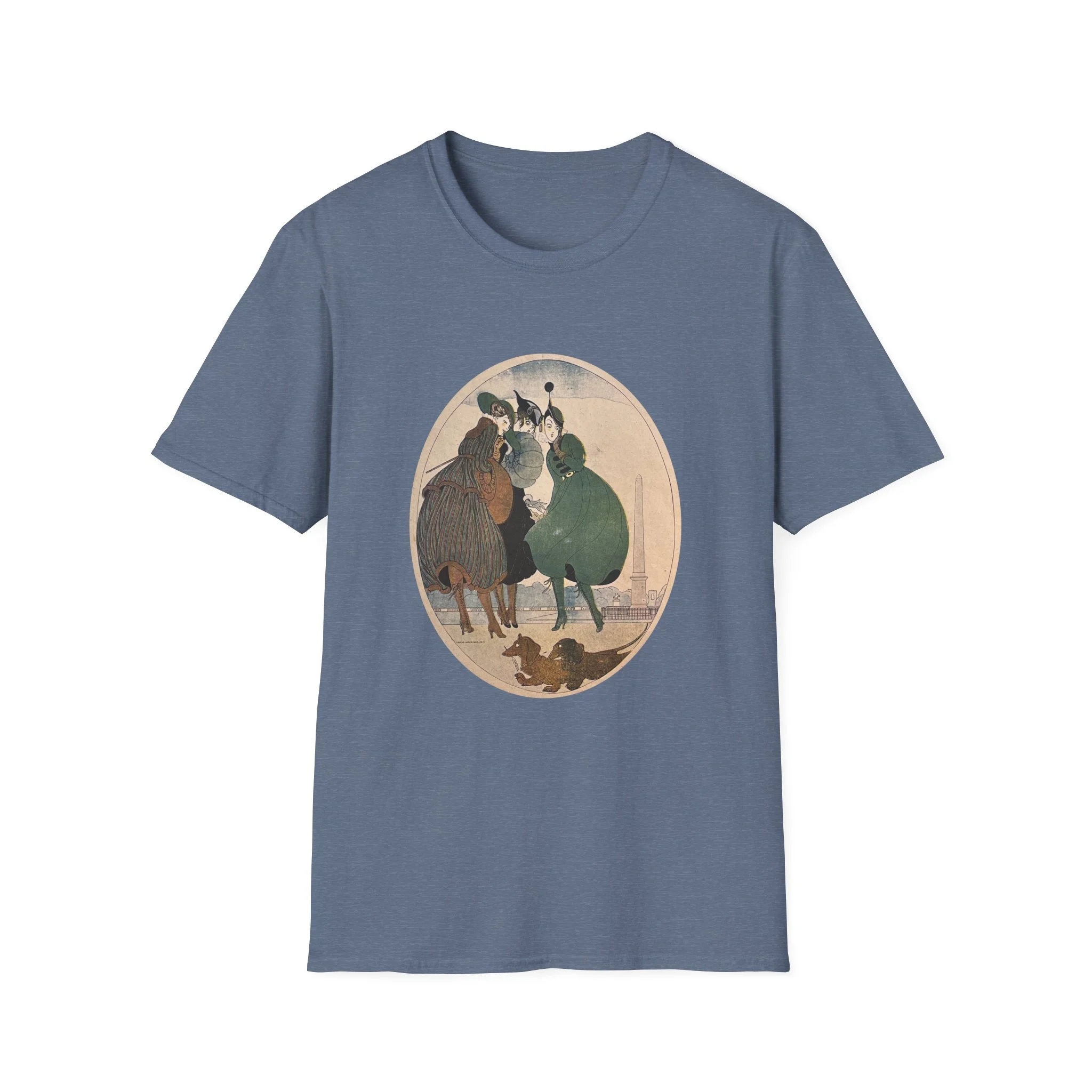
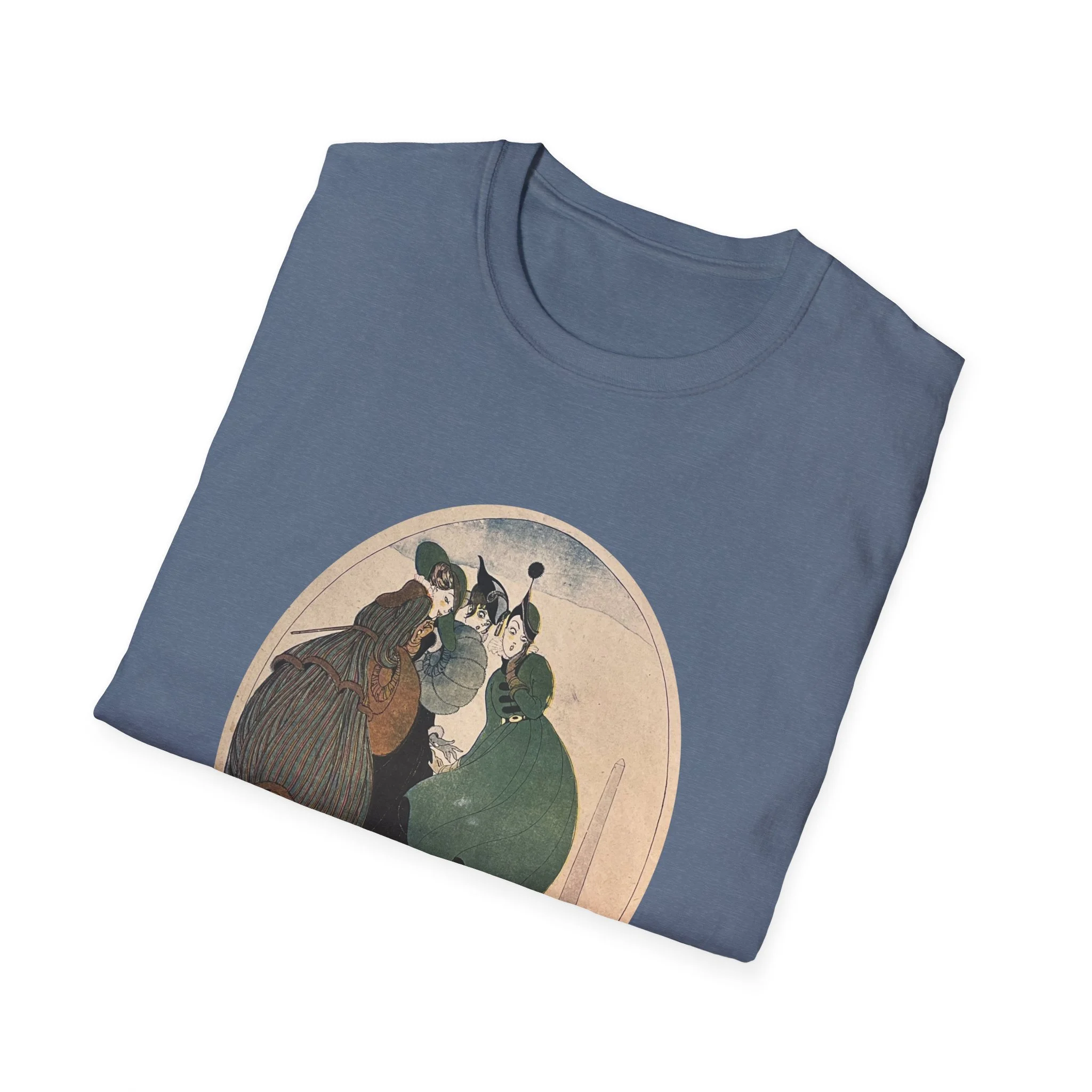
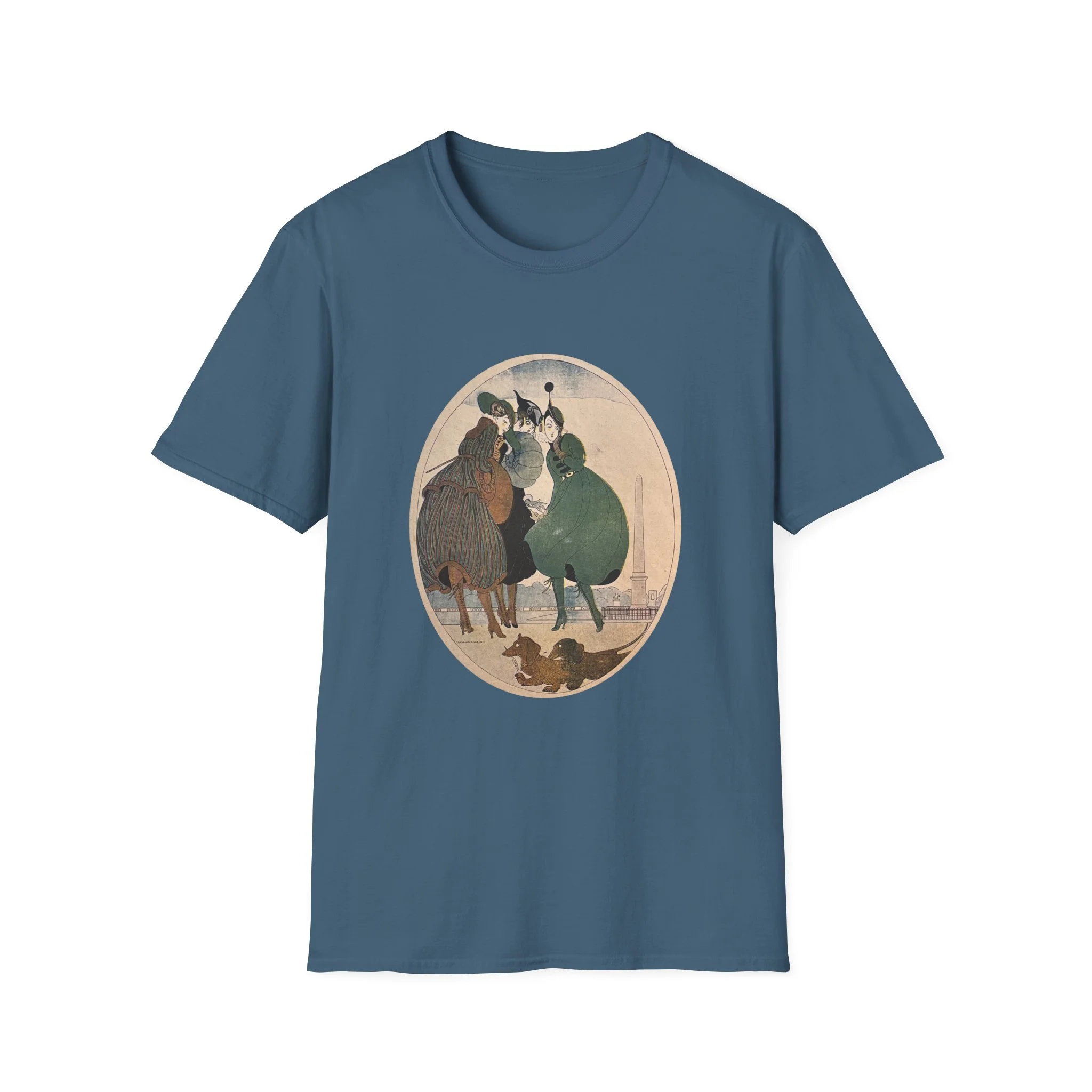
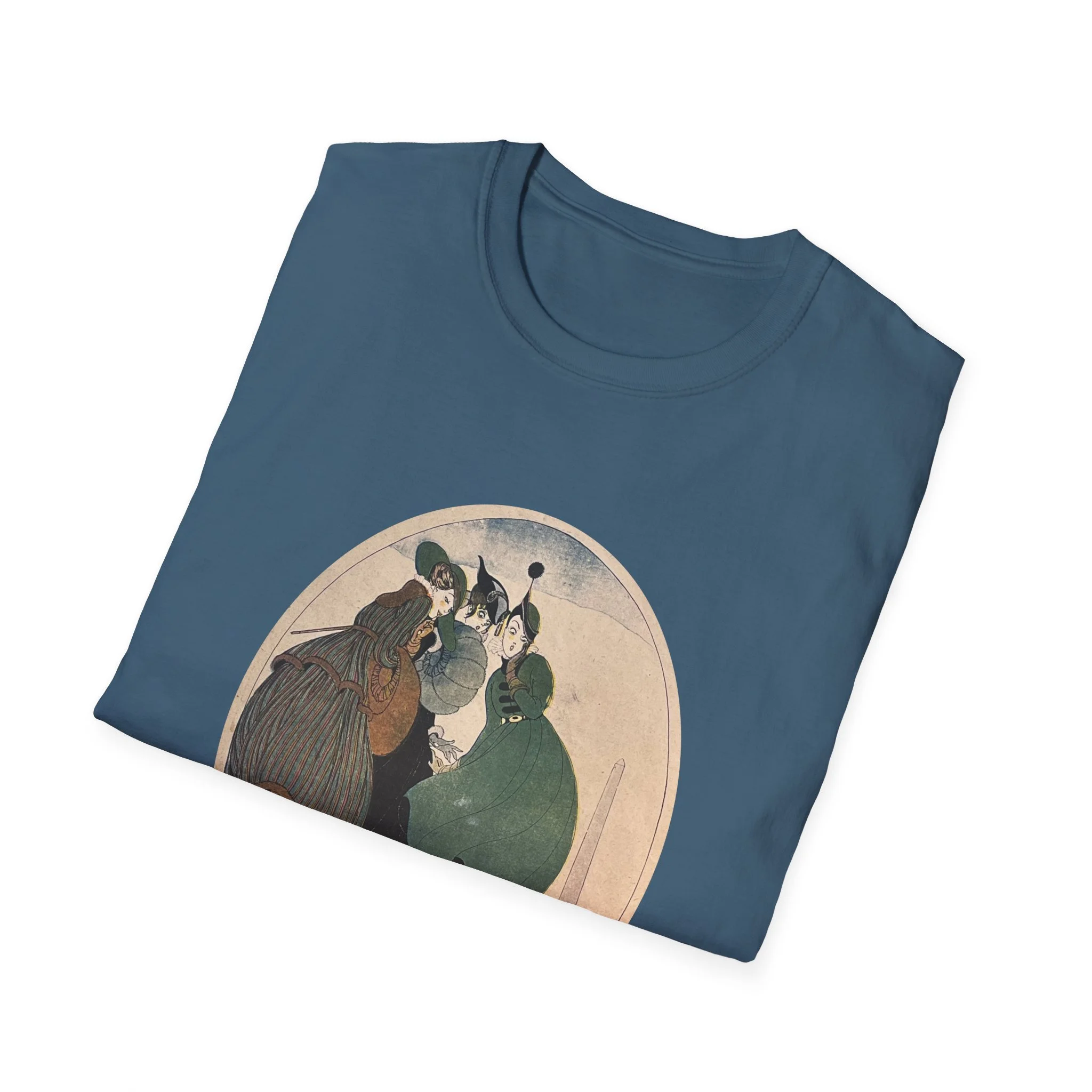
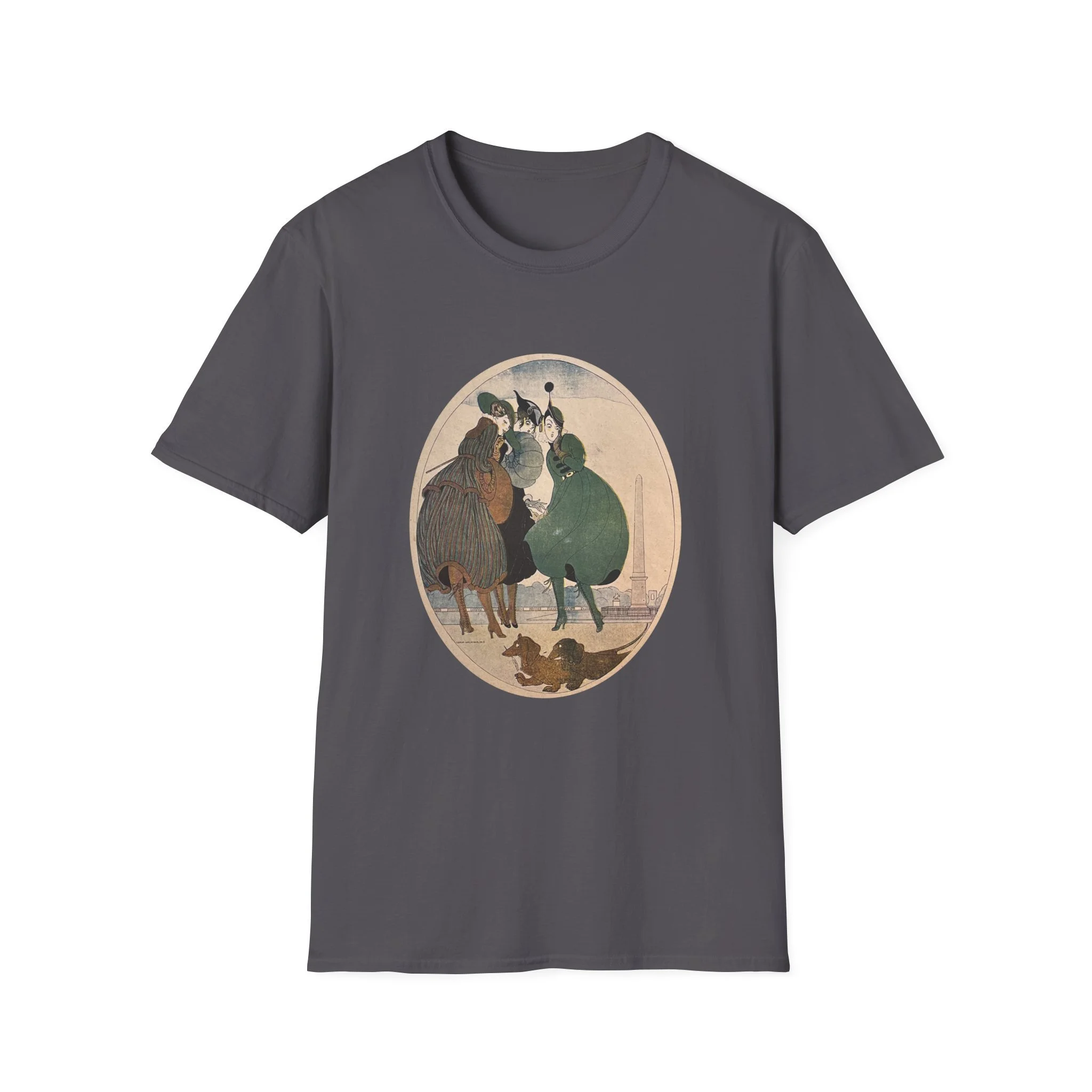
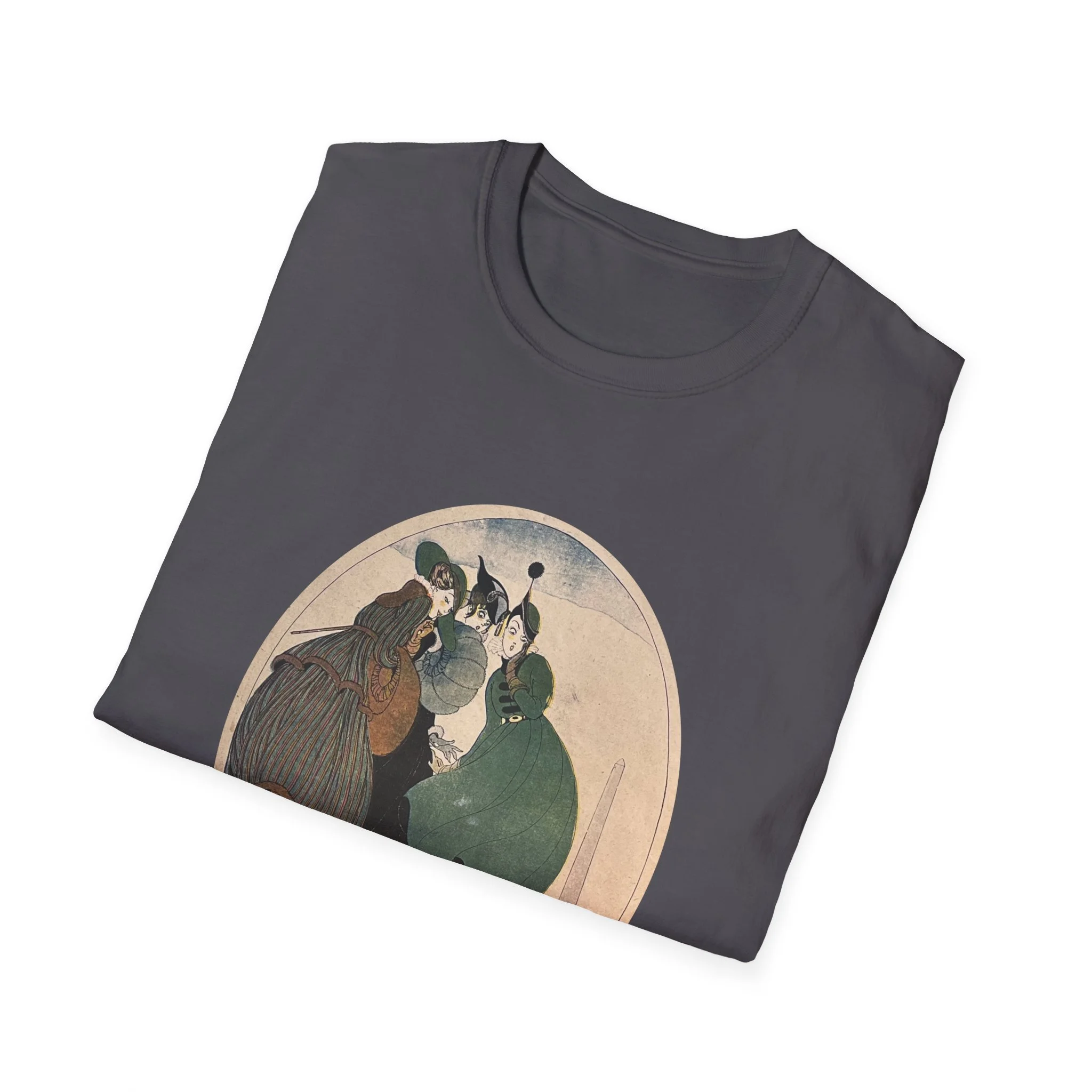
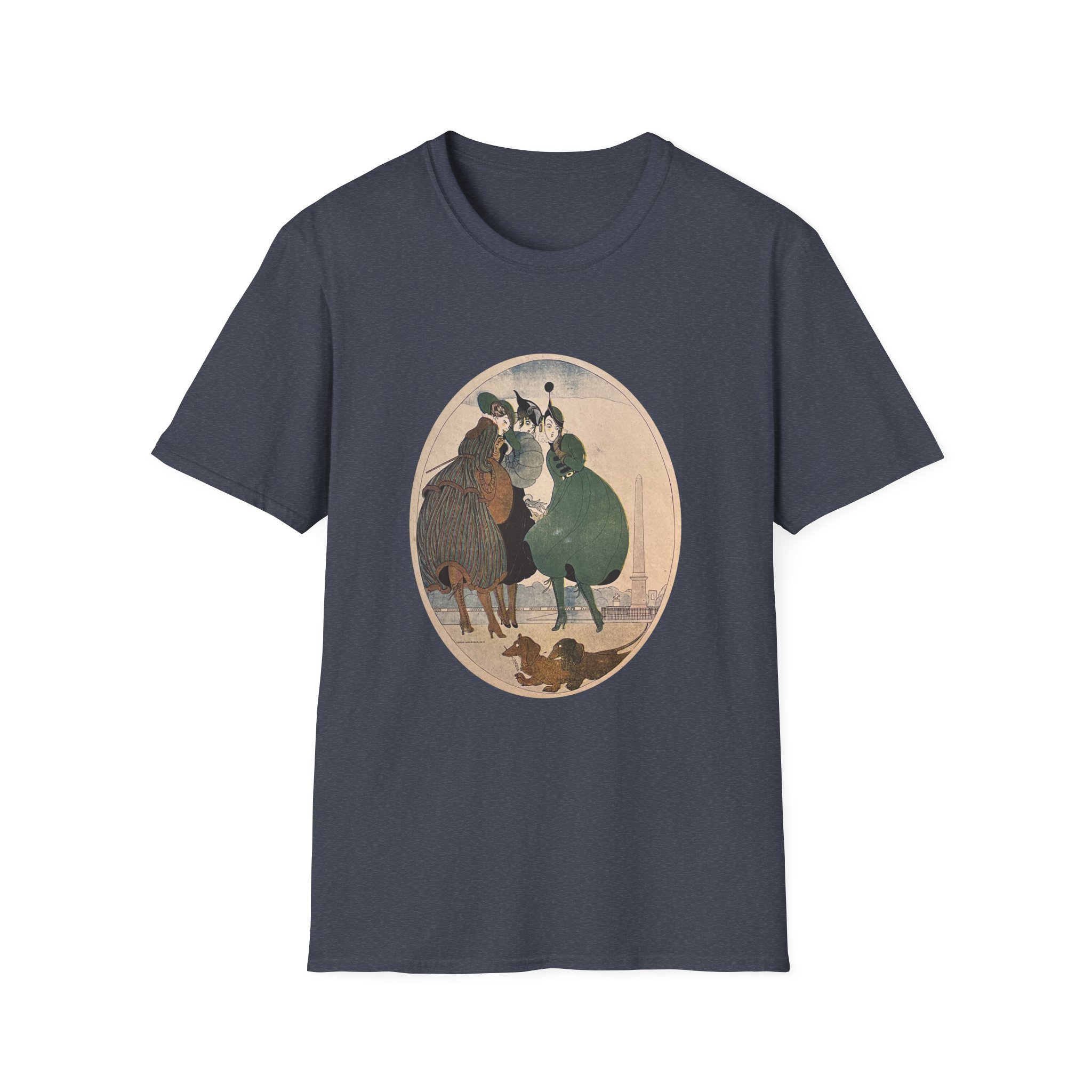
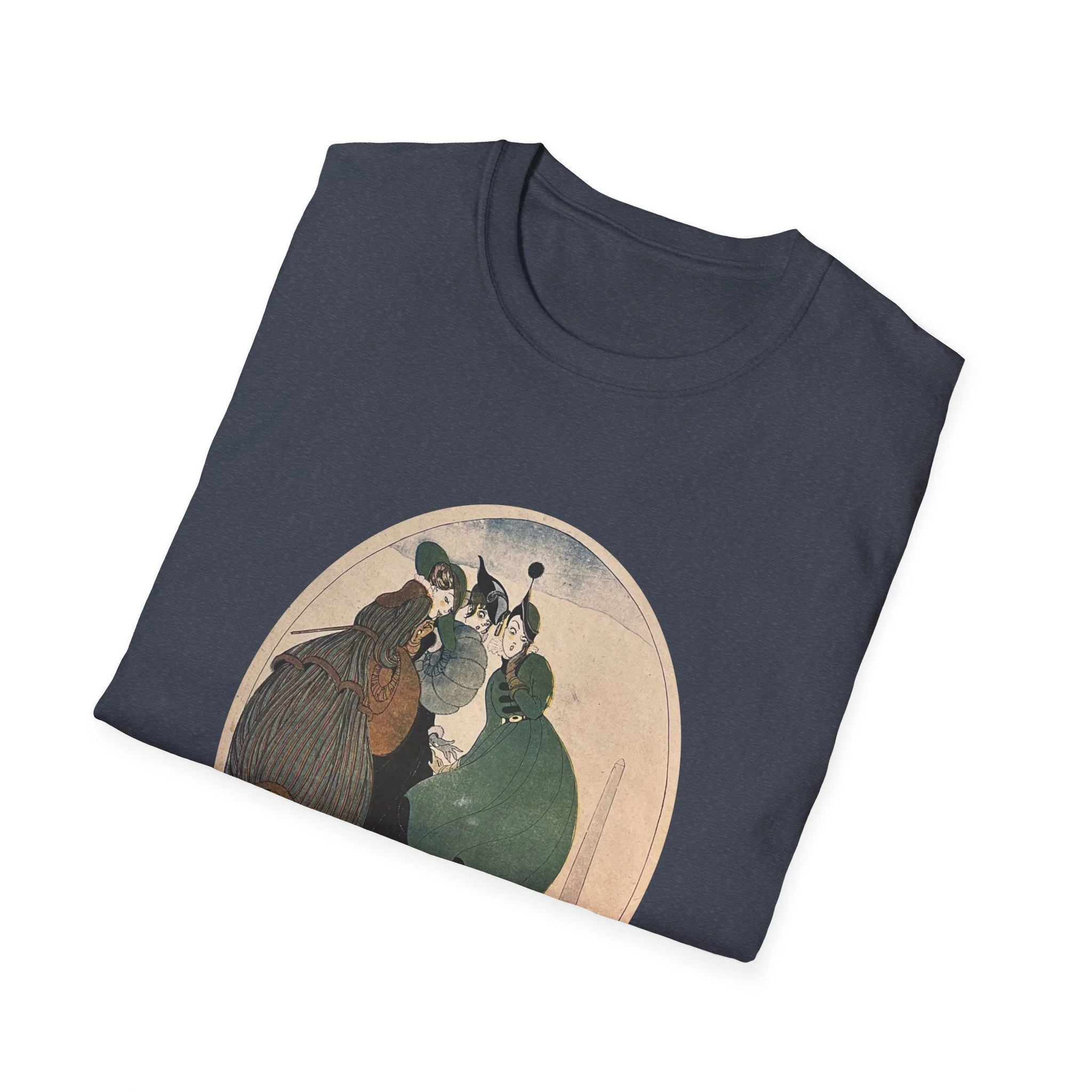
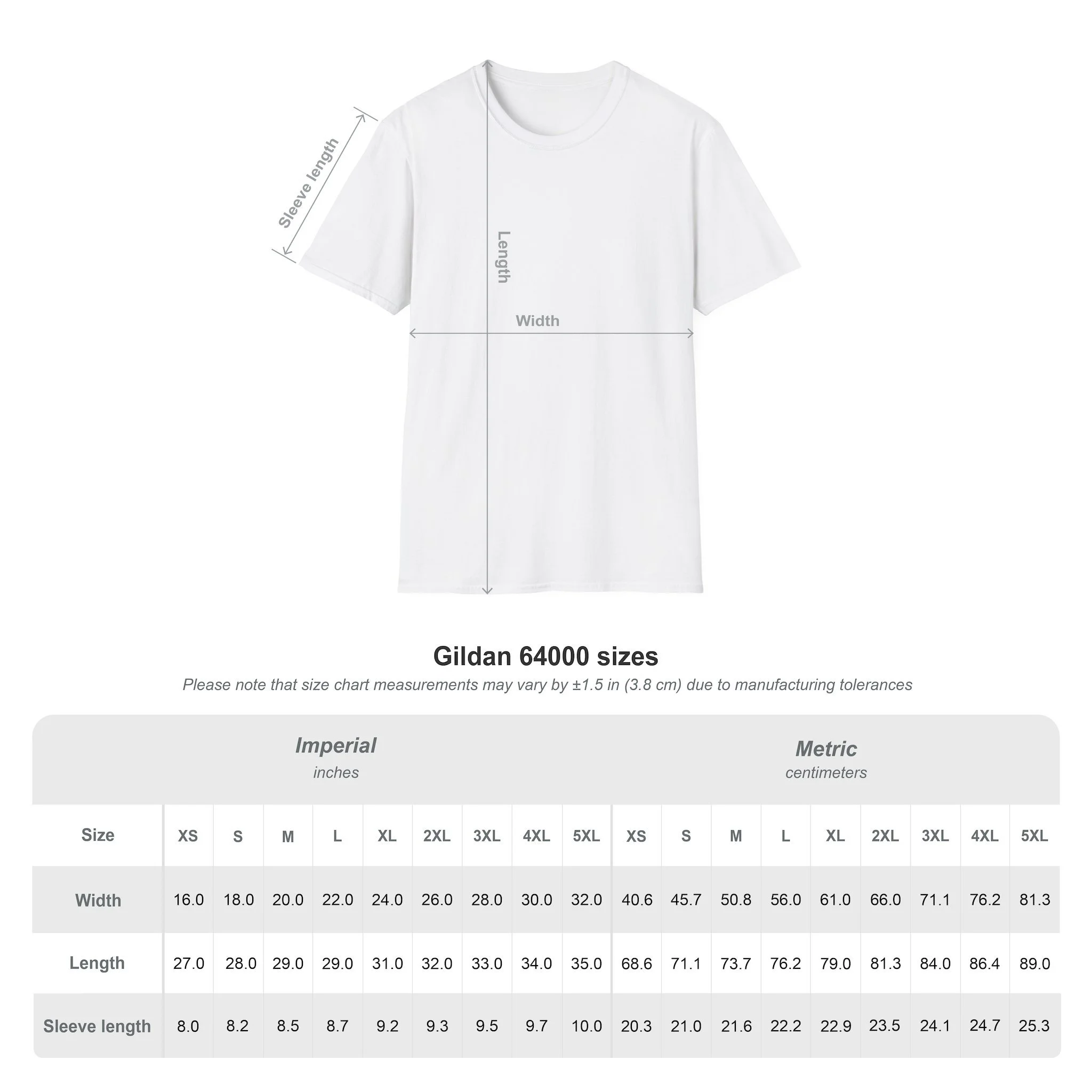
Satire aimed at rumor, surveillance, and the social spread of fear.
The image presents suspicion as a shared performance, where secrecy becomes theatrical and vigilance contagious. Authority recedes into the background as paranoia reorganizes everyday interaction, suggesting how control takes hold not only through orders, but through mutual watching and anxious imitation.
Historical Note
This illustration appeared in a 1916 issue of La Baïonnette and was drawn by Gerda Wegener. Using exaggerated posture, fashion, and animal figures, it satirizes wartime paranoia and the way fear reshapes social life under conditions of enforced vigilance.
100% ring-spun cotton | Pearlized tear-away label | Oeko-Tex certified | Unisex
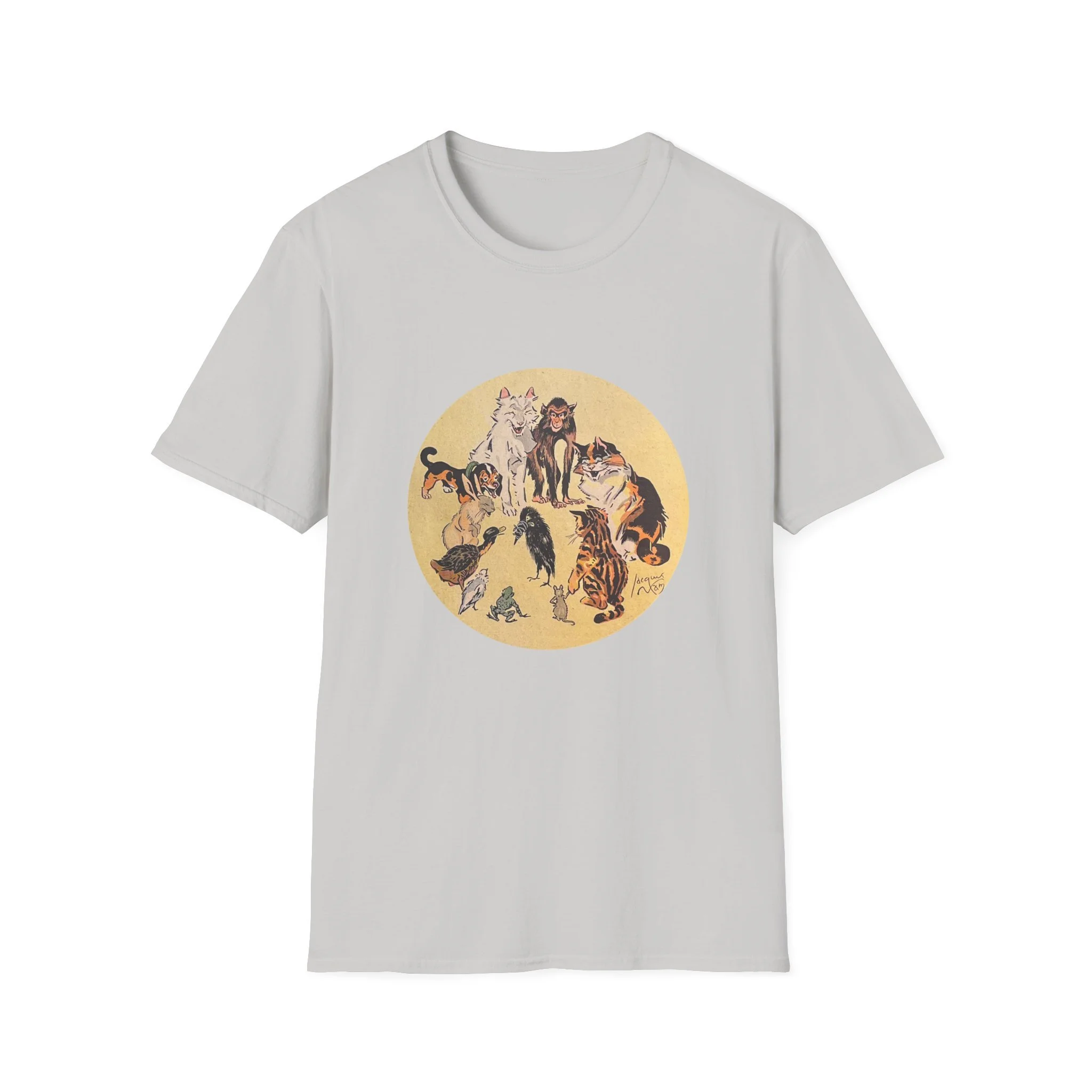
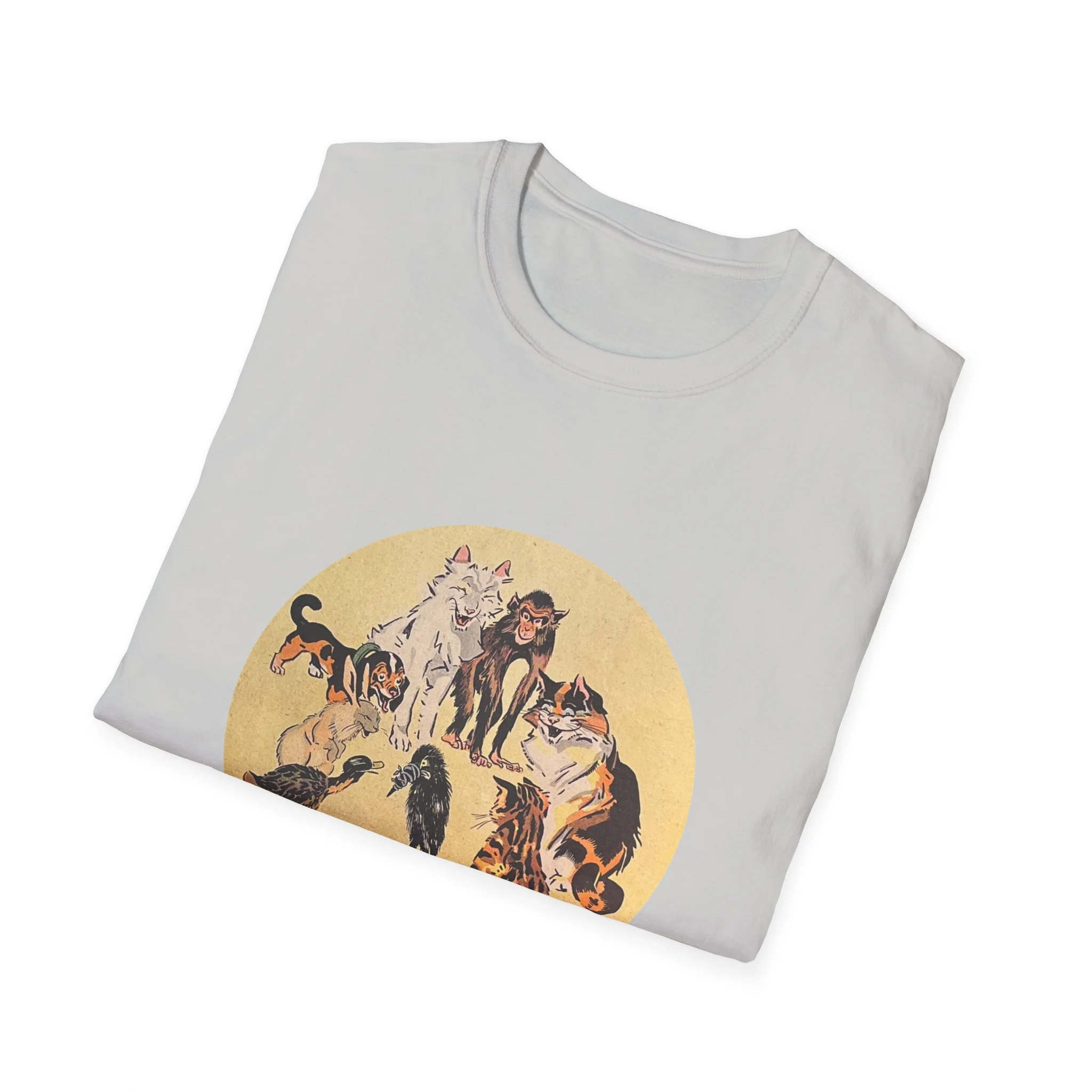
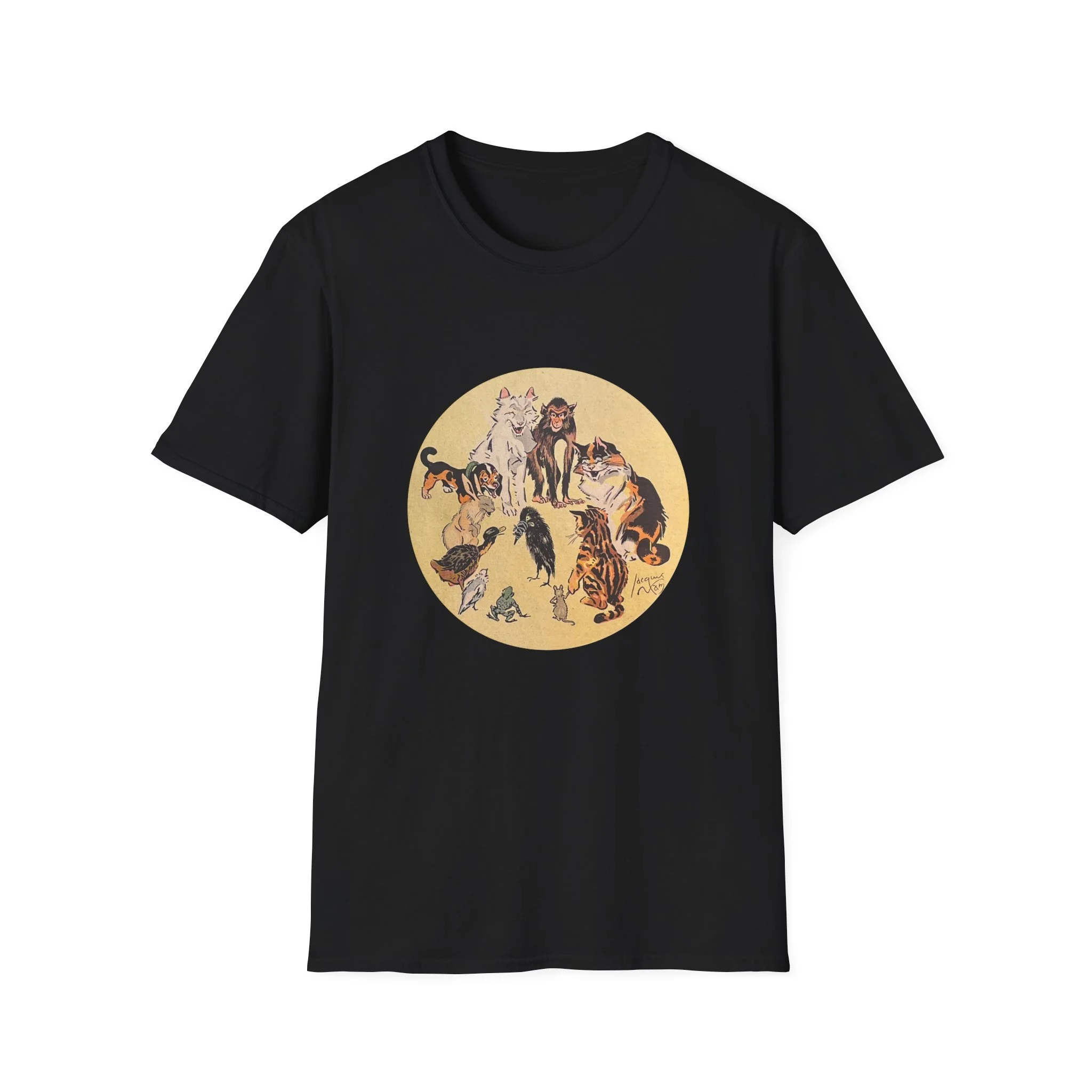
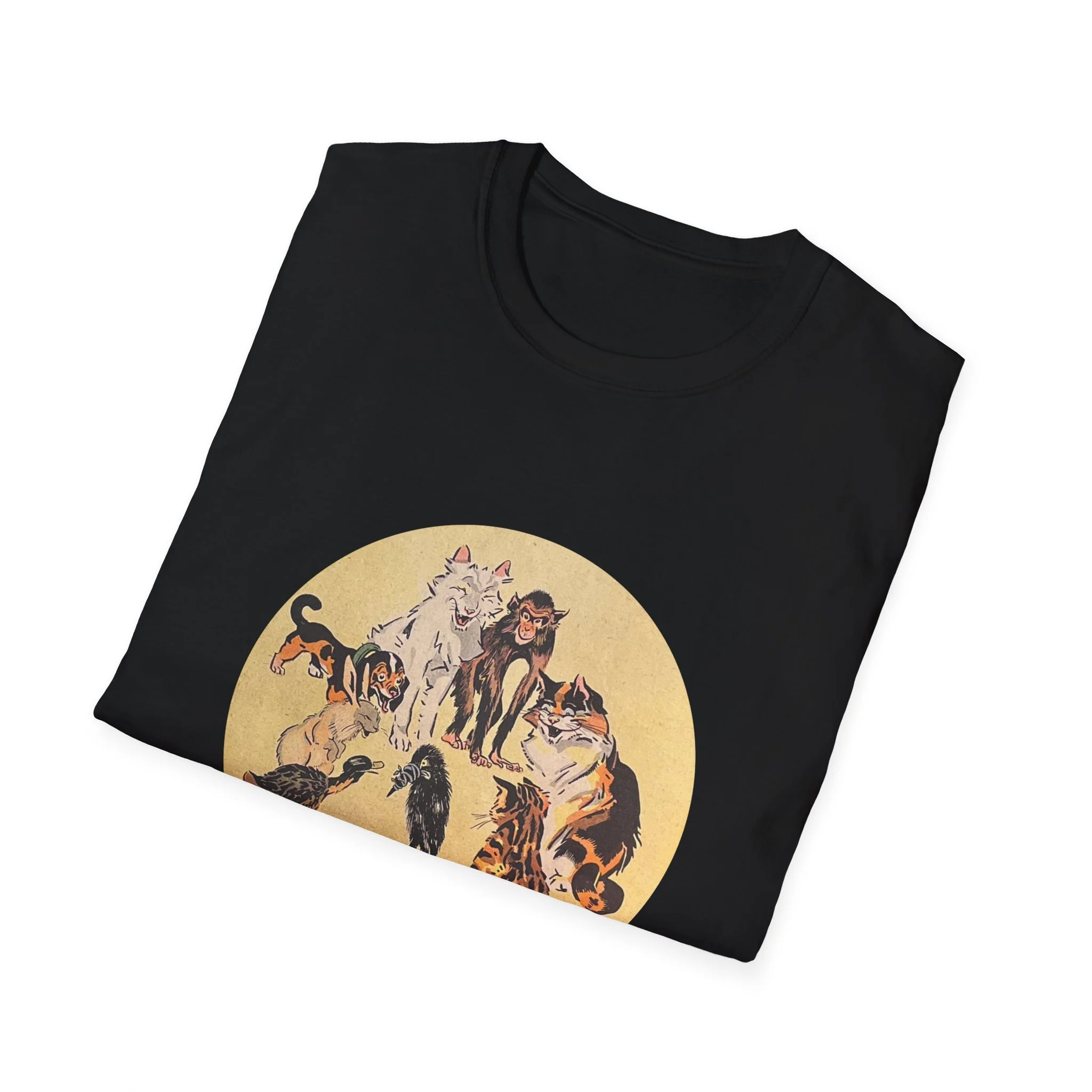
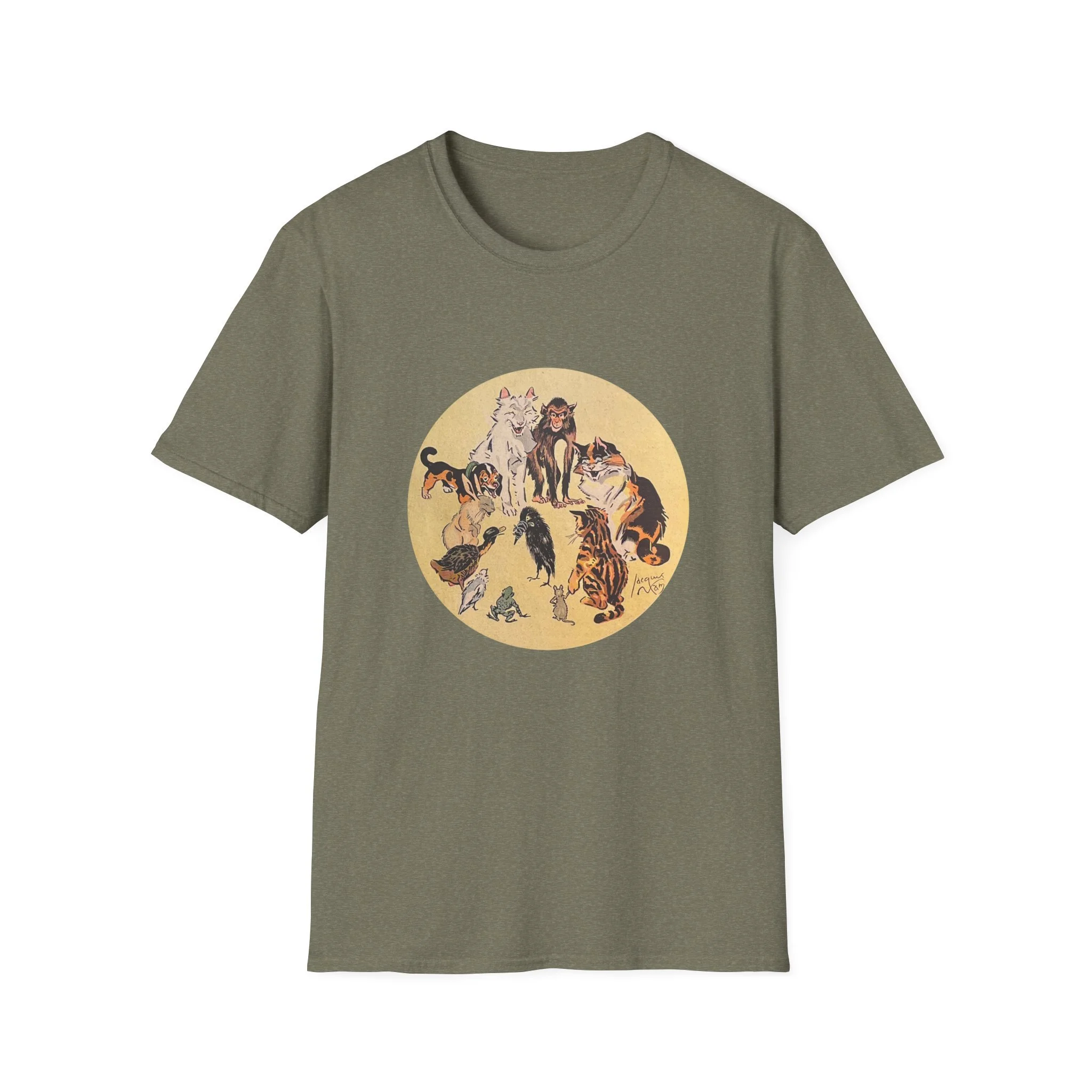

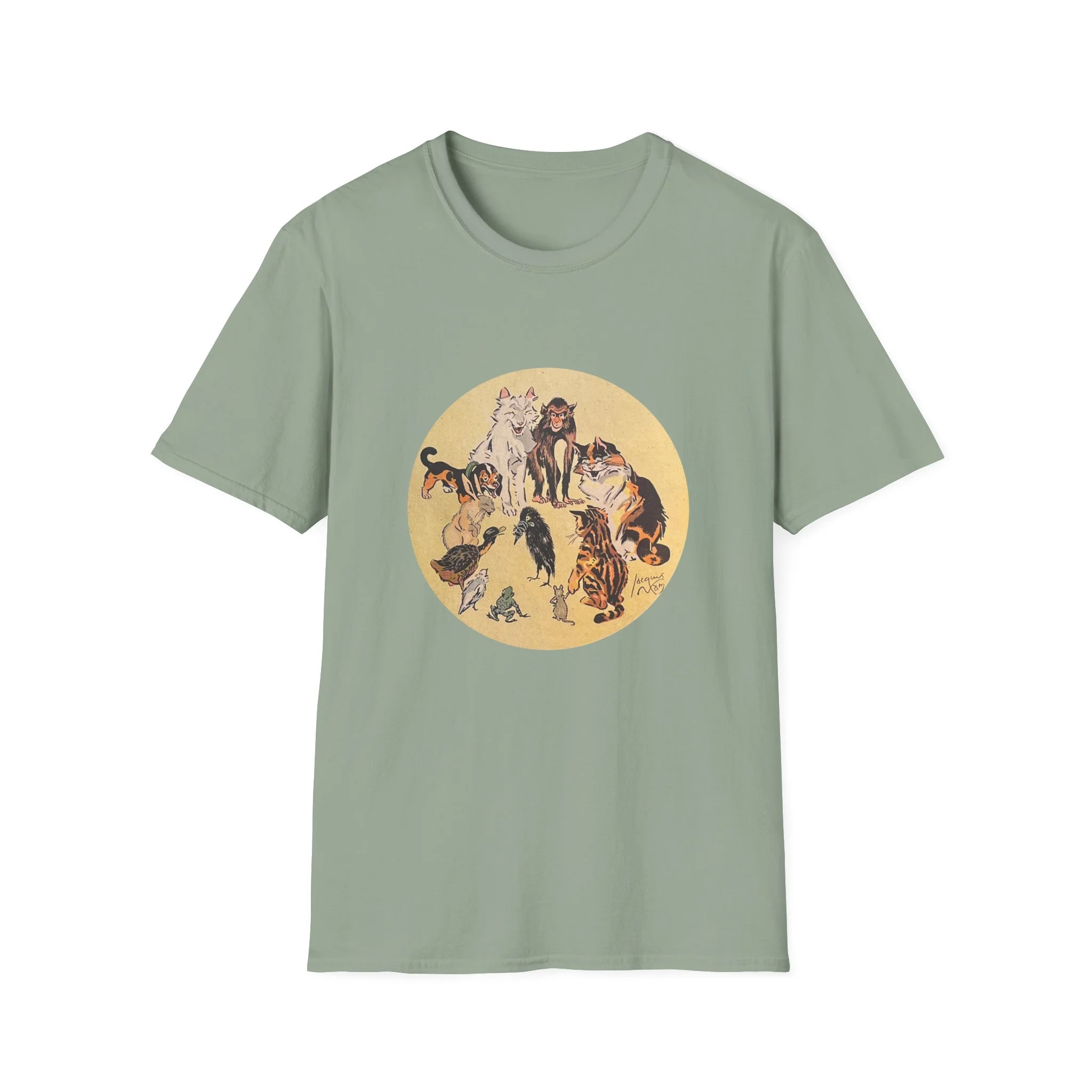
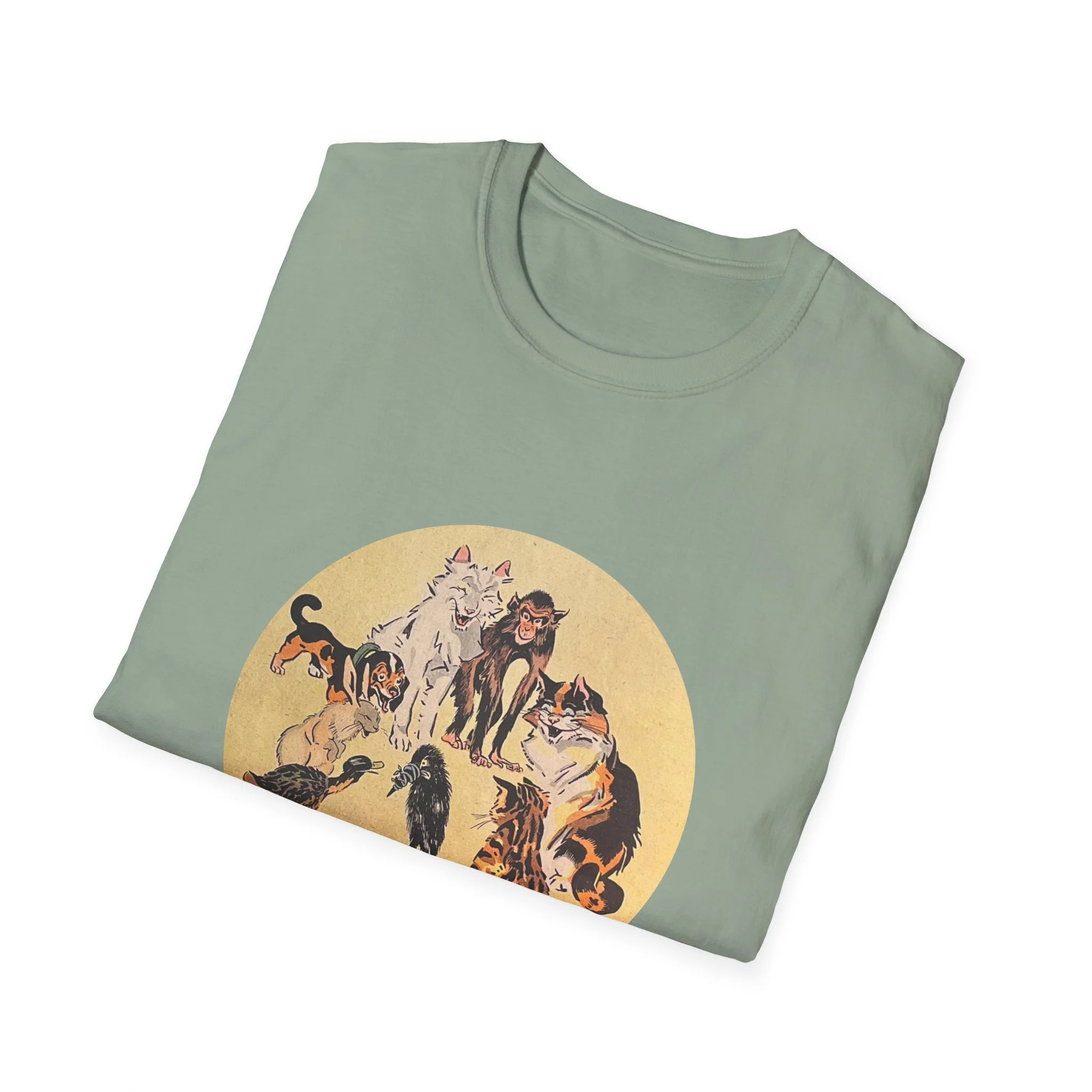
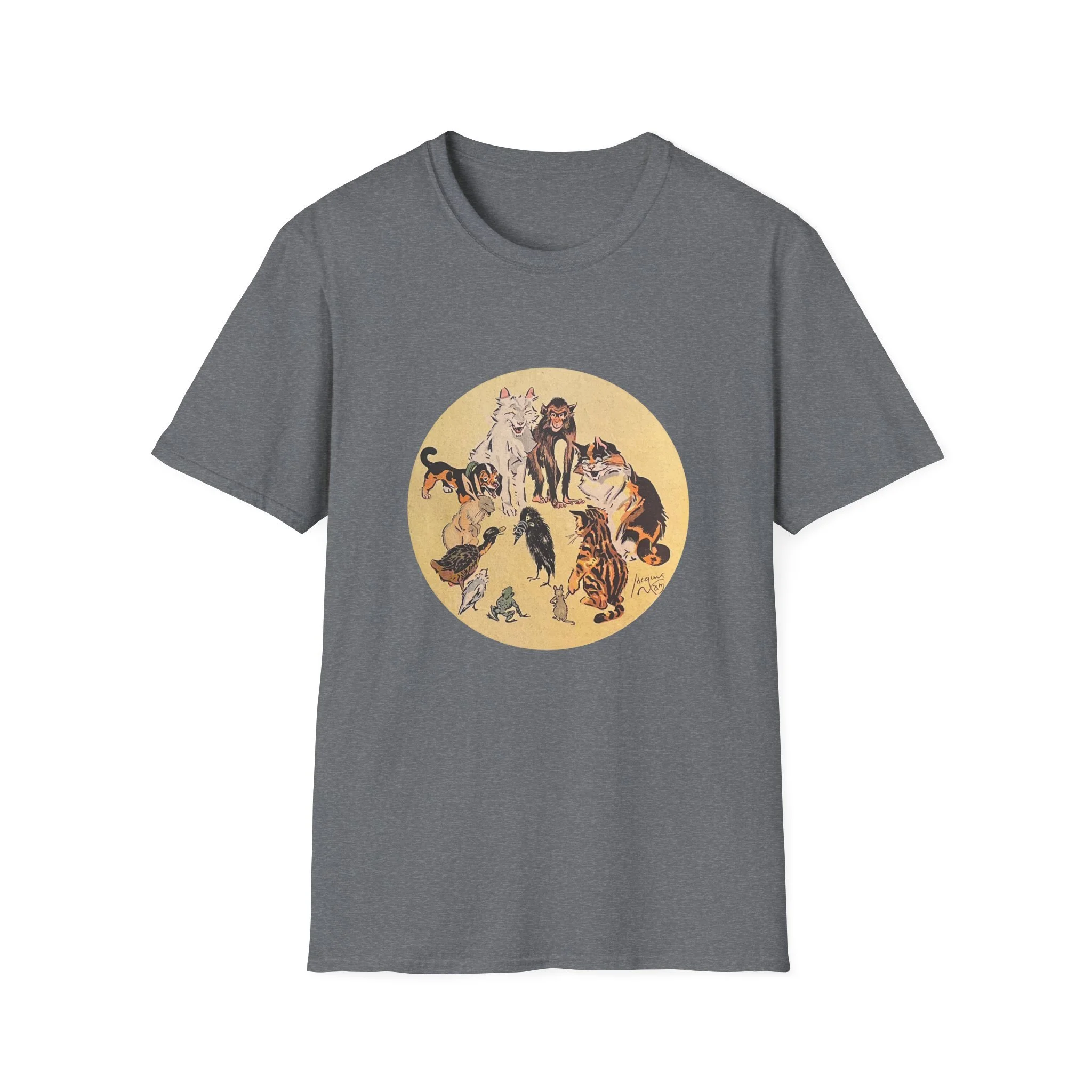
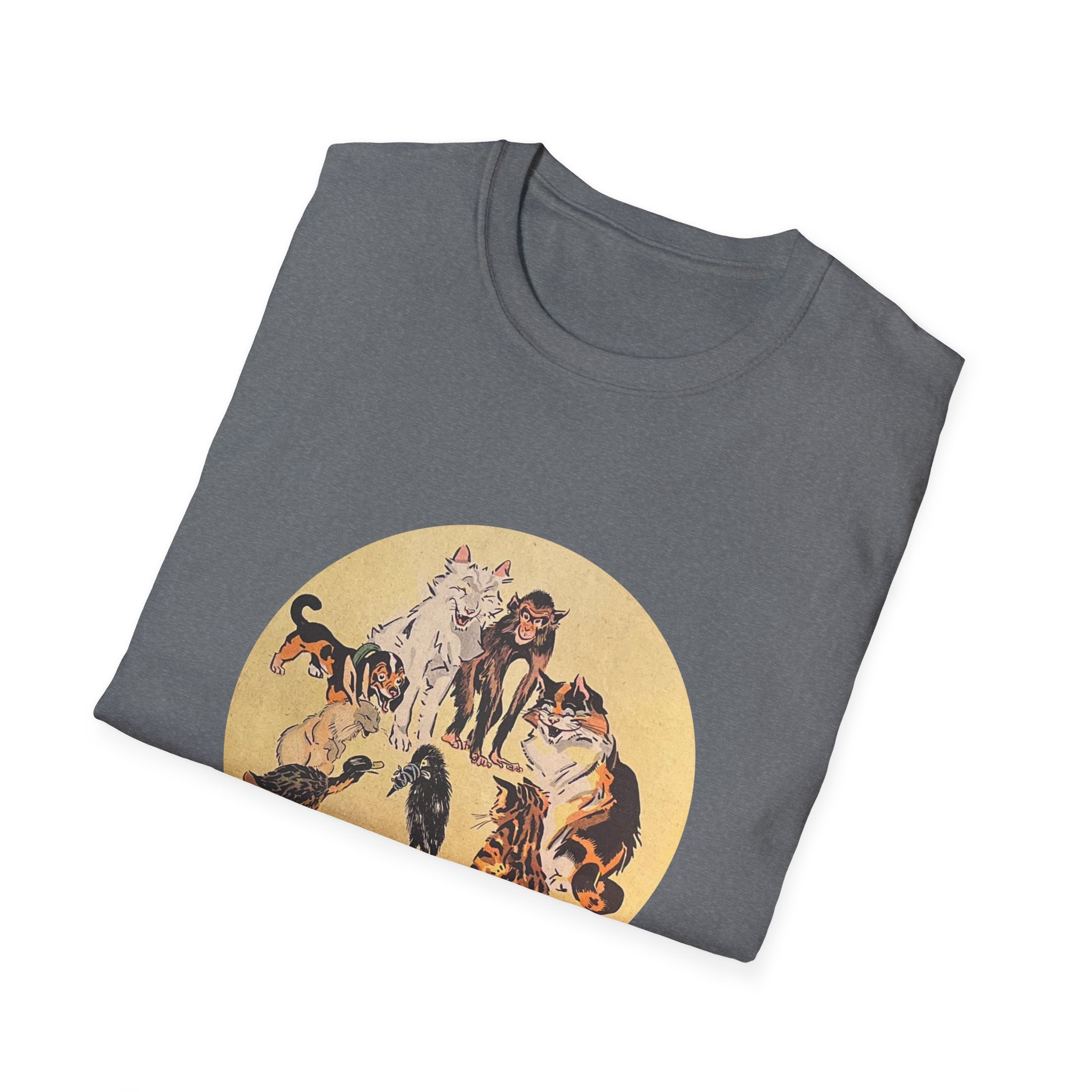
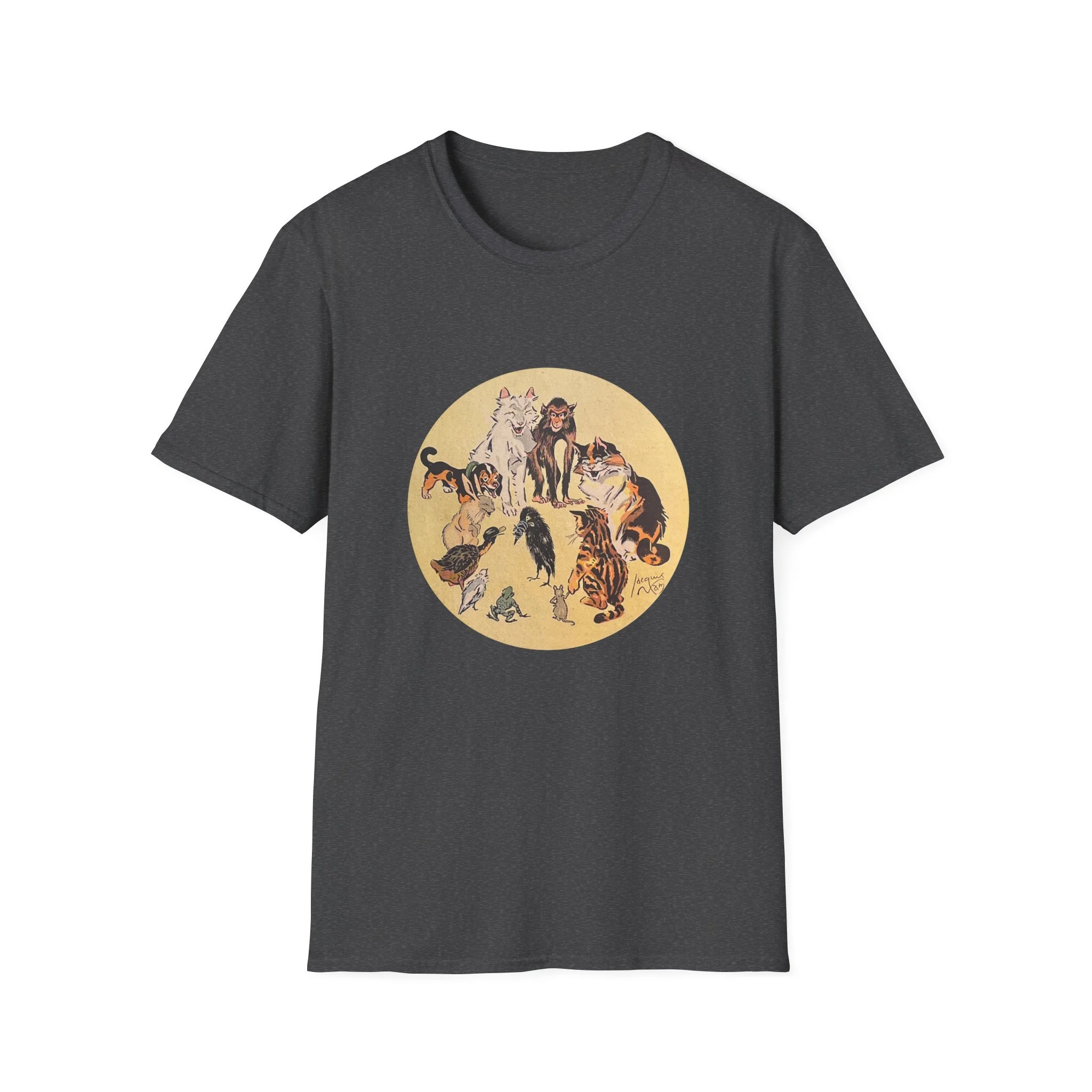
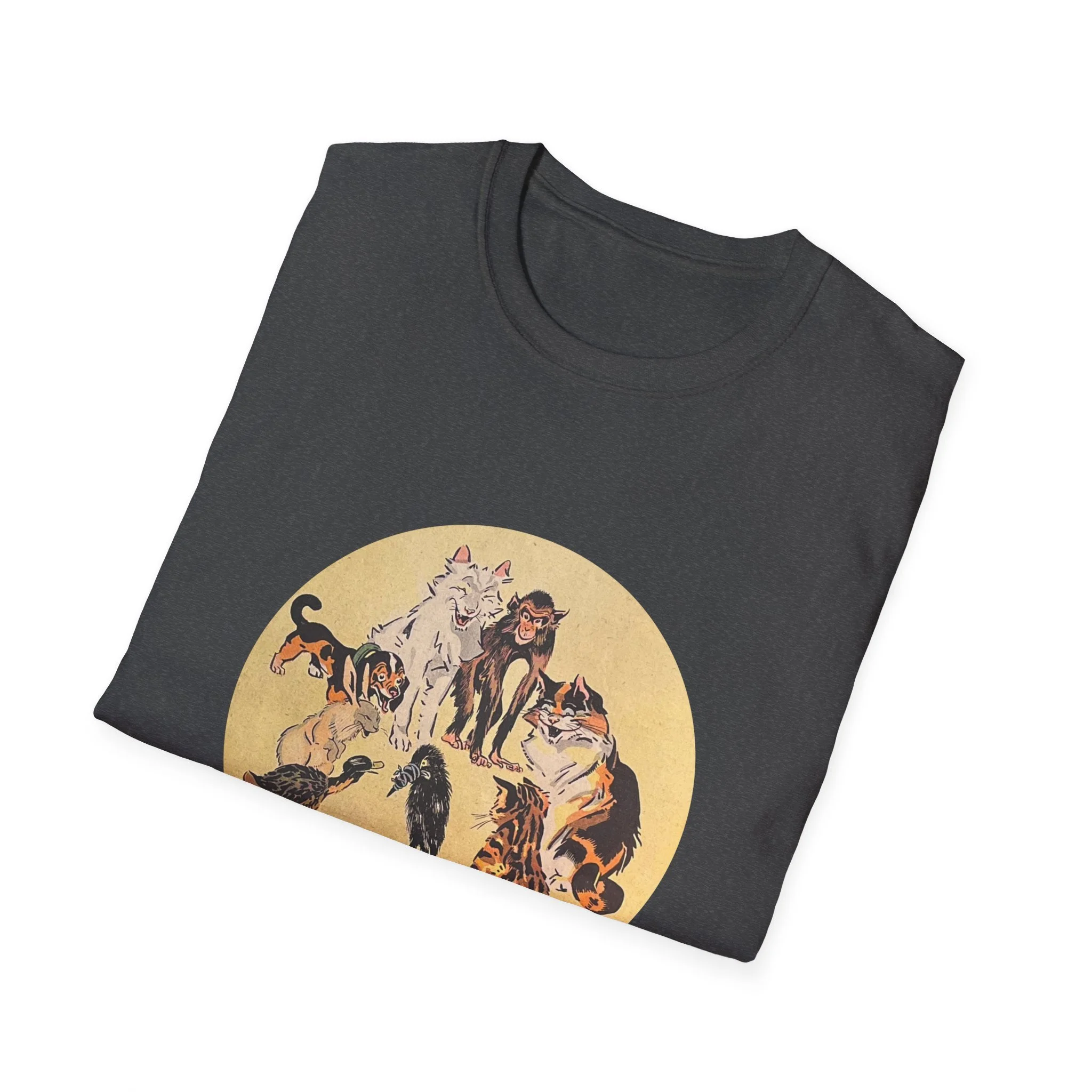
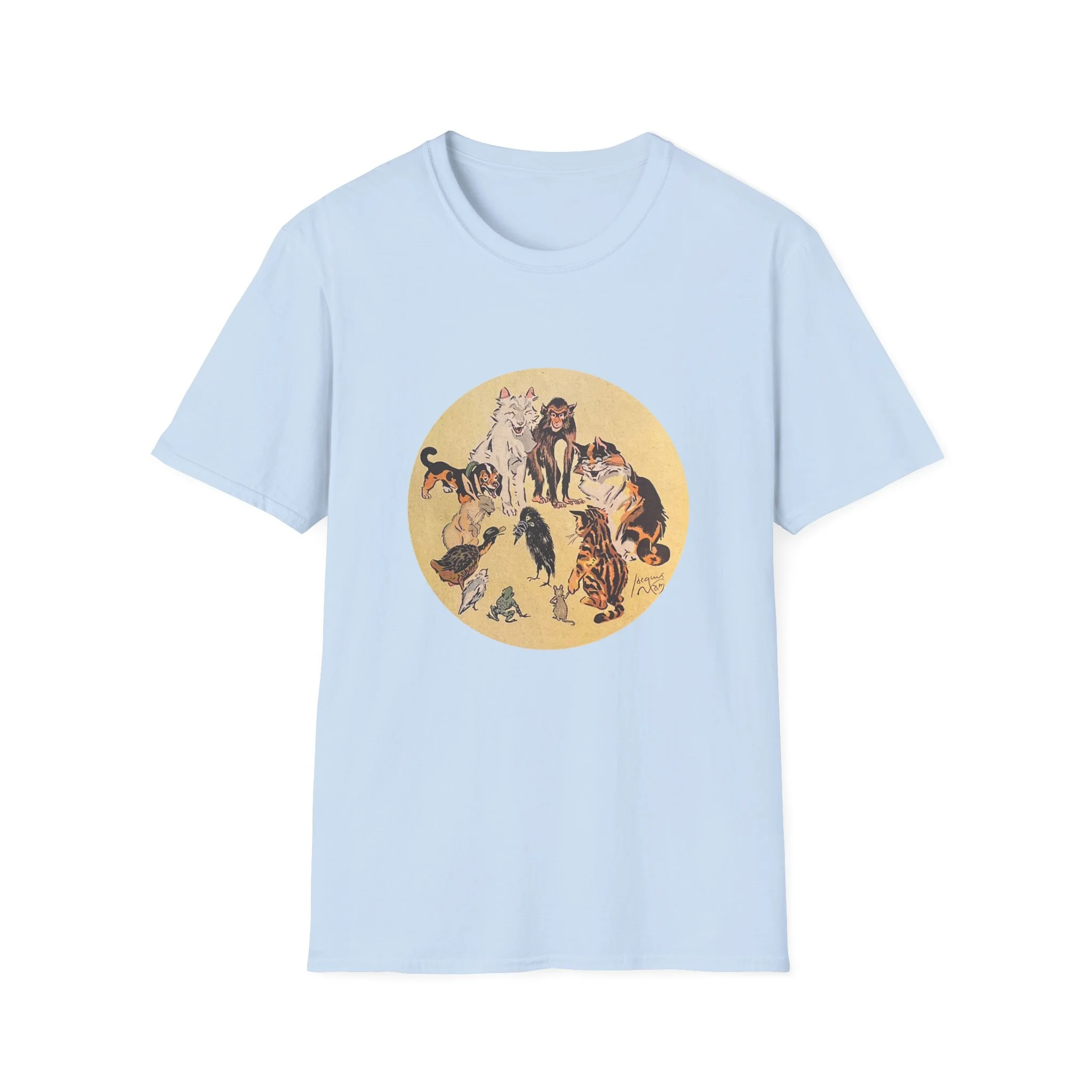
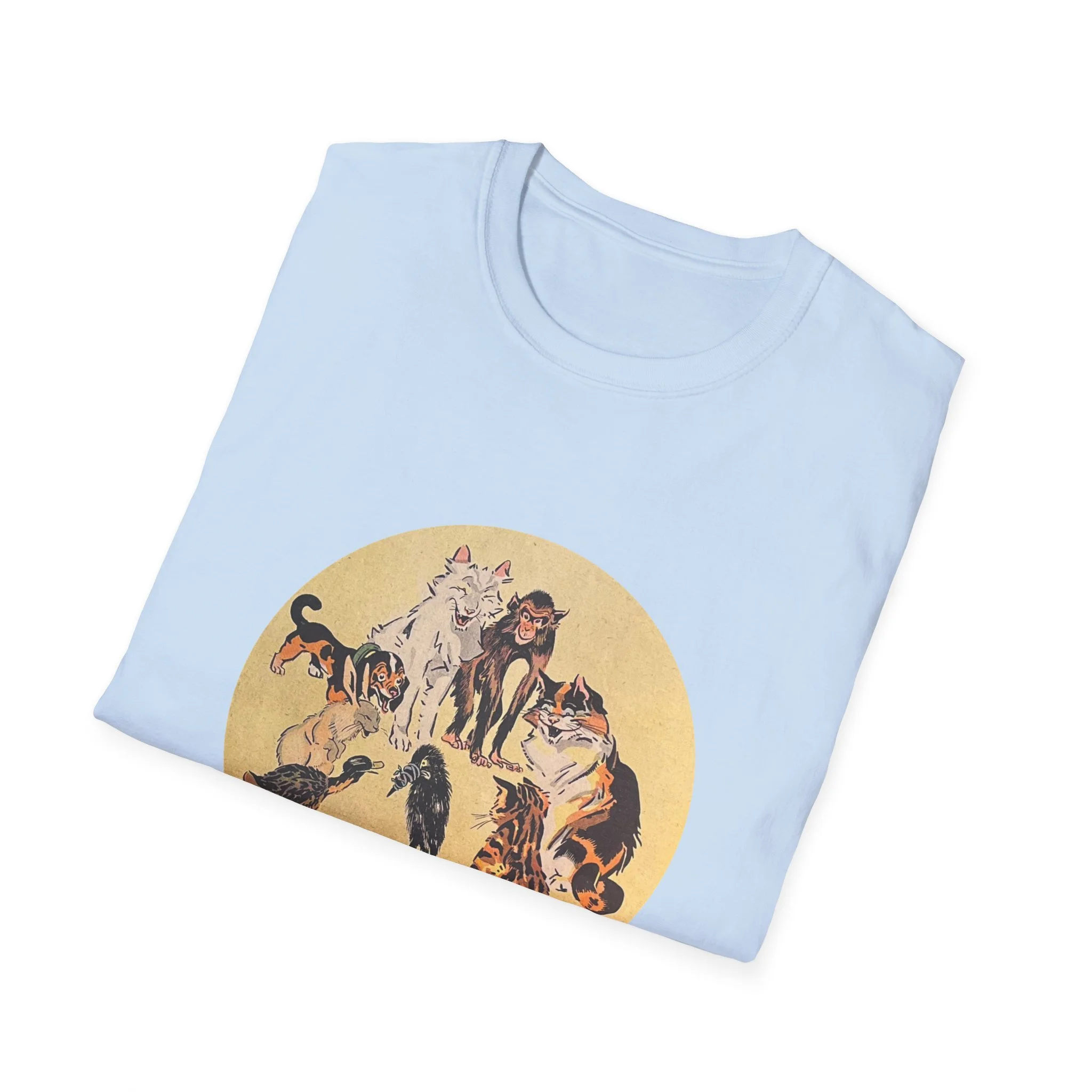
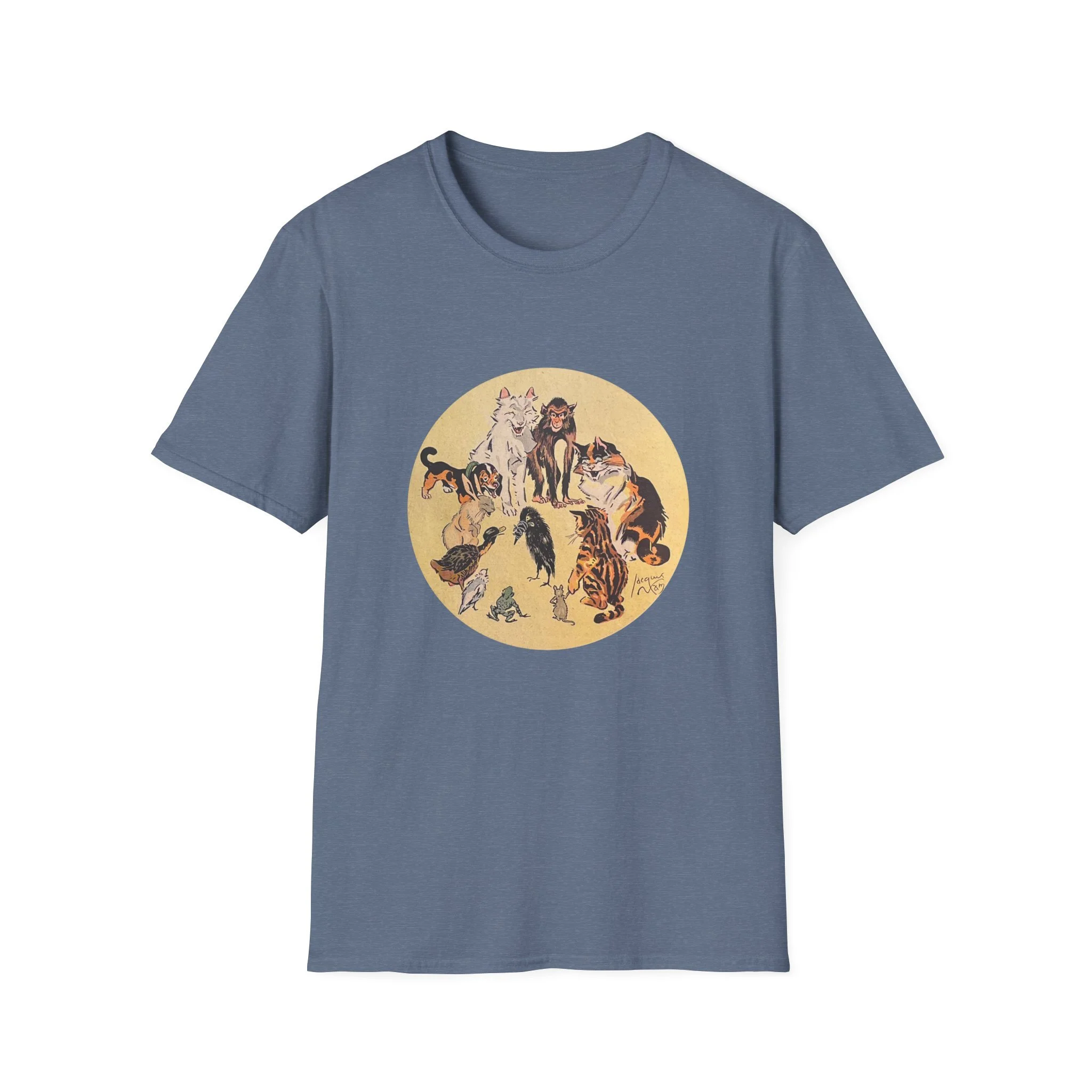
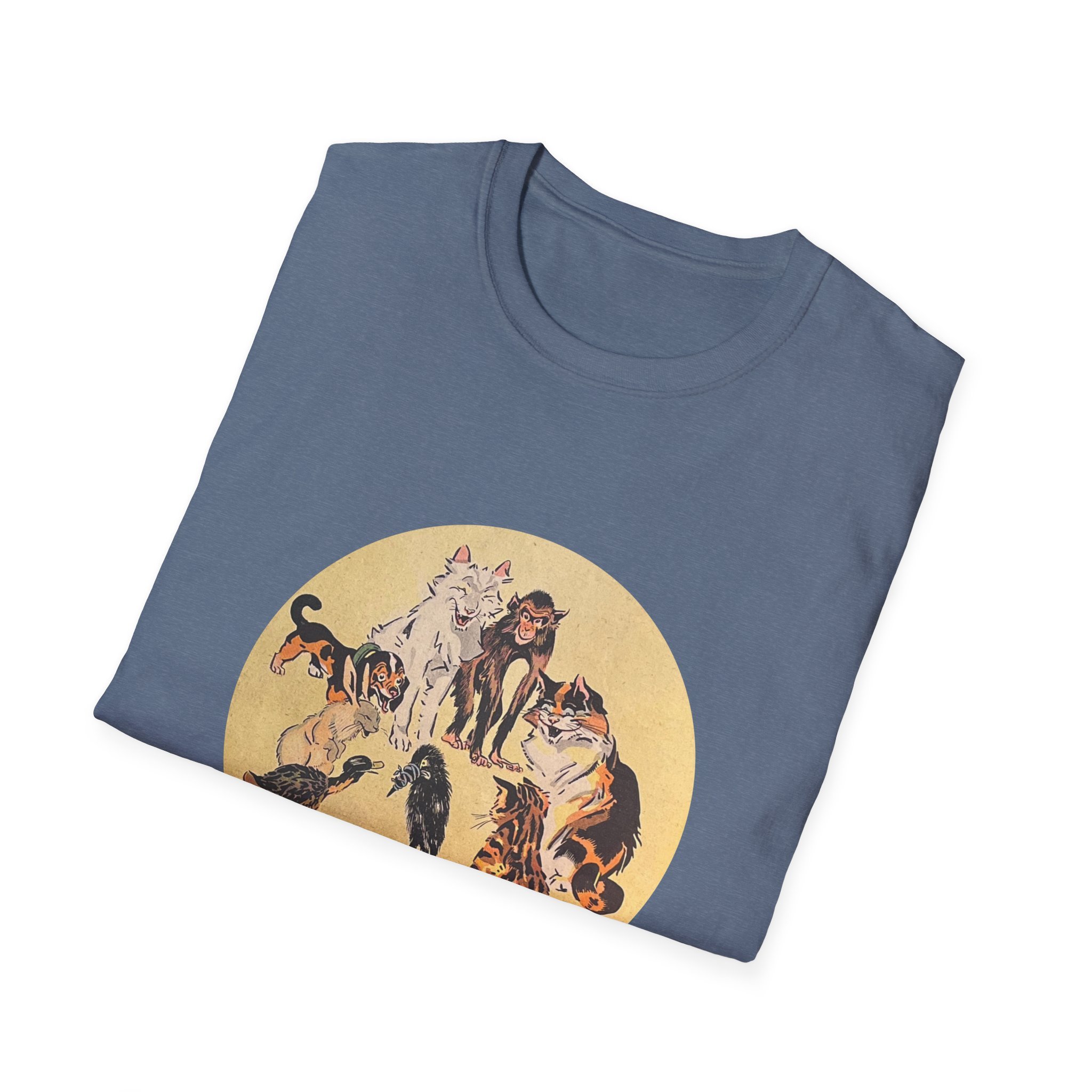
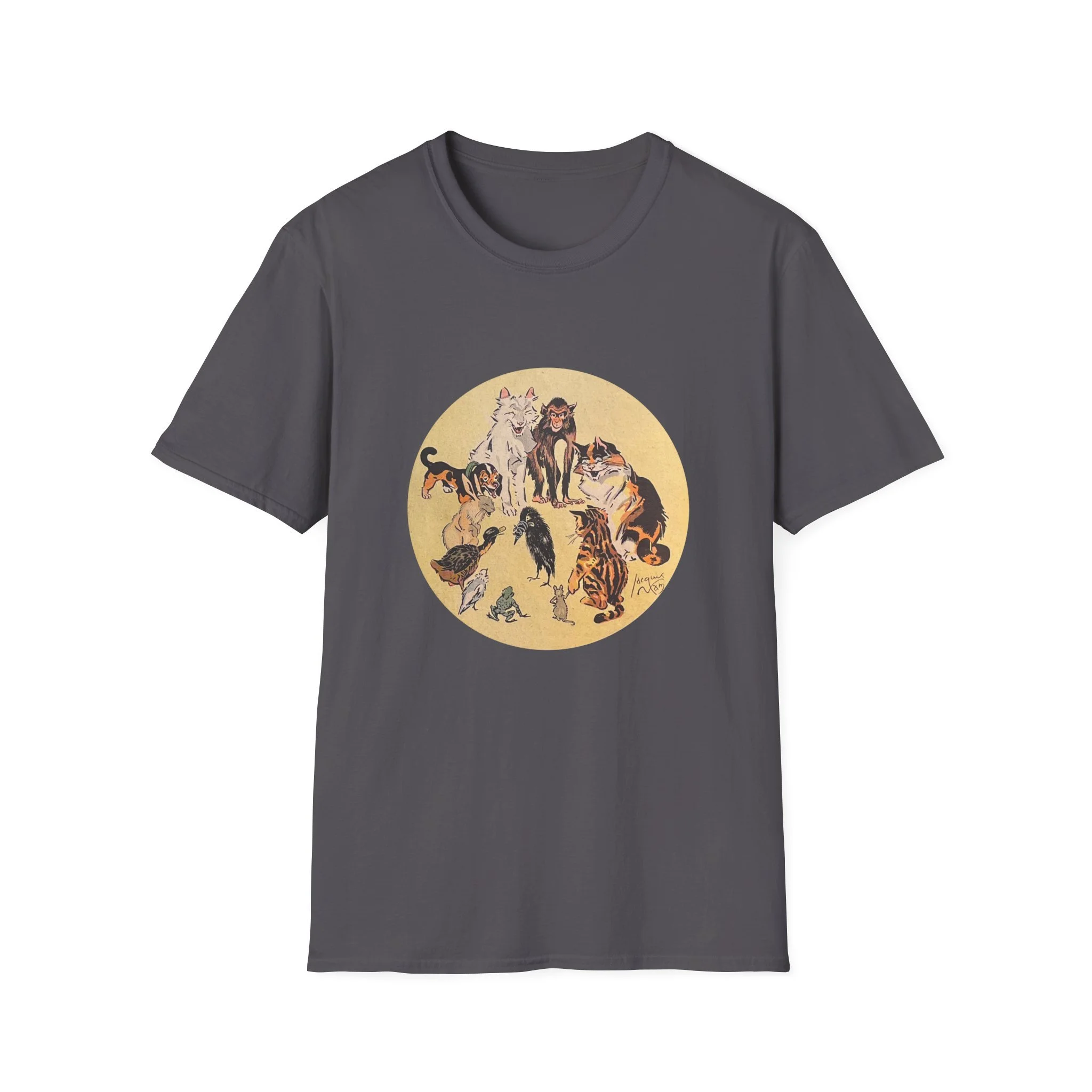
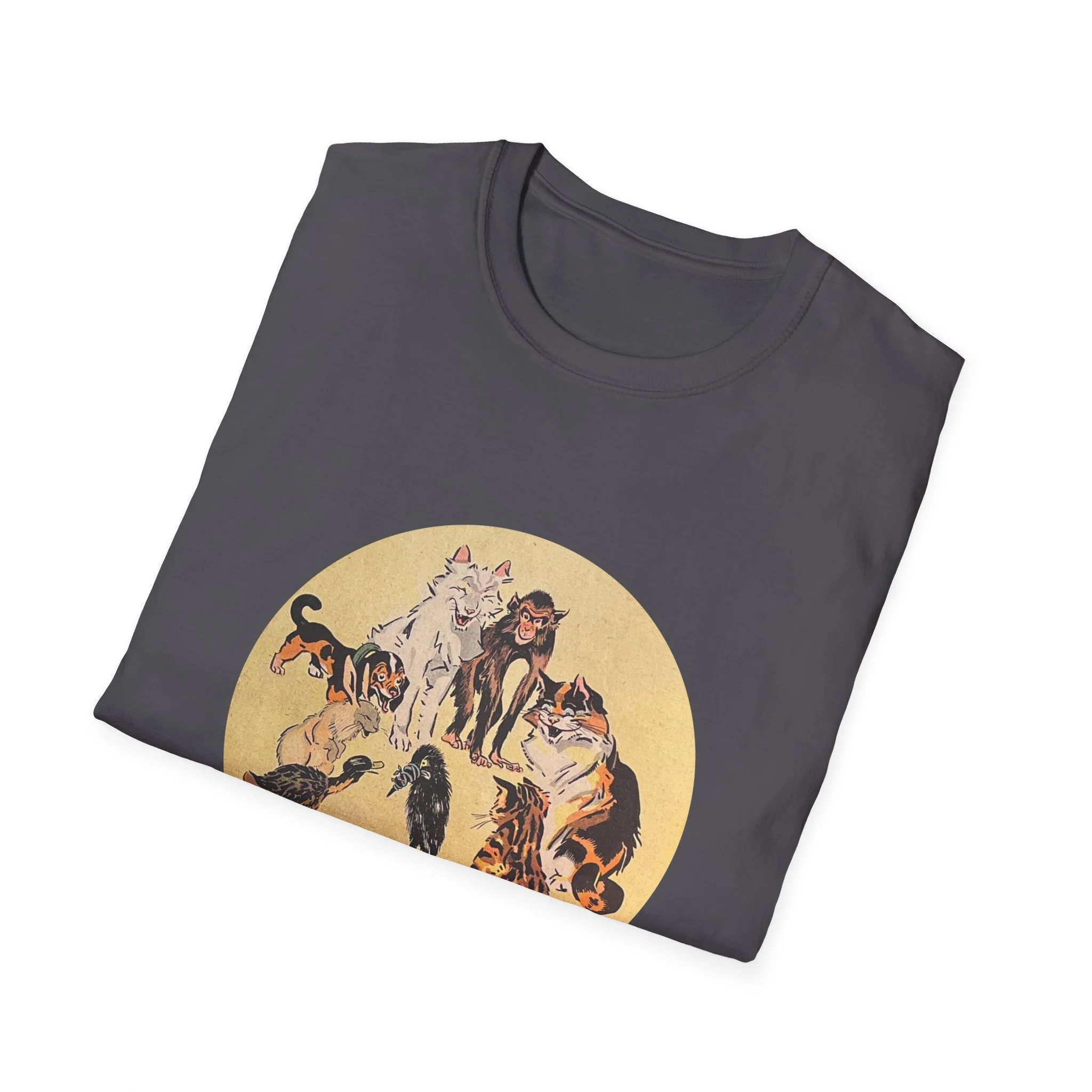
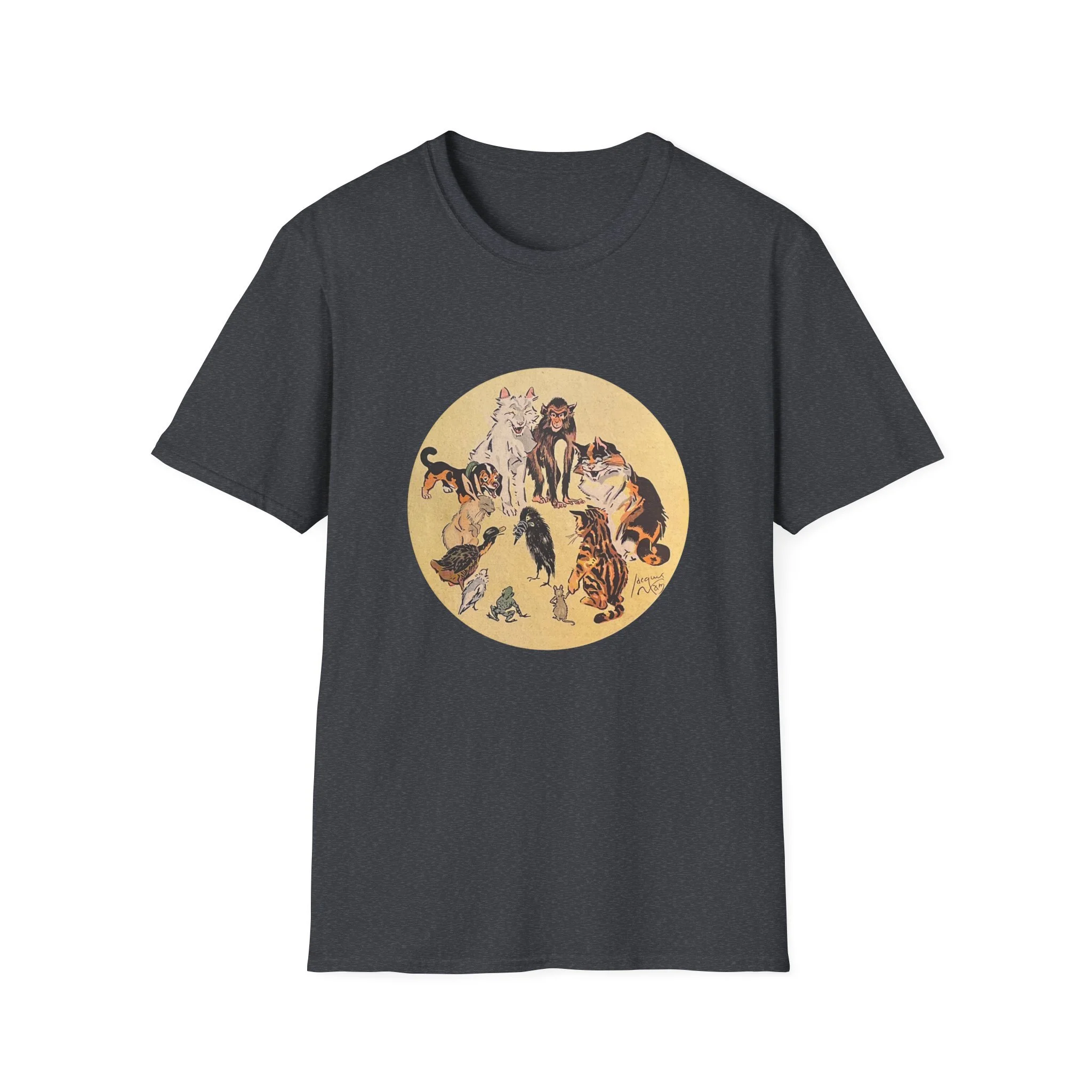
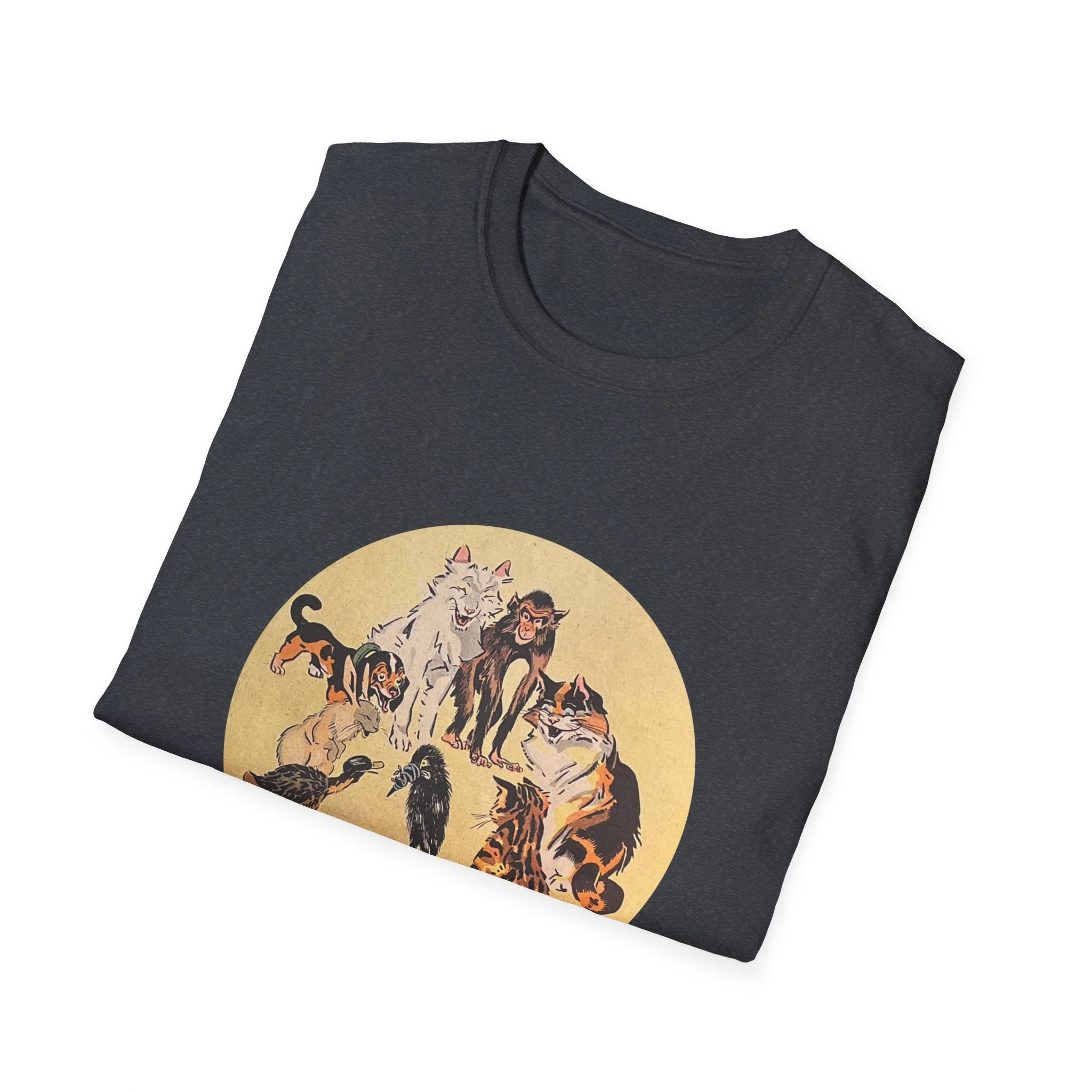
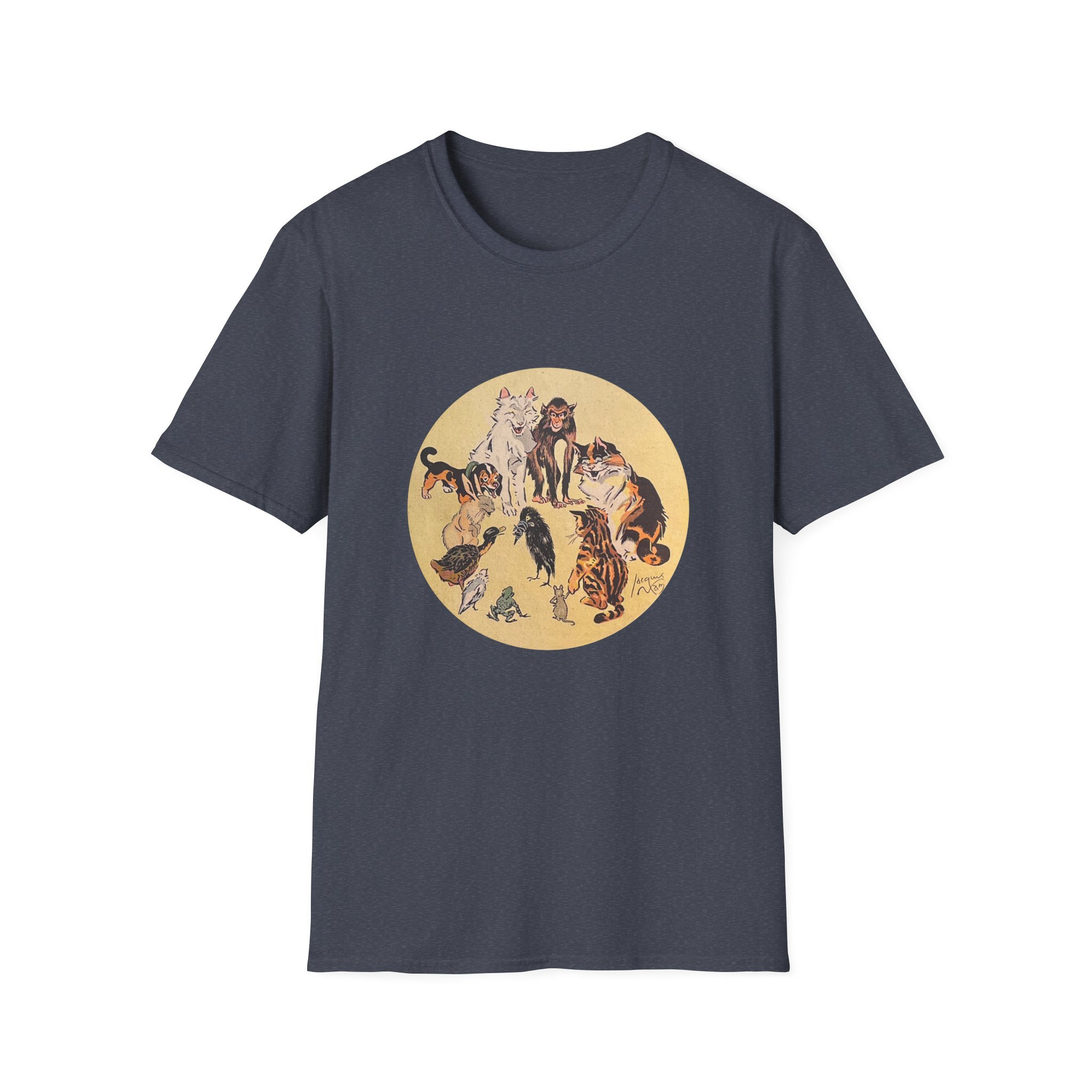
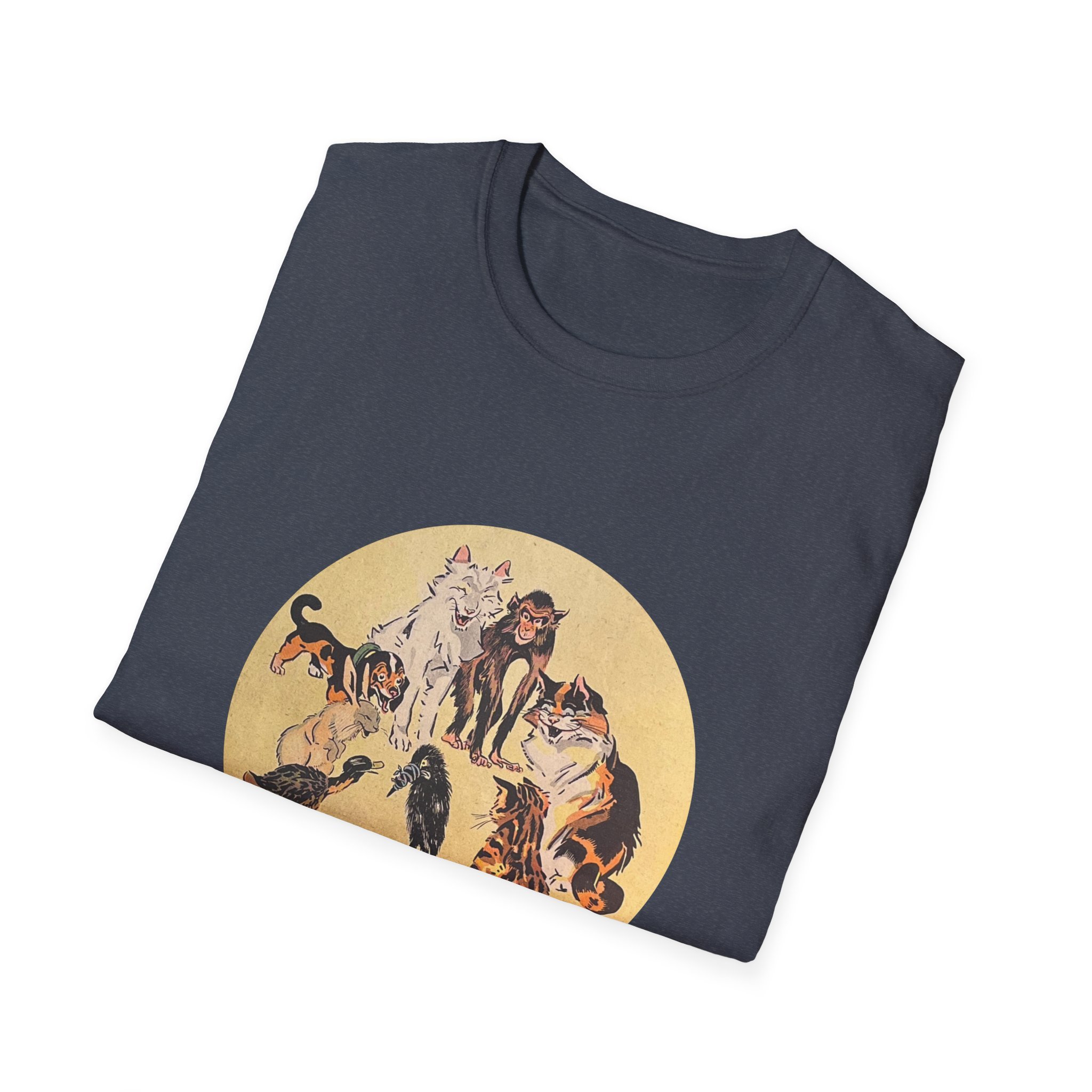
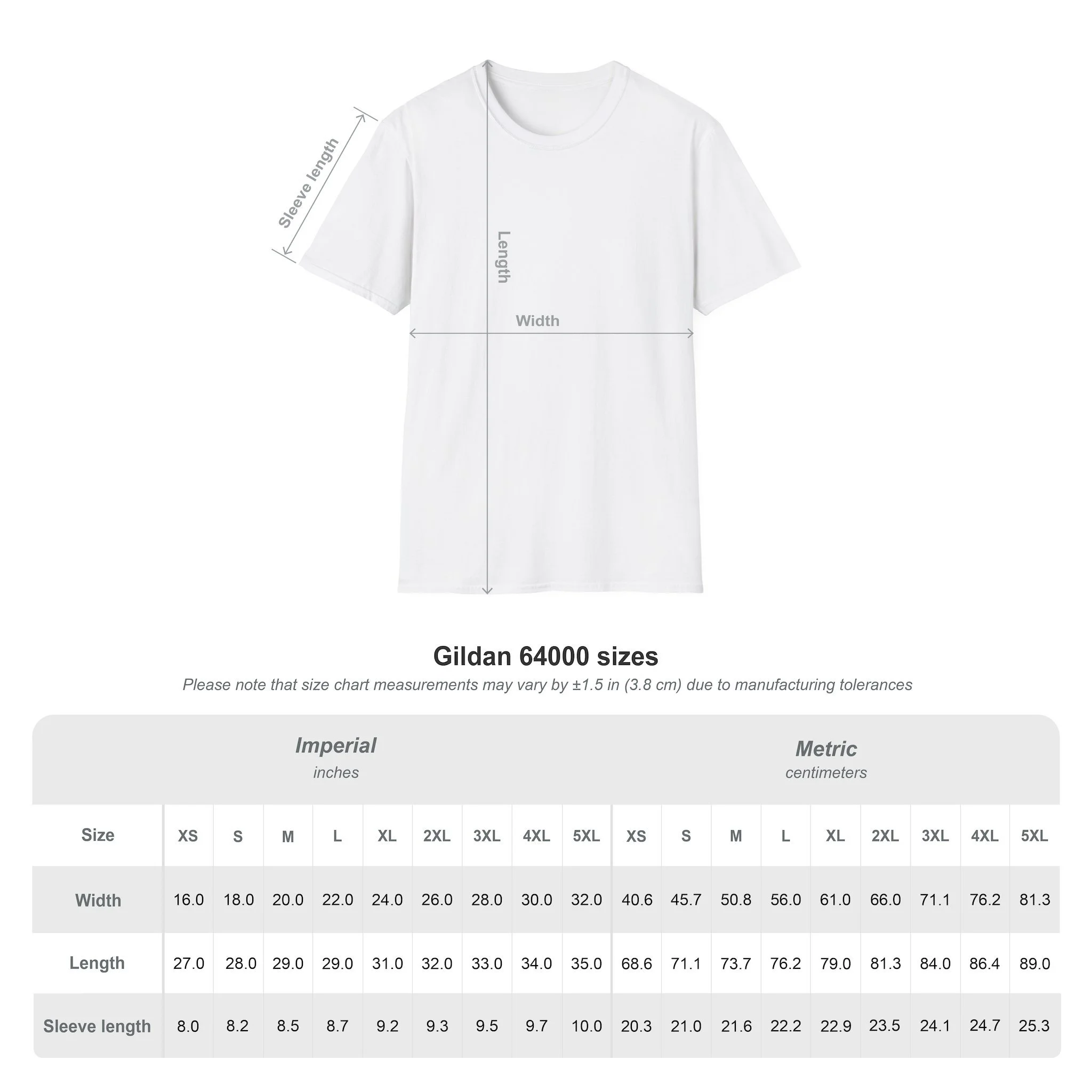
A satirical critique of group dynamics, noise, and the politics of who gets heard.
The image presents collective life as a performance of attention, where excess speech becomes disruption and silence is imposed for the sake of order. Humor carries the critique gently, suggesting that harmony is often achieved not through agreement, but through exclusion disguised as necessity.
Historical Note
This illustration appeared in a 1916 issue of La Baïonnette and was drawn by Jacques Nam. Using an animal fable, it turns everyday social tension into light satire, relying on posture and composition rather than exaggeration to deliver its wit.
100% ring-spun cotton | Pearlized tear-away label | Oeko-Tex certified | Unisex
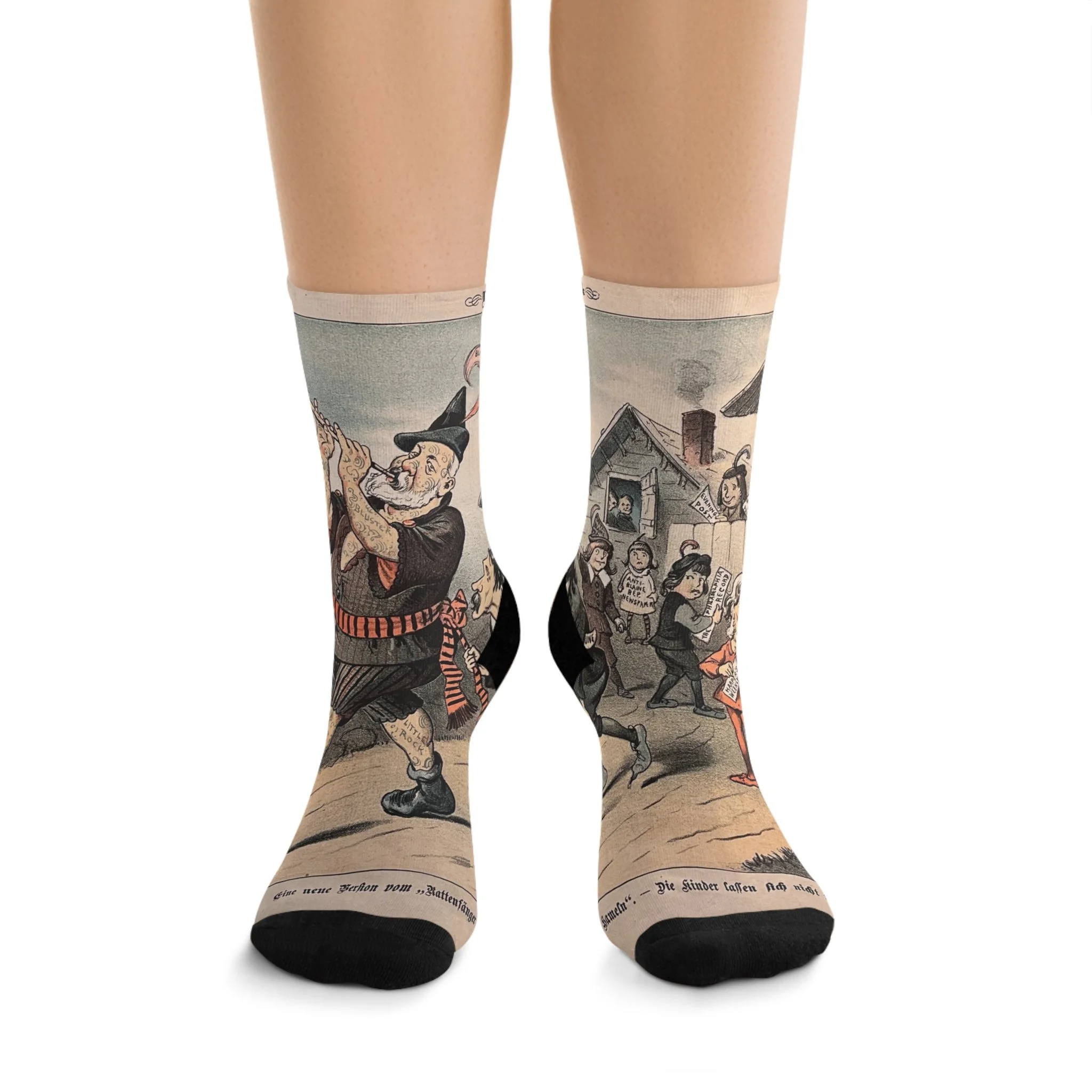
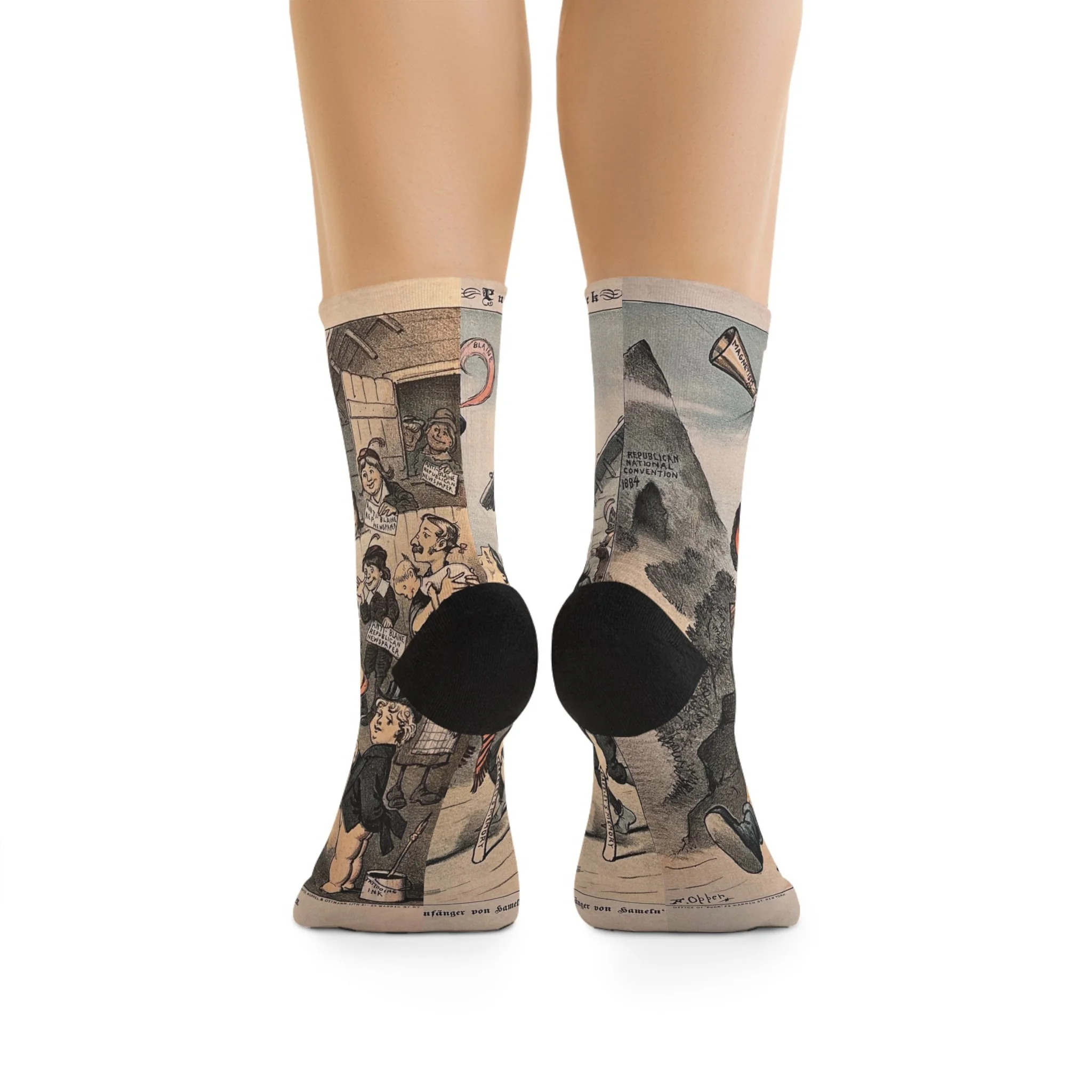
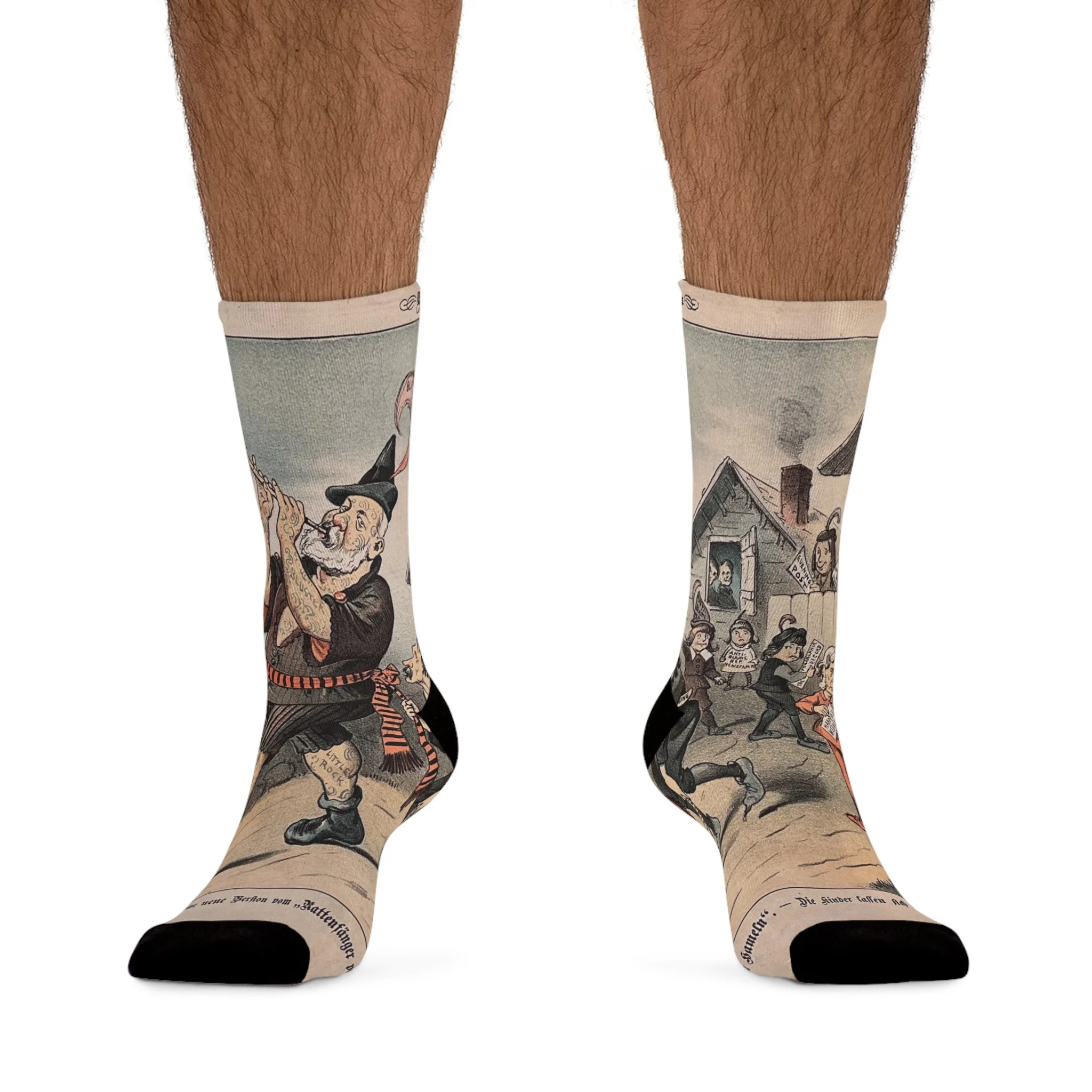
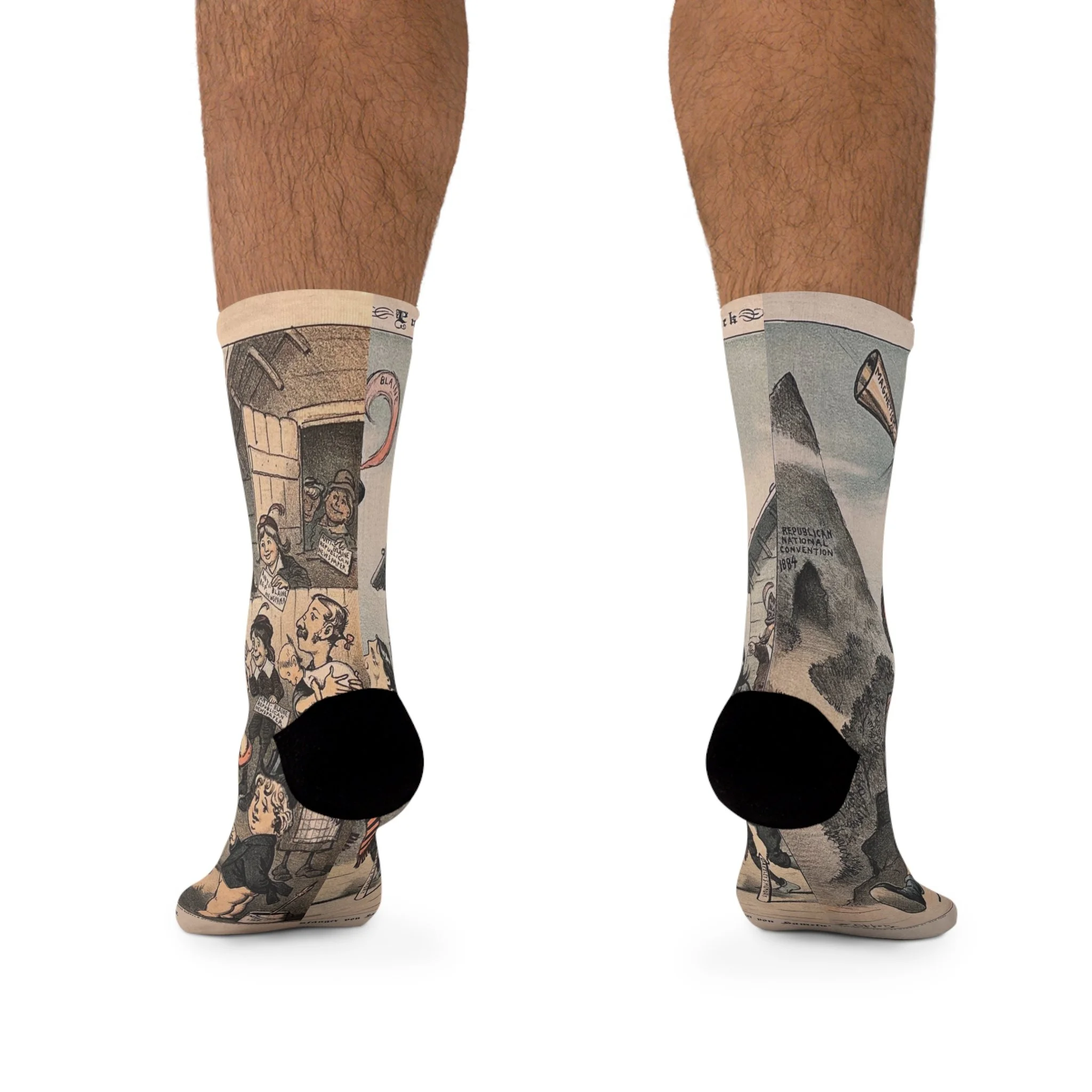
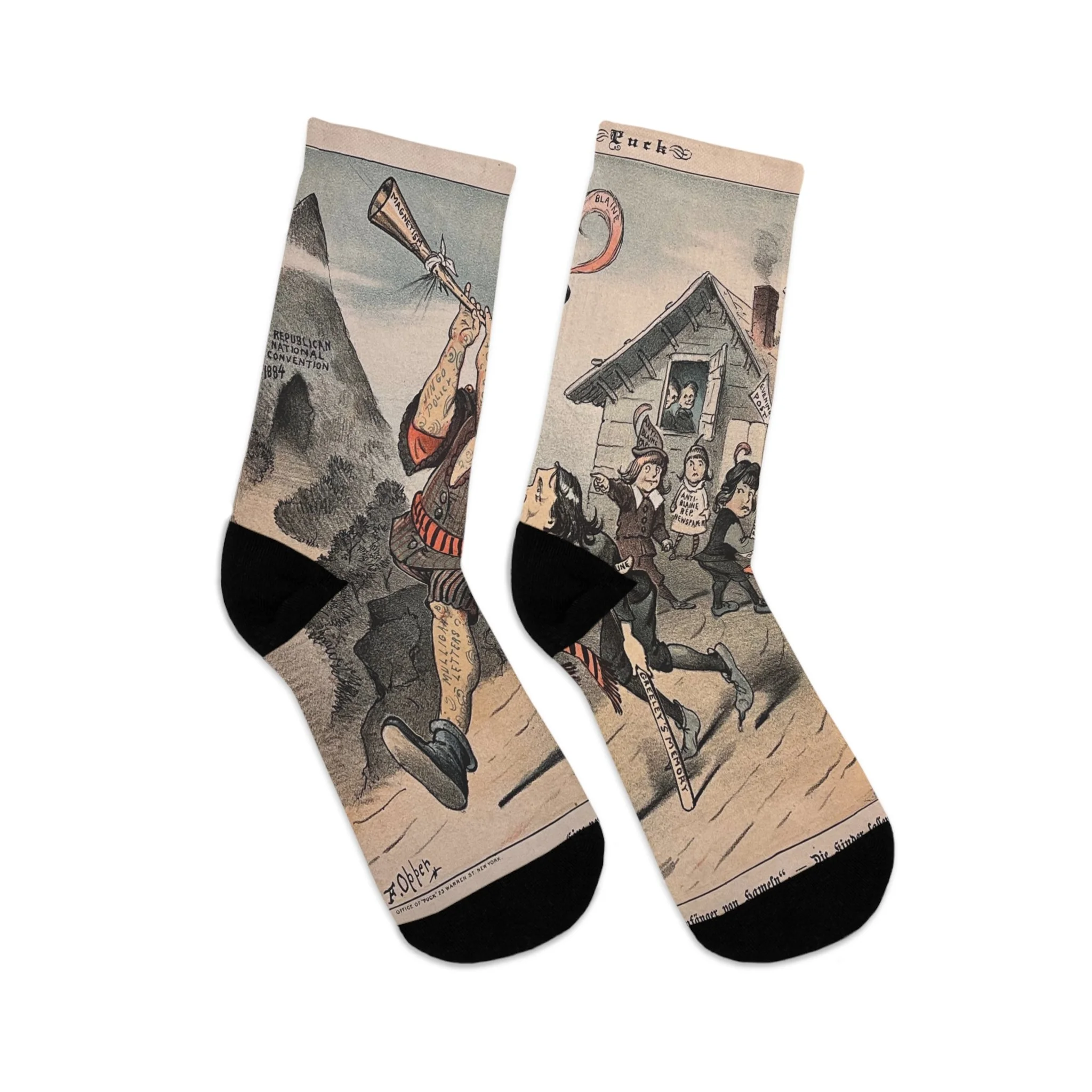
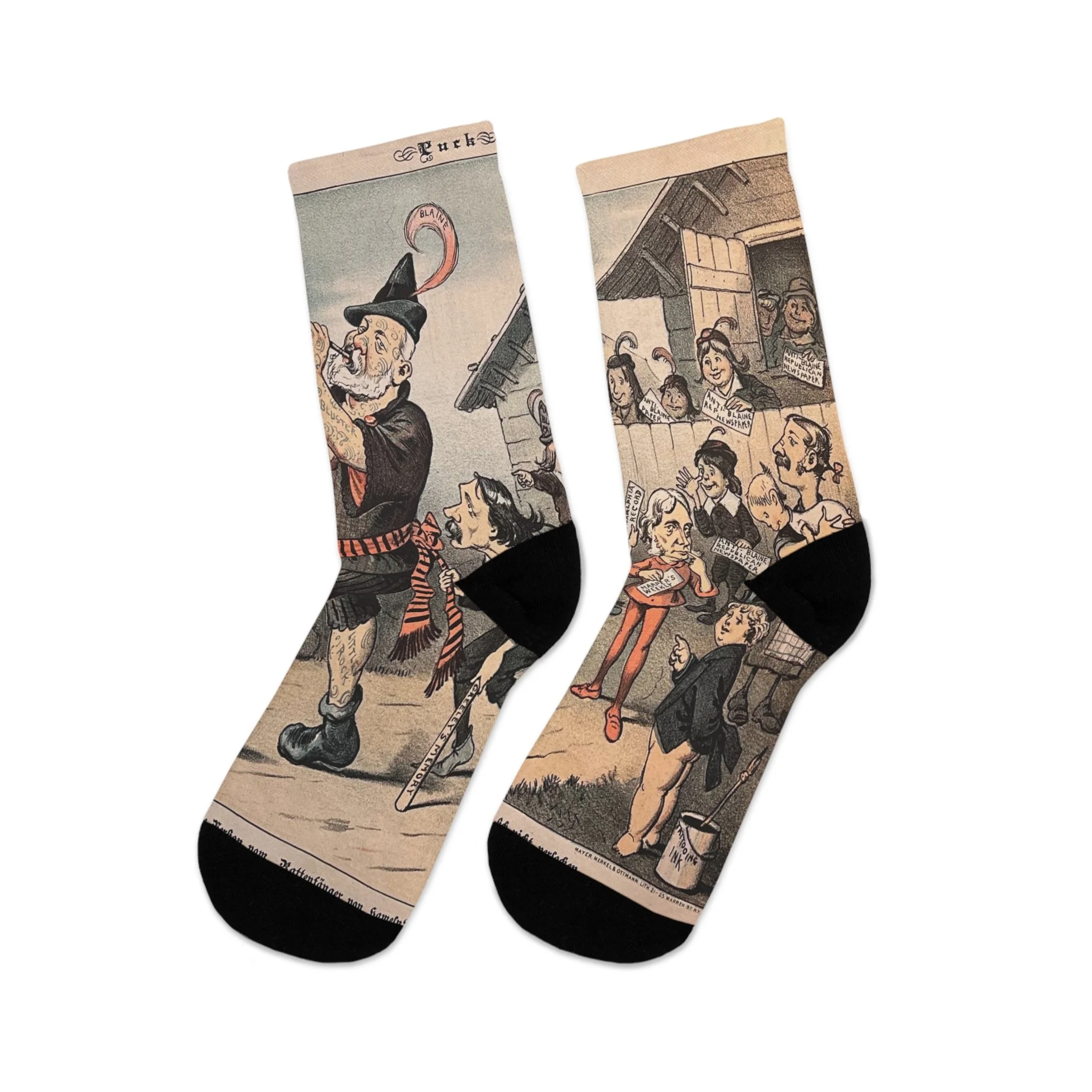
A satire of political demagoguery and the attempted capture of the press.
The image frames influence as performance rather than persuasion, exposing how power tries—and fails—to convert spectacle into obedience. Authority appears confident in its charm, yet unable to command credibility, underscoring the role of resistance in public discourse.
Historical Note
This cartoon appeared in an 1884 issue of Puck magazine and was illustrated by Frederick Burr Opper. It depicts a political figure modeled on the Pied Piper attempting to lure newspaper editors with a flute labeled “Magnetic Influence,” satirizing efforts to manipulate the press during the Republican National Convention.
Crew length | Recycled polyester–cotton blend | All-over print with solid black toe and heel accents
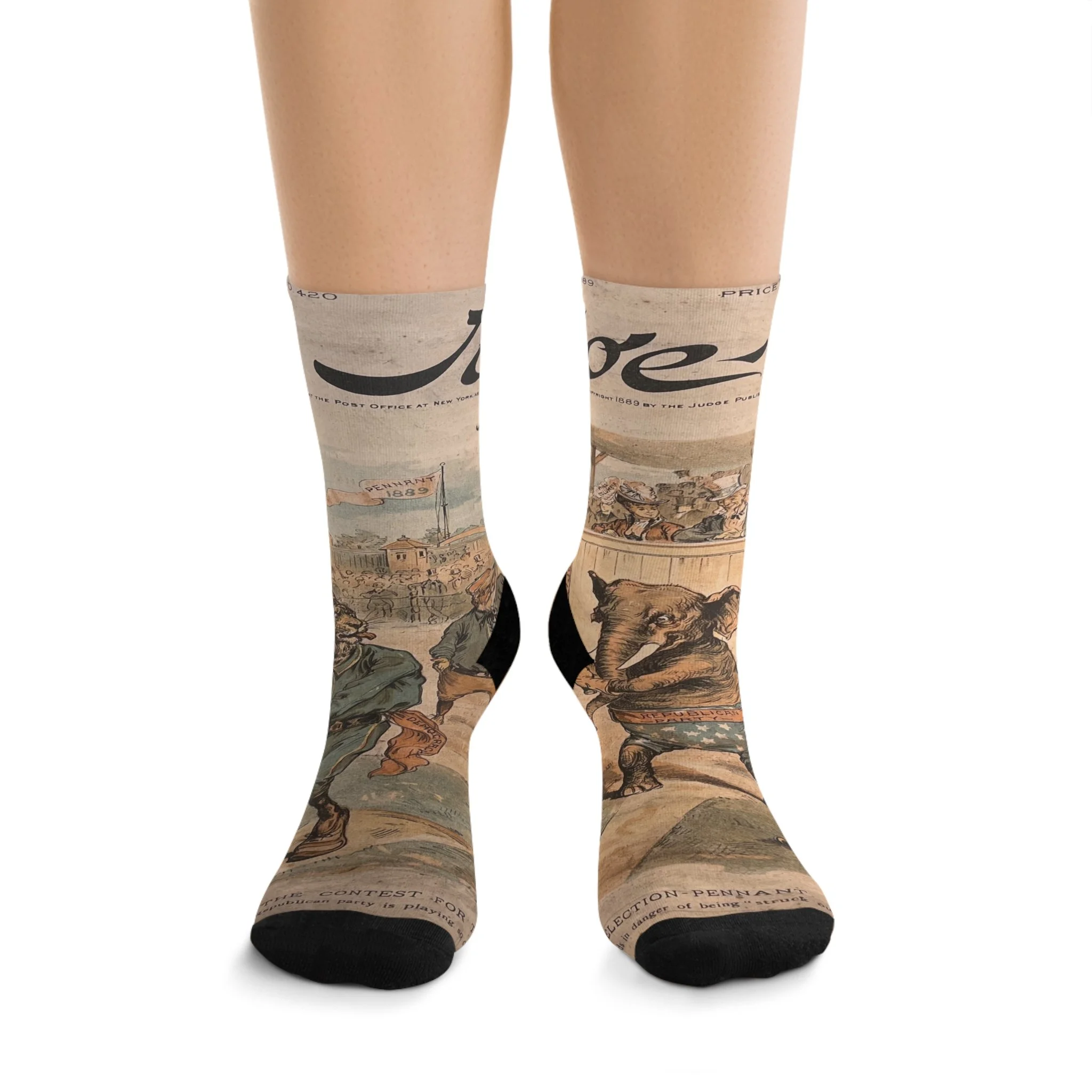
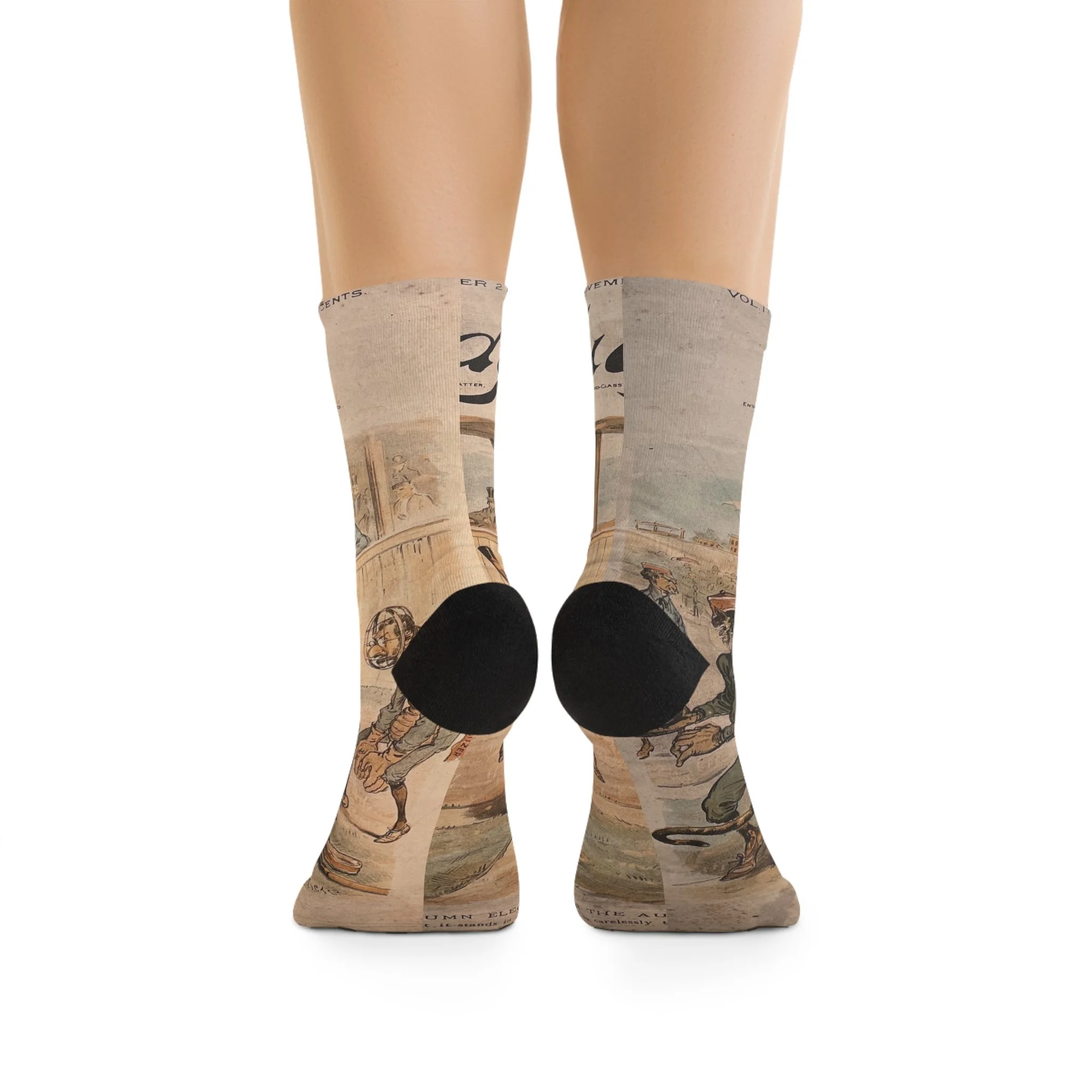
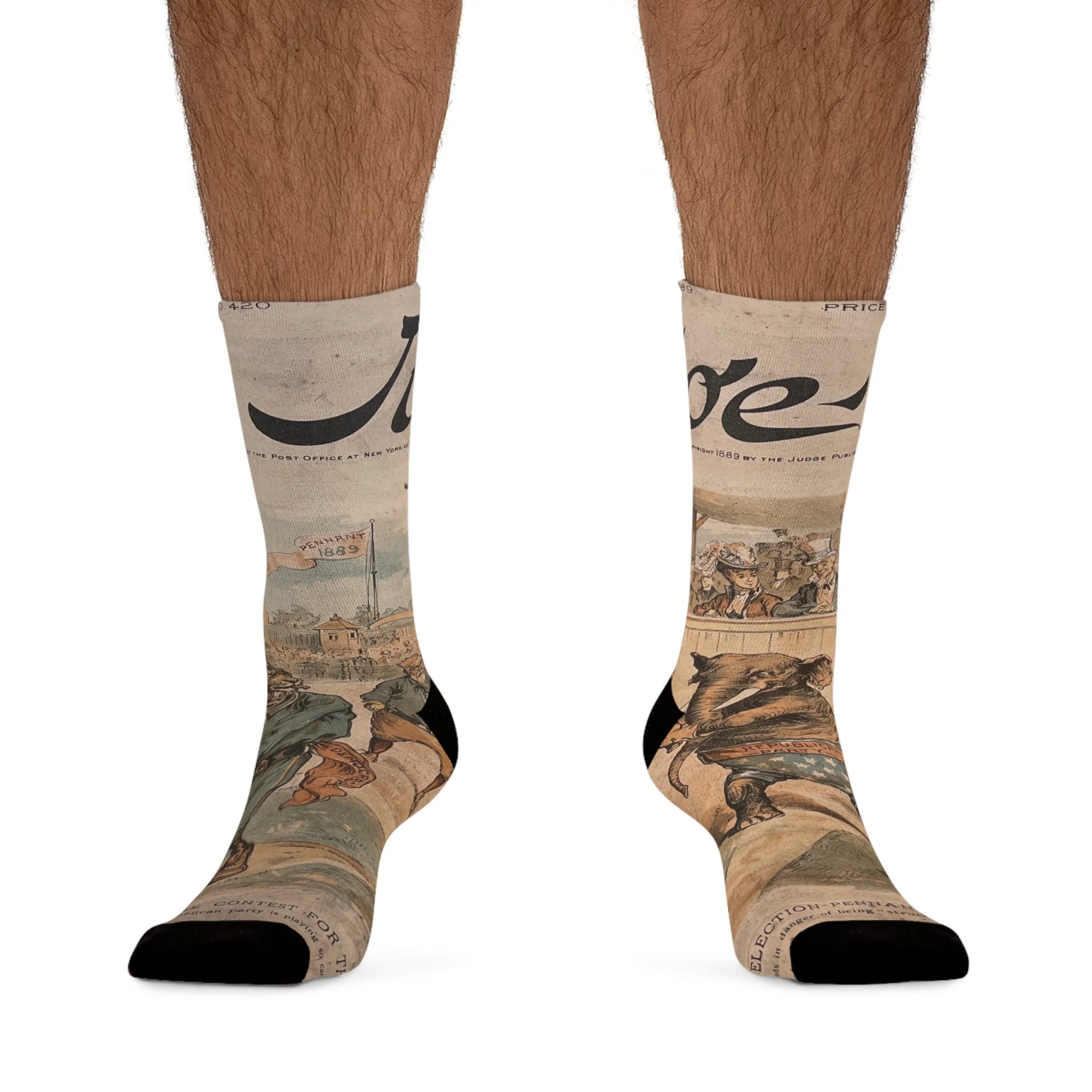
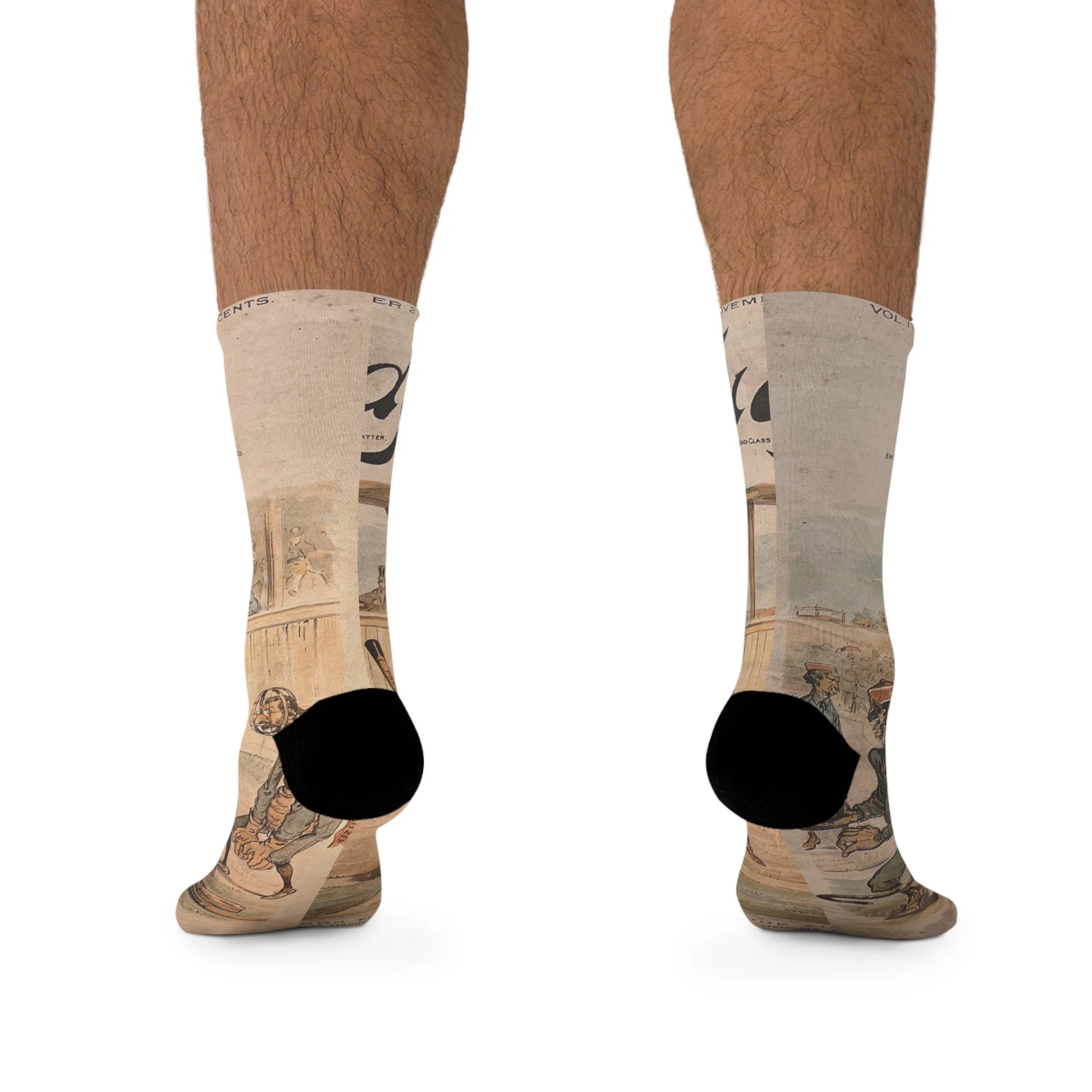
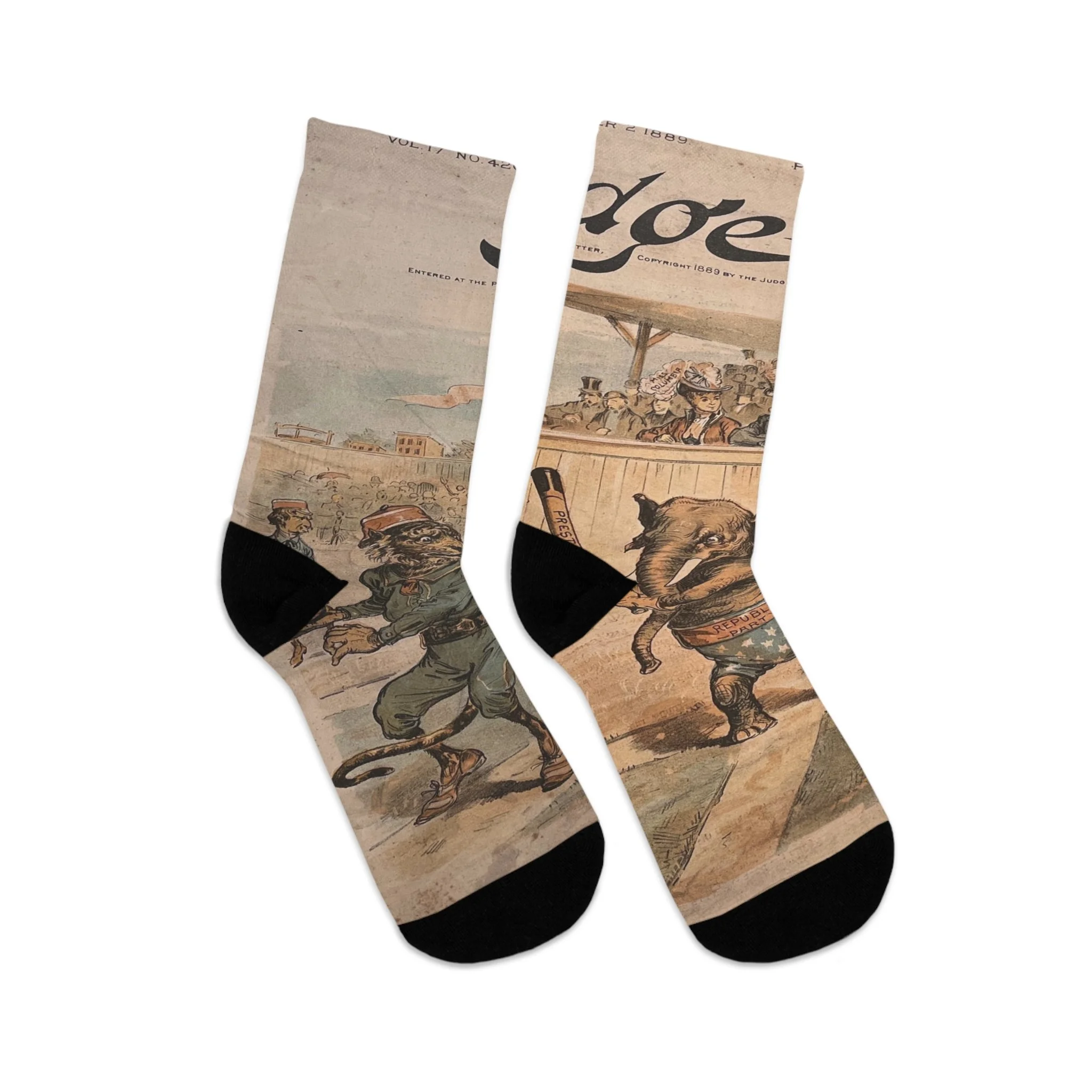
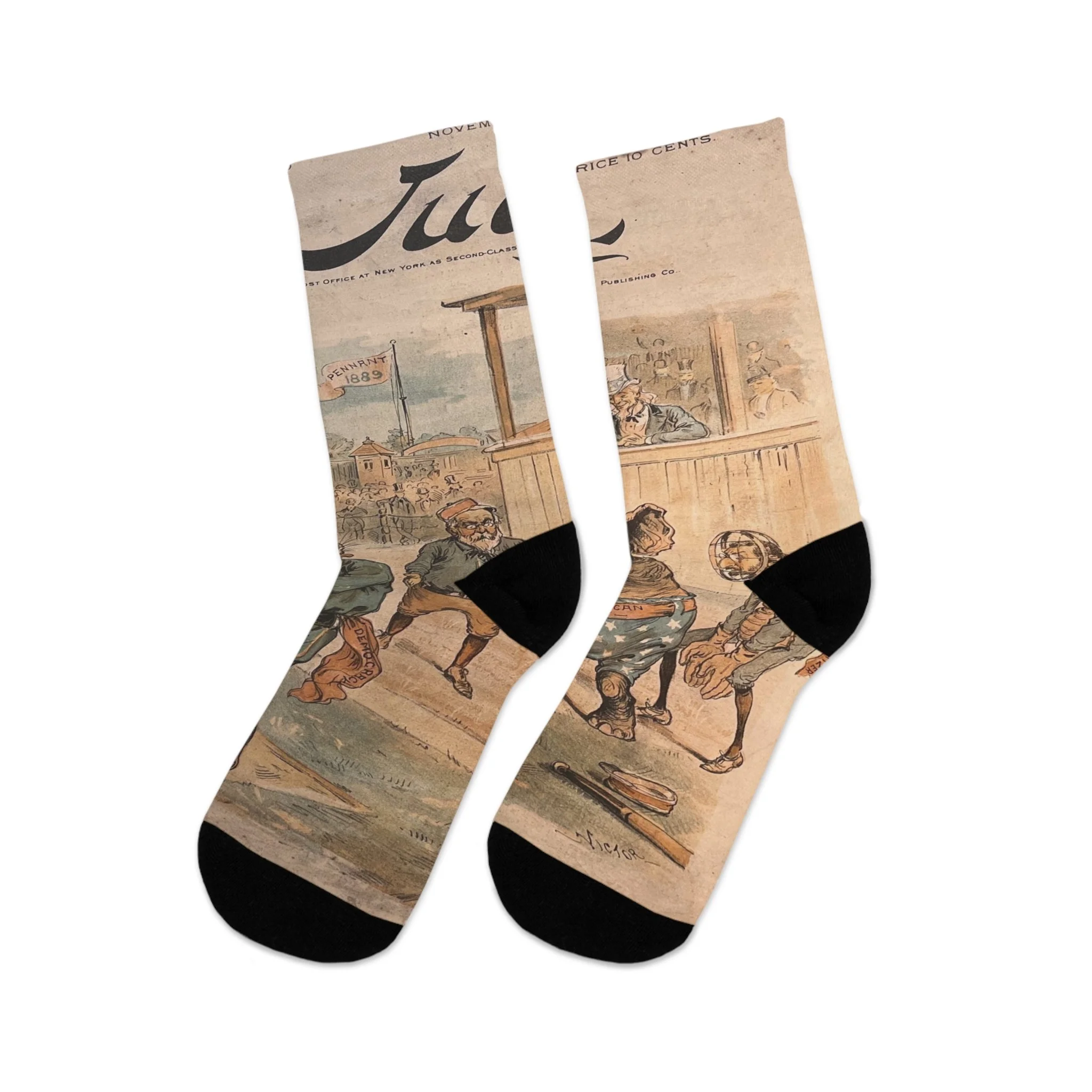
Satire focused on political complacency and the consequences of careless power.
The image frames electoral politics as a competitive arena where GOP misjudgment and overconfidence invite defeat. Authority appears inattentive and exposed, suggesting that dominance erodes when discipline gives way to entitlement and routine advantage.
Historical Note
This cover appeared in an 1889 issue of Judge magazine and was illustrated by Victor Gillam, a prominent political cartoonist of the Gilded Age known for his critiques of party politics, corruption, and electoral strategy.
Crew length | Recycled polyester–cotton blend | All-over print with solid black toe and heel accents
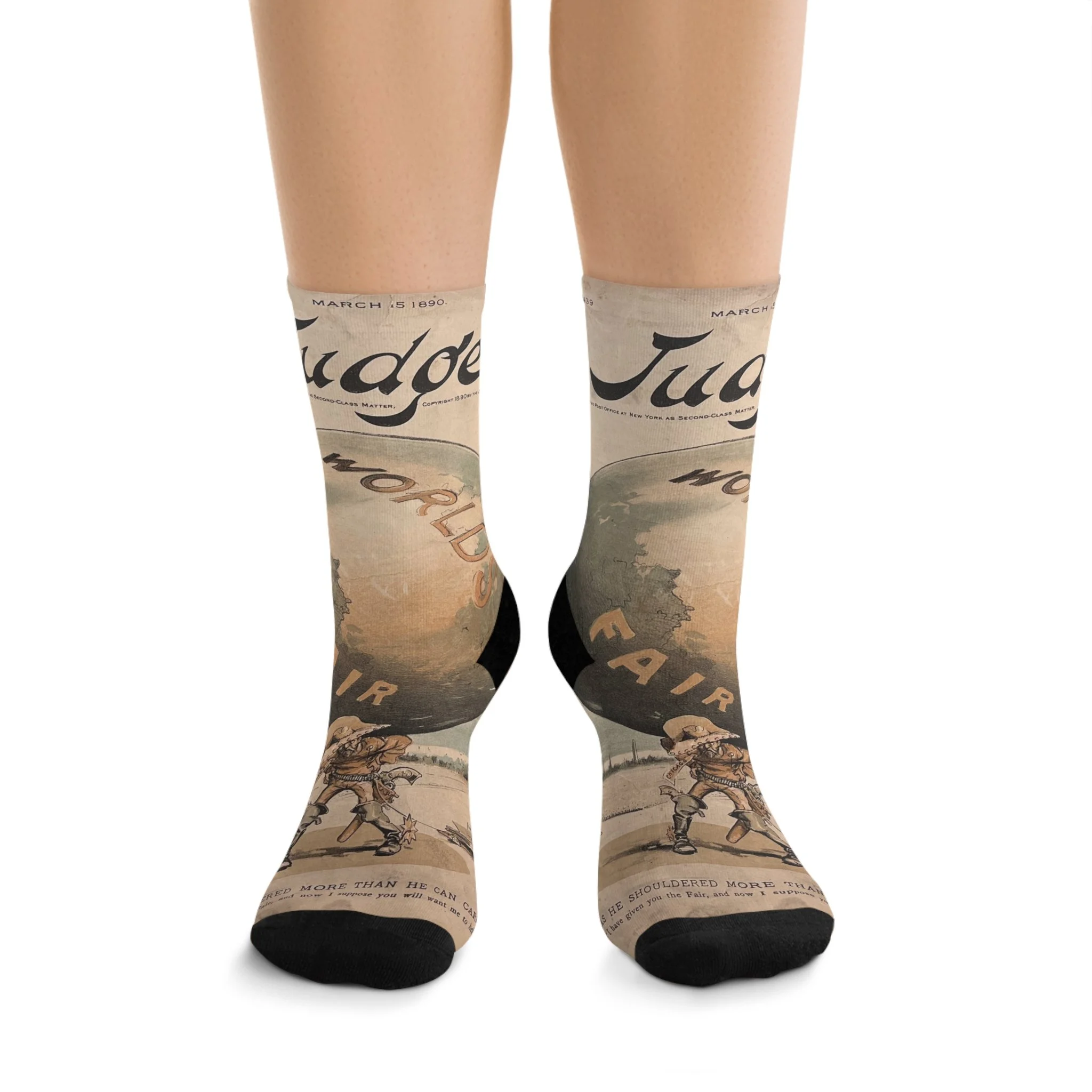
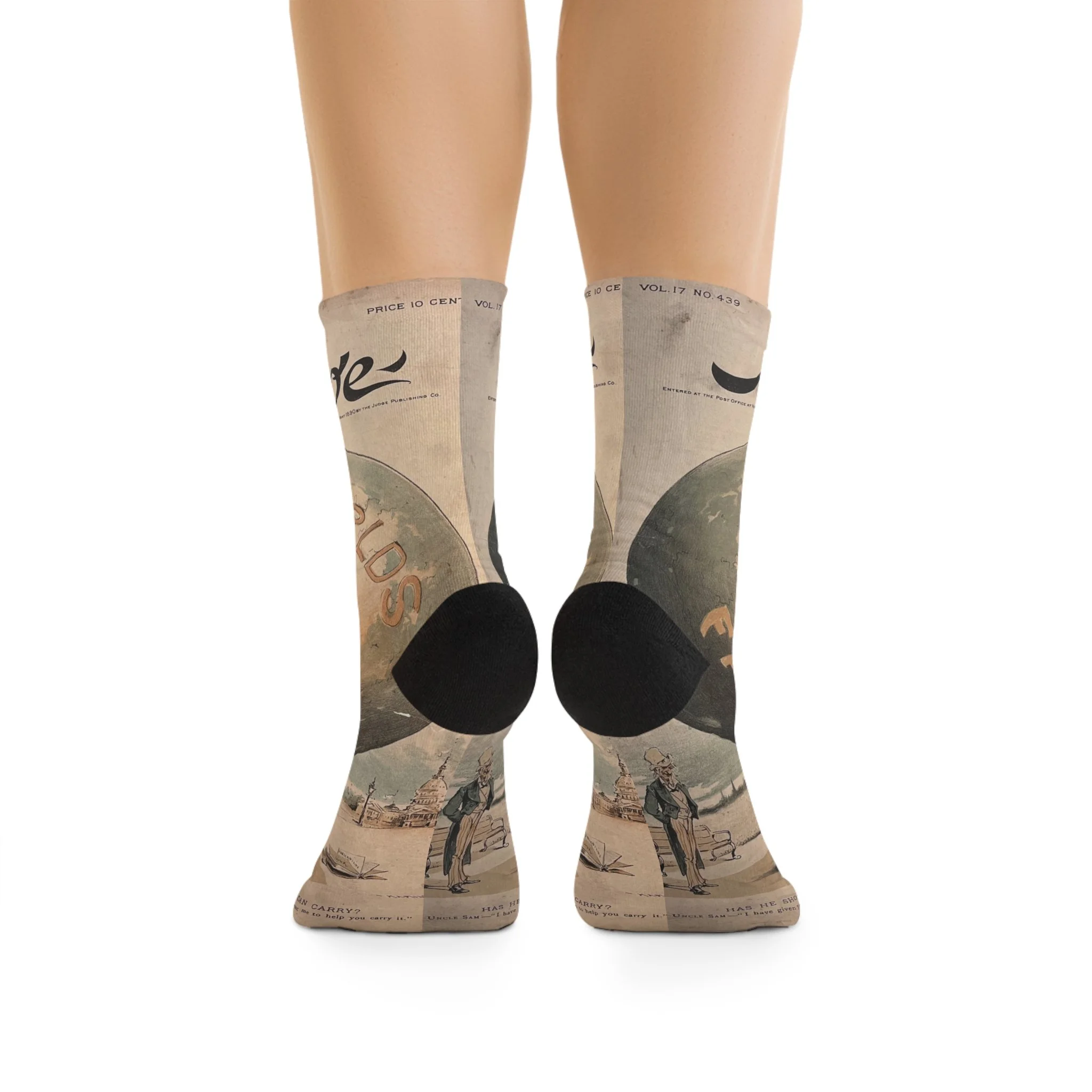
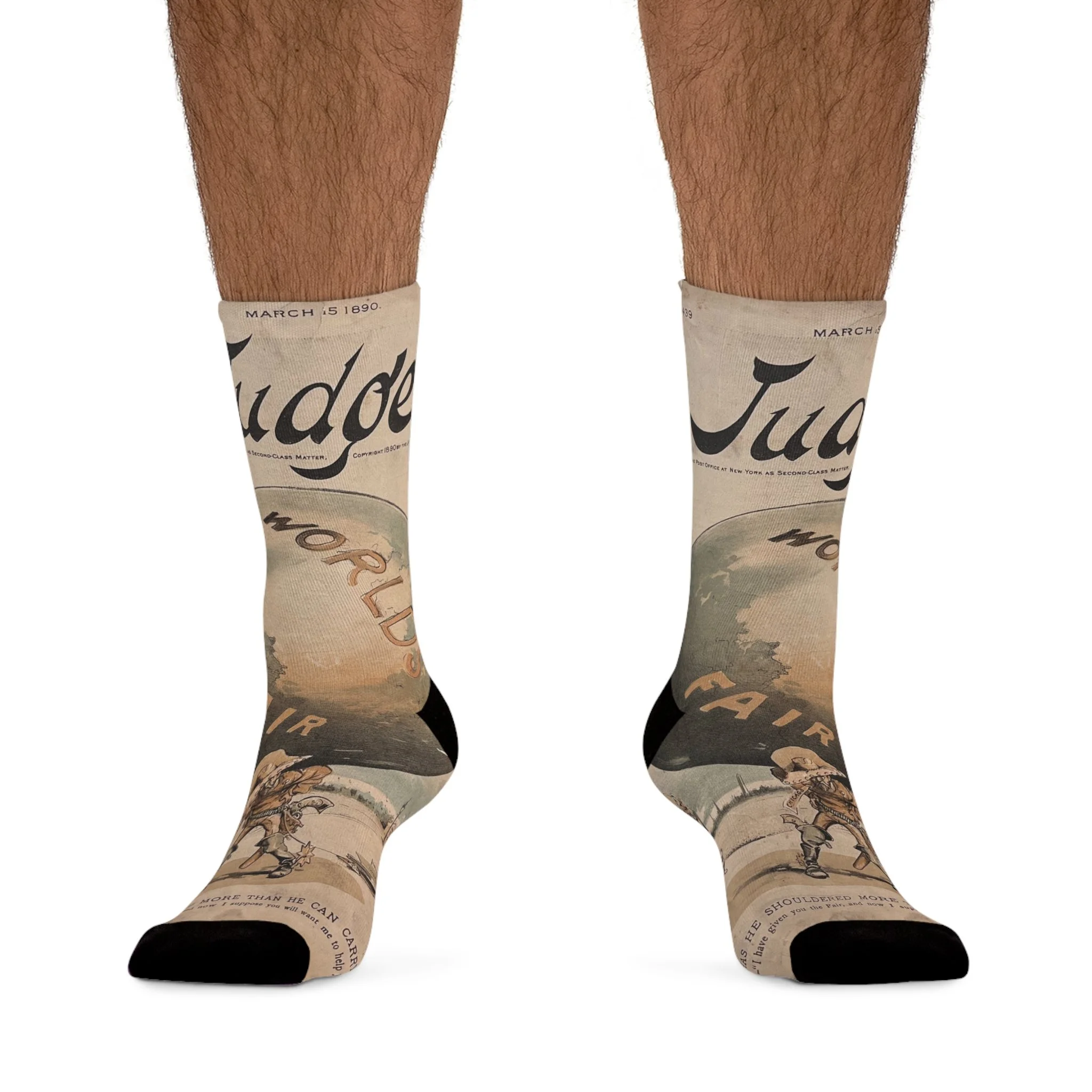
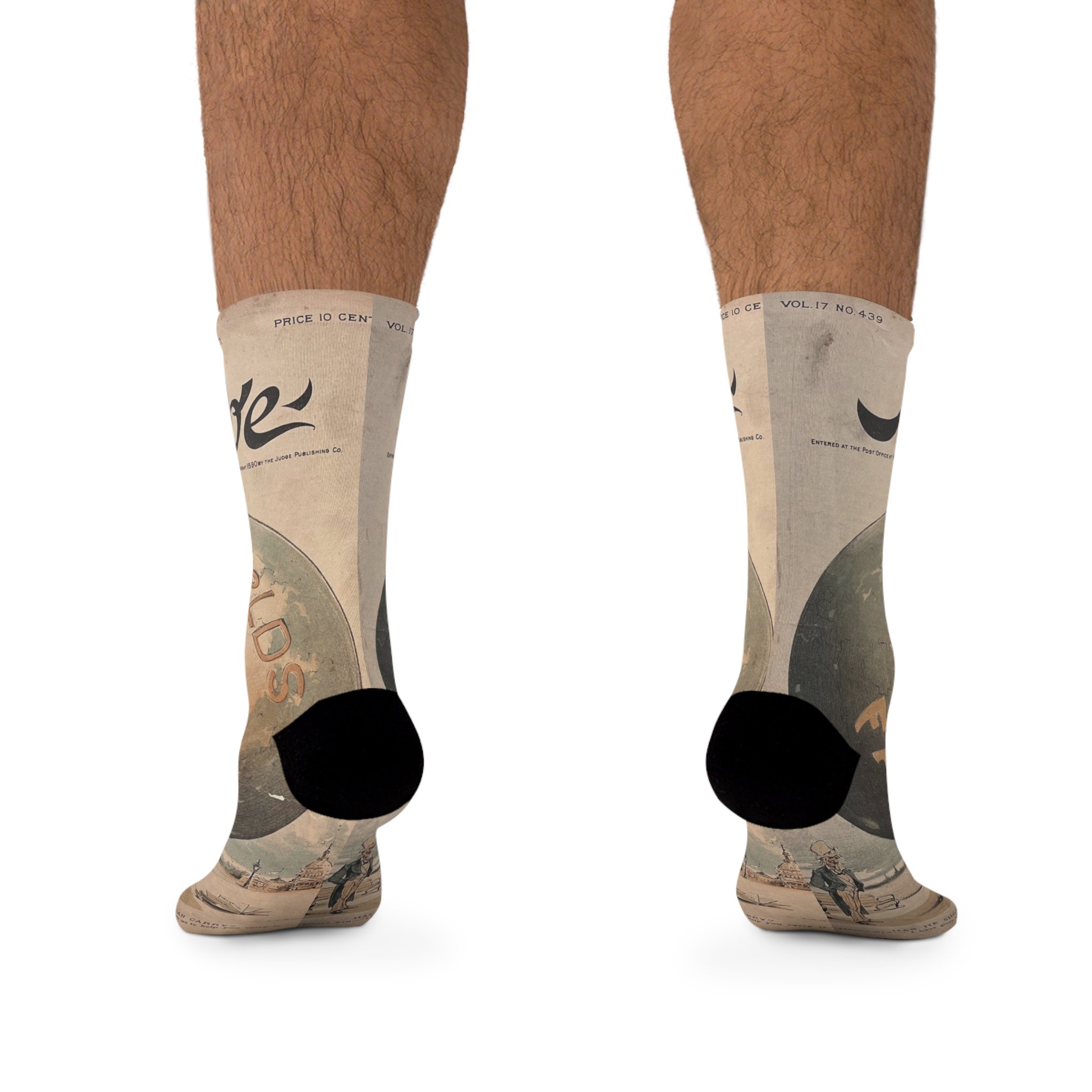
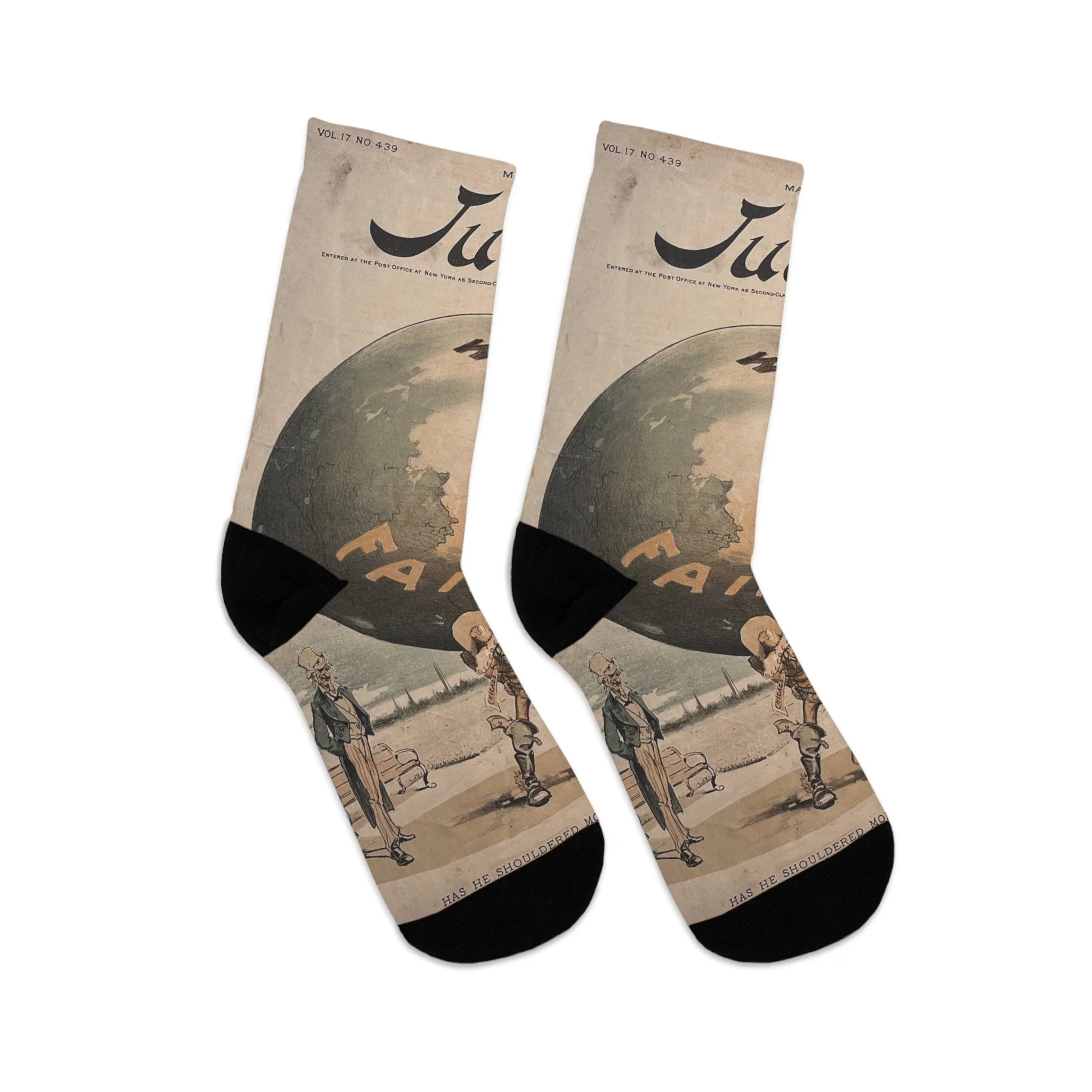
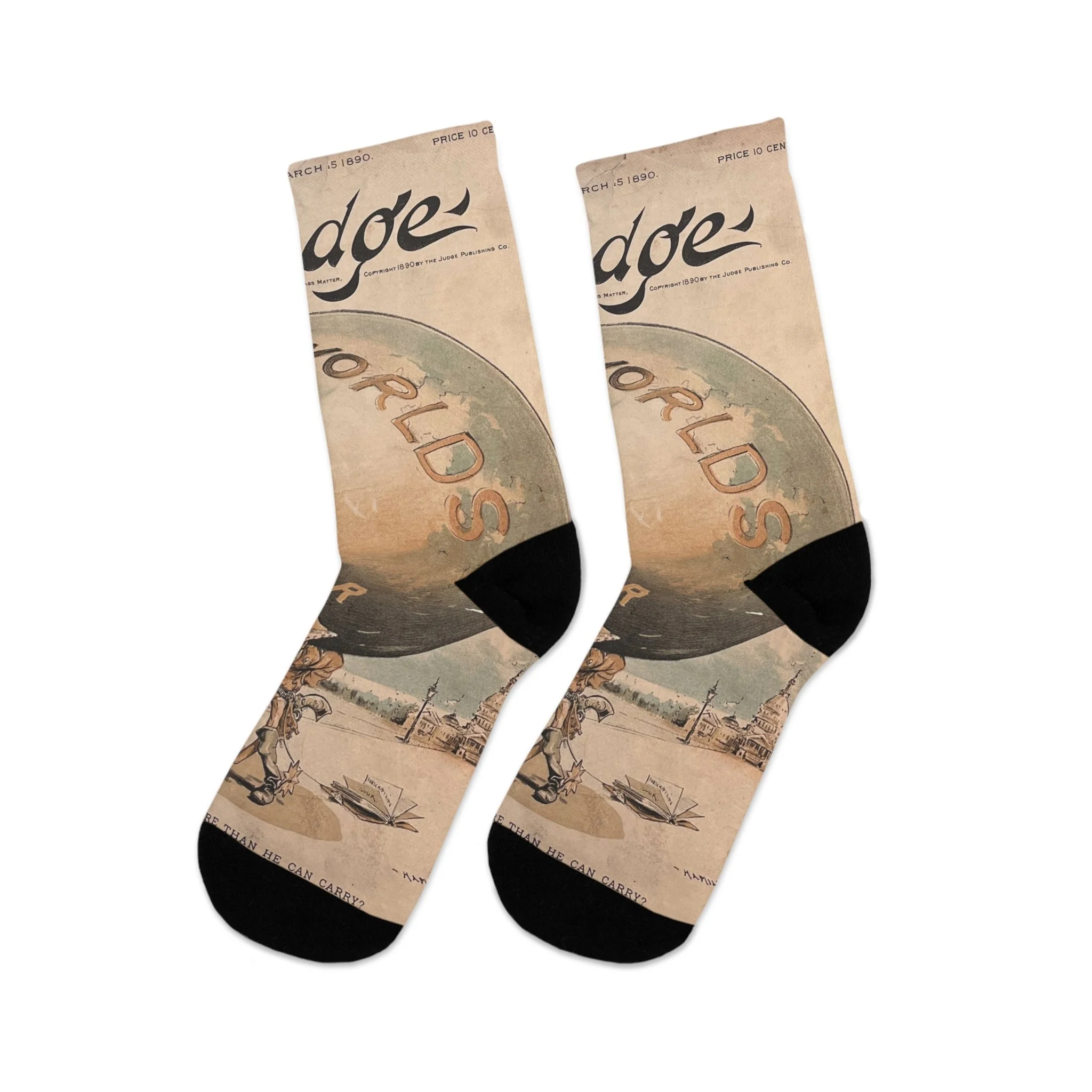
Satire directed at civic ambition inflated beyond capacity.
When leaders pursue prestige, spectacle, and headlines as ends in themselves, public institutions are often left to absorb the weight. Late-nineteenth-century satire recognized how grand projects can substitute image for governance—and how the consequences are rarely carried by those who make the promises.
Historical note:
The image comes from an 1890 issue of Judge magazine, critiquing Chicago’s campaign to host the World’s Columbian Exposition. The cartoon depicts the city personified as an overconfident figure straining beneath a globe labeled “World’s Fair,” while Uncle Sam looks on skeptically.
Crew length | Recycled polyester-cotton blend | All-over print with solid black toe and heel accents
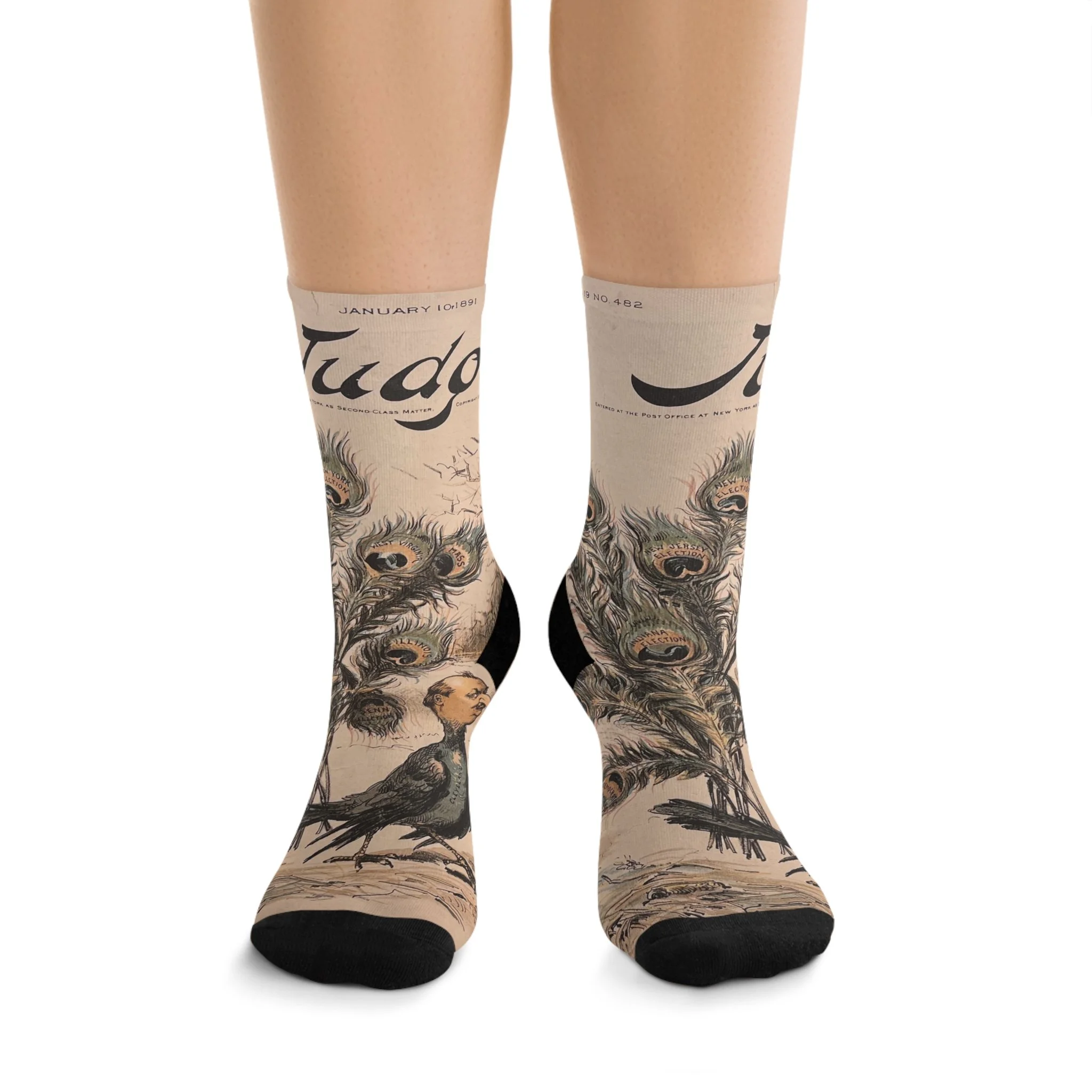
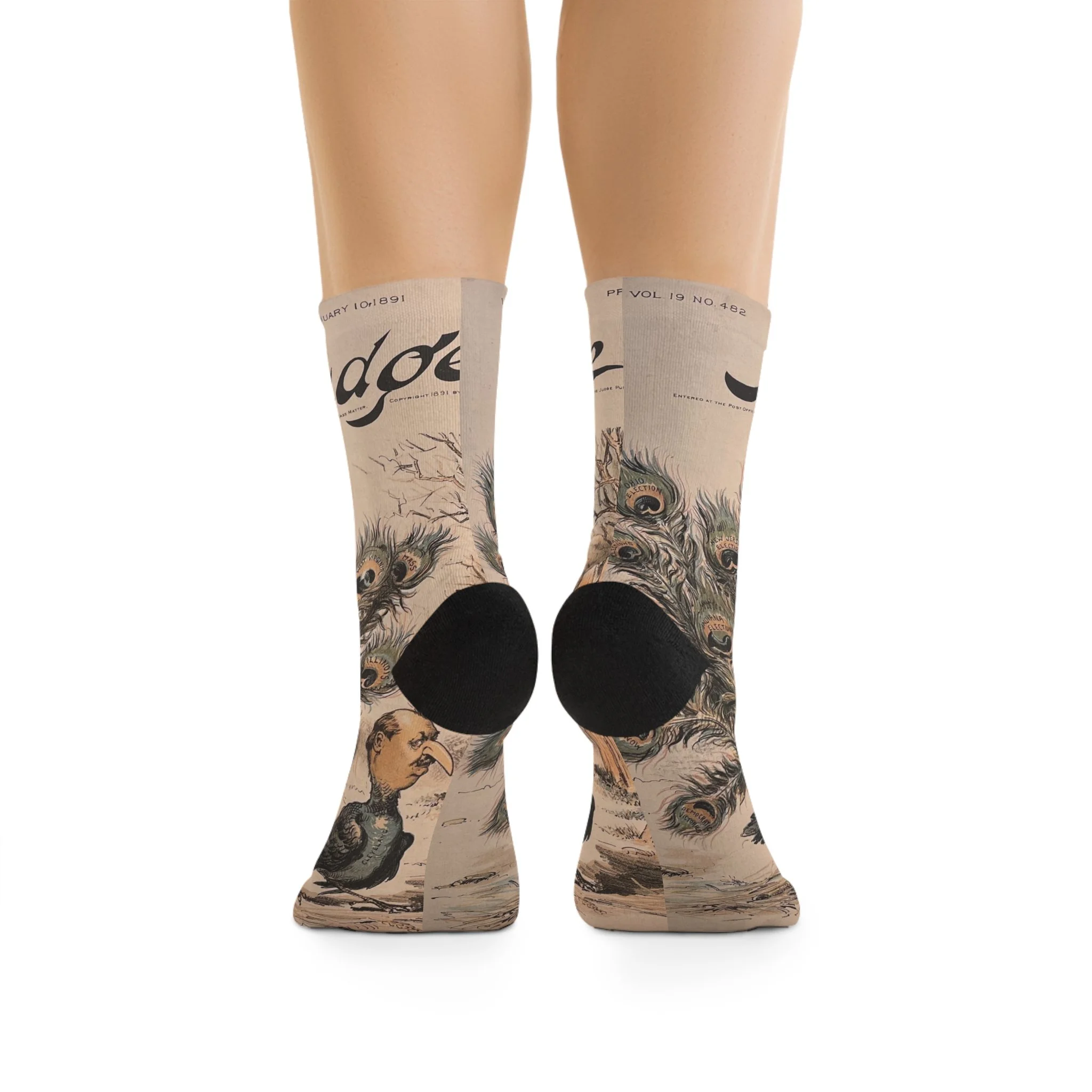

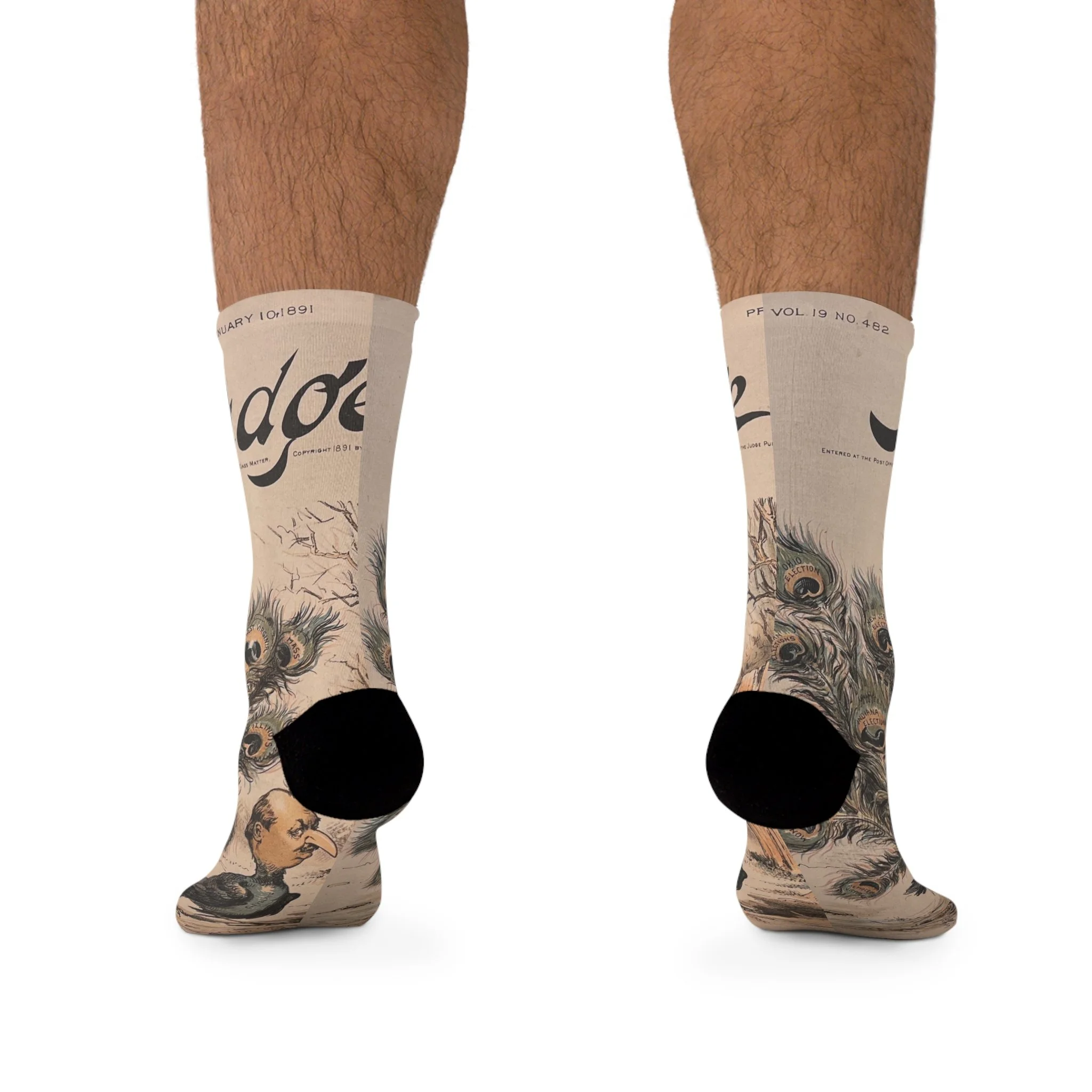

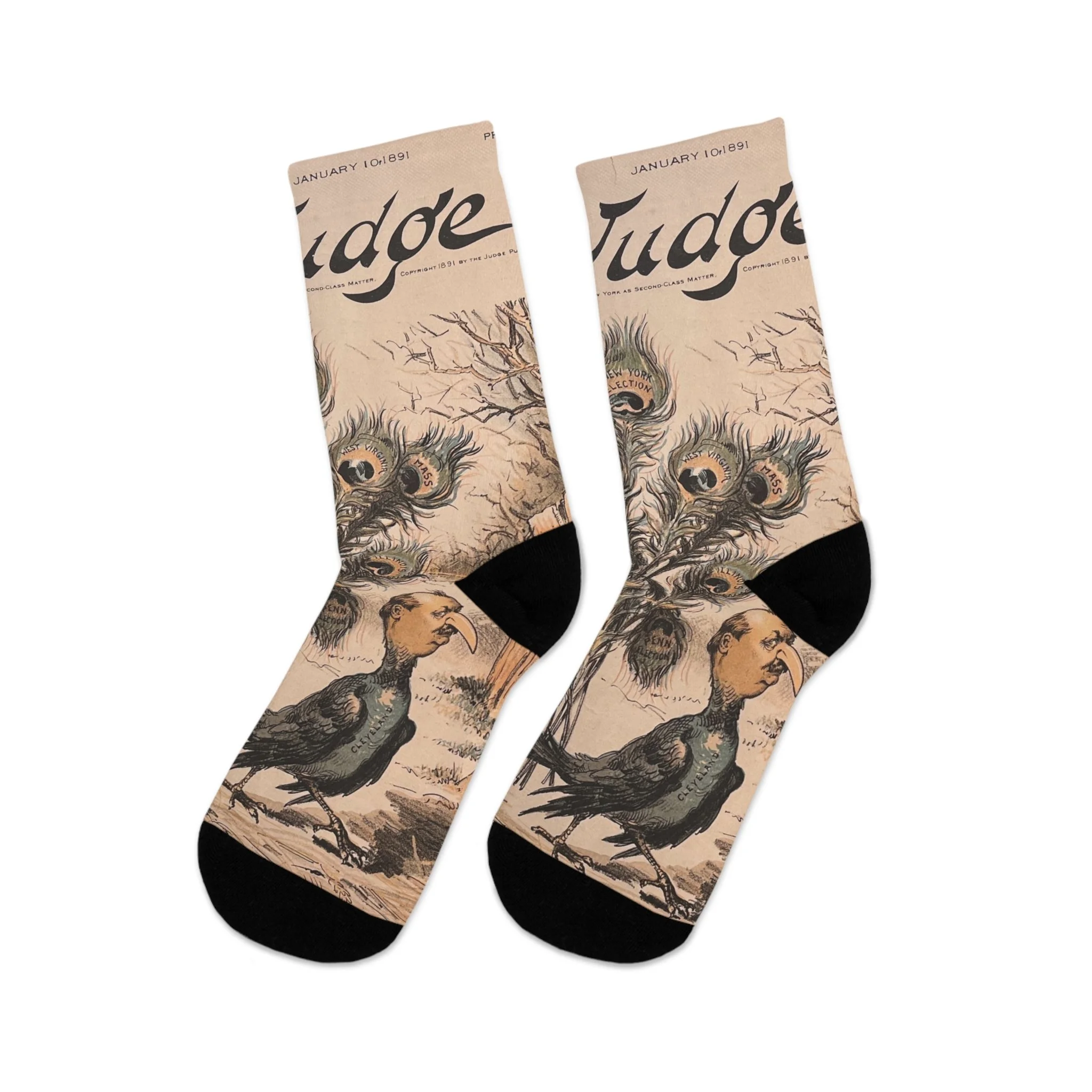
A satirical critique of political appropriation and manufactured success.
The image presents public ambition as a performance built on display rather than achievement. Authority is shown claiming outcomes it did not earn, relying on spectacle and repetition to convert loss into the appearance of victory. Power, here, is less about results than about who controls the narrative.
Historical Note
This cartoon appeared in an 1891 issue of Judge magazine and was illustrated by Victor Gillam. It uses visual parody to critique political figures who claim credit through exaggeration, display, and rhetorical sleight of hand rather than electoral fact.
Crew length | Recycled polyester-cotton blend | All-over print with solid black toe and heel accents
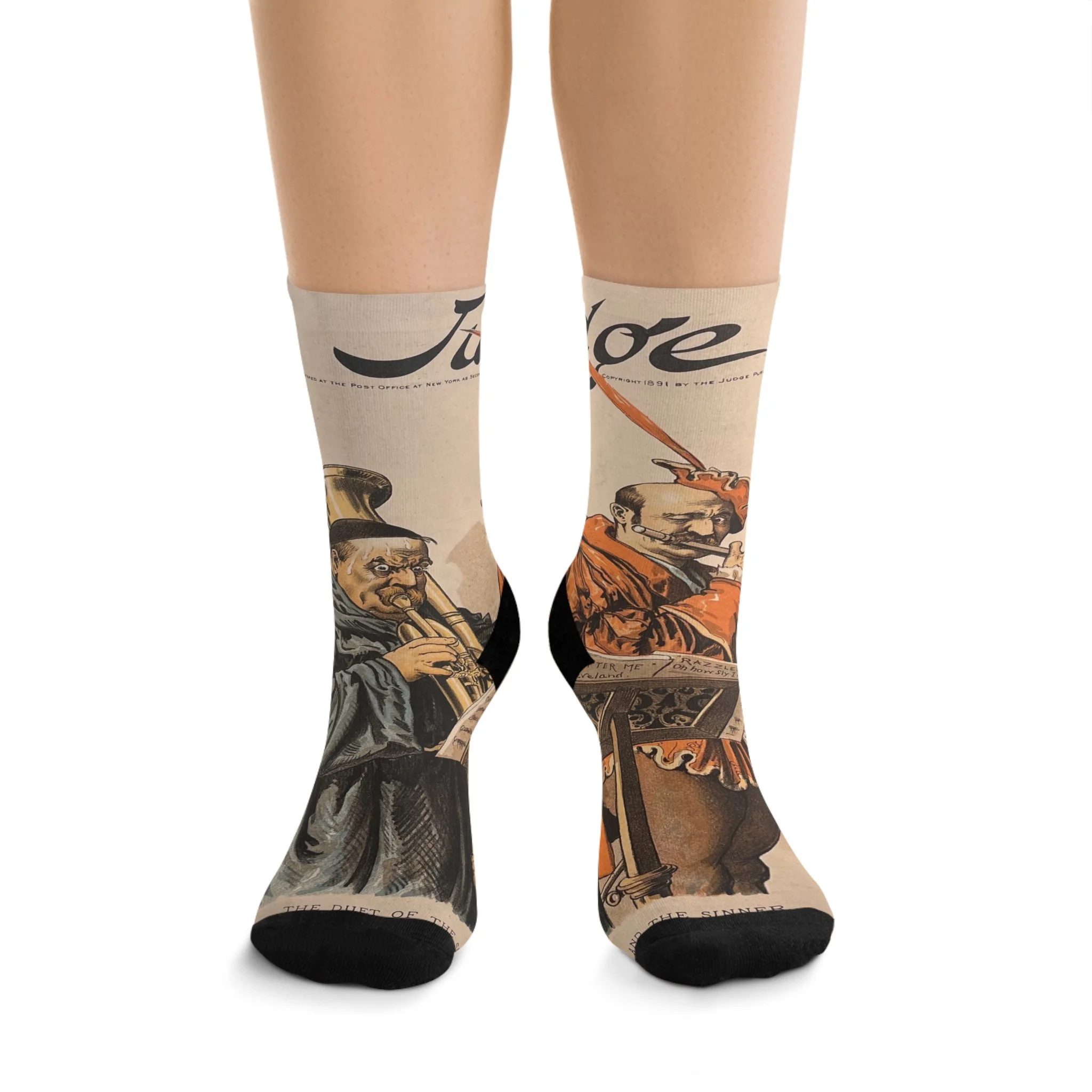

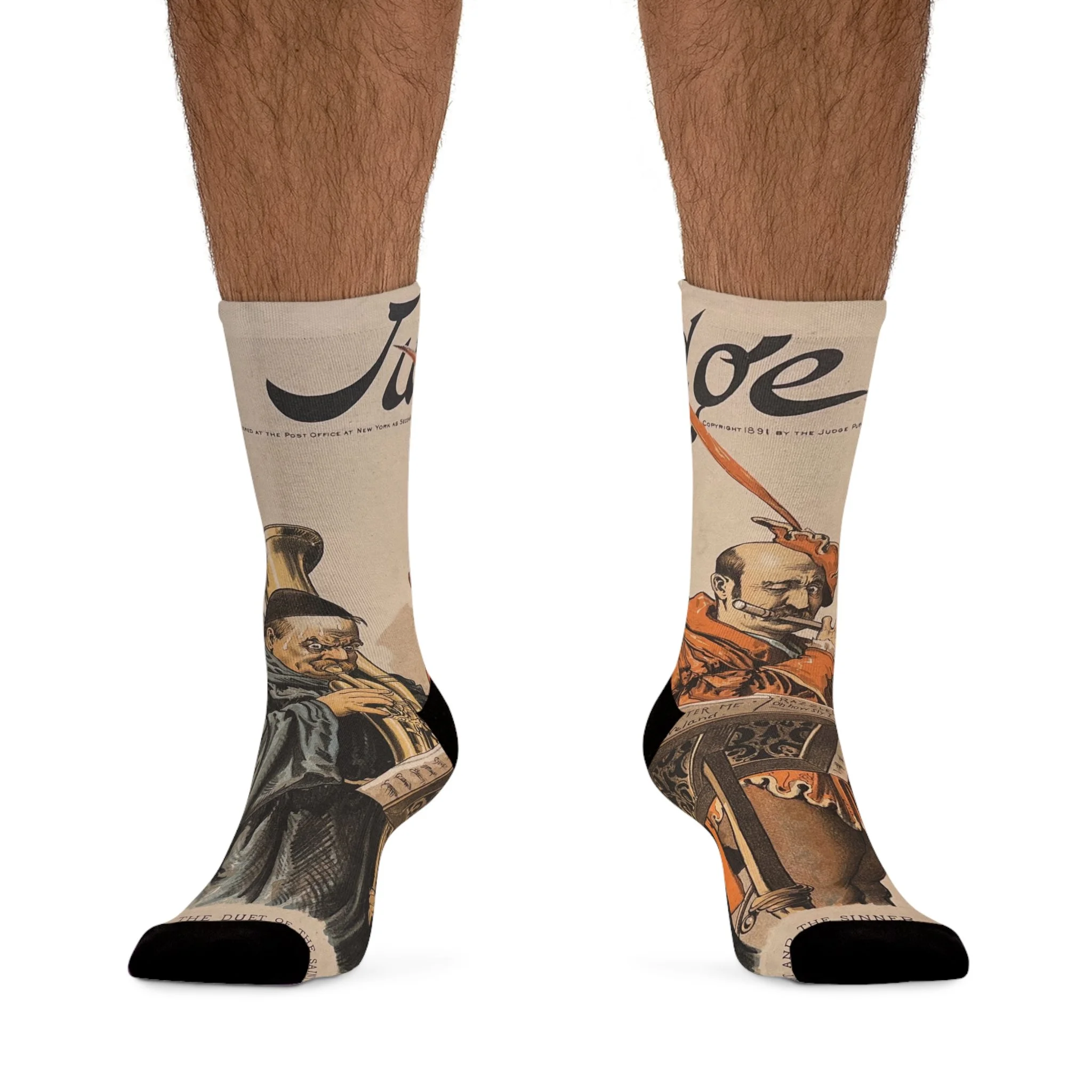
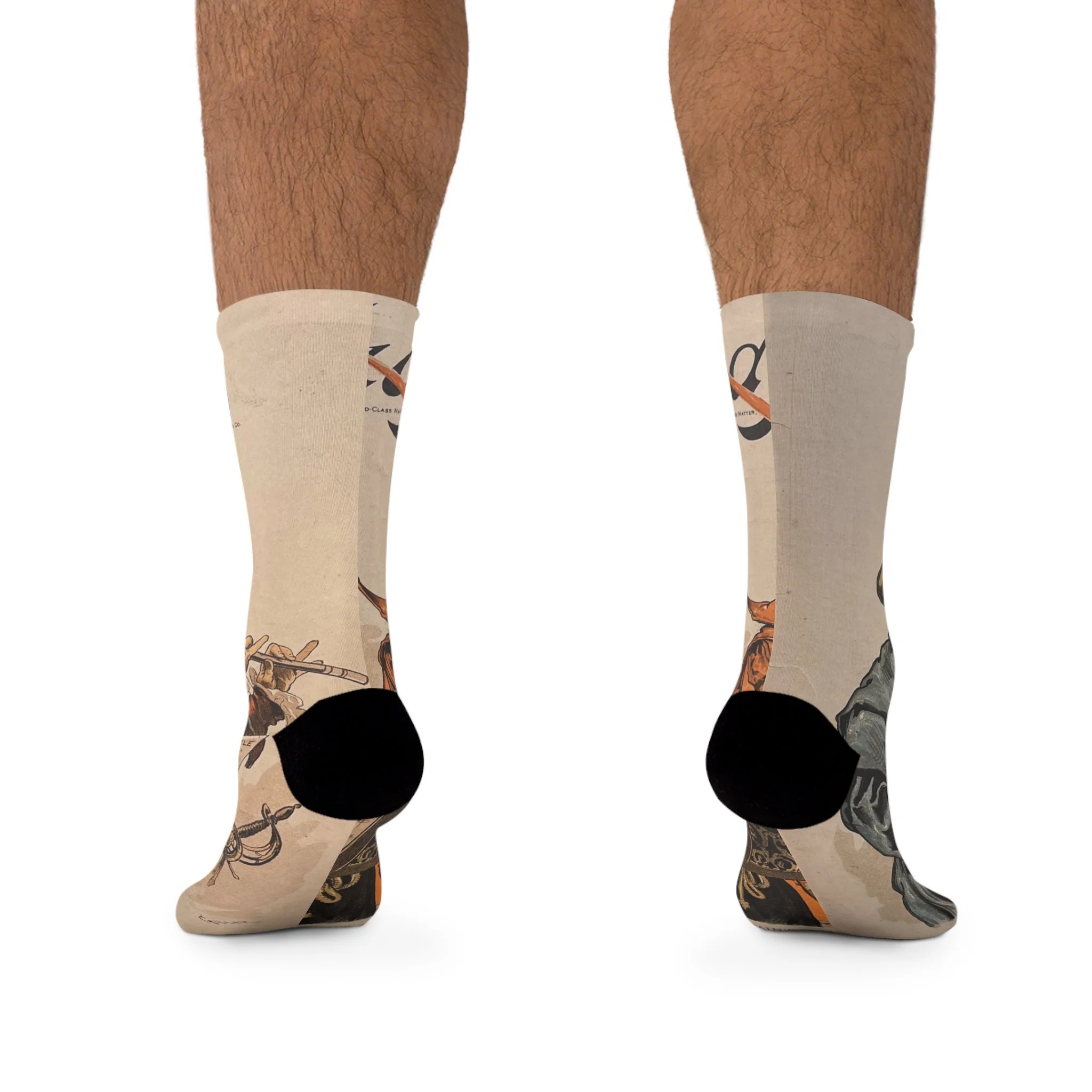
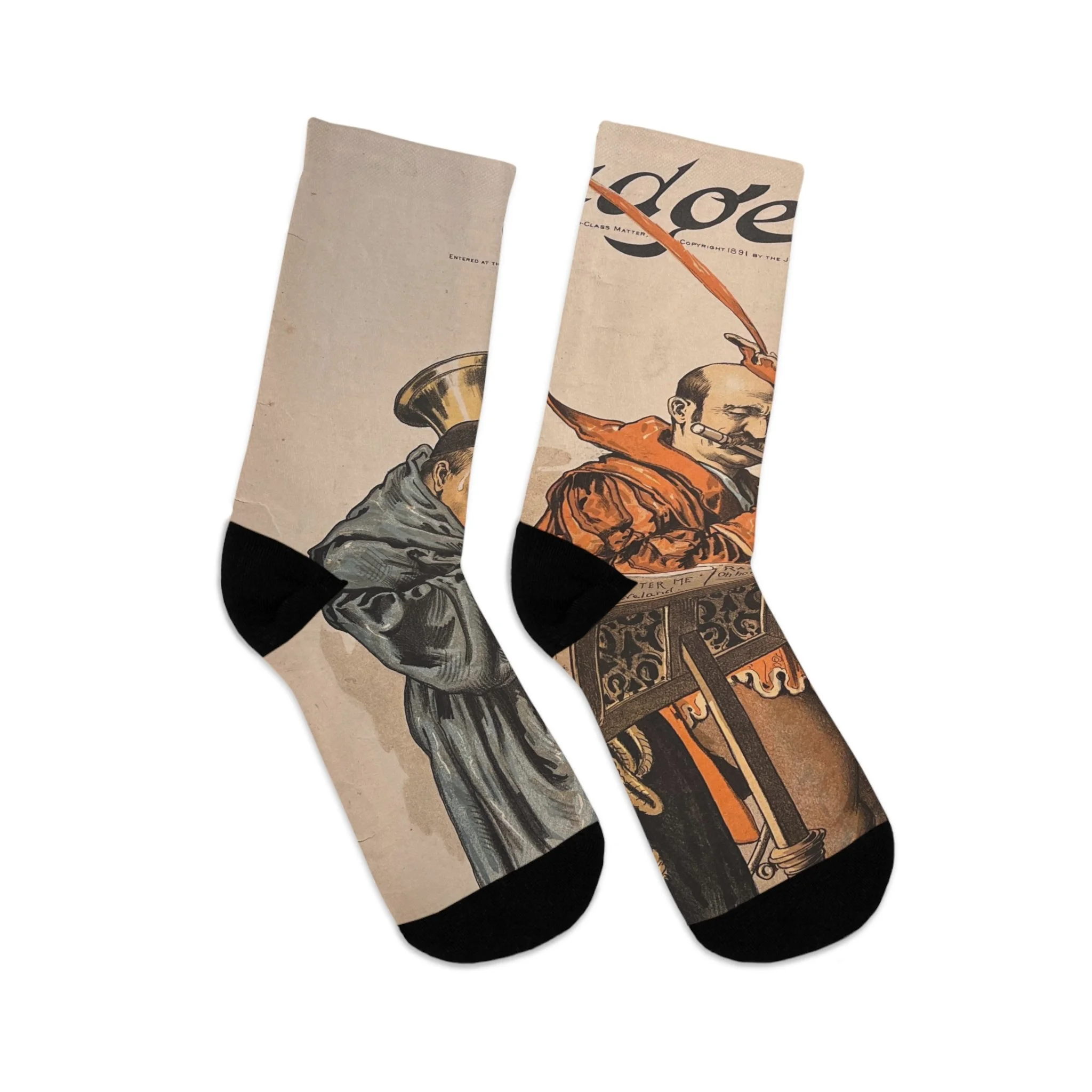
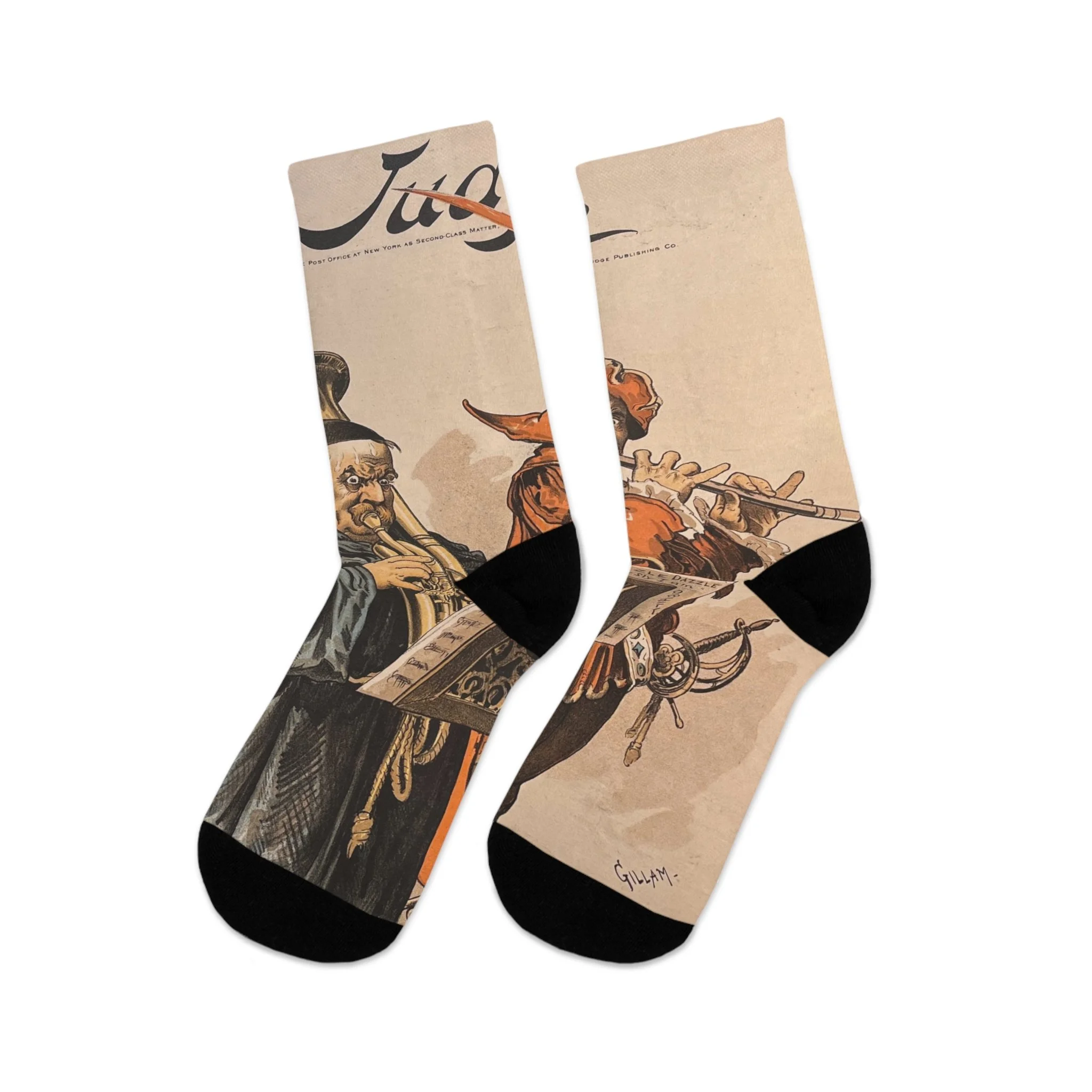
Satire depicting performative unity and the spectacle of incompatible alliance.
The image presents agreement as something staged rather than achieved, where moral opposites are placed side by side and declared harmonious by fiat. Cooperation appears theatrical and unstable, suggesting that proclaimed unity can mask deeper incoherence rather than resolve it.
Historical Note
This cover appeared in an 1891 issue of Judge magazine and was illustrated by Bernhard Gillam. Titled “The Duet of the Saint and the Sinner,” it uses visual contrast to critique political alliances that announce harmony while exposing fundamental contradiction.
Crew length | Recycled polyester-cotton blend | All-over print with solid black toe and heel accents
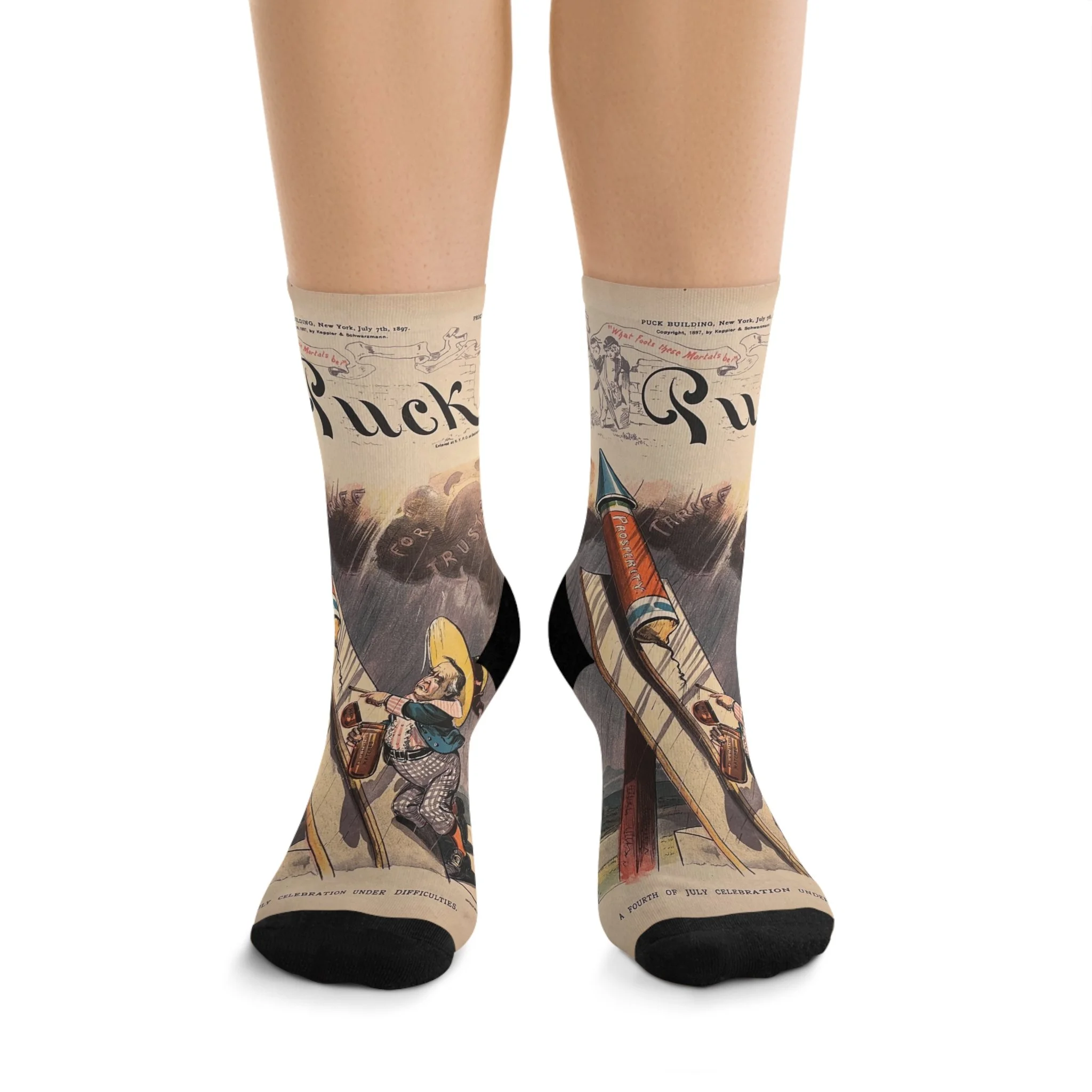
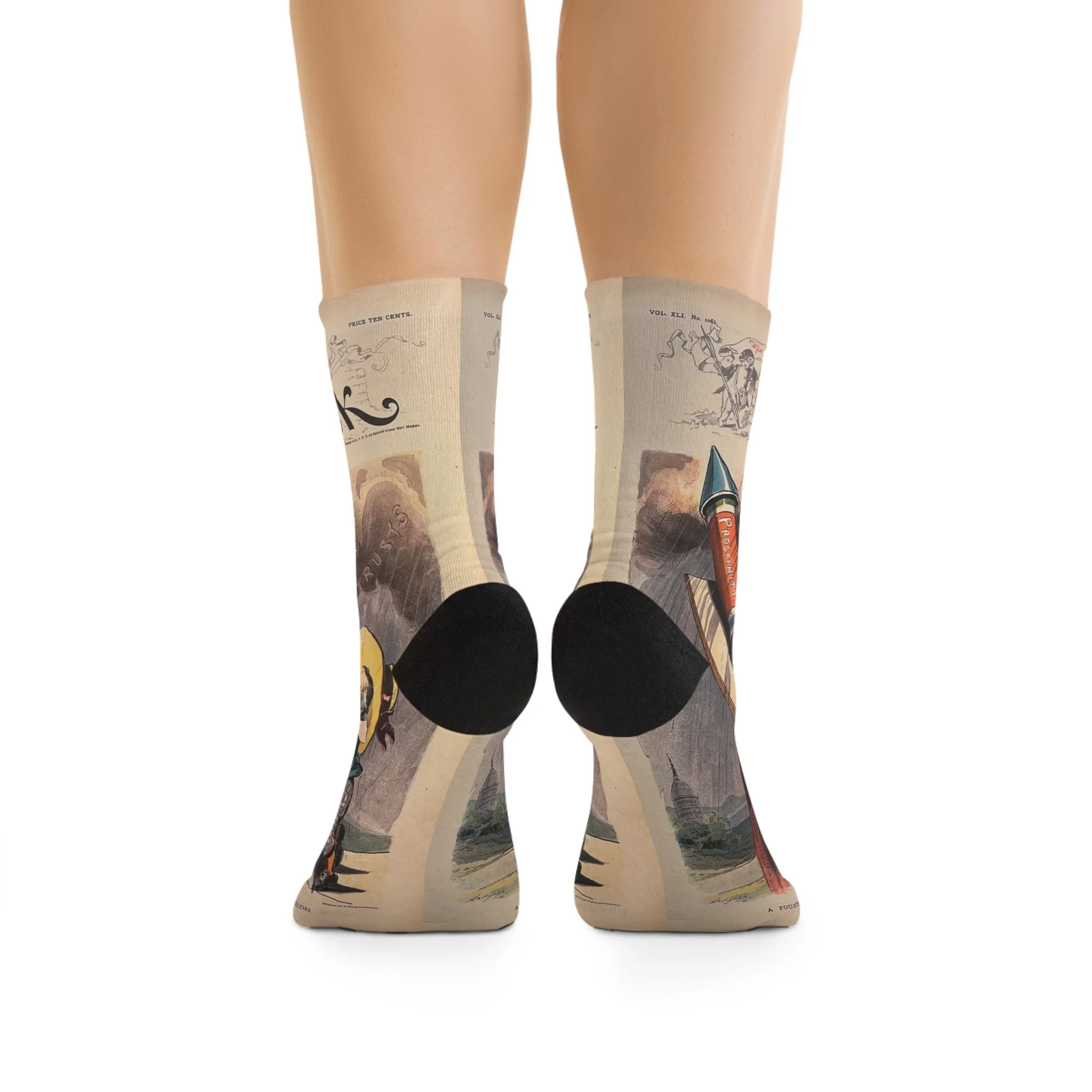
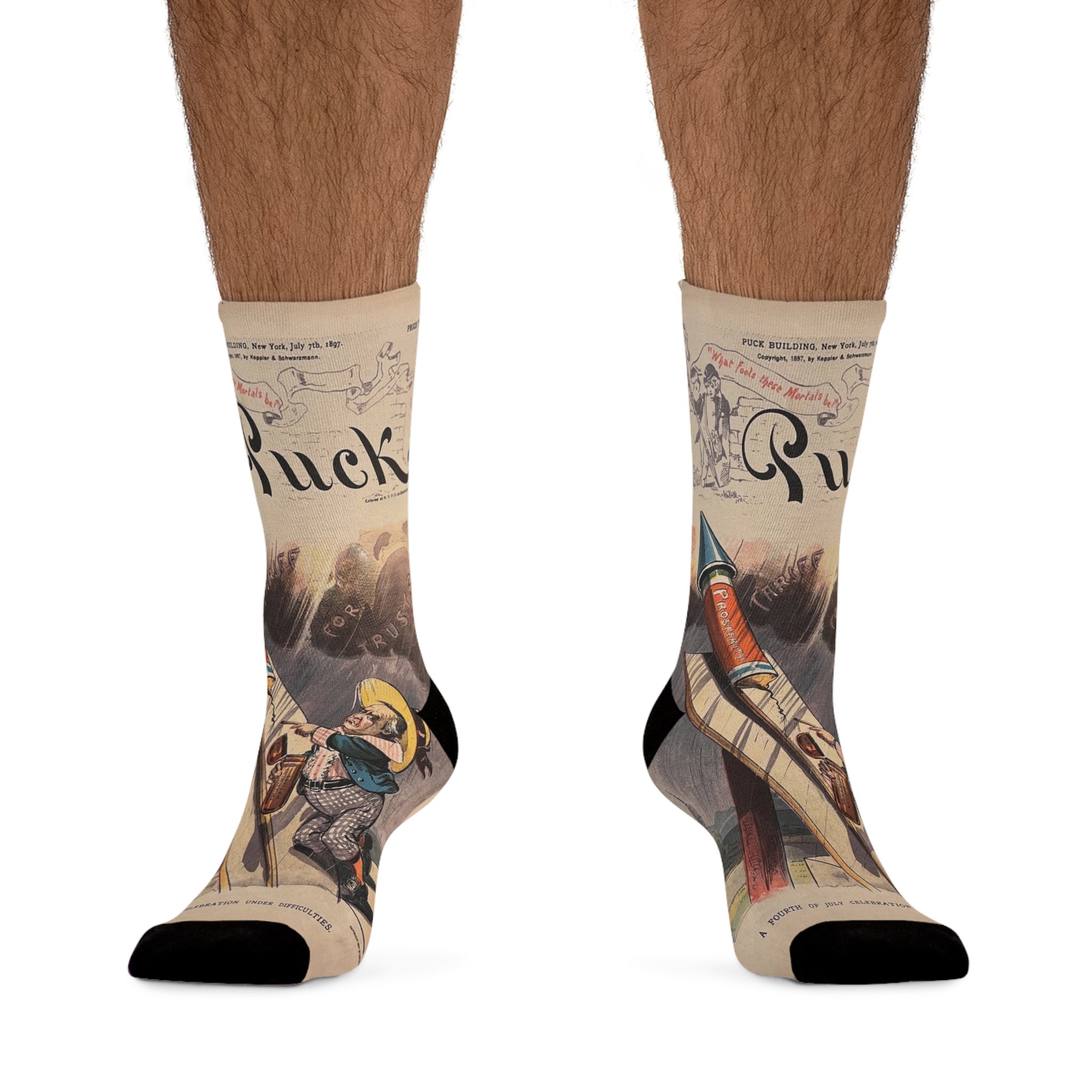
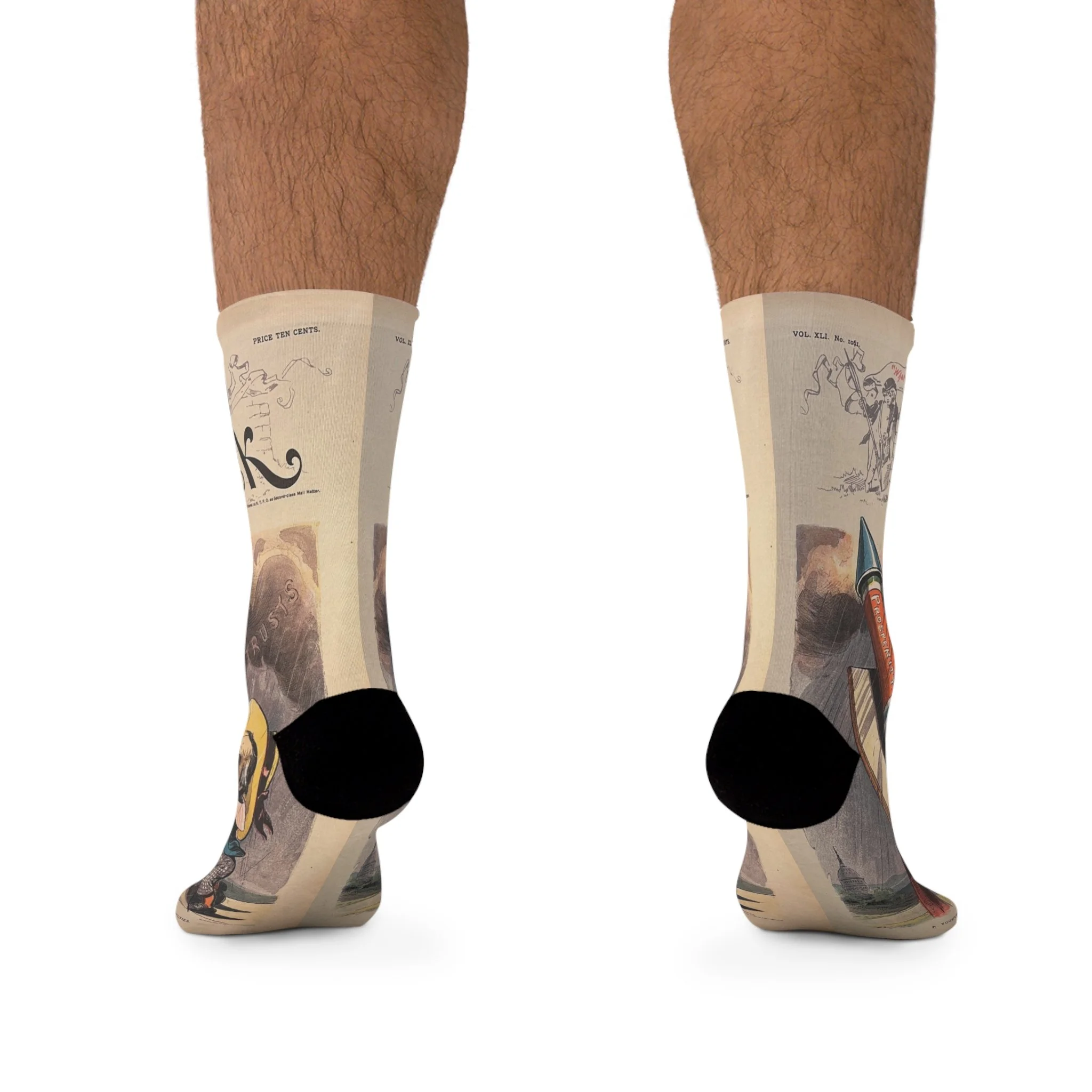
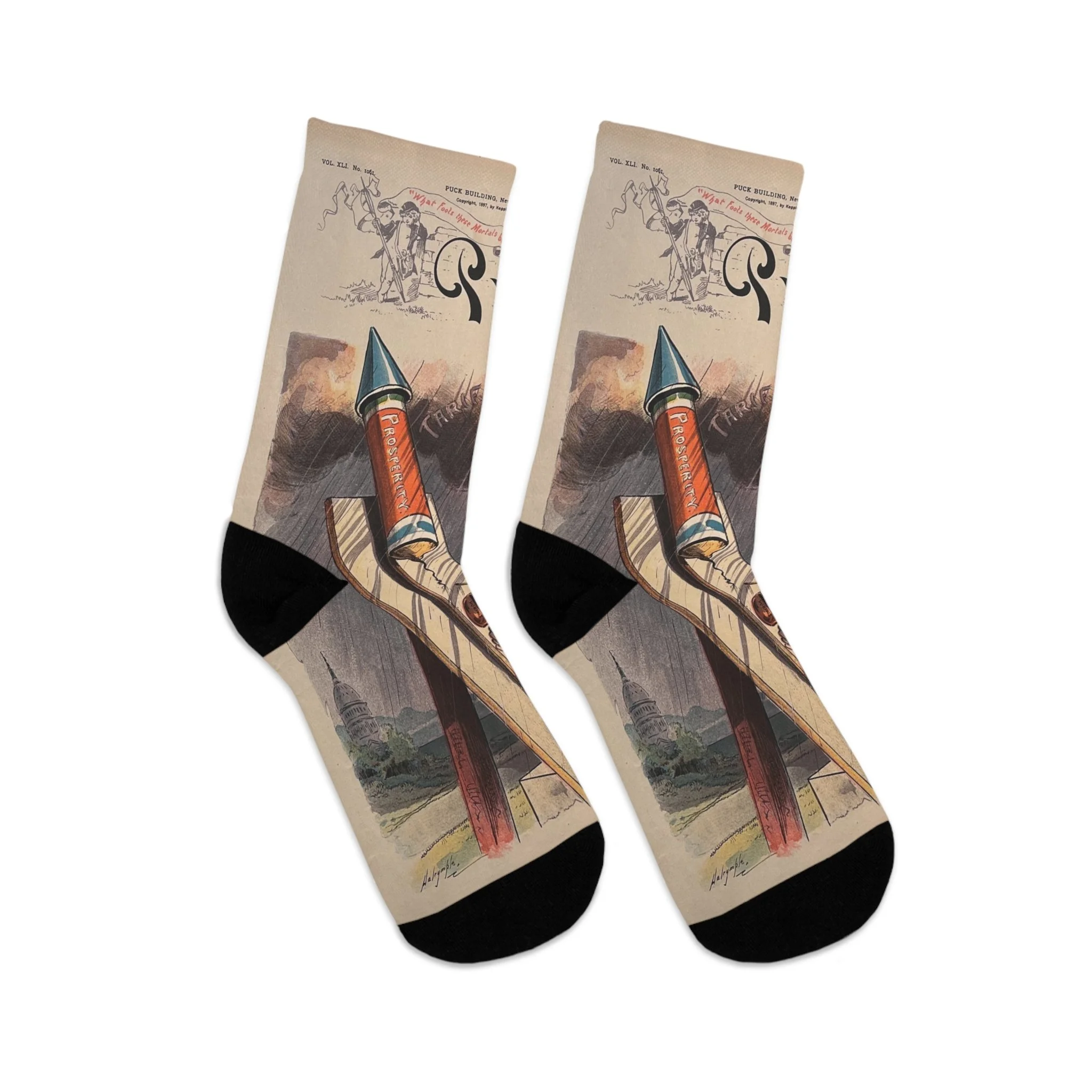
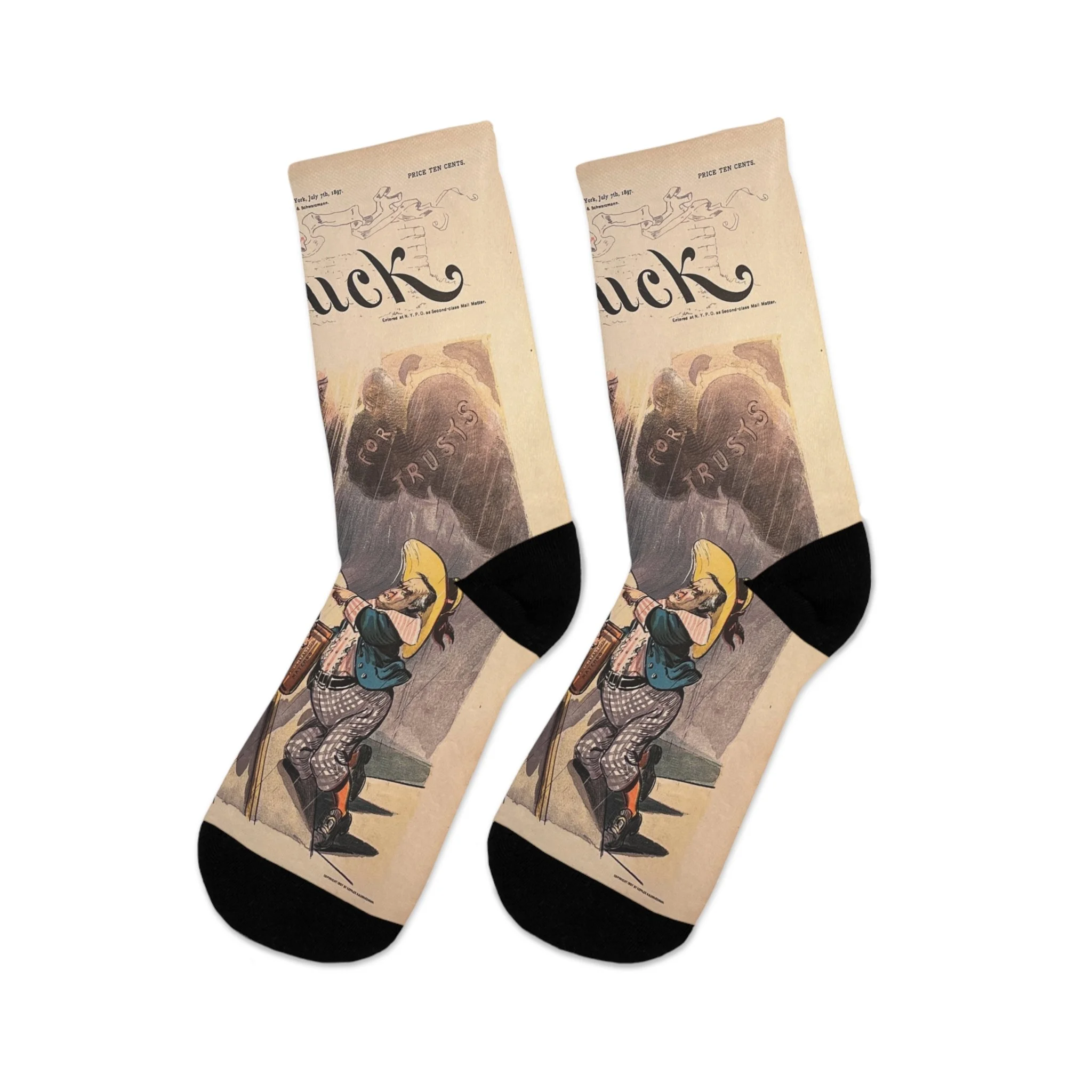
Satire aimed at hollow celebration and the weight of policy on public optimism.
The image presents national pride as a stalled ritual, where promised prosperity struggles to take flight under accumulating constraints. Confidence is shown as ceremonial rather than realized, suggesting that economic policy can dampen collective momentum even in moments meant for unity and renewal.
Historical Note
This cover appeared in an 1897 issue of Puck magazine and was illustrated by Louis M. Dalrymple. It critiques the impact of protectionist policy and concentrated economic power on public life, using patriotic imagery to underscore political strain.
Crew length | Recycled polyester-cotton blend | All-over print with solid black toe and heel accents
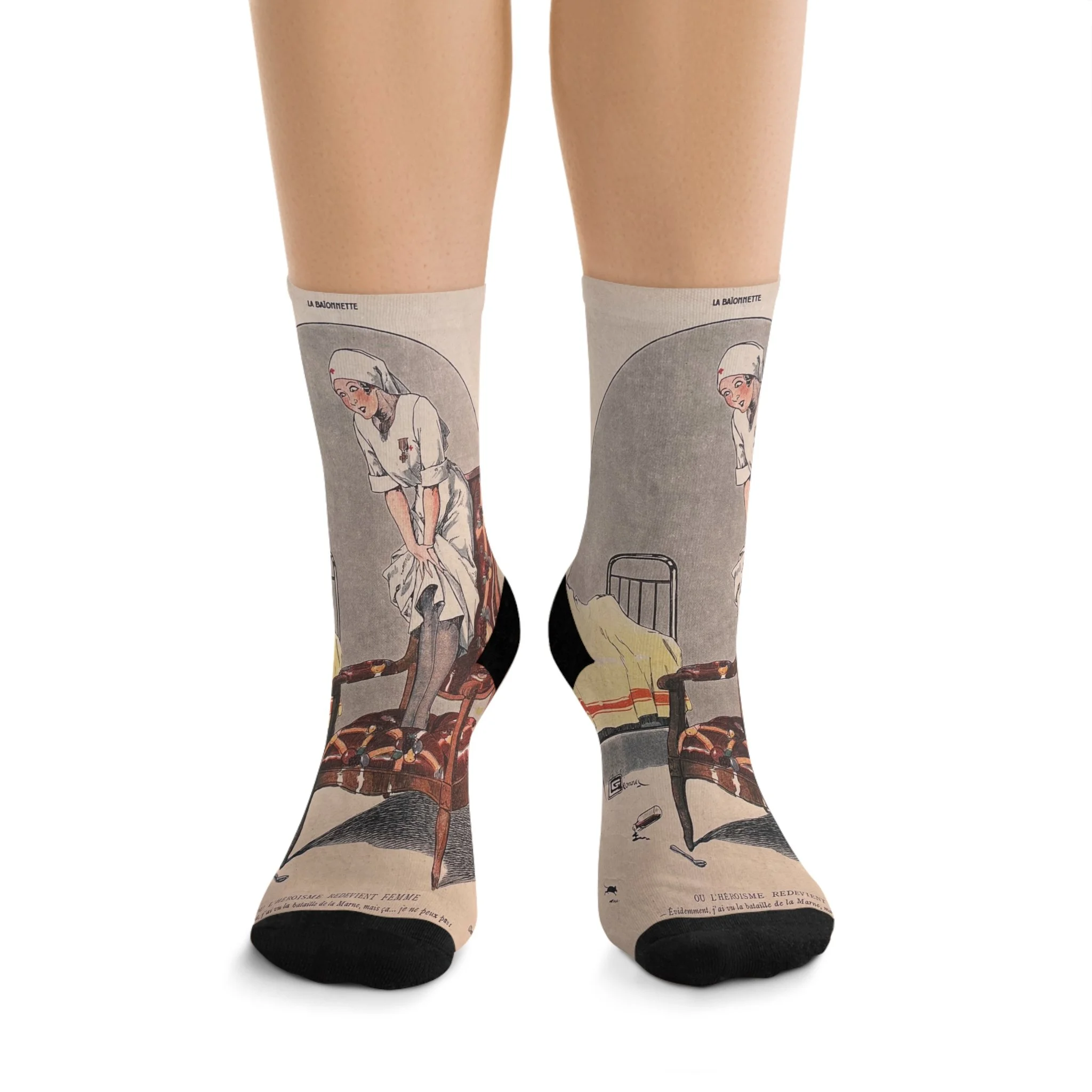
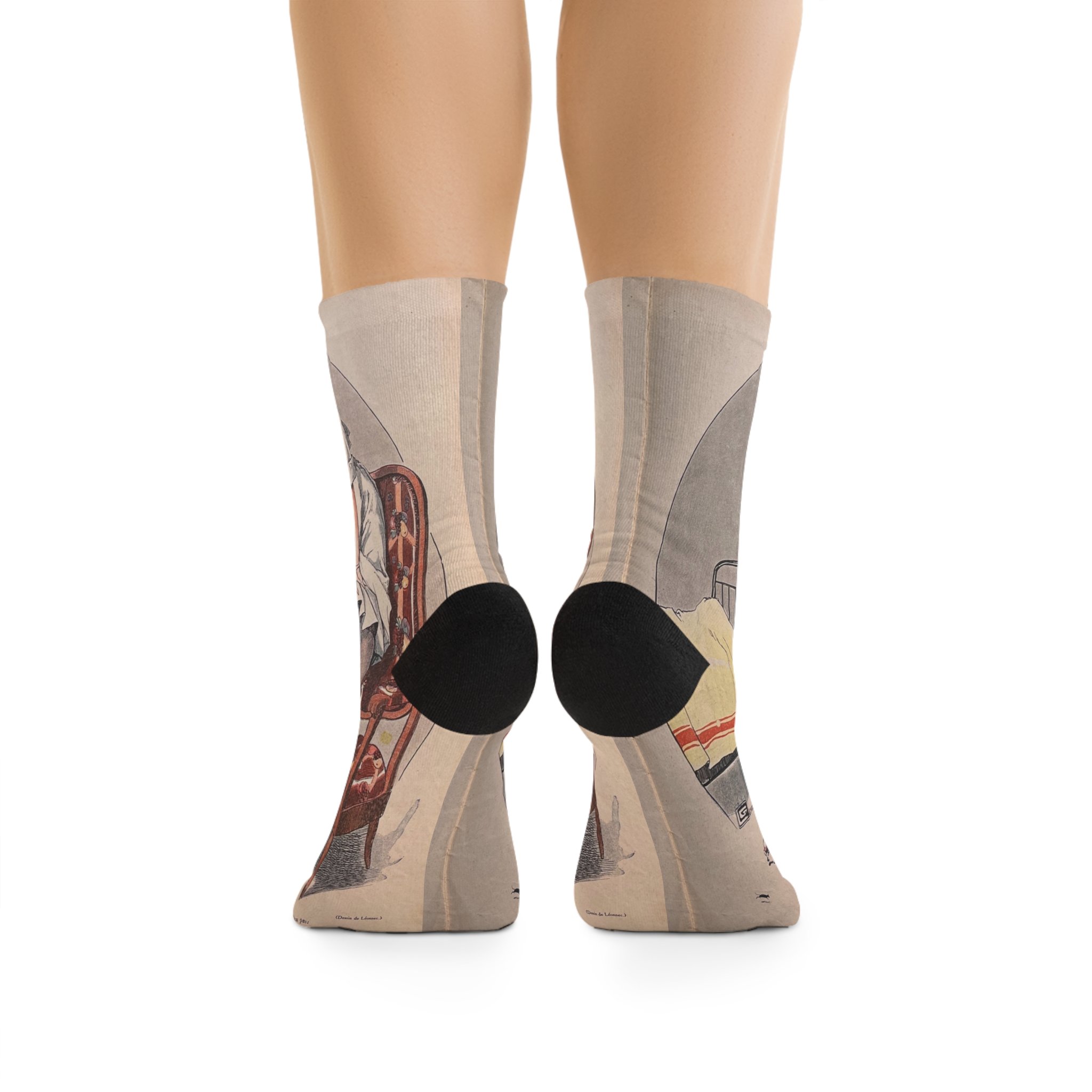
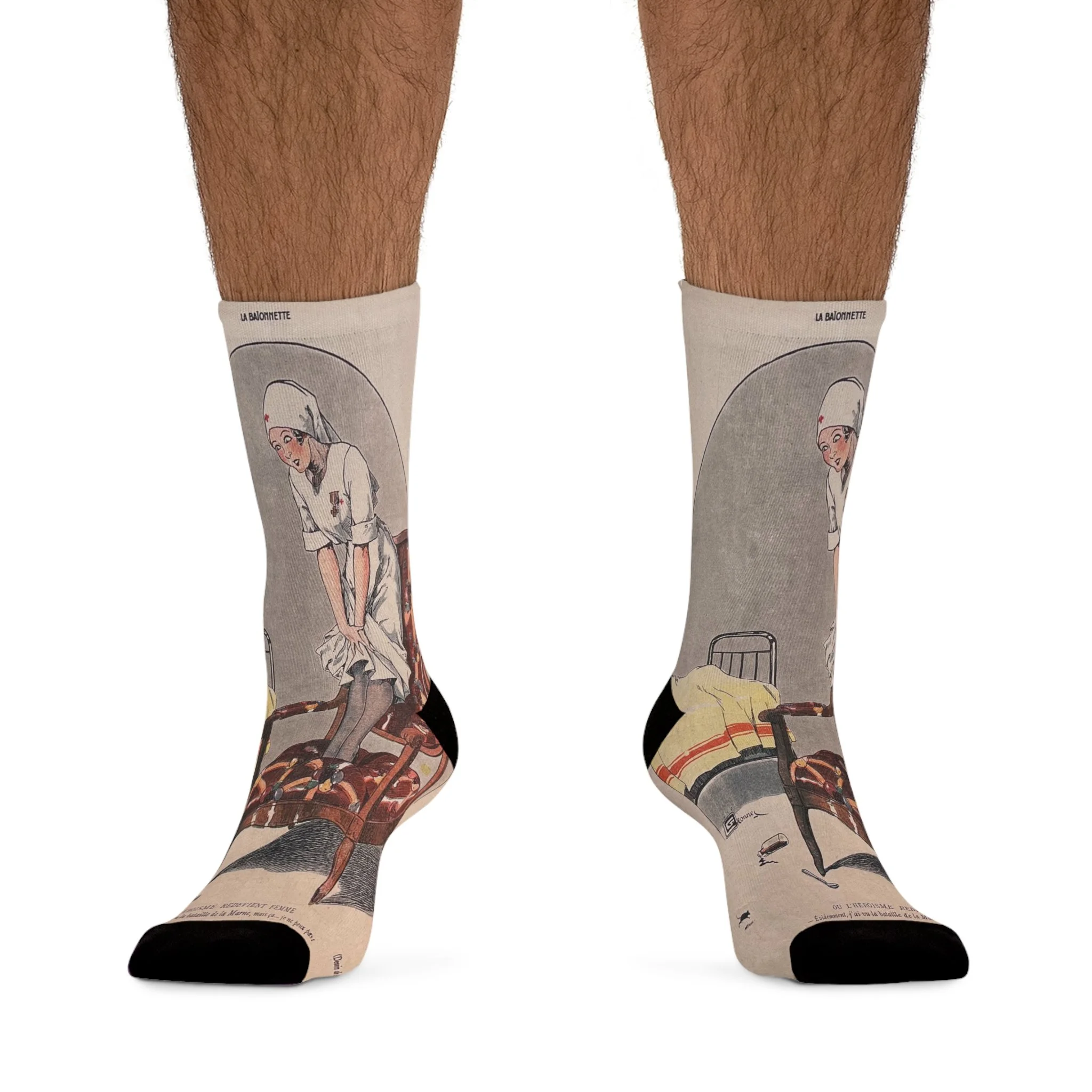
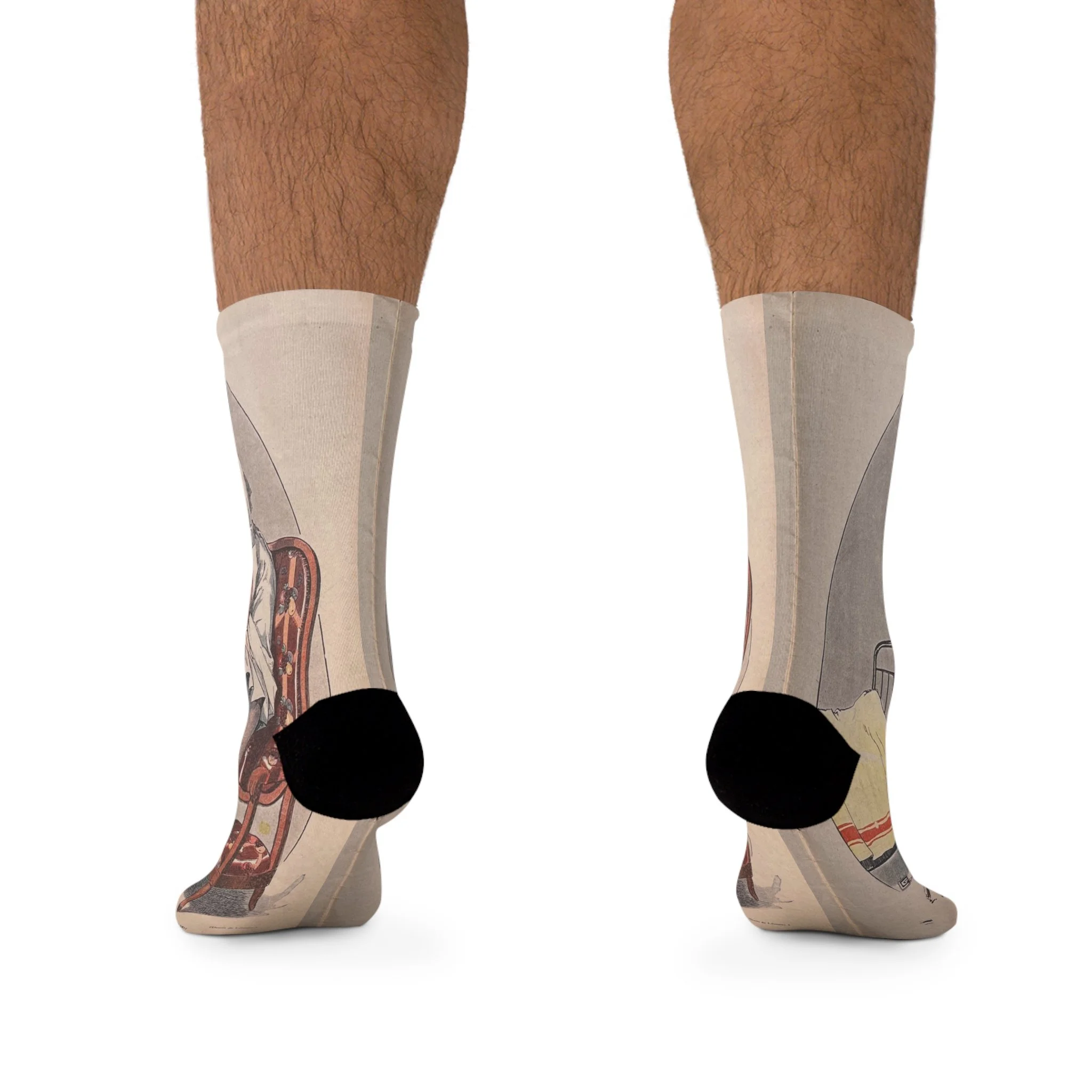
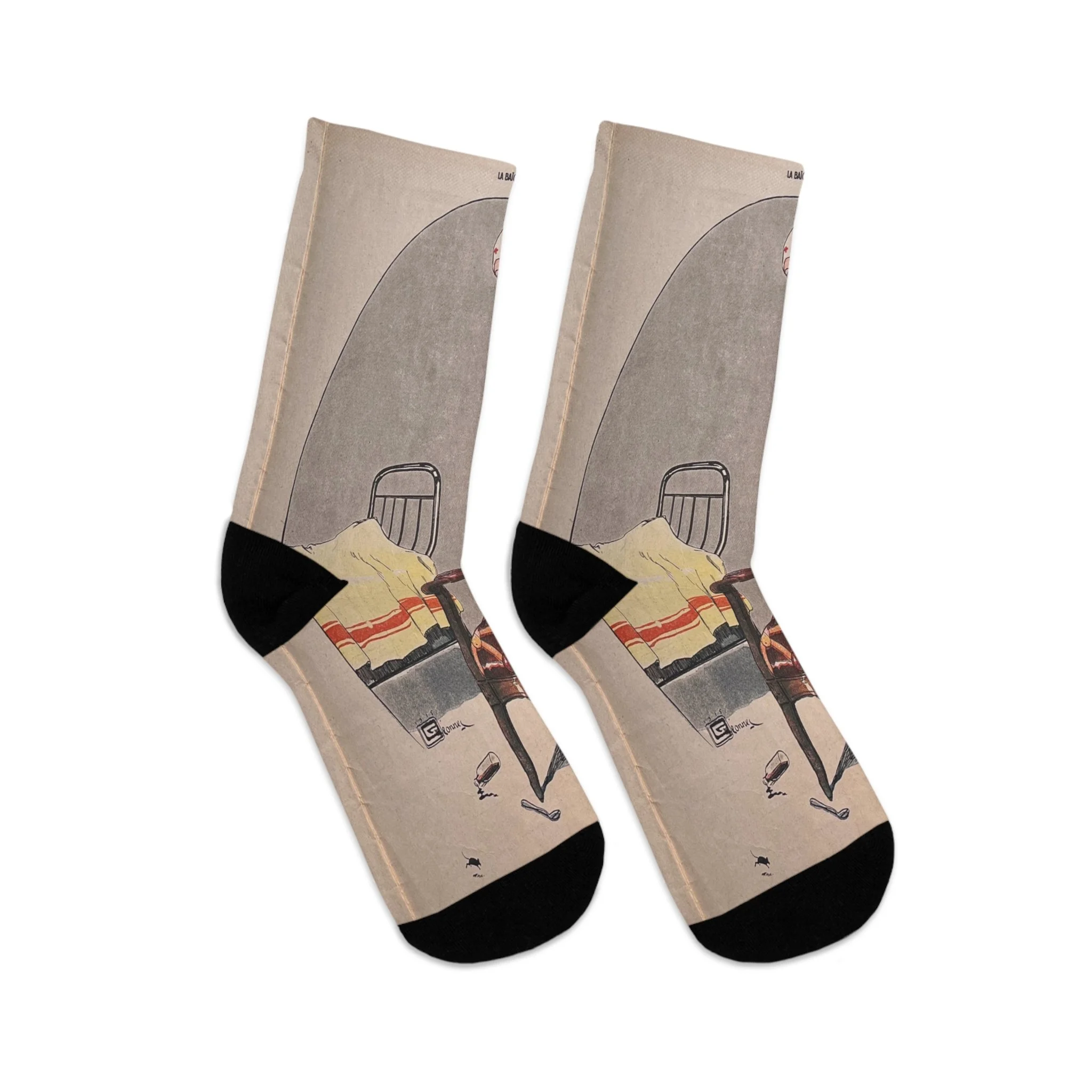
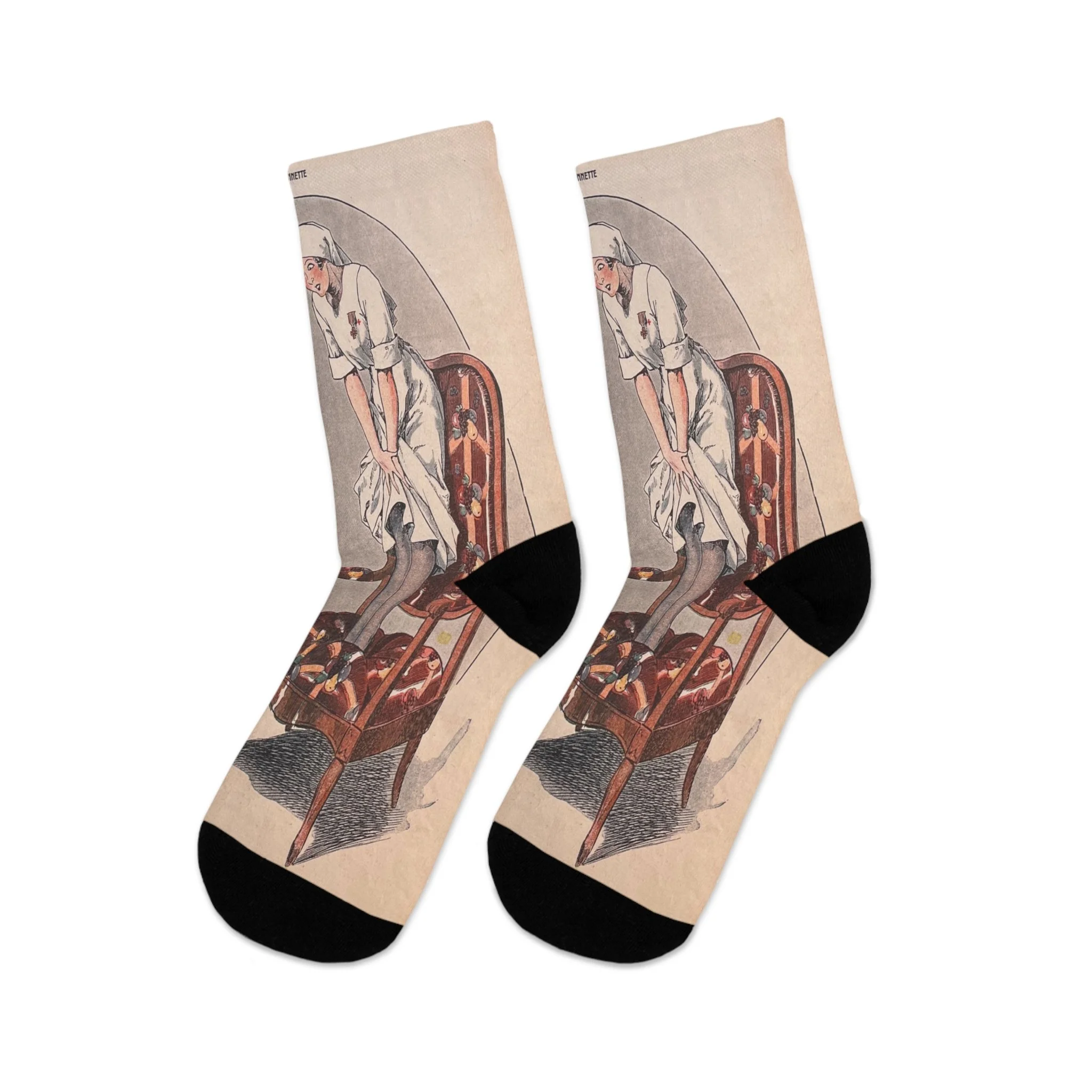
A satirical treatment of the tension between public service and private strain.
The image shifts attention from heroics to an unguarded pause, where composure and fatigue coexist. By lingering on a small, human gesture, authority and endurance are reframed as lived experience rather than spectacle, suggesting that service is sustained as much by vulnerability as by resolve.
Historical Note
This illustration appeared in a 1915 issue of La Baïonnette and was drawn by Léonnec. It contrasts decorated wartime roles with everyday human fragility, using restrained humor to register the personal cost of service away from the battlefield.
Crew length | Recycled polyester-cotton blend | All-over print with solid black toe and heel accents
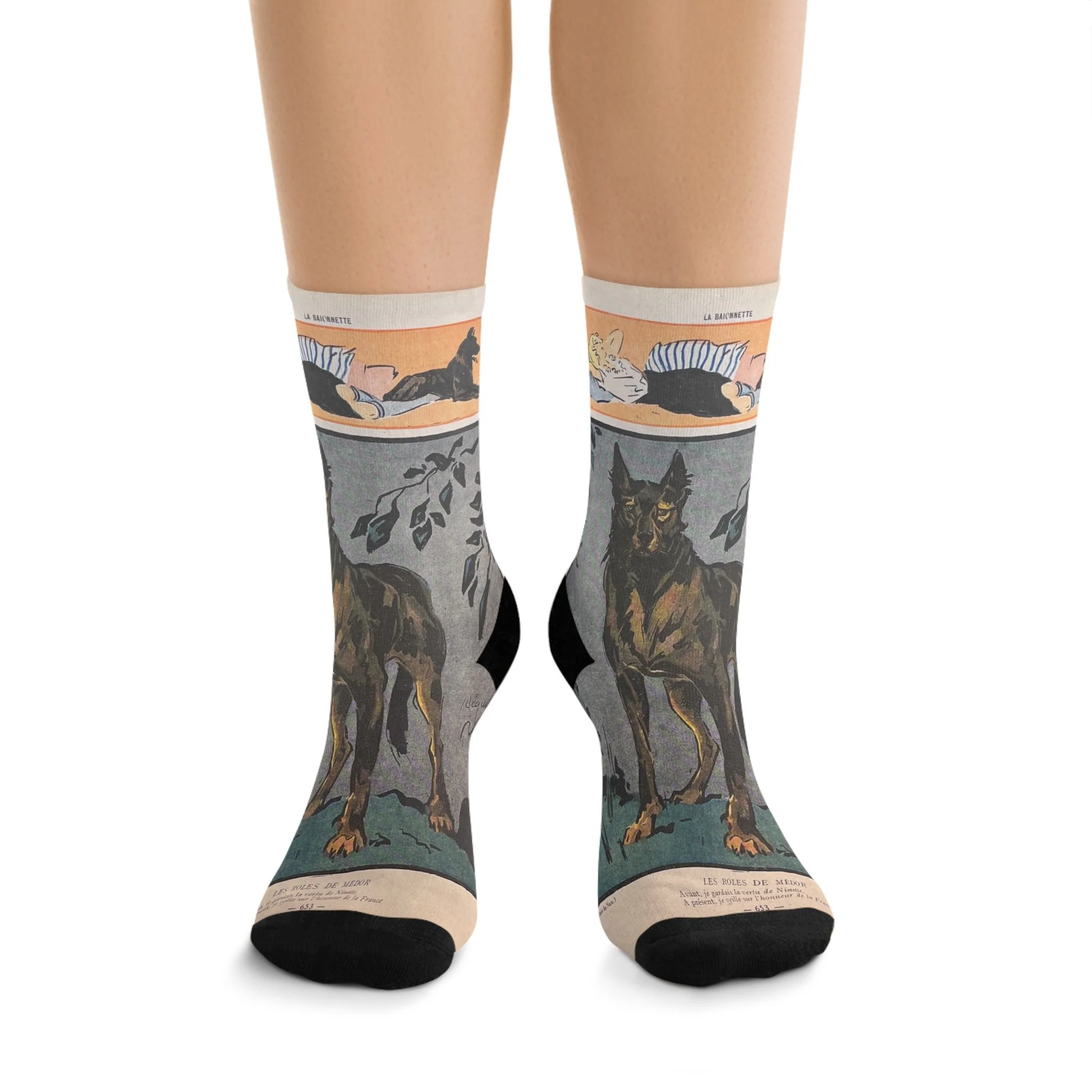
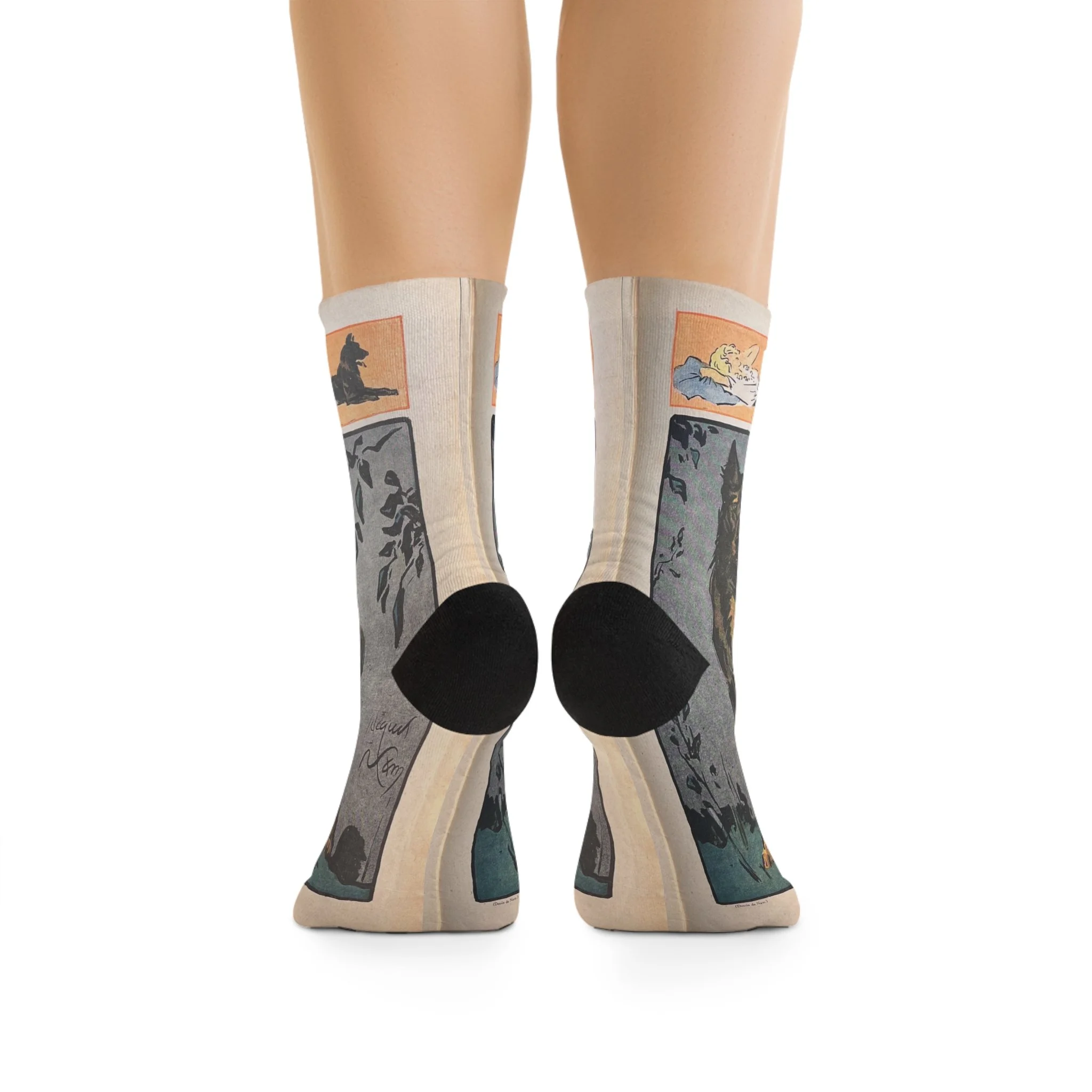
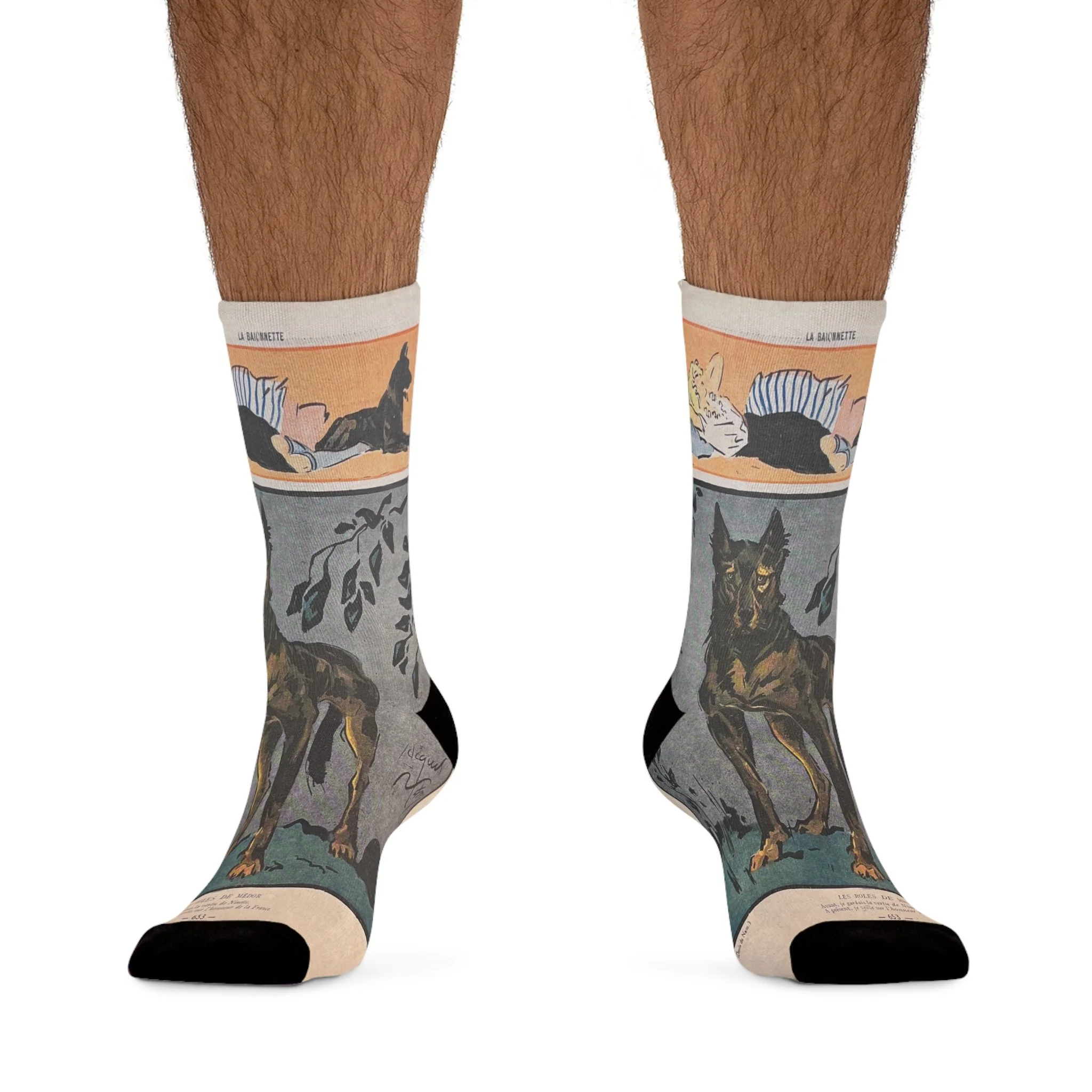
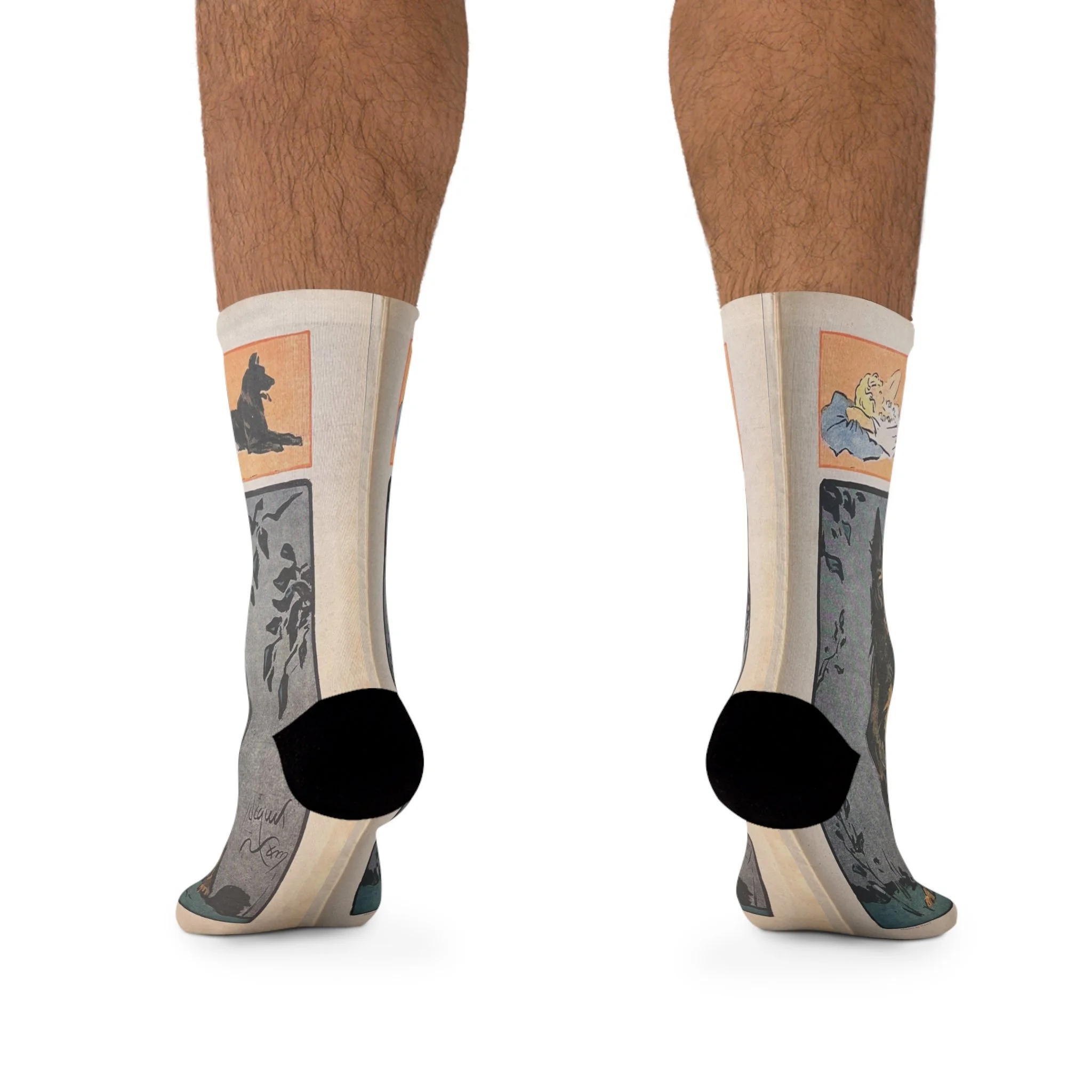
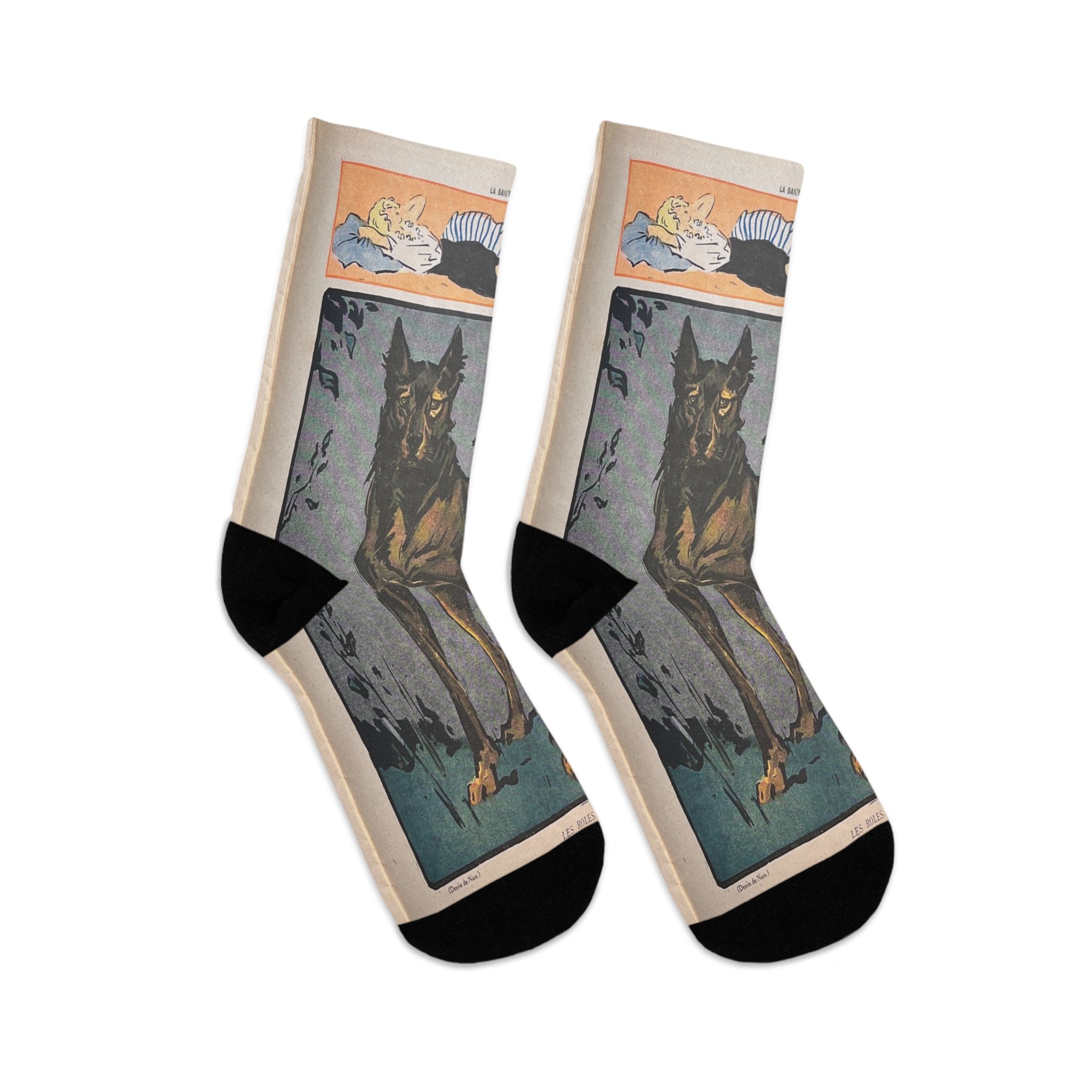
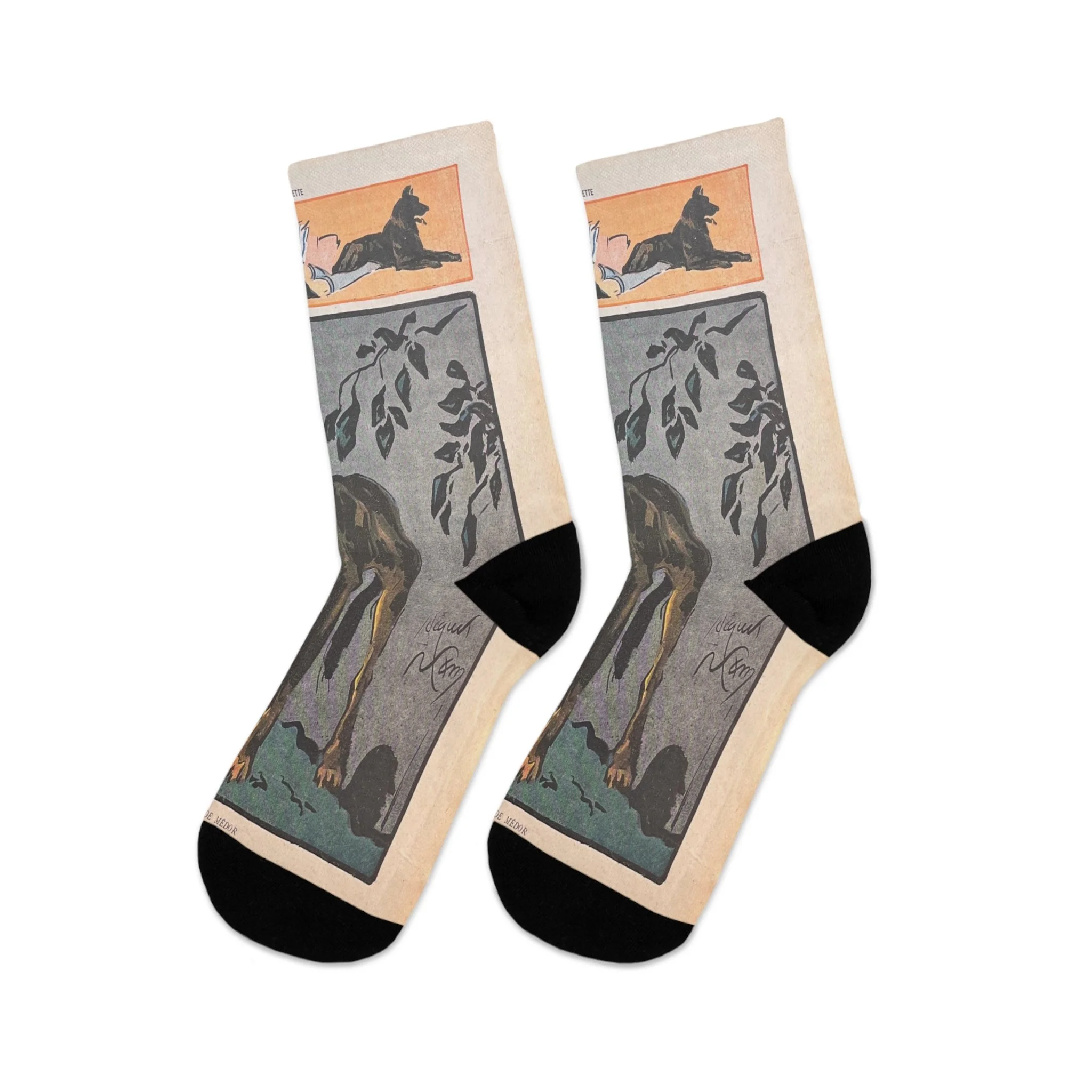
Satire aimed at the redefinition of loyalty under conditions of total war.
The image presents transformation as quiet and unquestioned, where familiar roles are repurposed for national ends. What once belonged to private life is recast as public obligation, suggesting how war absorbs everyday symbols and redirects them toward collective duty.
Historical Note
This page appeared in a 1916 issue of La Baïonnette and was illustrated by Jacques Nam. Using a simple two-panel allegory, it reflects how wartime ideology reframed personal loyalty as a resource of the nation.
Crew length | Recycled polyester–cotton blend | All-over print with solid black toe and heel accents
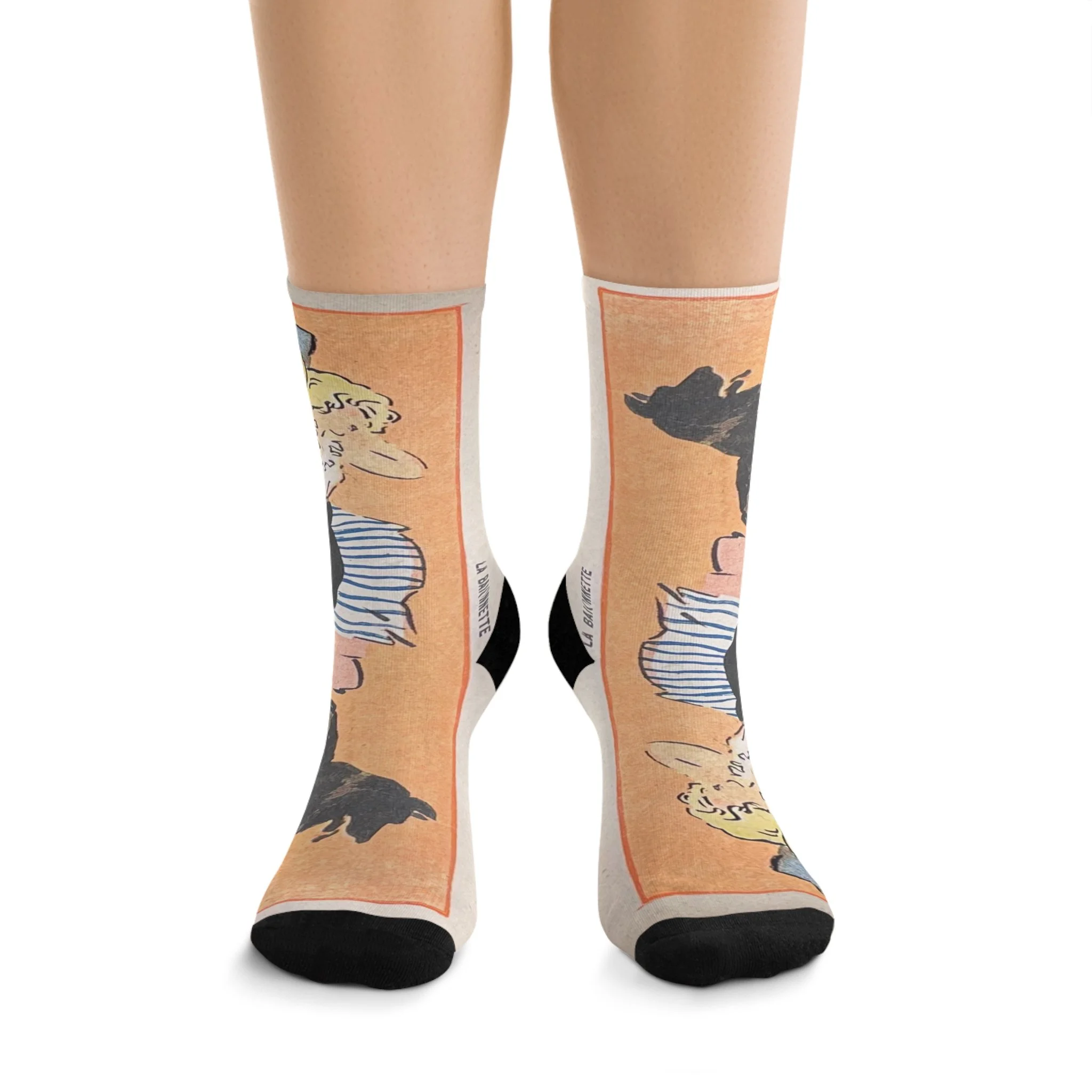
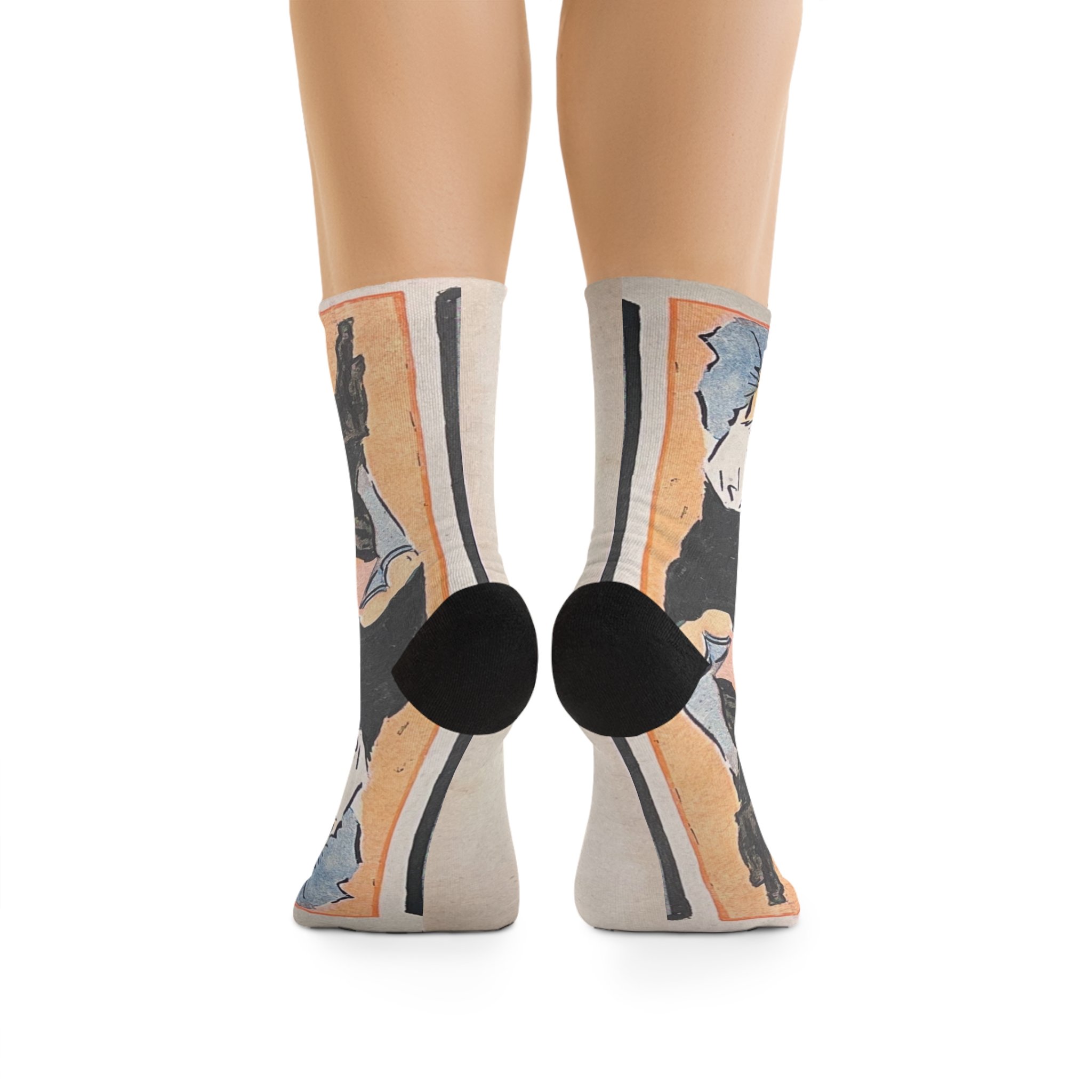
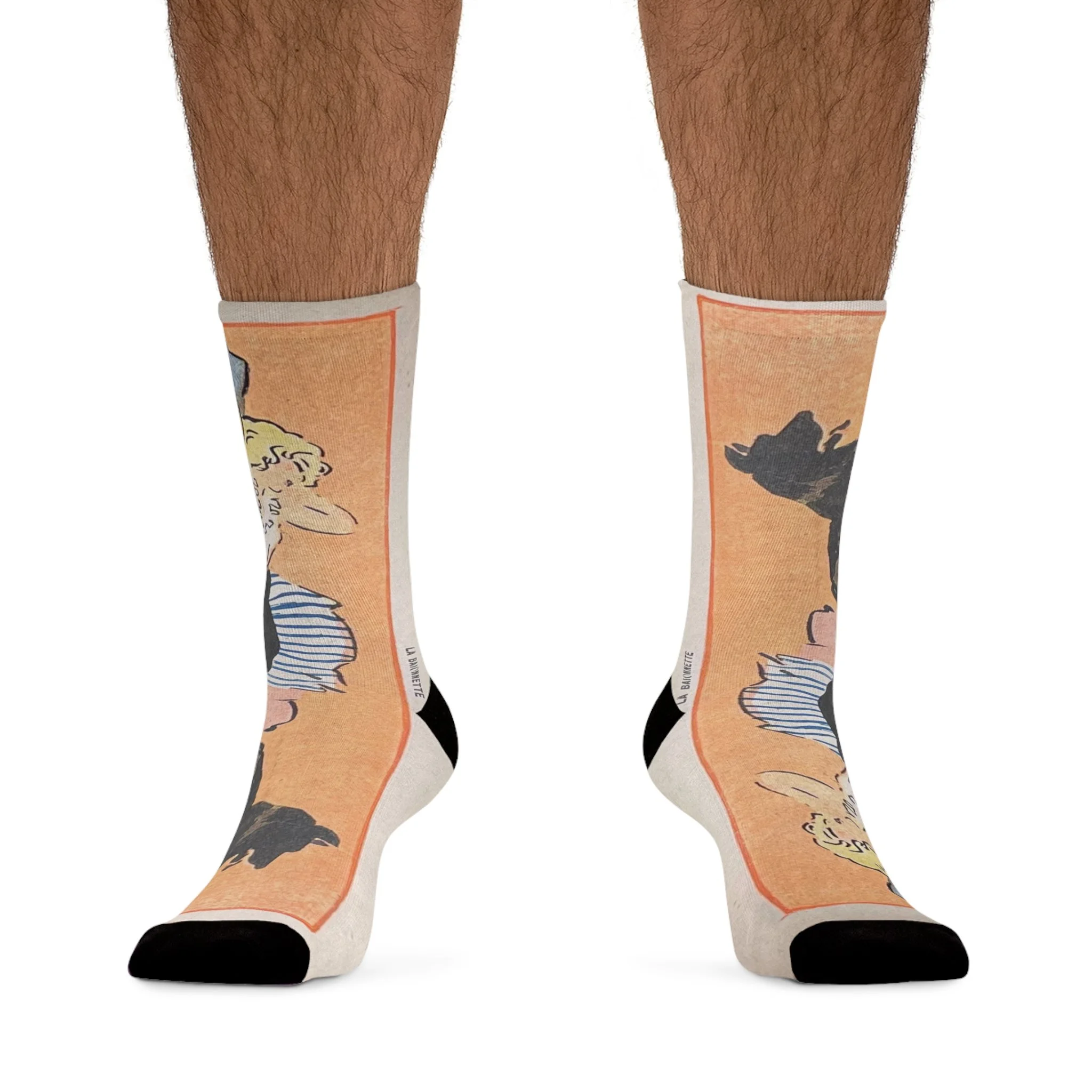
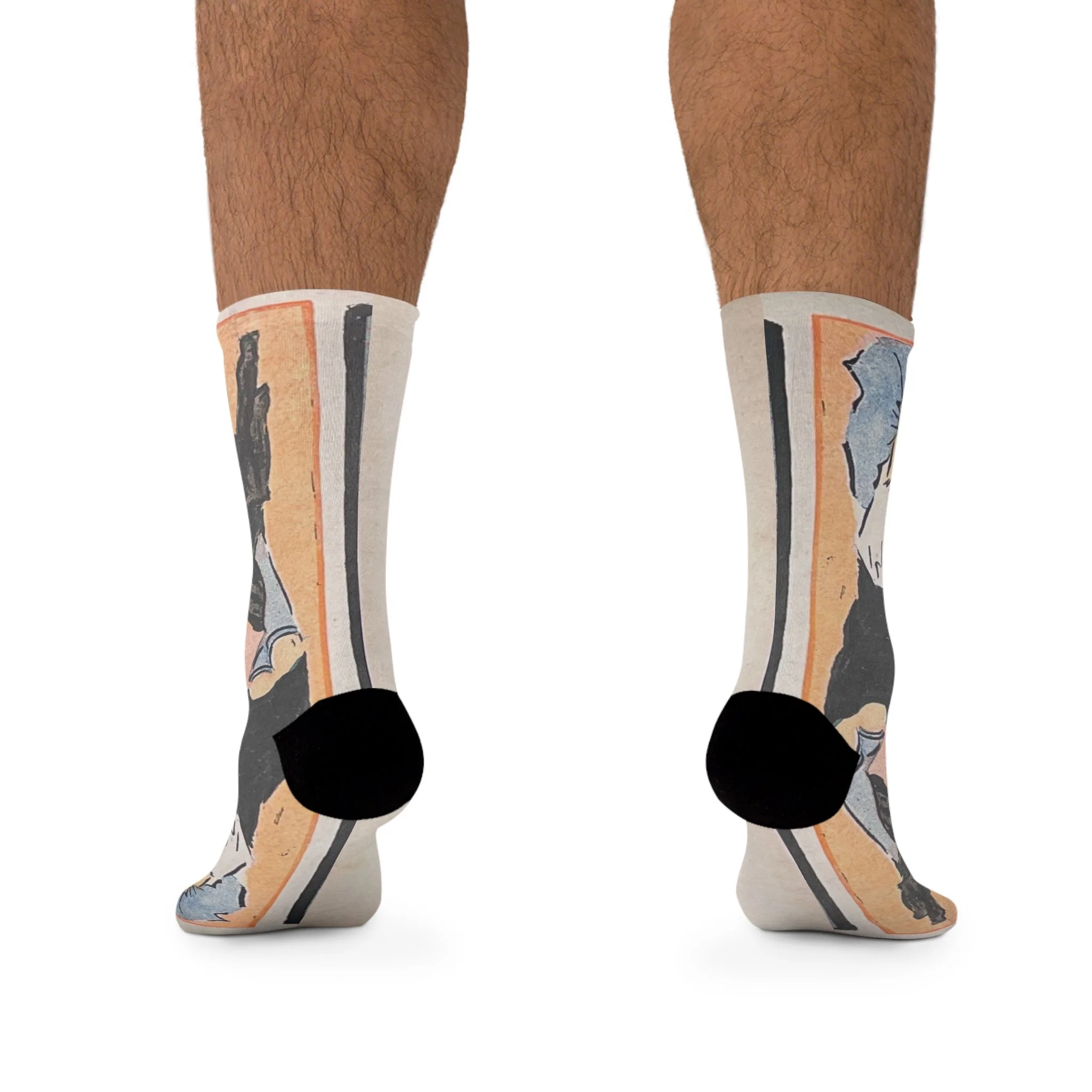
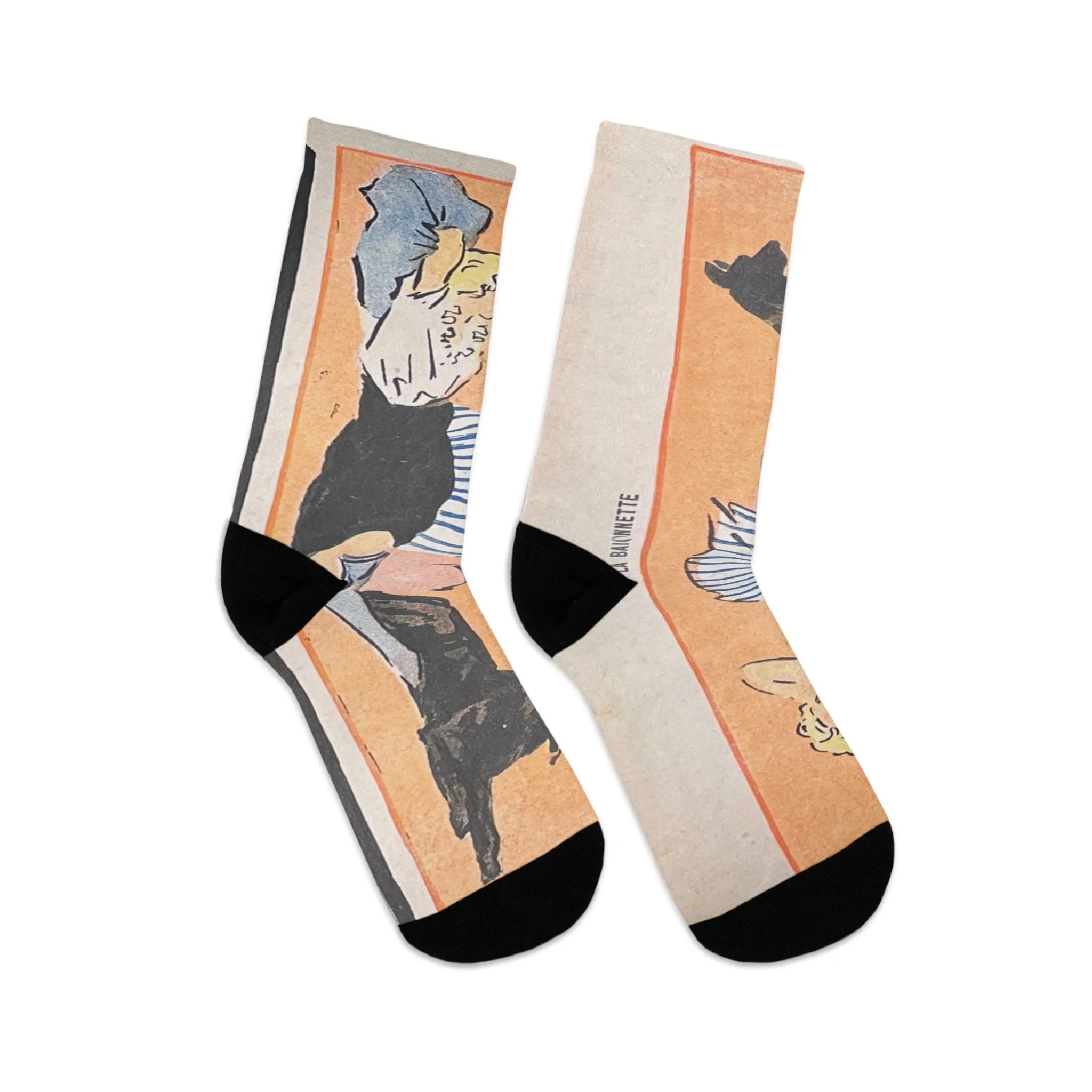
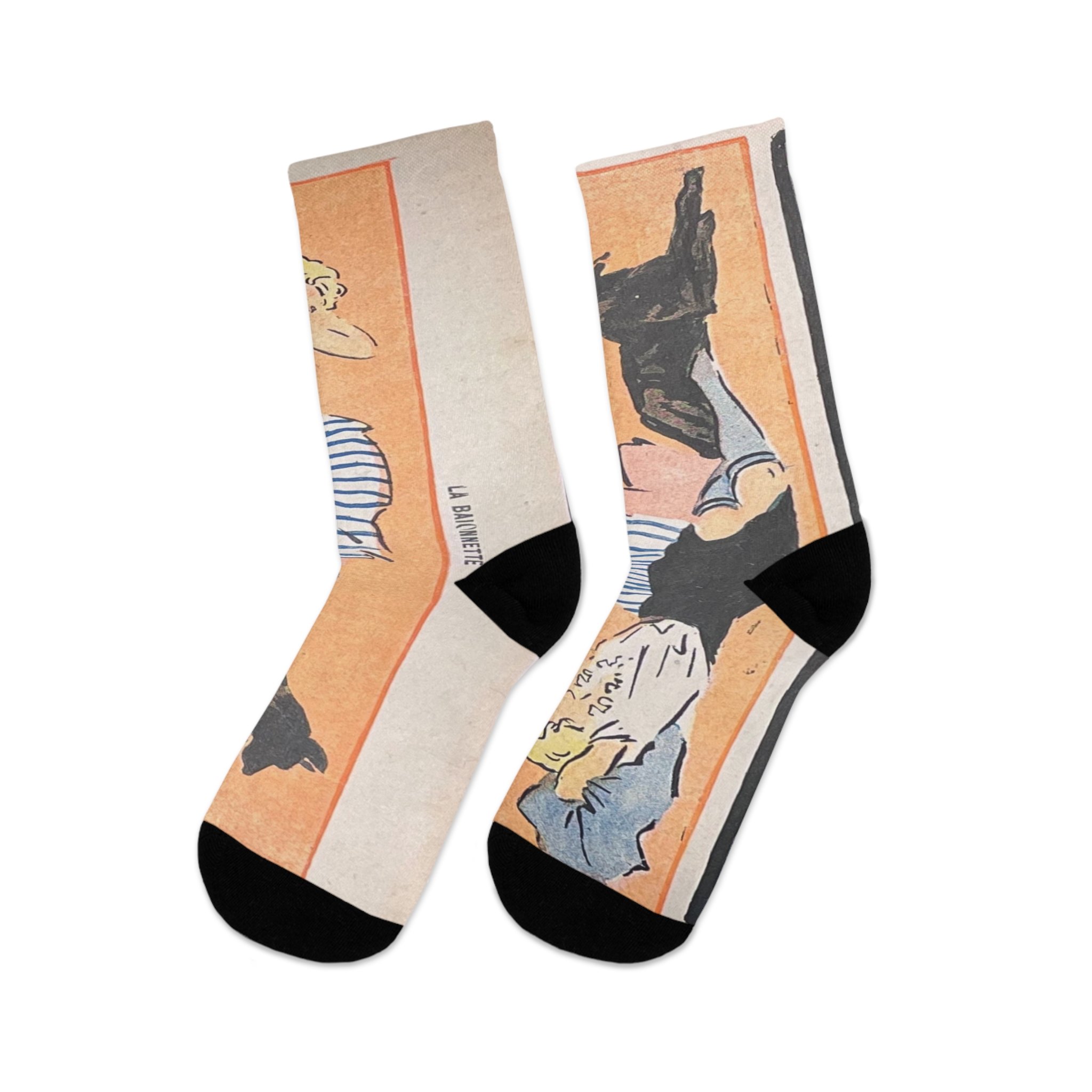
Satire aimed at the redefinition of loyalty under conditions of total war.
The image presents transformation as quiet and unquestioned, where familiar roles are repurposed for national ends. What once belonged to private life is recast as public obligation, suggesting how war absorbs everyday symbols and redirects them toward collective duty.
Historical Note
This page appeared in a 1916 issue of La Baïonnette and was illustrated by Jacques Nam. Using a simple two-panel allegory, it reflects how wartime ideology reframed personal loyalty as a resource of the nation.
Crew length | Recycled polyester–cotton blend | All-over print with solid black toe and heel accents



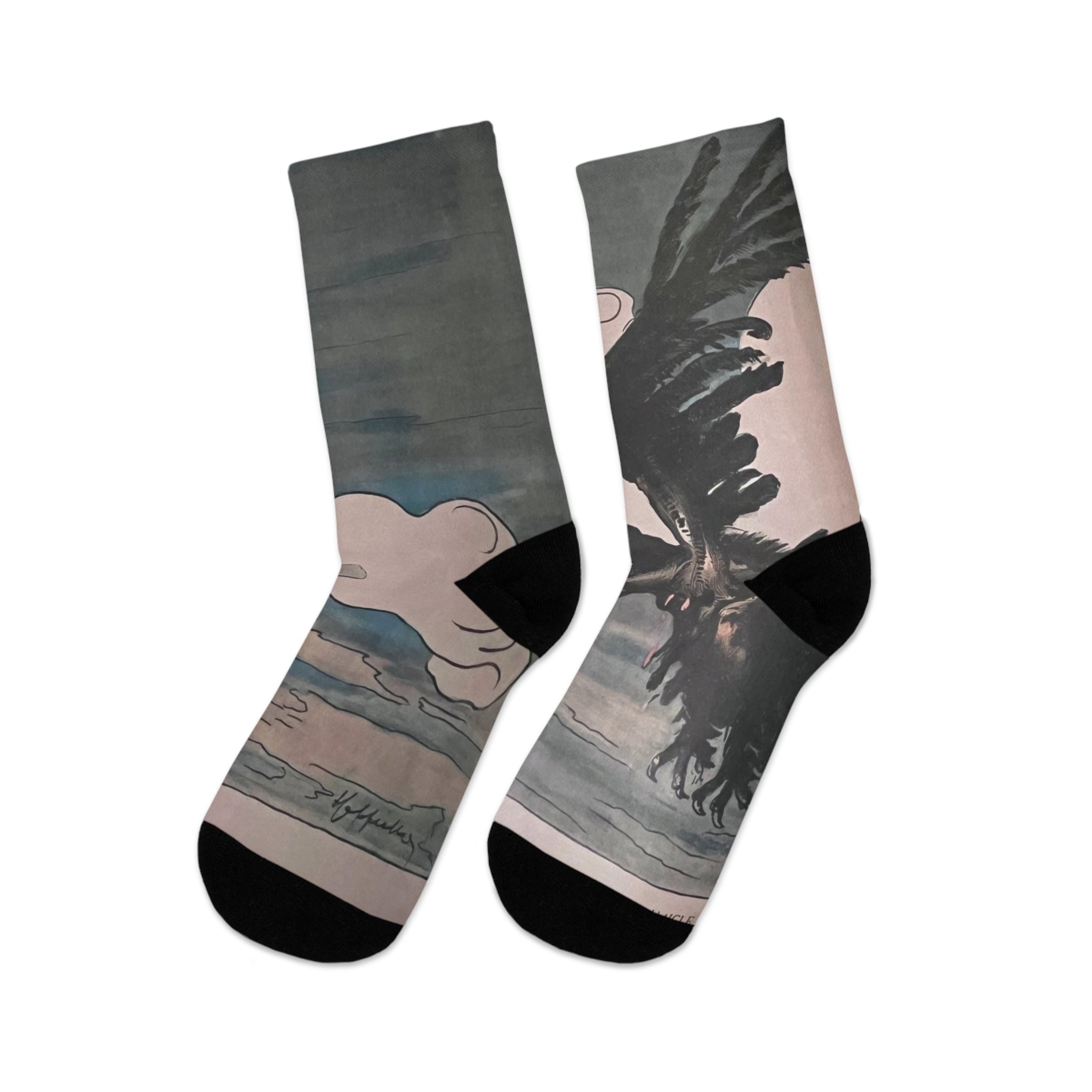
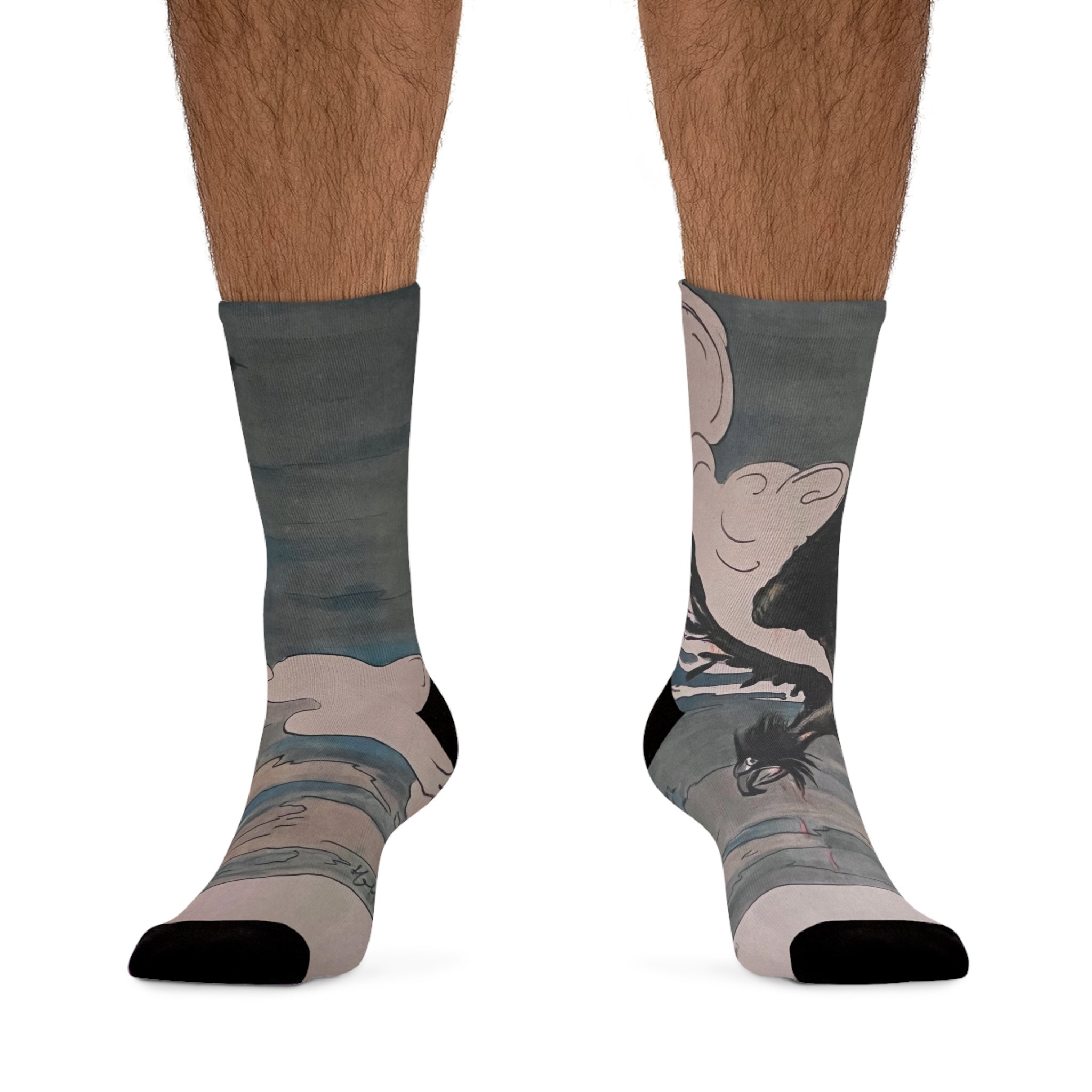
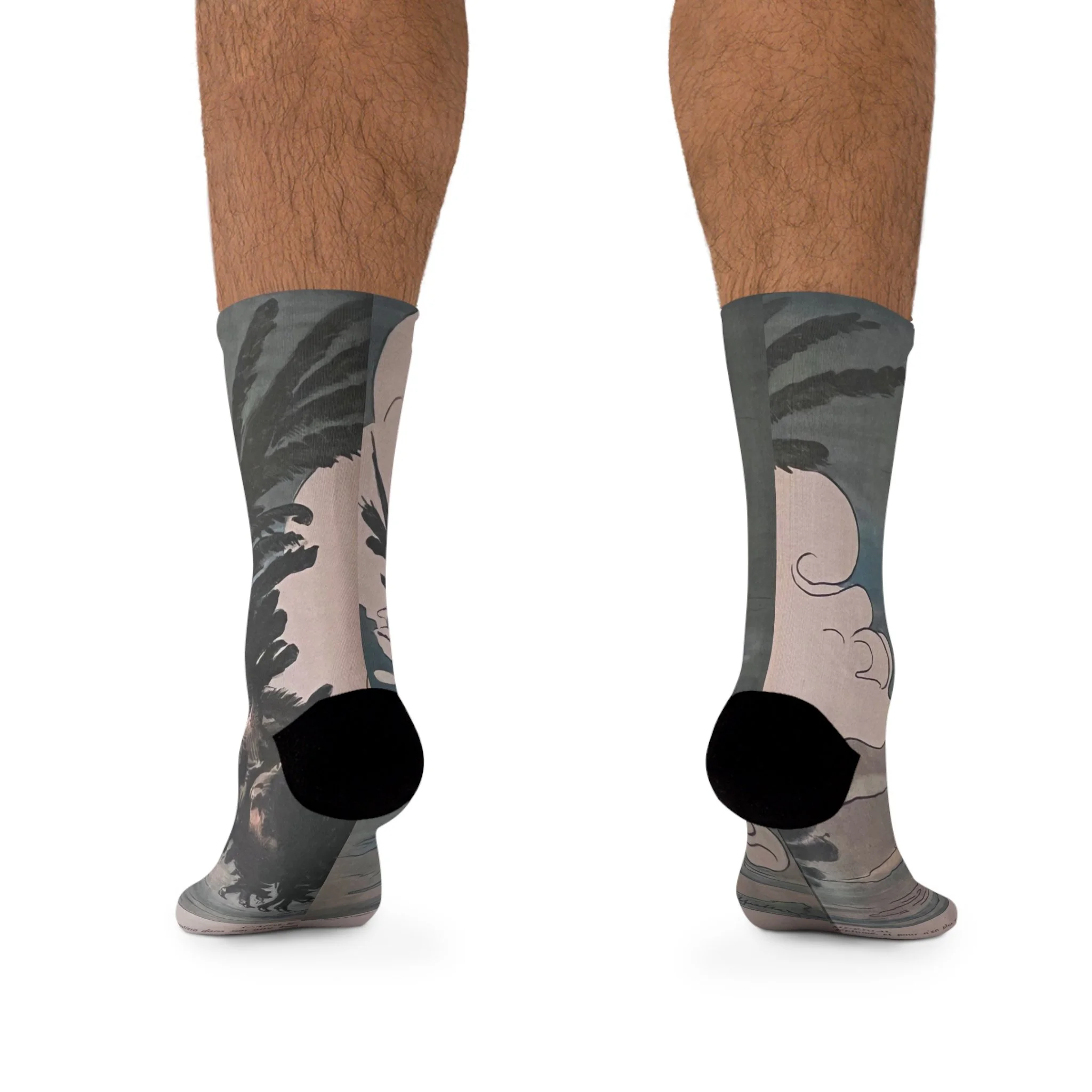
Satire aimed at militarism, exhaustion, and the collapse of imperial myth.
The image reduces a symbol of dominance to a figure of strain and injury, stripping authority of spectacle and inevitability. Power appears grounded and diminished, confronting the limits of force once grandeur gives way to consequence.
Historical Note
This illustration appeared during the First World War in La Baïonnette and was drawn by Adolphe Willette. Using the German imperial eagle as a stand-in for militarism, it reflects French wartime satire’s unsentimental critique of authoritarian power.
Crew length | Recycled polyester-cotton blend | All-over print with solid black toe and heel accents
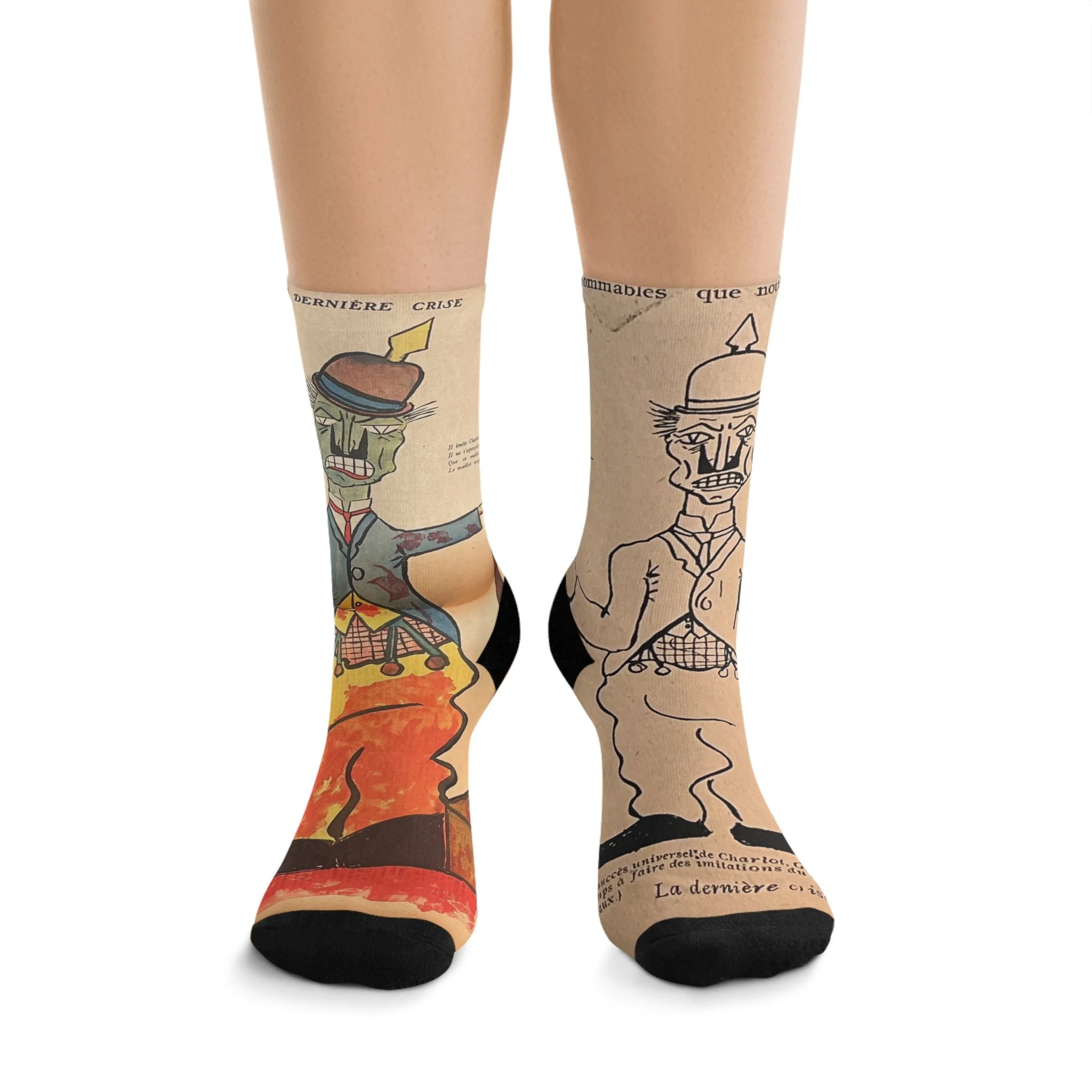
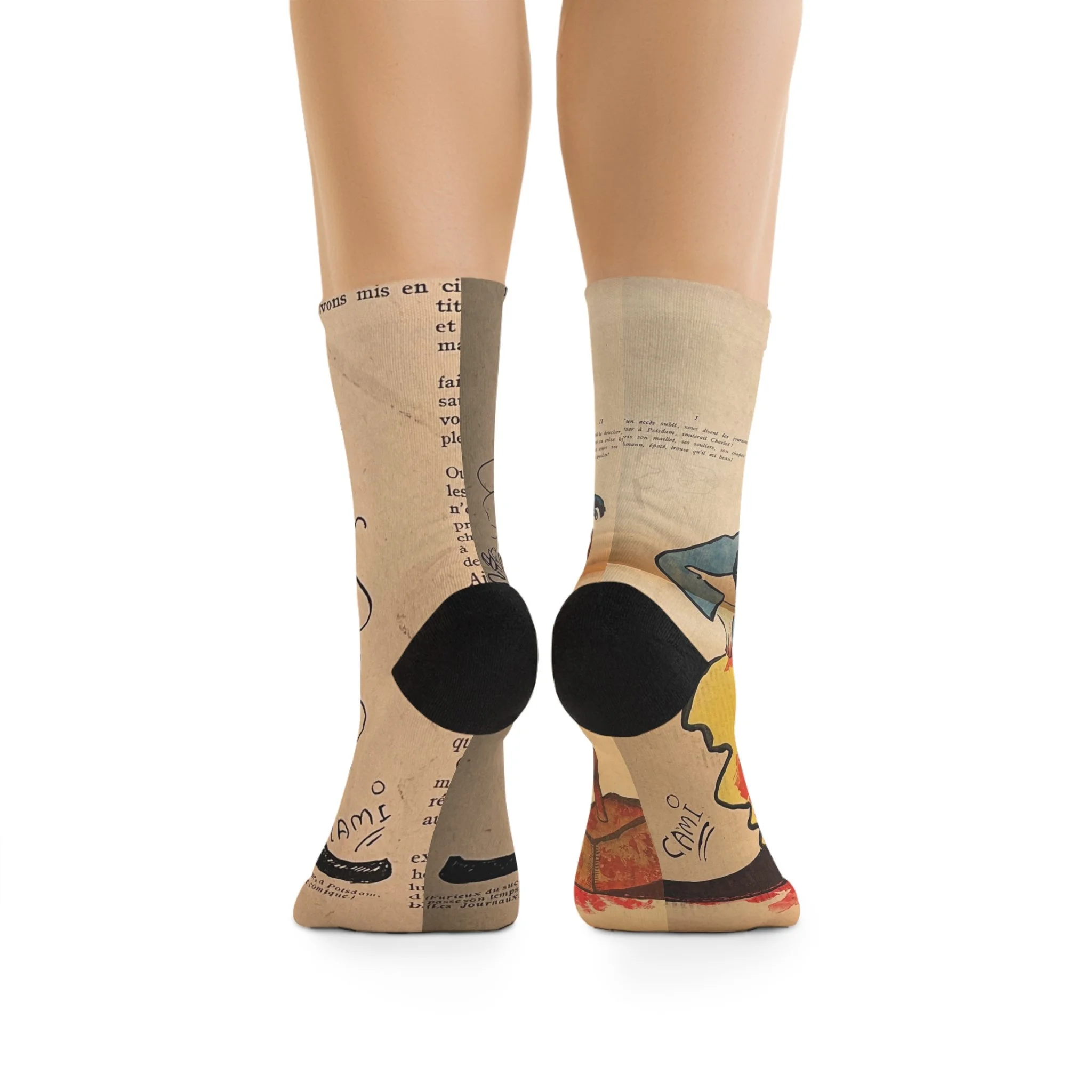
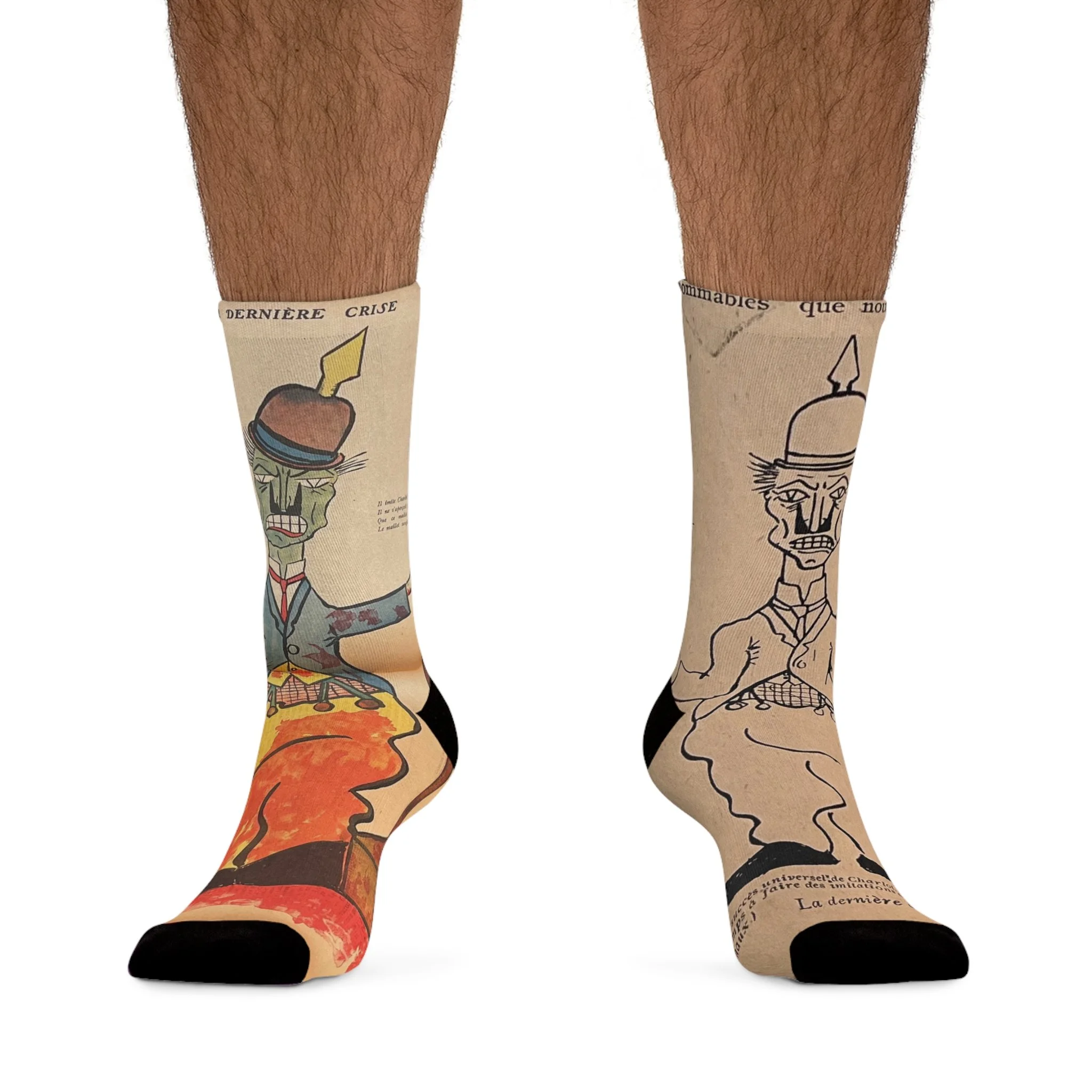
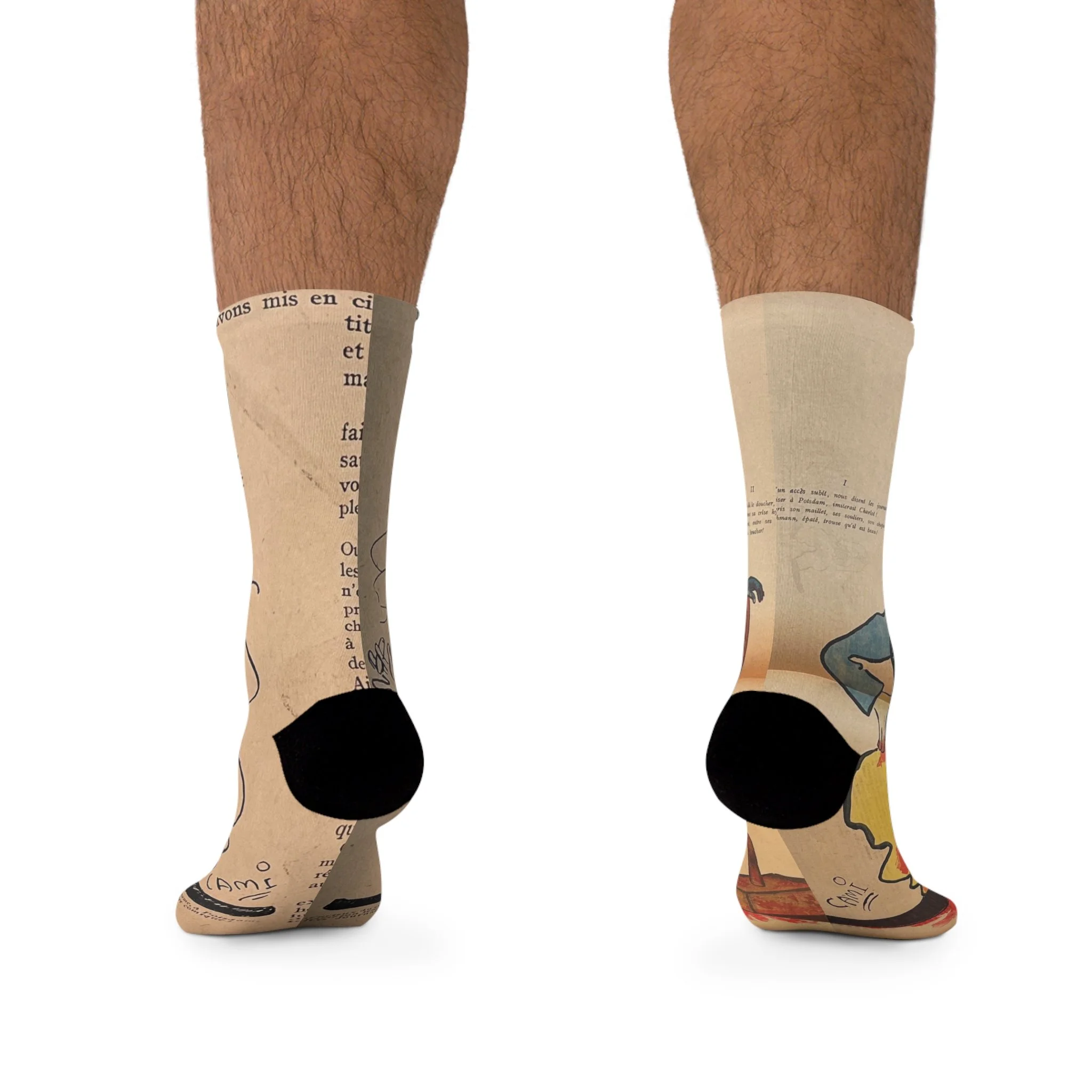
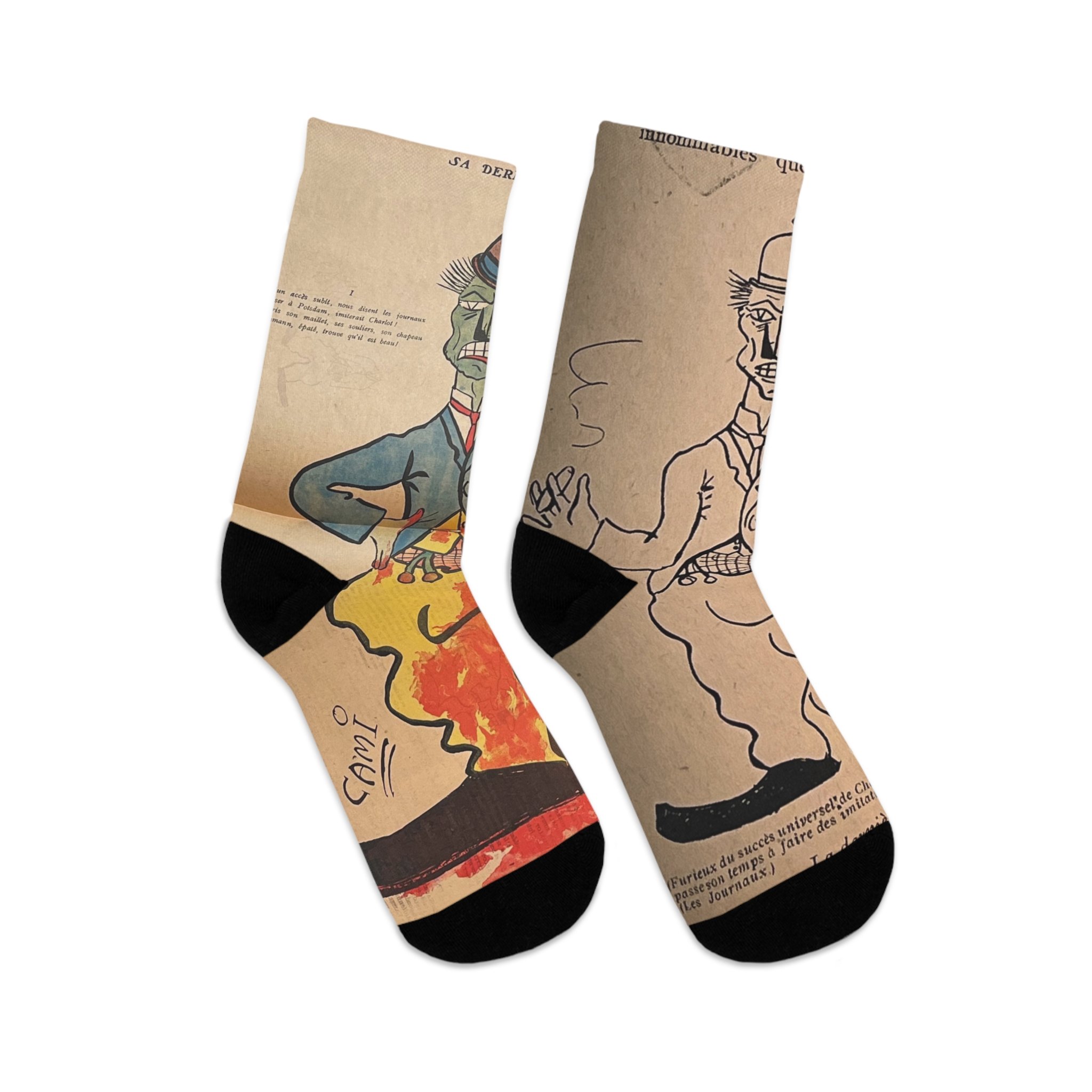
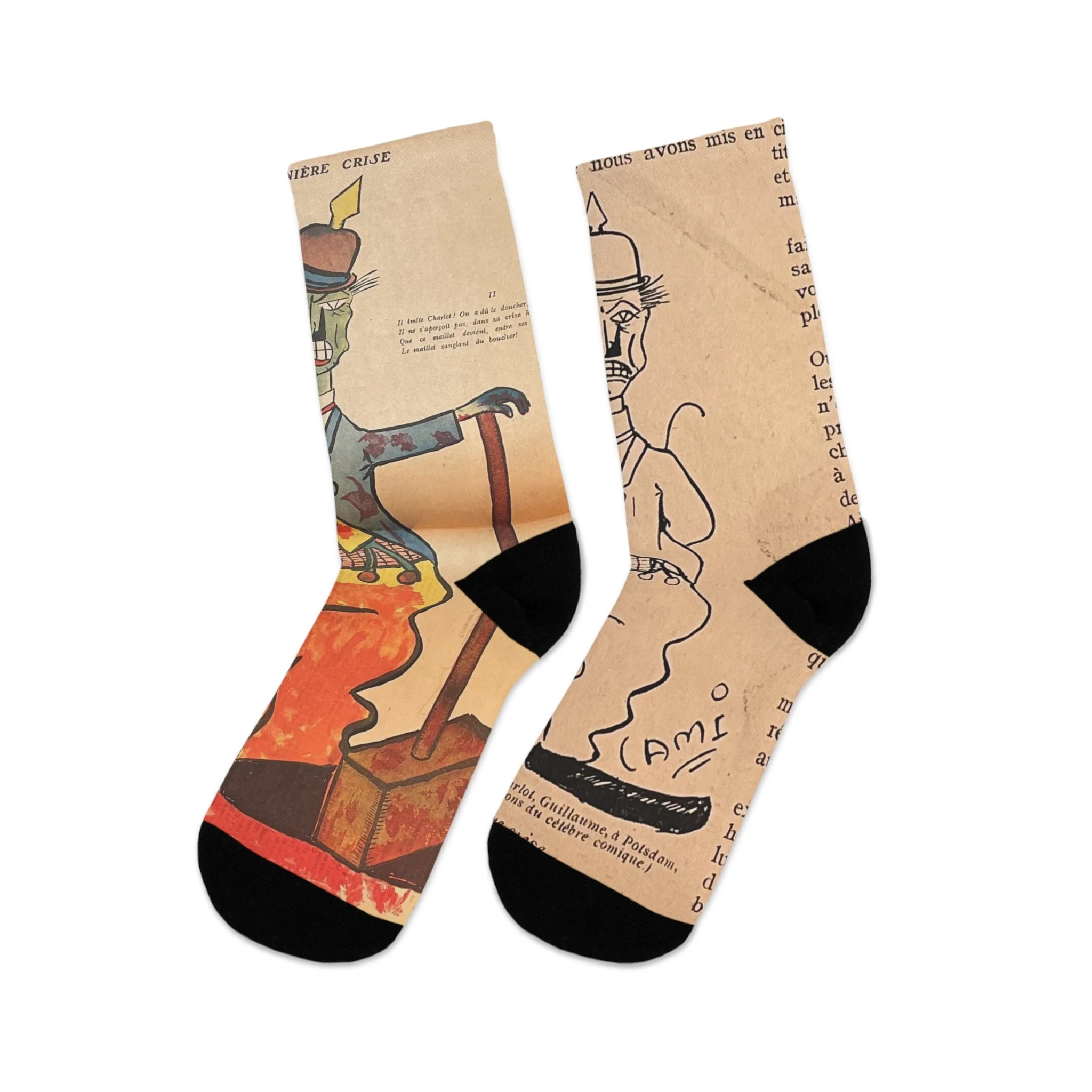
A satirical critique of authoritarian performance and the collapse of imperial bravado.
The image presents power as rigid and overstated, where exaggerated uniform and forced posture reveal authority sustained by spectacle rather than substance. Alongside it, the simplified line-drawing variant strips the figure down to nervous gesture and compressed form, exposing fragility beneath the performance.
Historical Note
These images appeared in a 1917 issue of La Baïonnette and were created by Pierre-Henri Cami. Using caricature and reduction, they mock Kaiser Wilhelm II’s wartime posturing, portraying militarism as brittle and increasingly hollow in the war’s later years.
See the full Cami: Charlie Chaplin Collection here
Crew length | Recycled polyester-cotton blend | All-over print with solid black toe and heel accents
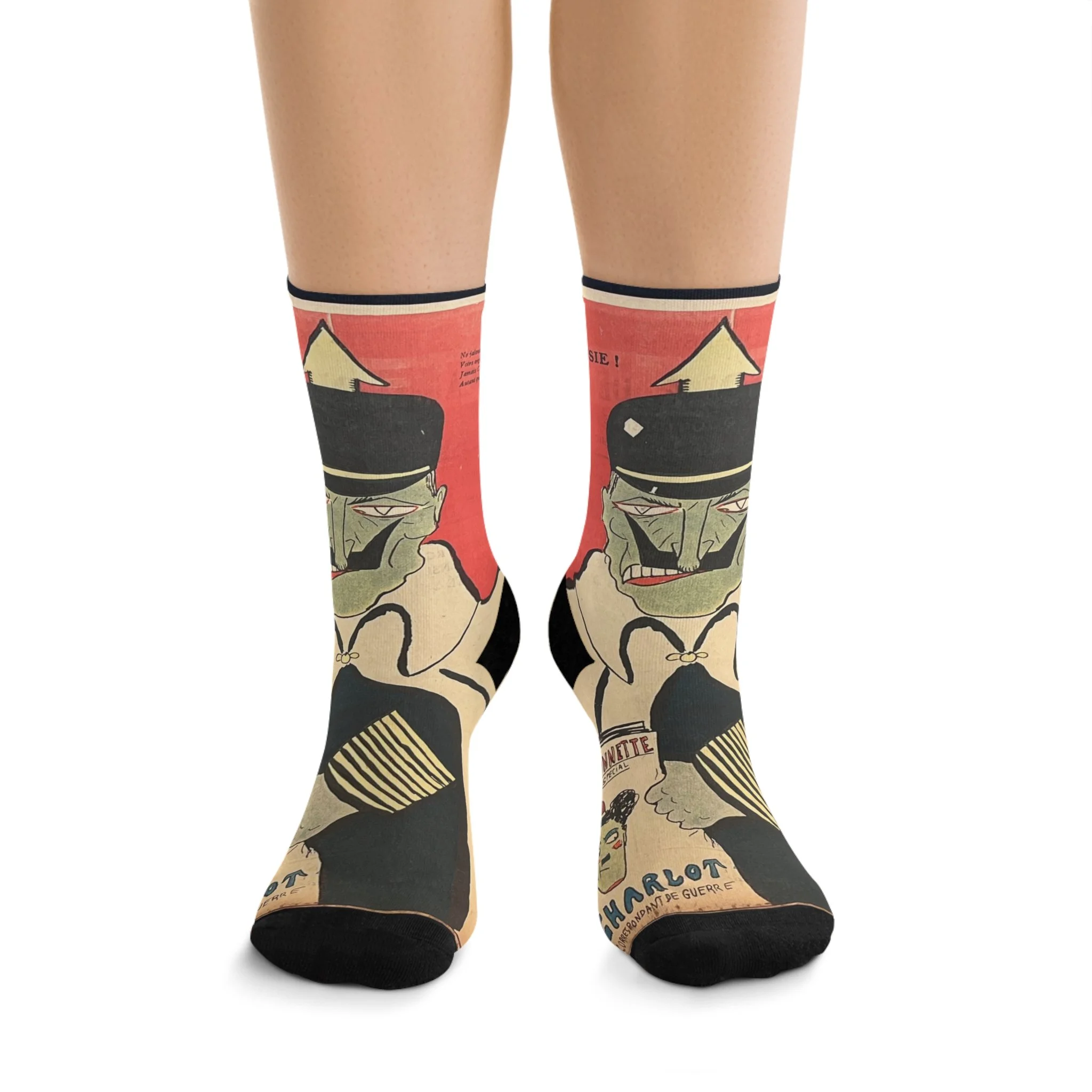
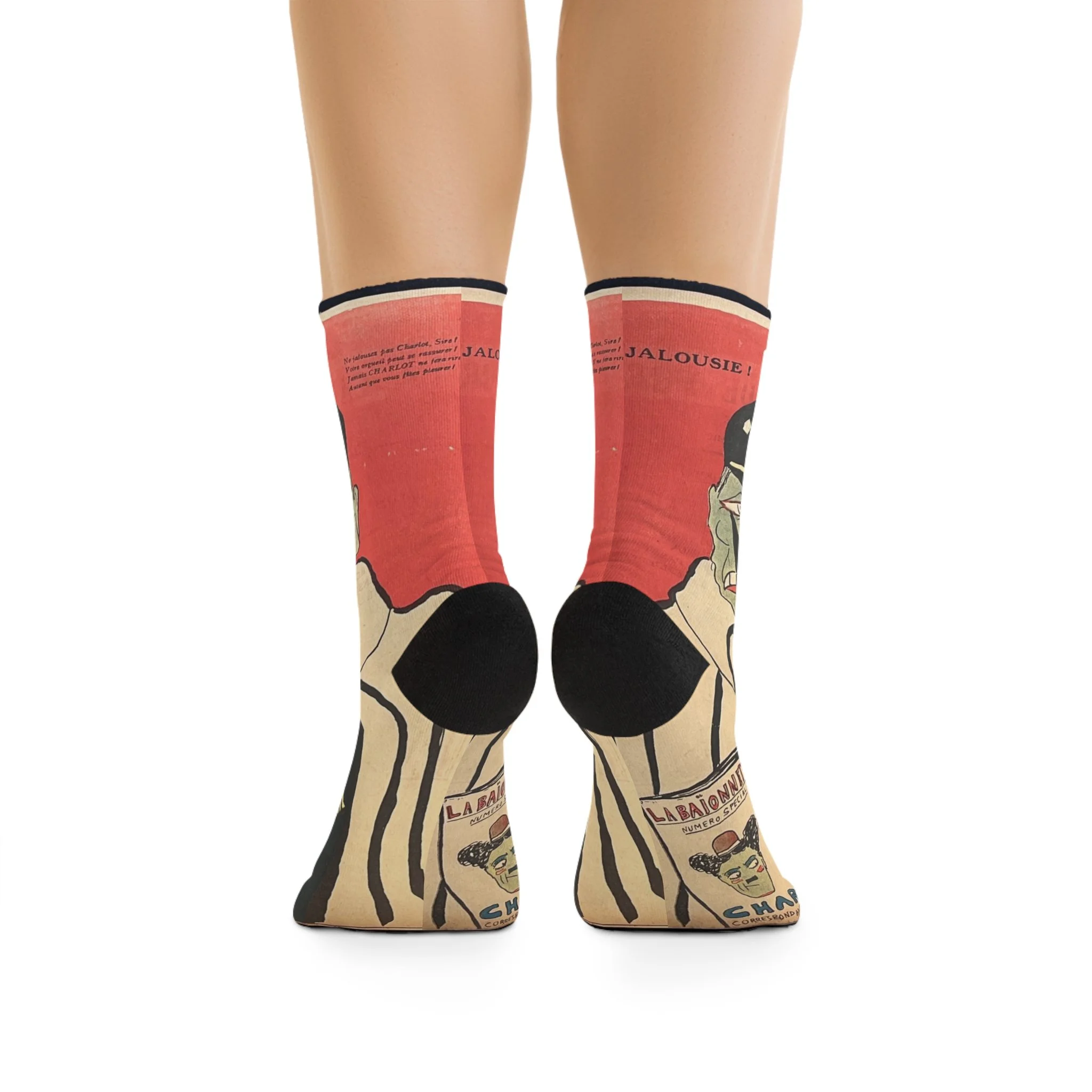
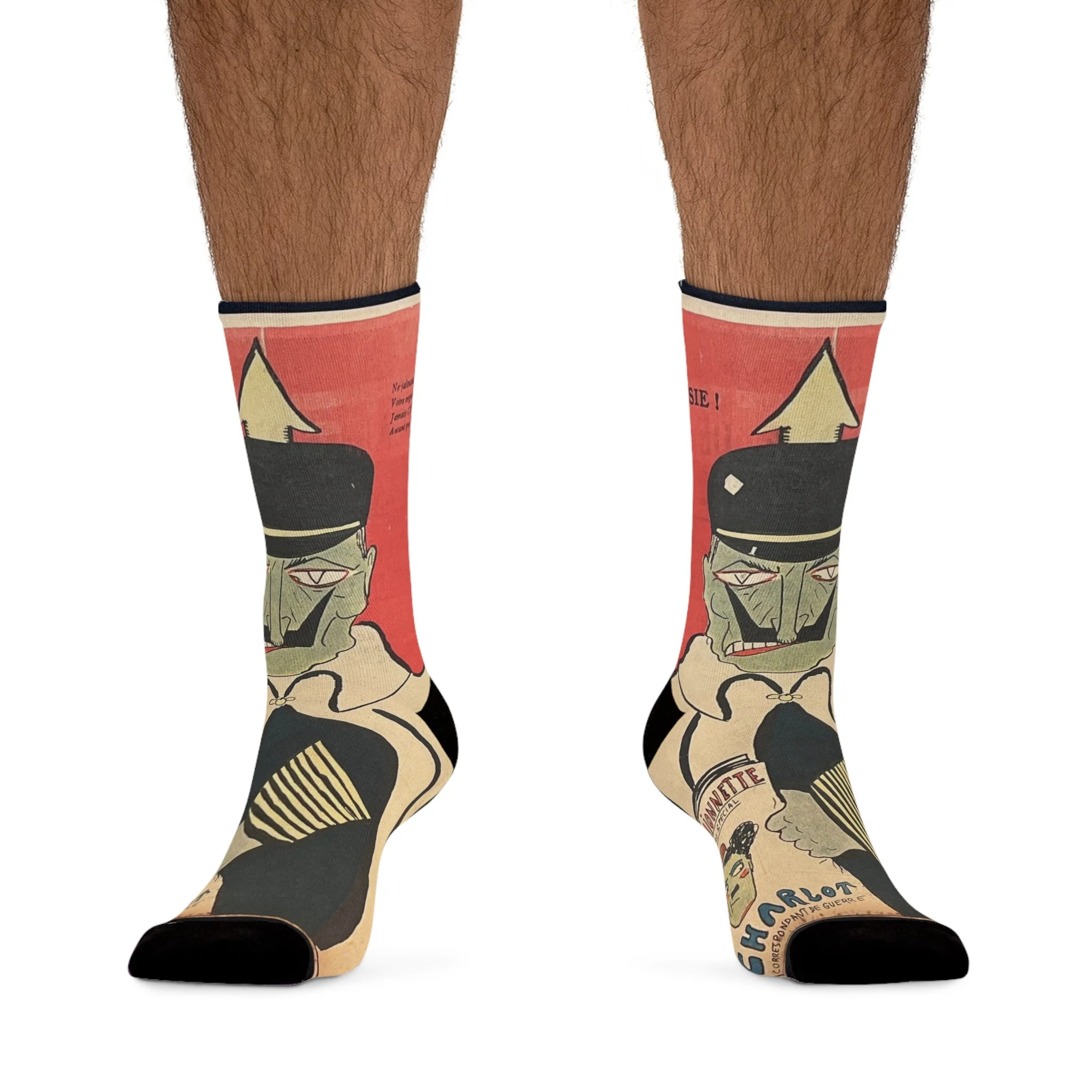
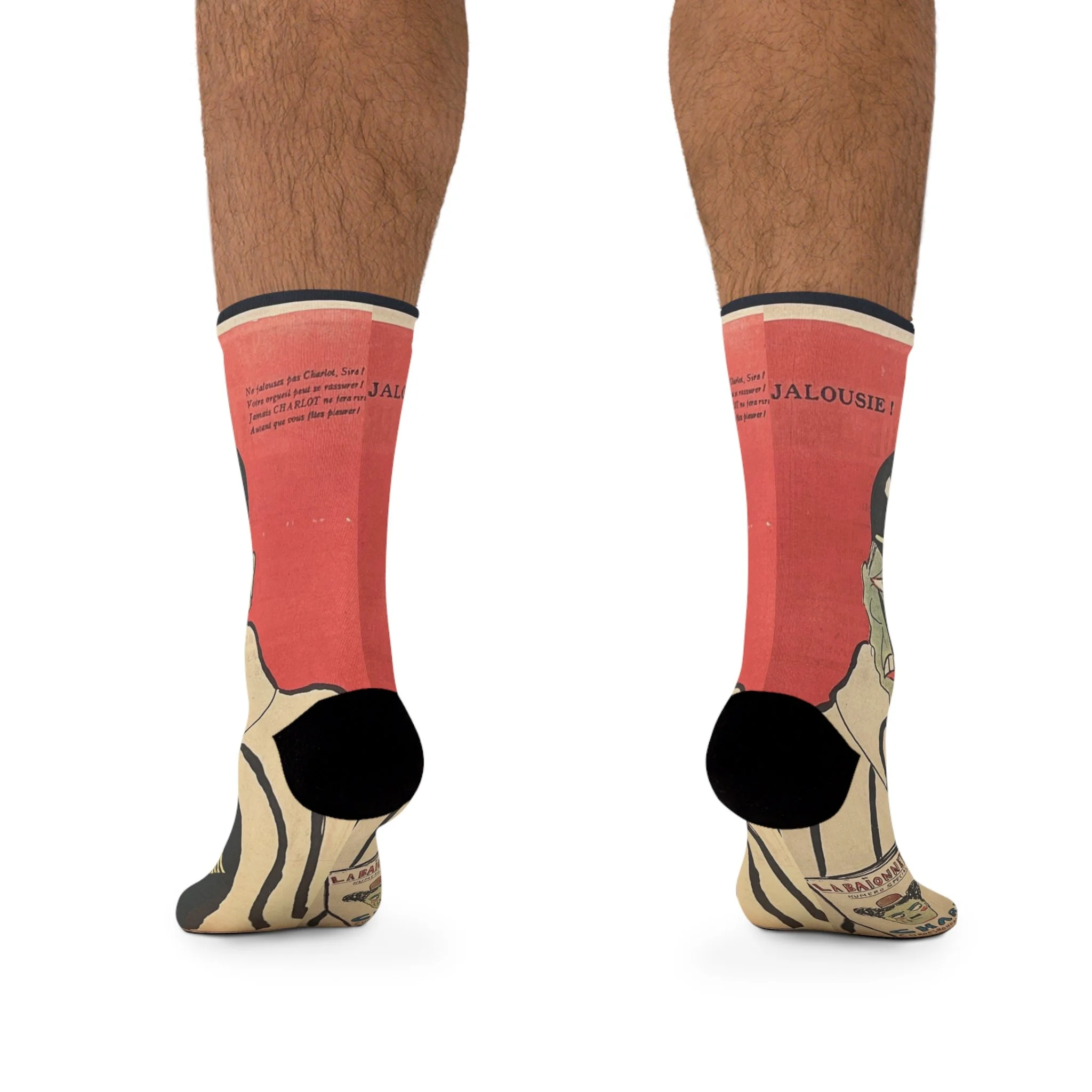
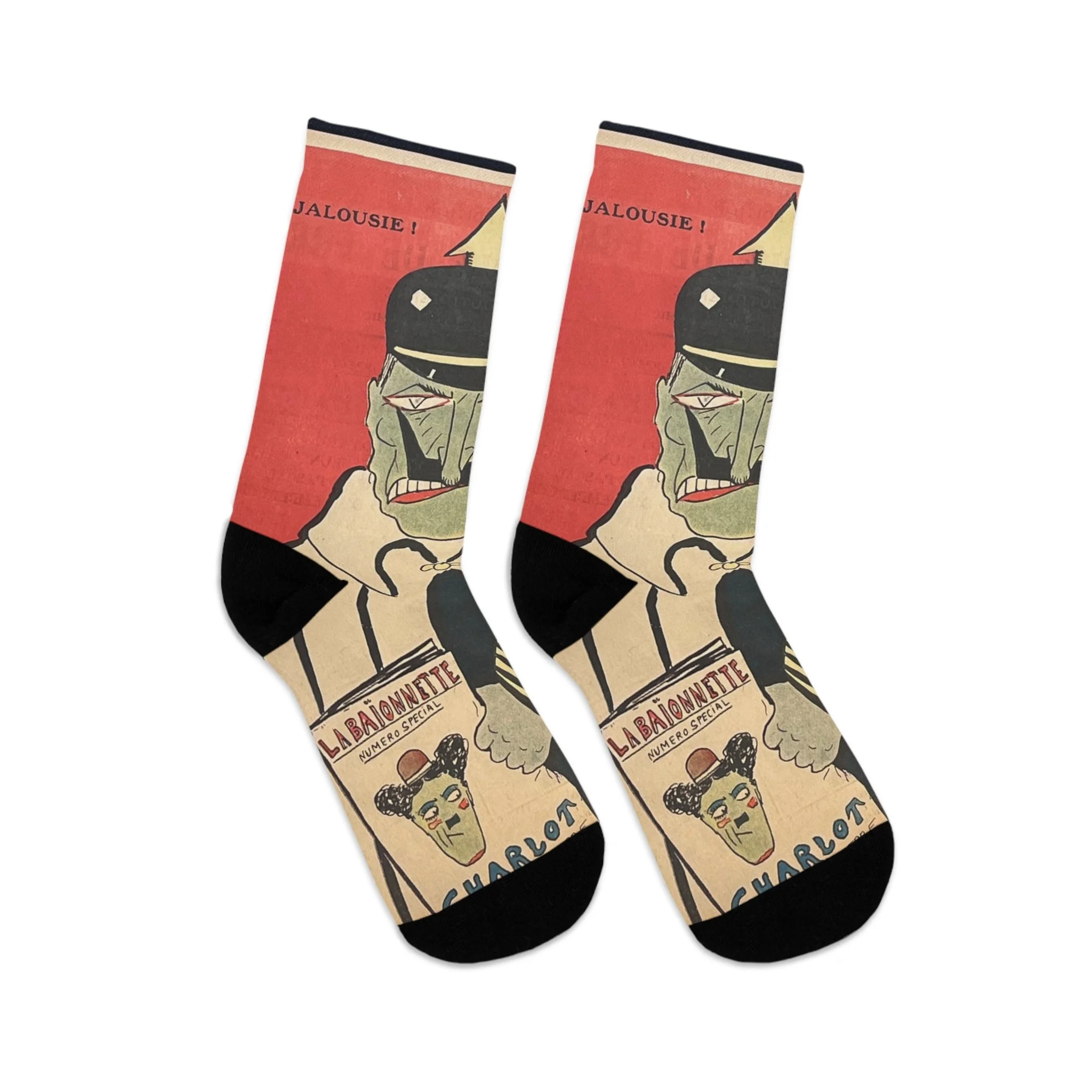
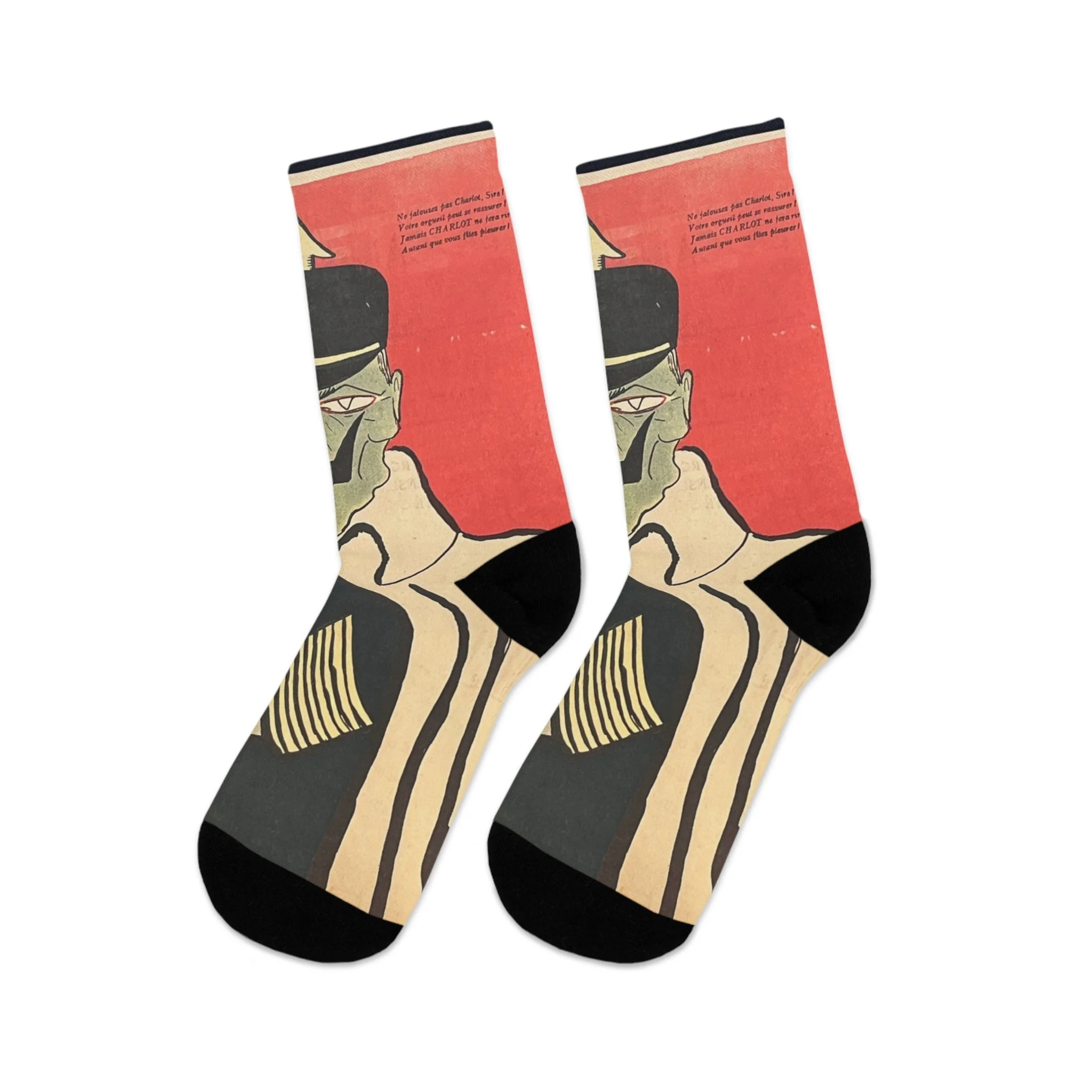
A satirical critique of authoritarian vanity and wounded imperial pride.
The image presents power as reactive and insecure, where command is unsettled by ridicule and popularity beyond its control. Exaggerated expression and posture turn authority inward, exposing how spectacle and resentment replace confidence when legitimacy falters.
Historical Note
This illustration appeared in a 1917 issue of La Baïonnette and was created by Pierre-Henri Cami. Titled Jalousie!, it depicts Kaiser Wilhelm II reacting to the popularity of Charlot, using caricature to mock imperial vanity and fragility during the First World War.
See the full Cami: Charlie Chaplin Collection here
Crew length | Recycled poly-cotton blend | All-over print with solid black toe and heel accents
No results match your search. Try removing a few filters.