
From the archives of political satire
these works preserve a tradition of dissent—
continuing its vigilance in the present.
From the archives of political satire
these works preserve a tradition of dissent—
continuing its vigilance in the present.
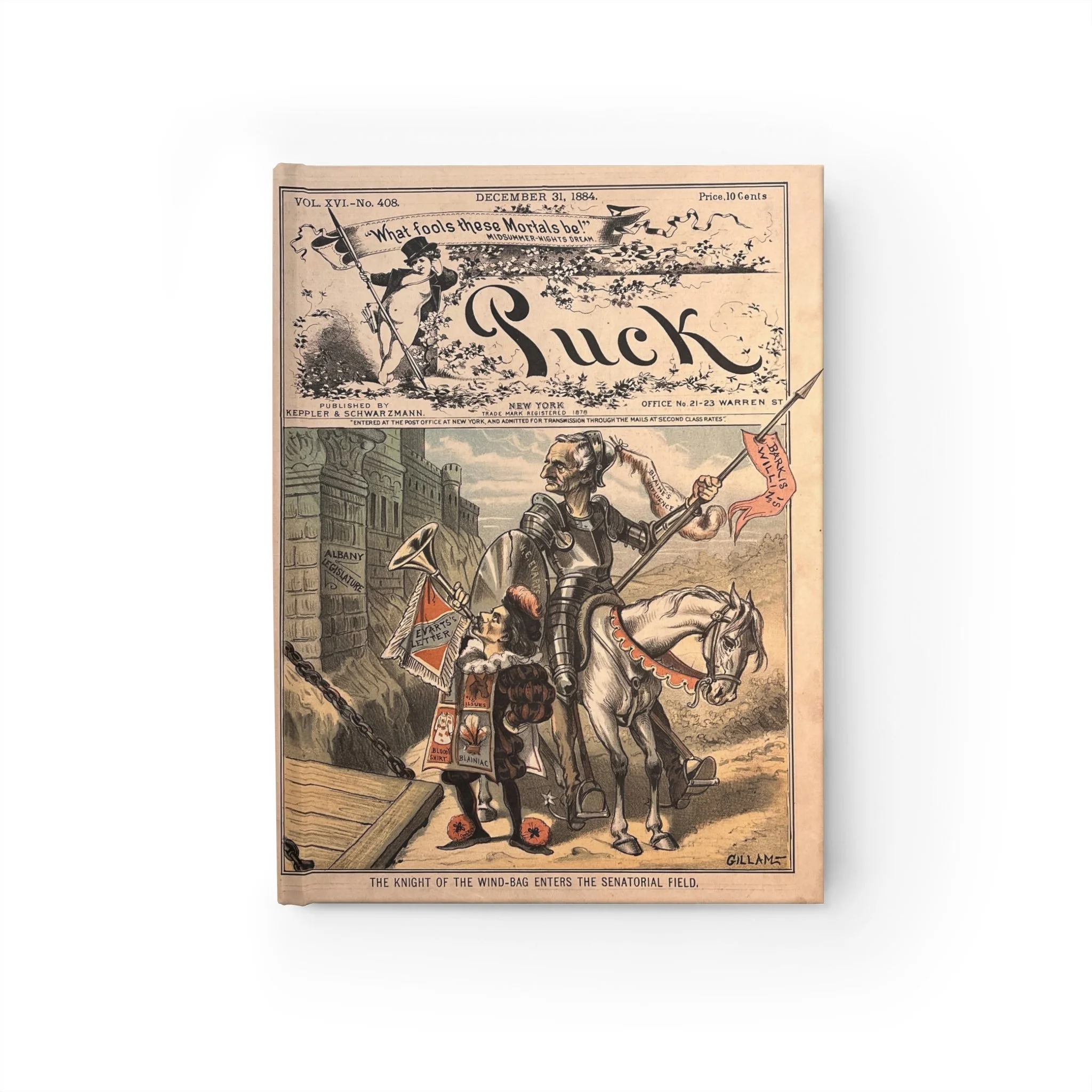
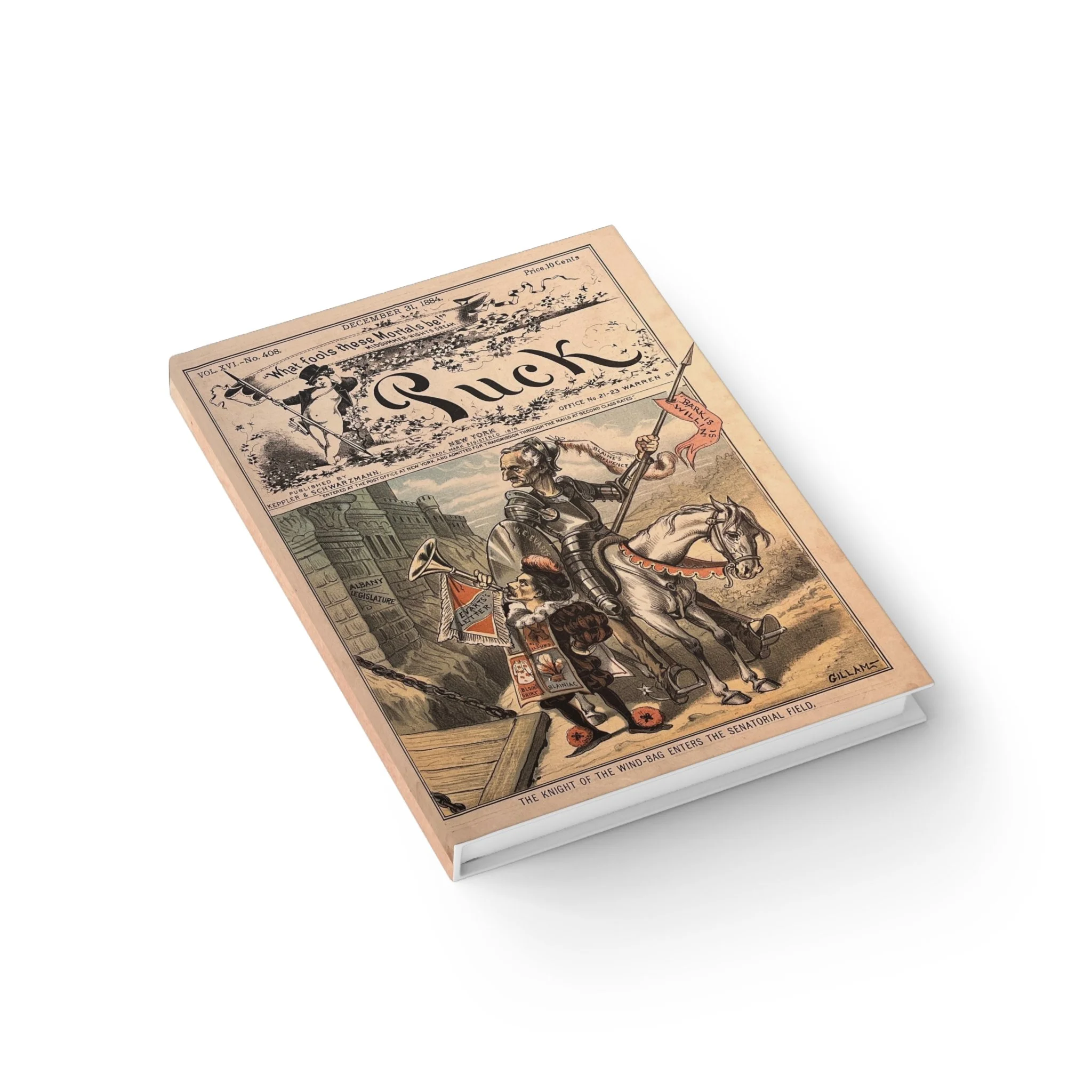

Satire aimed at political performance and empty display.
When ambition is staged through slogans and props rather than ideas and responsibility, spectacle begins to substitute for substance. That dynamic was already visible in the late nineteenth century—and it has never entirely disappeared.
Historical note:
The cover image comes from an 1884 issue of Puck magazine, illustrated by Bernhard Gillam, a leading Gilded Age political cartoonist known for satirizing corruption, ambition, and political spectacle.
5 × 7 in | Casewrap sewn binding | Ruled | Vibrant, crisp vintage tones
Add two journals to your cart to receive an automatic bundle discount.
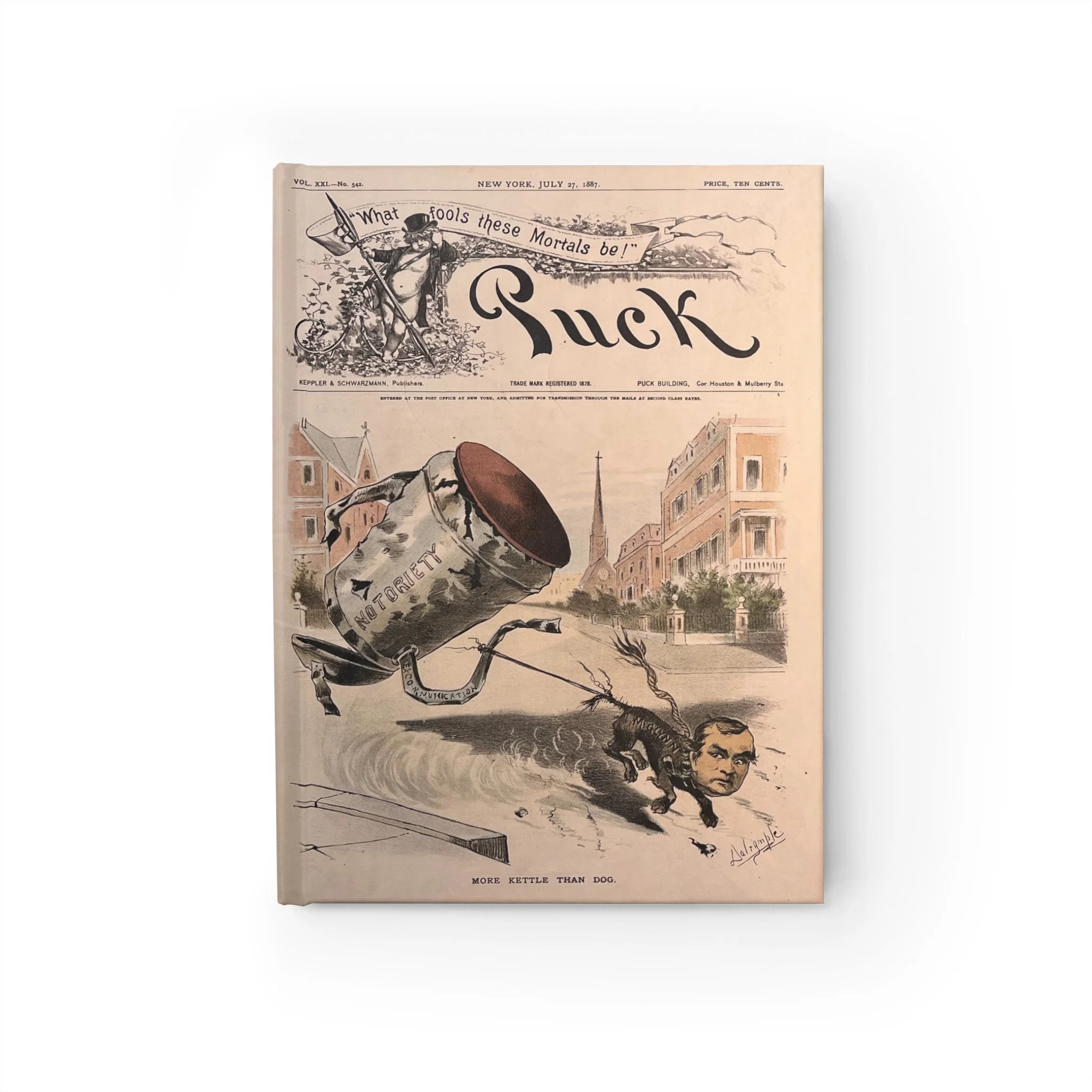
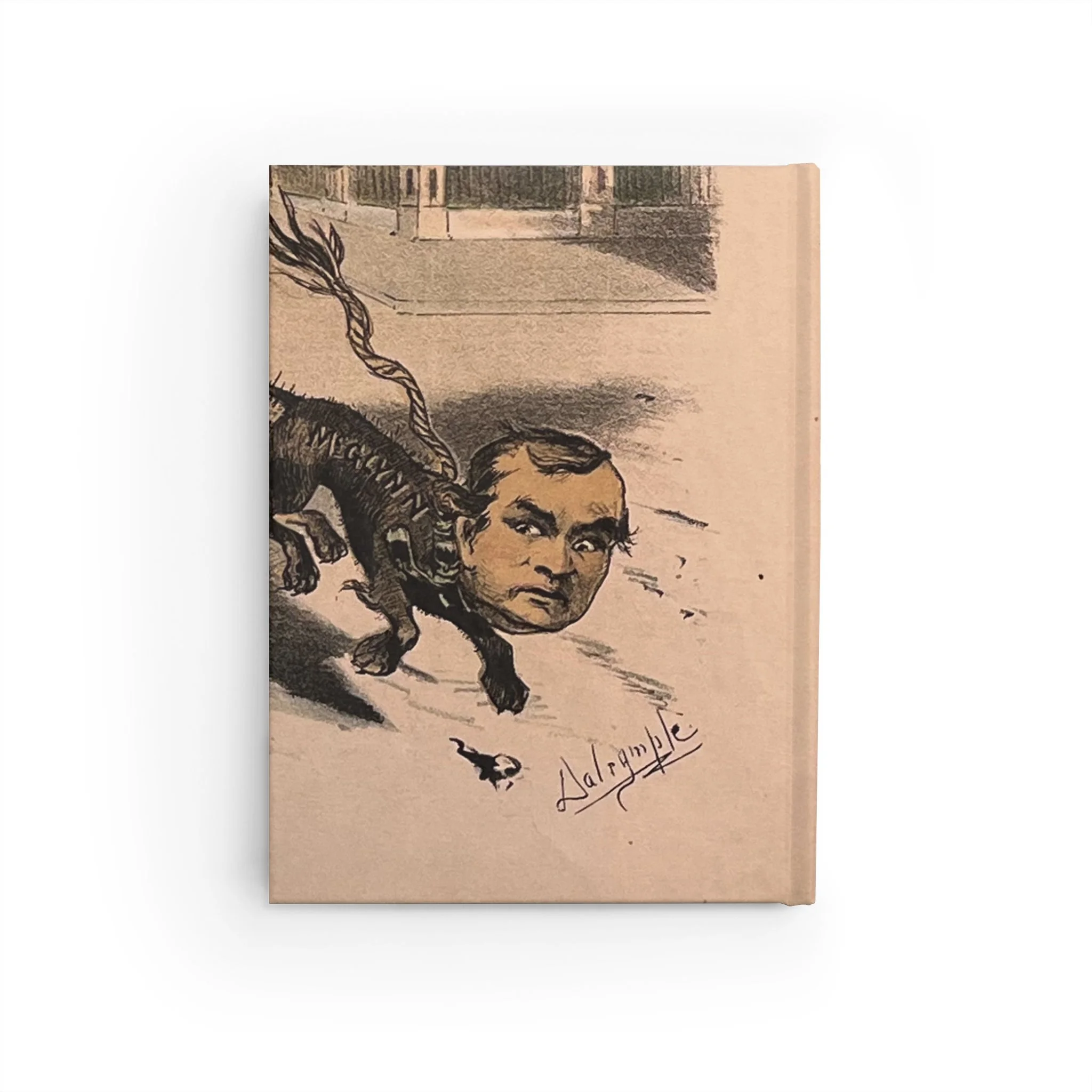
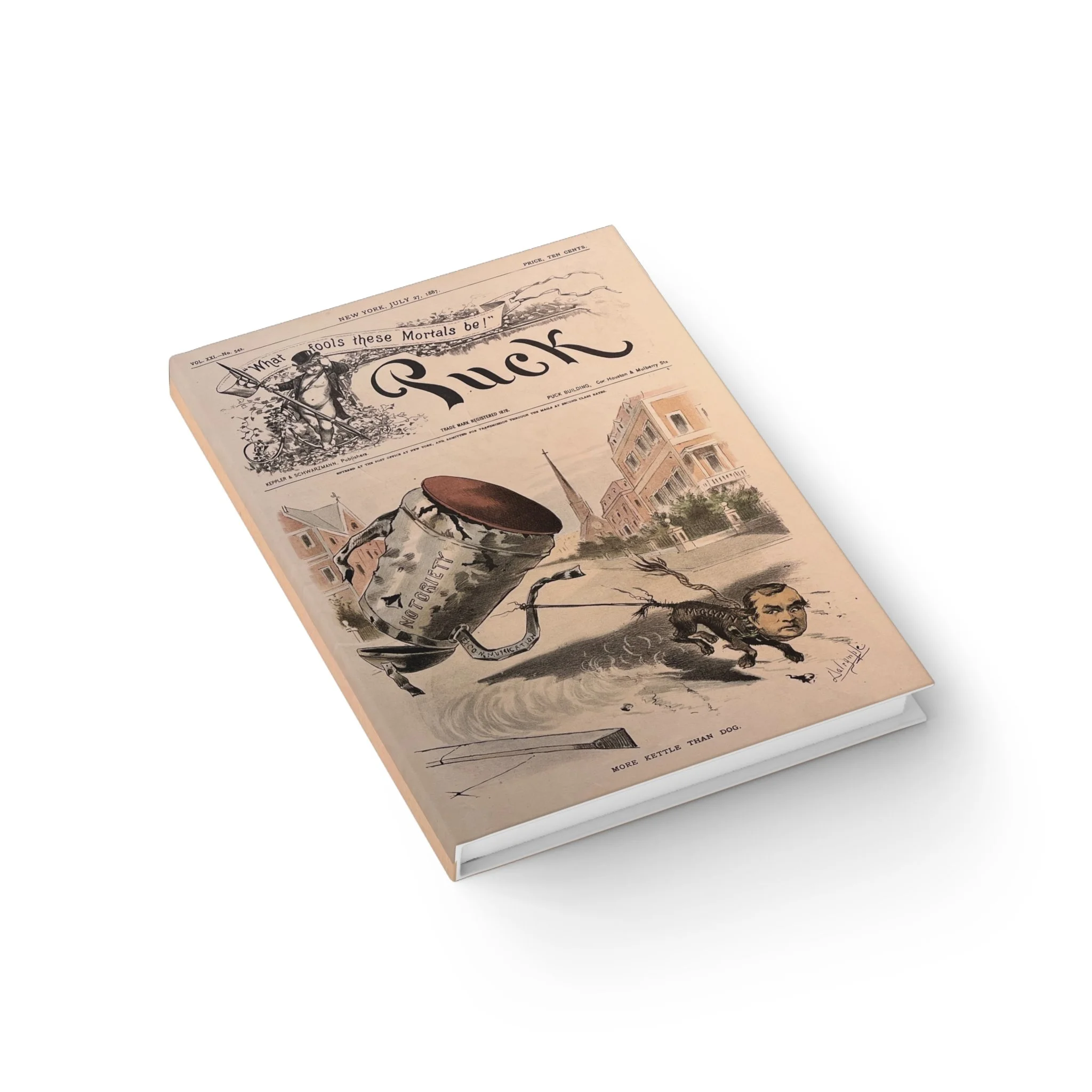

A satirical treatment of scandal, spectacle, and the inflation of moral outrage.
The image portrays notoriety as a force that grows beyond its original cause, pulling individuals along in its wake while punishment becomes performative rather than corrective. Public condemnation appears less about responsibility than about amplification, exposure, and control.
Historical Note
This cartoon appeared in an 1887 issue of Puck magazine and was illustrated by Louis M. Dalrymple, whose work frequently examined scandal, authority, and the theatrical use of shame in public life.
5 × 7 in | Casewrap sewn binding | Blank | Vibrant, crisp vintage tones
Add two journals to your cart to receive an automatic bundle discount.
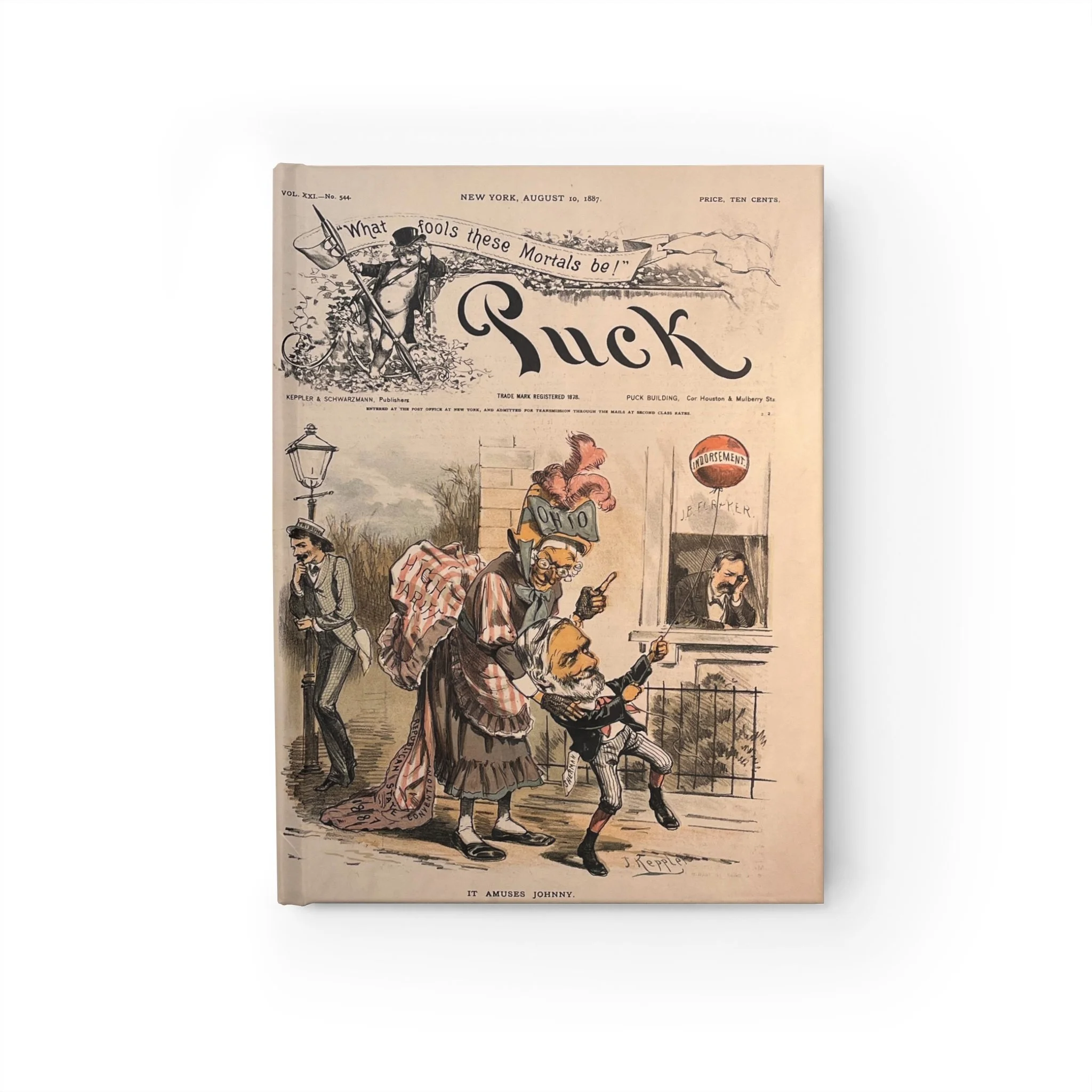
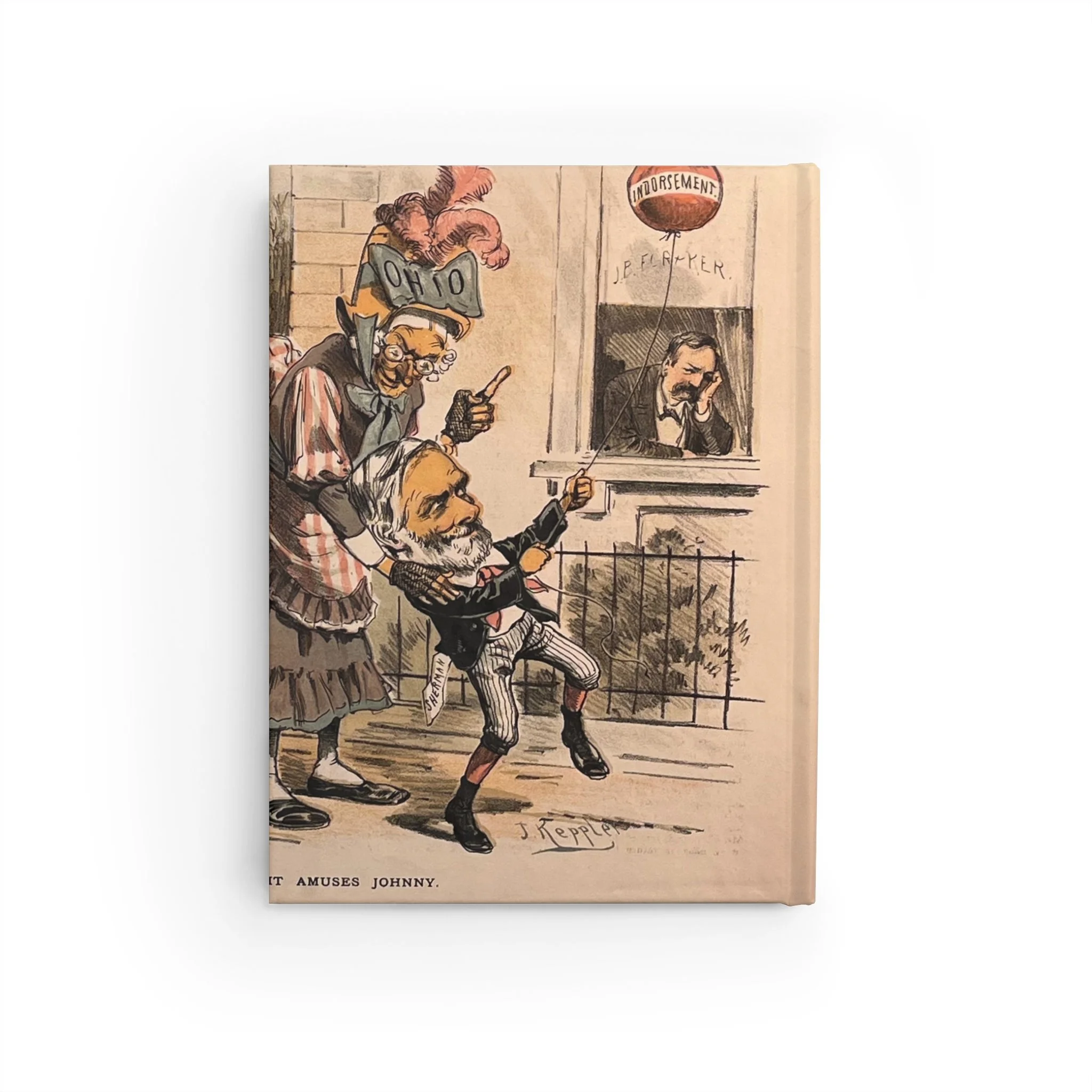


Satire directed at political management and performative ambition.
The image frames public life as something arranged rather than chosen, where candidates are advanced through routine gestures and institutional habit. Endorsement appears procedural and symbolic, suggesting a system in which display substitutes for deliberation.
Historical Note
This cover appeared in the August 10, 1887 issue of Puck magazine and was illustrated by Joseph Keppler, whose work frequently critiqued party machinery and the theatrical character of late-nineteenth-century politics.
5 × 7 in | Casewrap sewn binding | Ruled | Vibrant, crisp vintage tones
Add two journals to your cart to receive an automatic bundle discount.
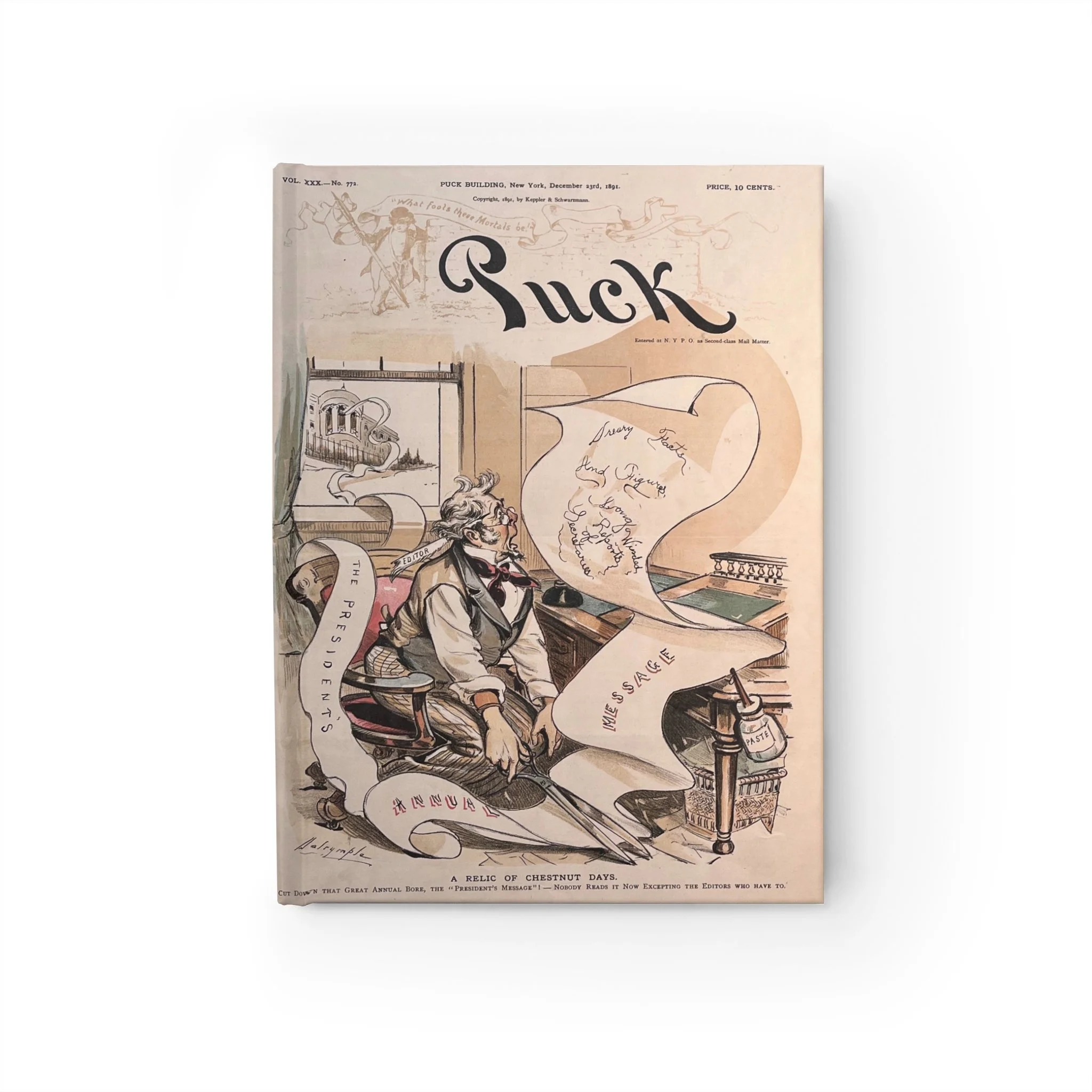
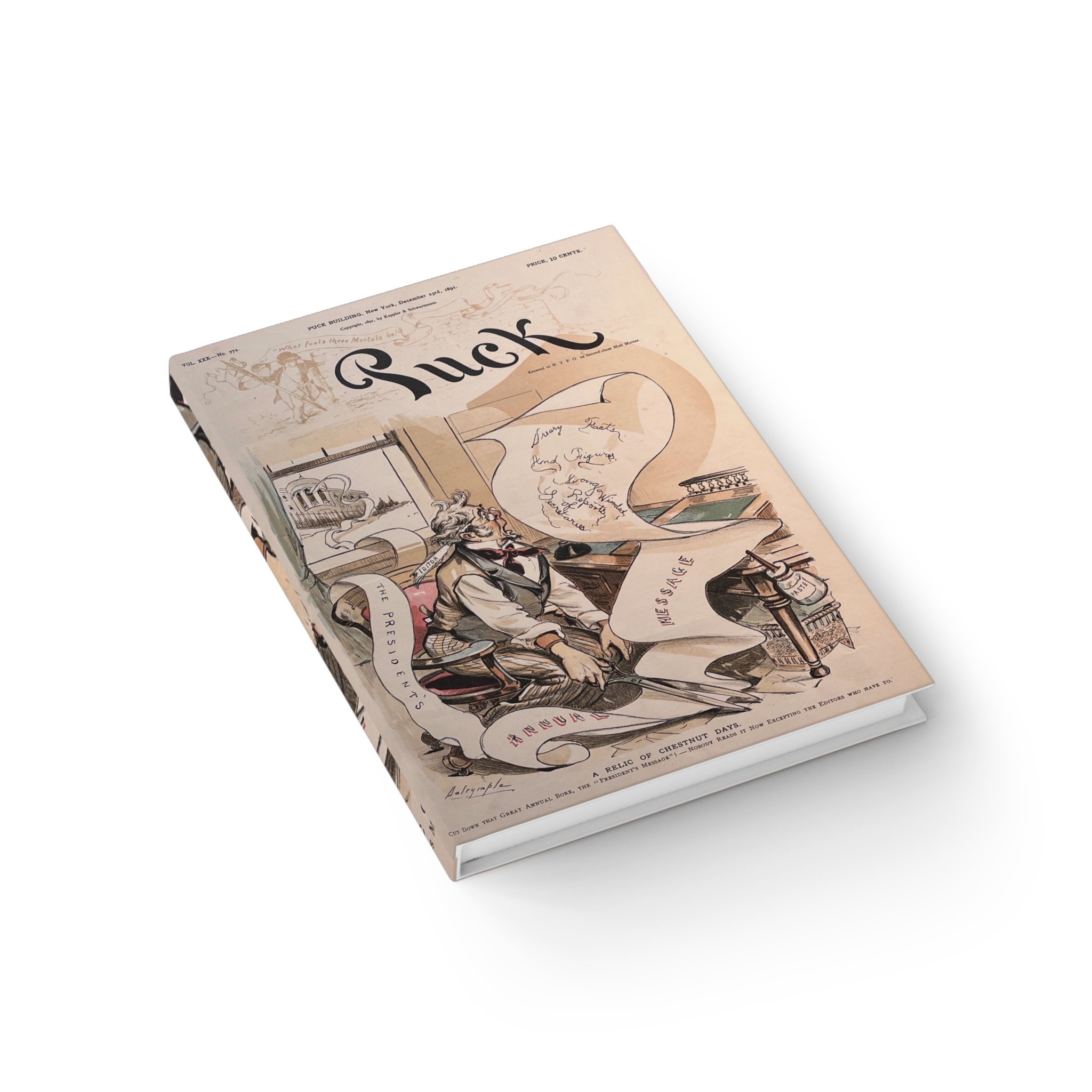

Satire aimed at political verbosity and the fatigue of endless official communication.
The image frames public discourse as an exercise in endurance, where excessive detail and ritualized language overwhelm meaning. Authority speaks at length while comprehension erodes, leaving intermediaries and audiences alike burdened by volume rather than informed by substance.
Historical Note
This cover was published in Puck magazine on December 23, 1891, and was illustrated by Louis M. Dalrymple, whose work often critiqued bureaucracy, political excess, and the performative rituals of public authority.
5 × 7 in | Casewrap sewn binding | Ruled | Vibrant, crisp vintage tones
Add two journals to your cart to receive an automatic bundle discount.
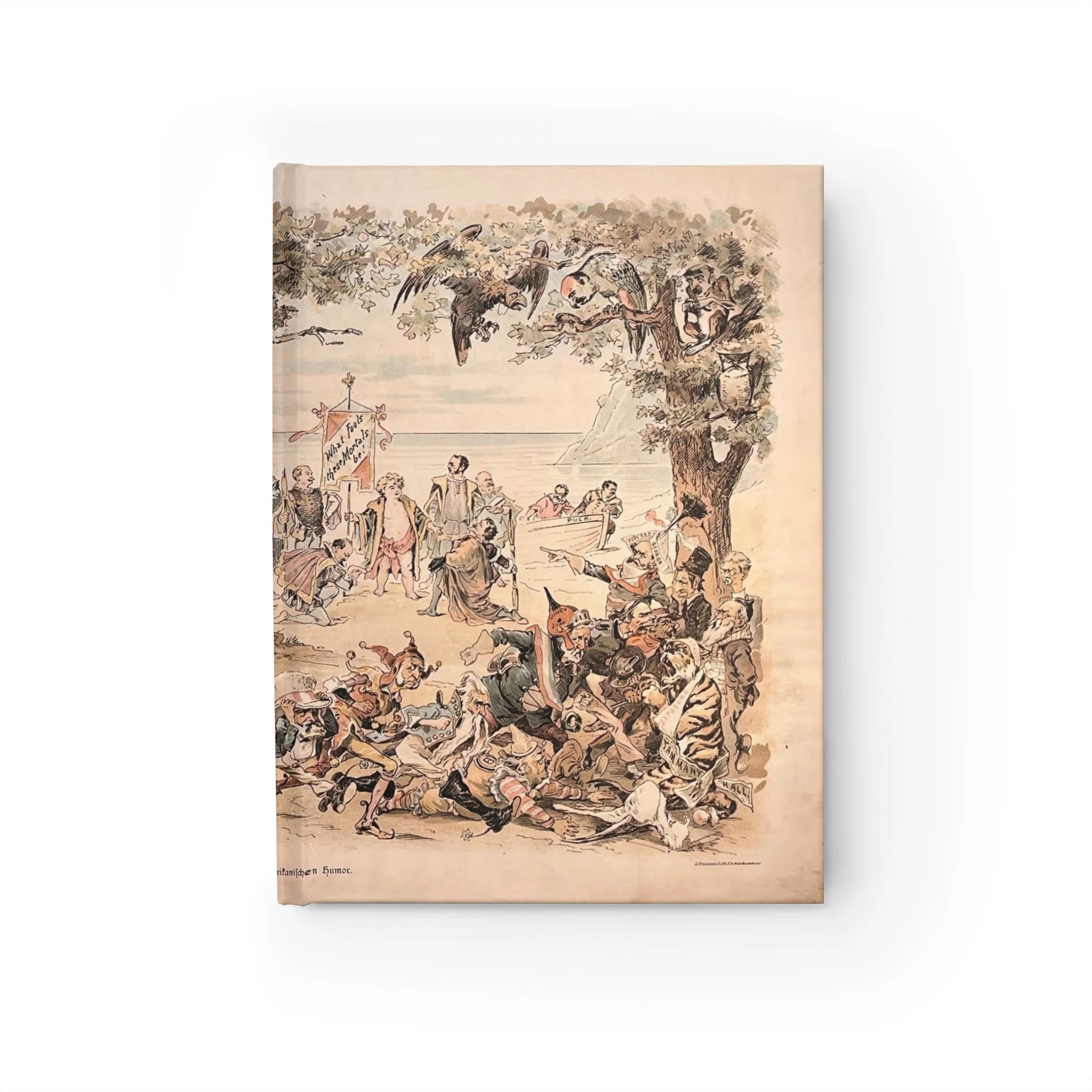
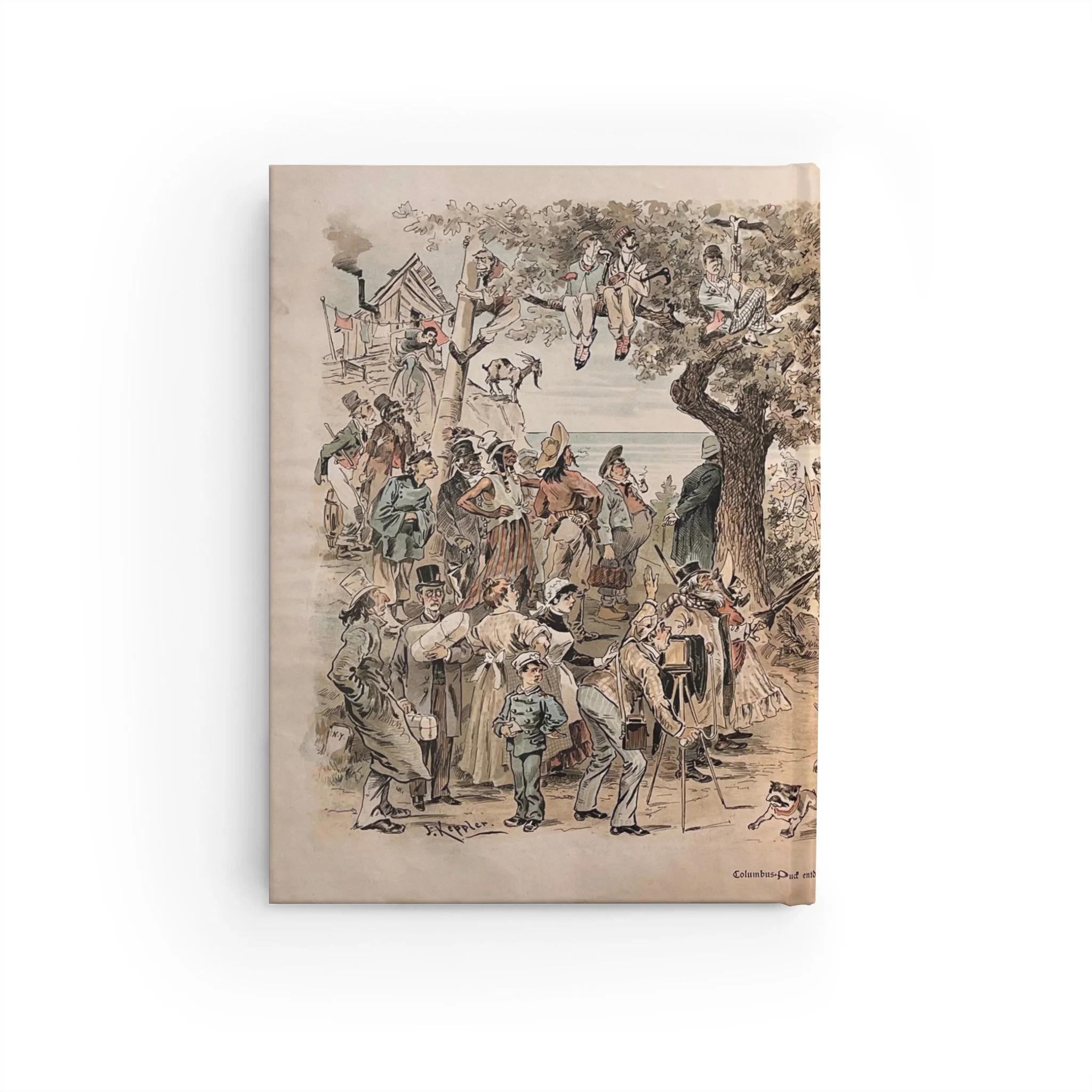
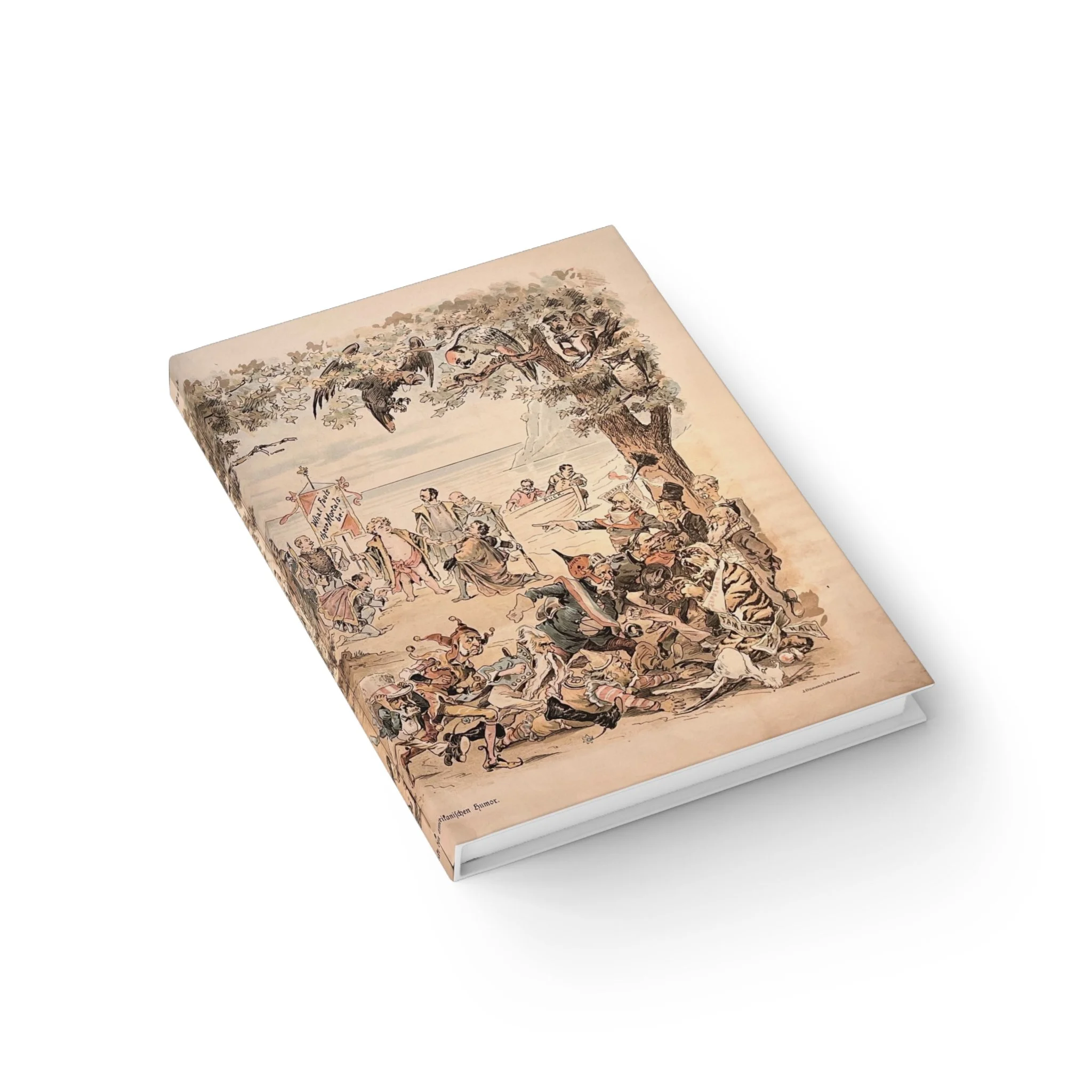

A study of mass participation, public performance, and the instability of collective enthusiasm.
The image presents civic life as a crowded stage, where ambition, humor, and tension coexist without clear hierarchy. Public energy appears expansive and animated, yet precarious—suggesting that national identity is formed as much through spectacle and proximity as through order or consensus.
Historical Note
This two-page illustration appeared in an early 1890s issue of Puck magazine and was illustrated by Joseph Keppler. Known for large ensemble scenes, Keppler used dense composition to explore the performance of power, social diversity, and the contradictions of American public life.
5 × 7 in | Casewrap sewn binding | Blank | Vibrant, crisp vintage tones
Add two journals to your cart to receive an automatic bundle discount.
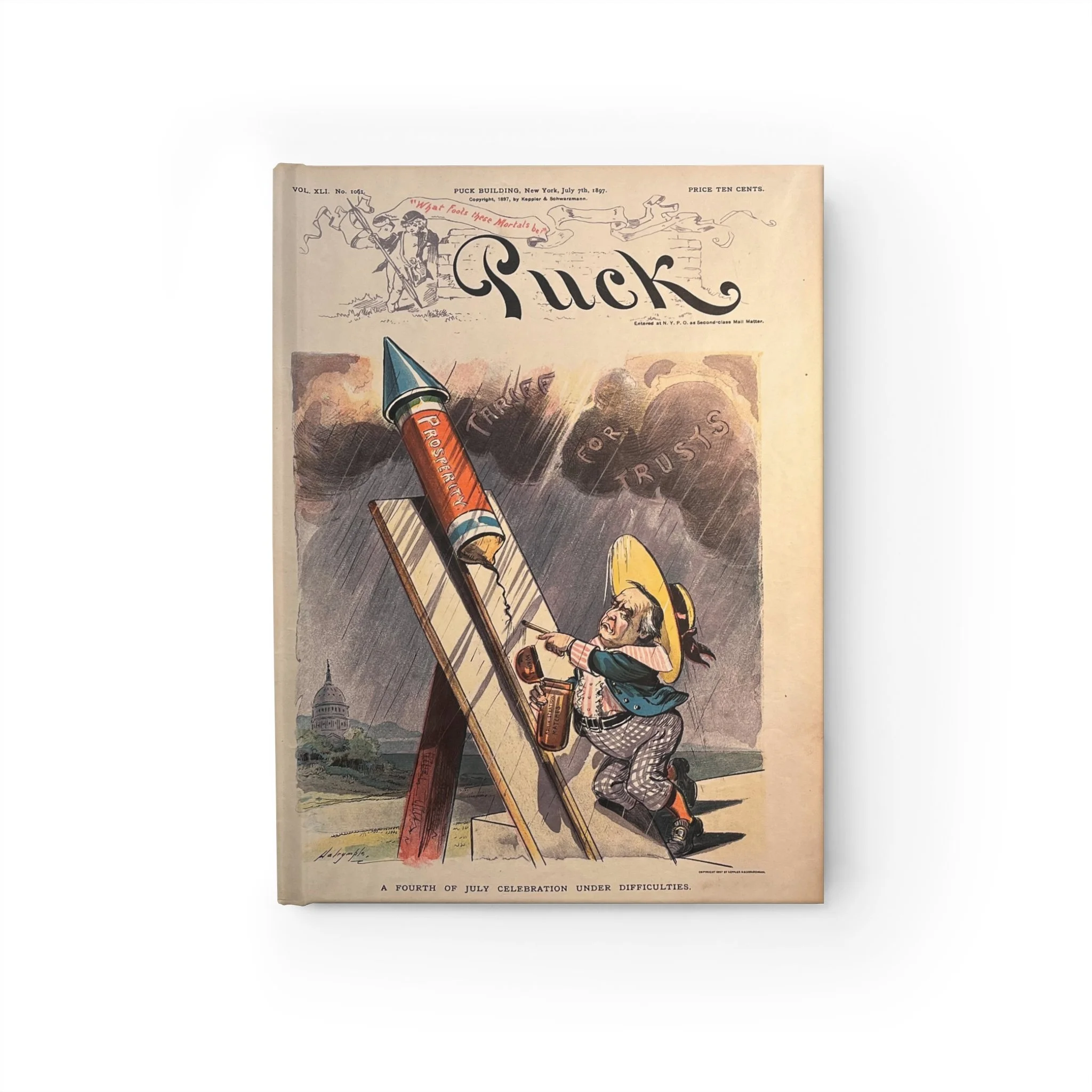
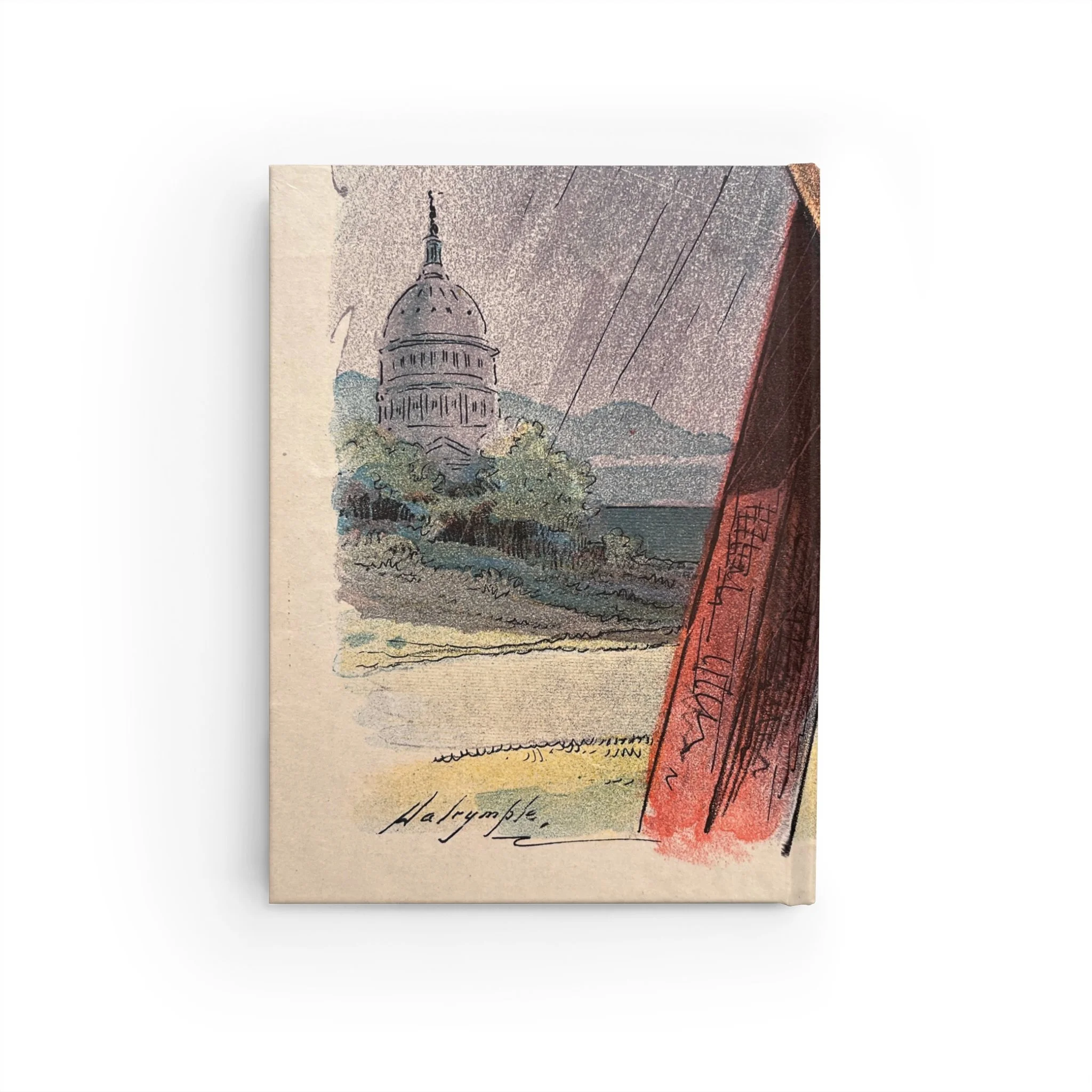
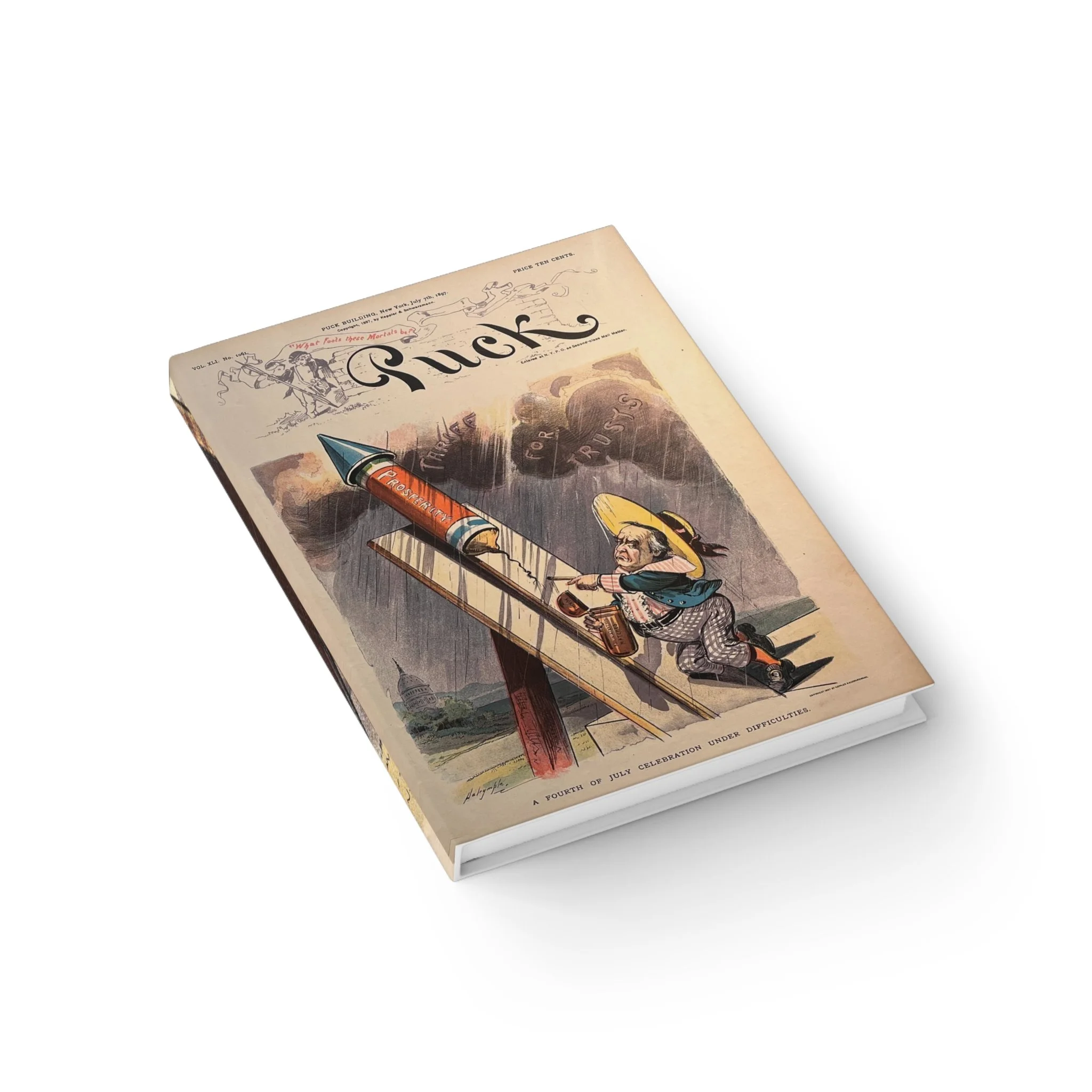

Satire aimed at hollow celebration and the weight of policy on public optimism.
The image presents national pride as a stalled ritual, where promised prosperity struggles to take flight under accumulating constraints. Confidence is shown as ceremonial rather than realized, suggesting that economic policy can dampen collective momentum even in moments meant for unity and renewal.
Historical Note
This cover appeared in an 1897 issue of Puck magazine and was illustrated by Louis M. Dalrymple. It critiques the impact of protectionist policy and concentrated economic power on public life, using patriotic imagery to underscore political strain.
5 × 7 in | Casewrap sewn binding | Ruled | Vibrant, crisp vintage tones
Add two journals to your cart to receive an automatic bundle discount.
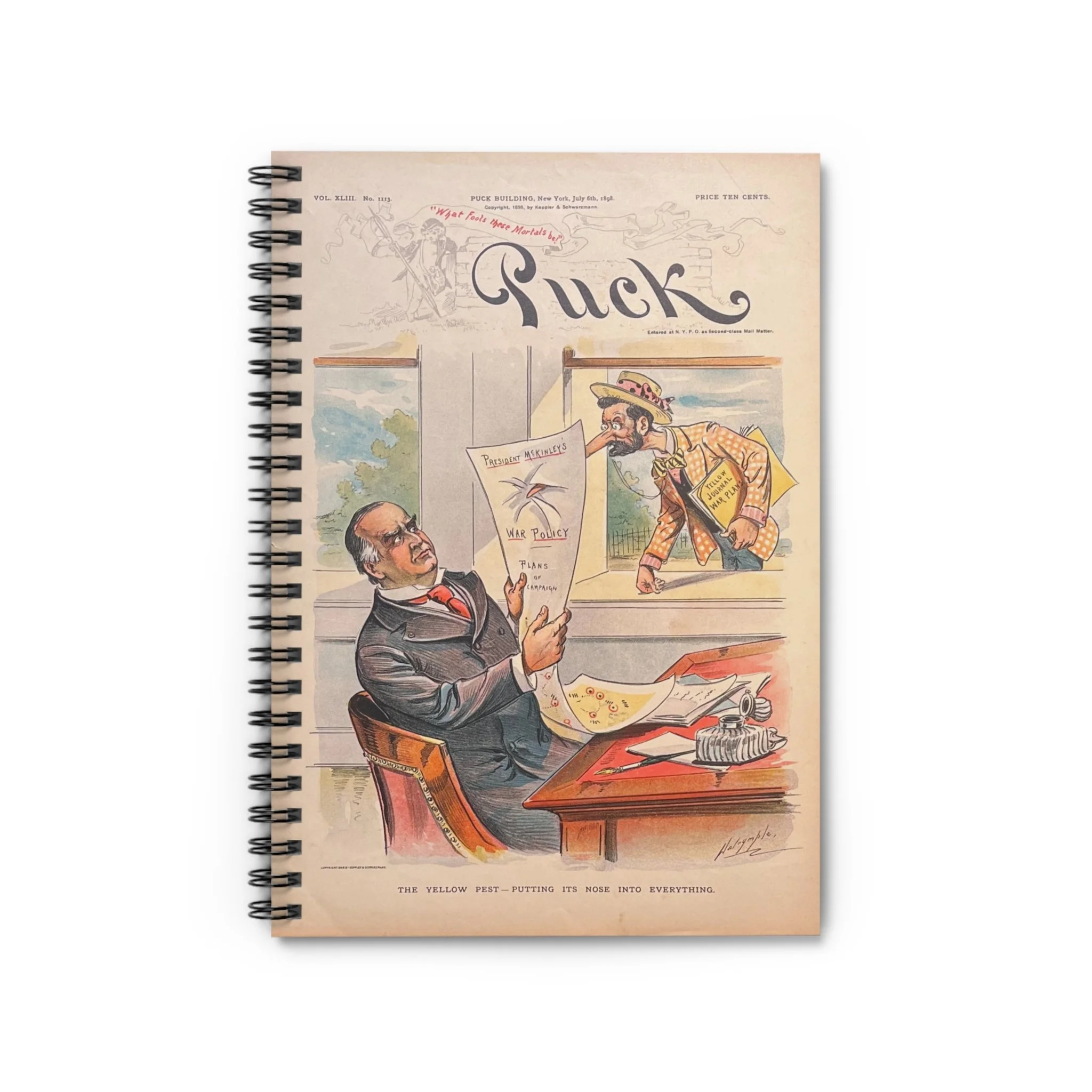
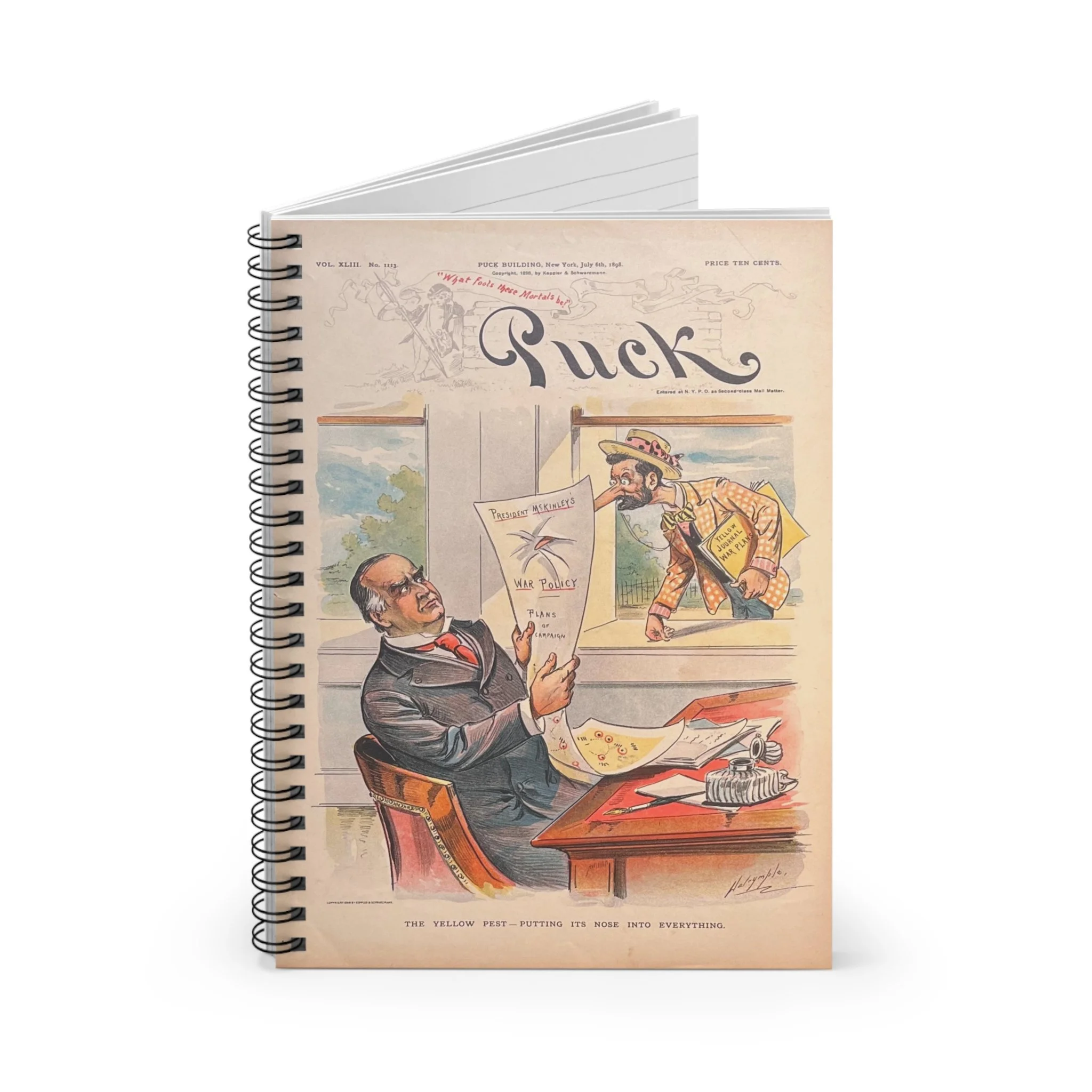
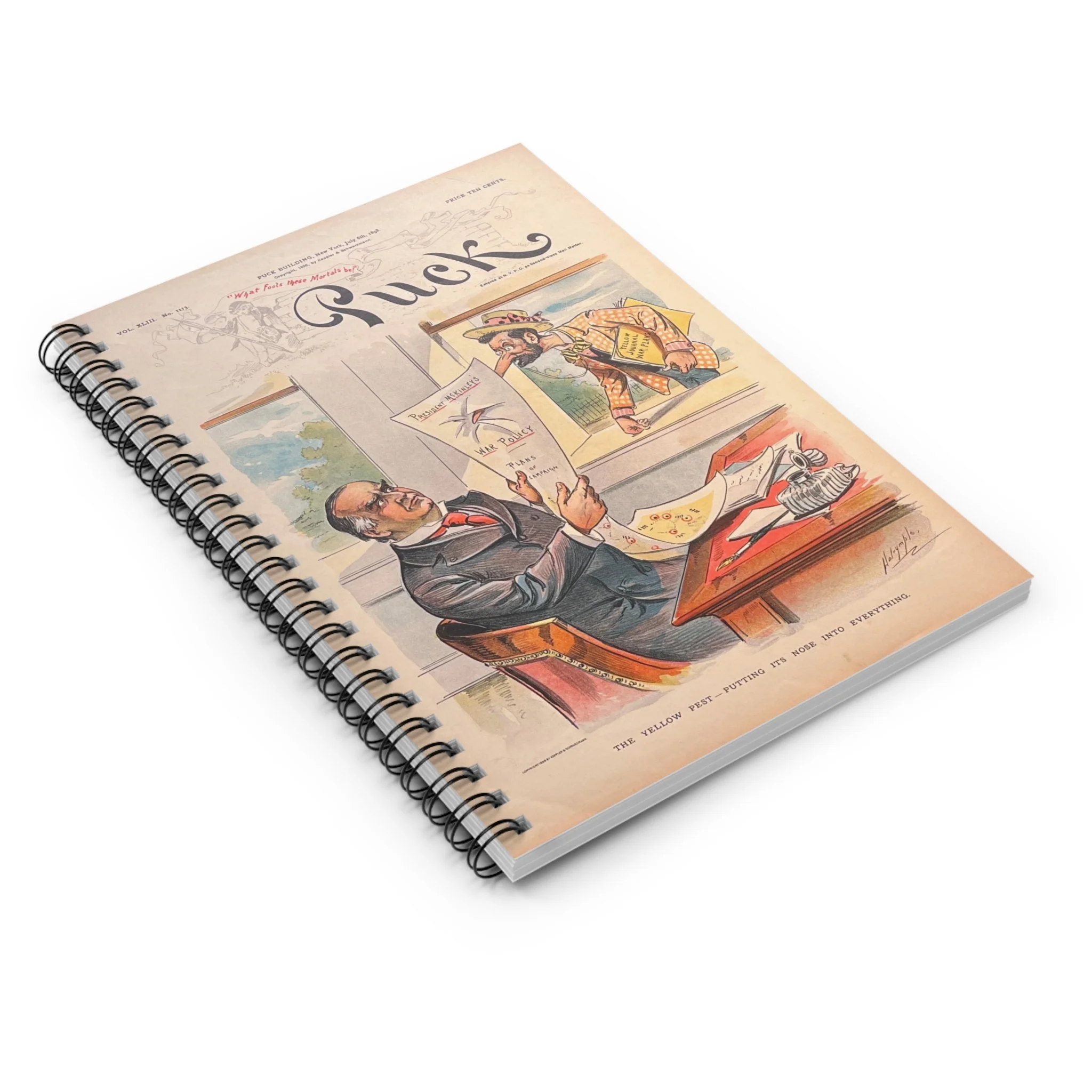

Satire of sensationalism, manufactured outrage, and the intrusion of spectacle into governance.
The image frames public decision-making as vulnerable to external pressure, where urgency is amplified through display rather than deliberation. Authority appears encroached upon by noise posing as necessity, suggesting how spectacle can displace restraint at moments of consequence.
Historical Note
This cartoon was published in an 1898 issue of Puck magazine during the Spanish–American War and was illustrated by Louis M. Dalrymple. It critiques the influence of yellow journalism on political judgment, depicting media pressure as a force that presses itself into the machinery of war.
6 × 8 in | Metal spiral binding | Ruled | Interior document pocket
Add two journals to your cart to receive an automatic bundle discount.
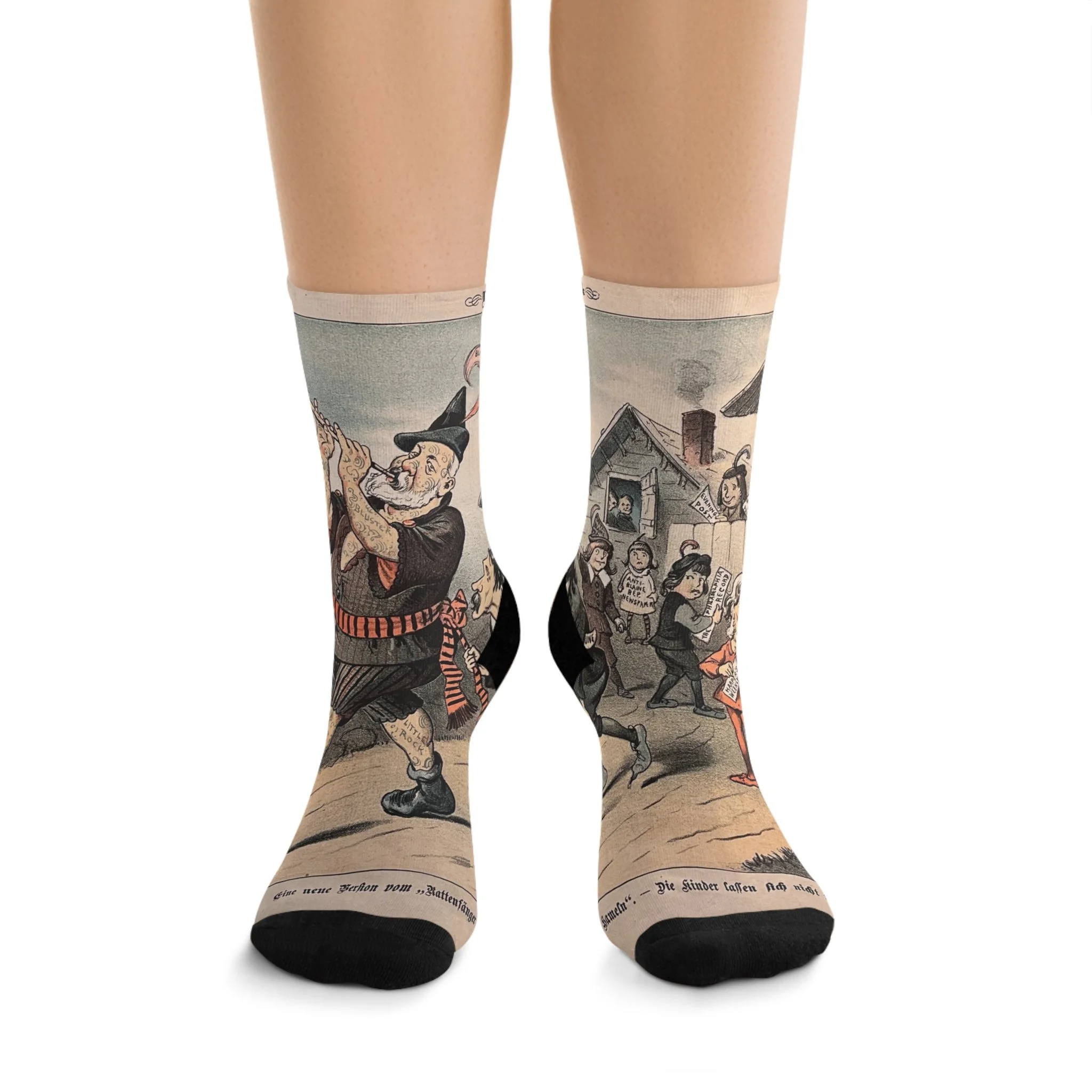

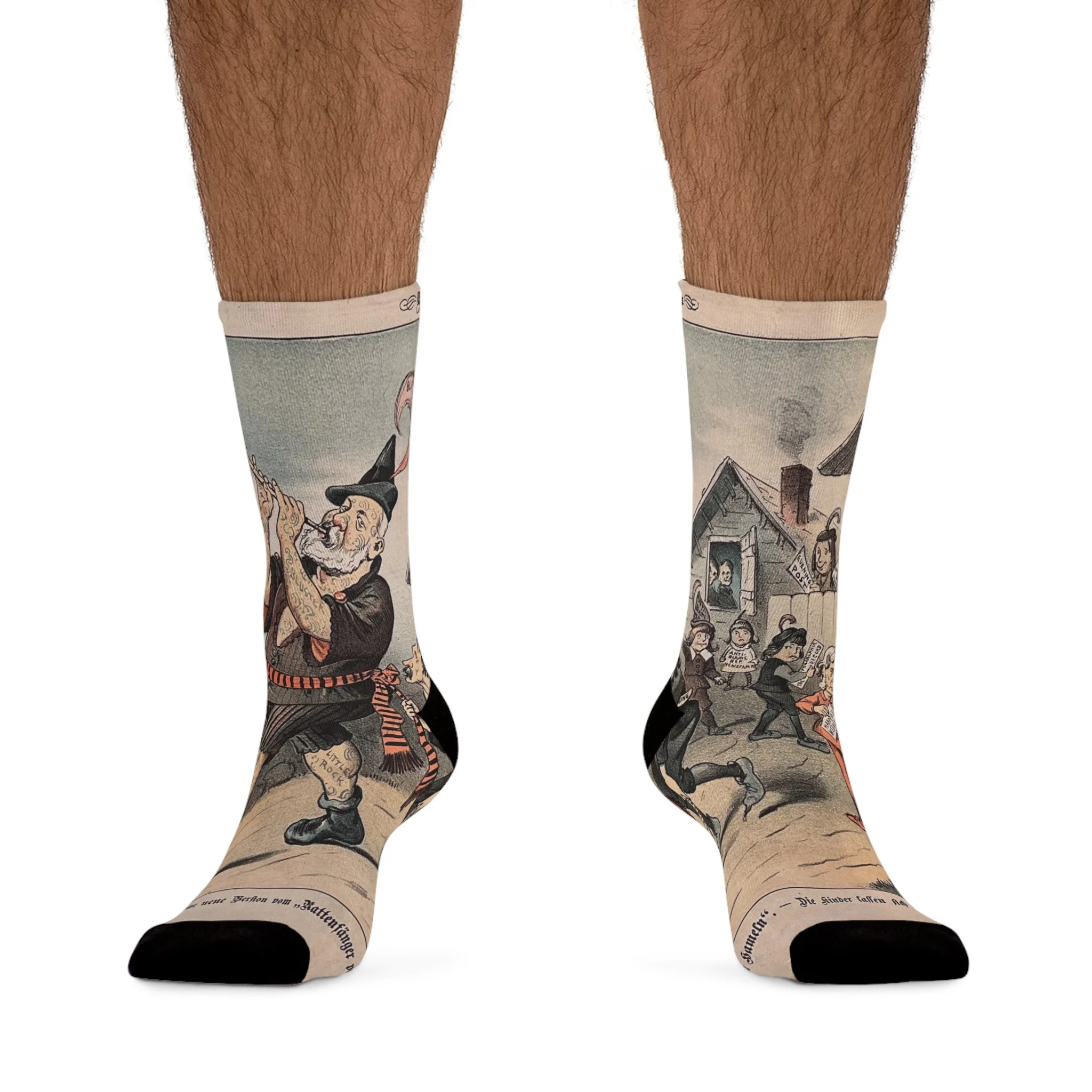
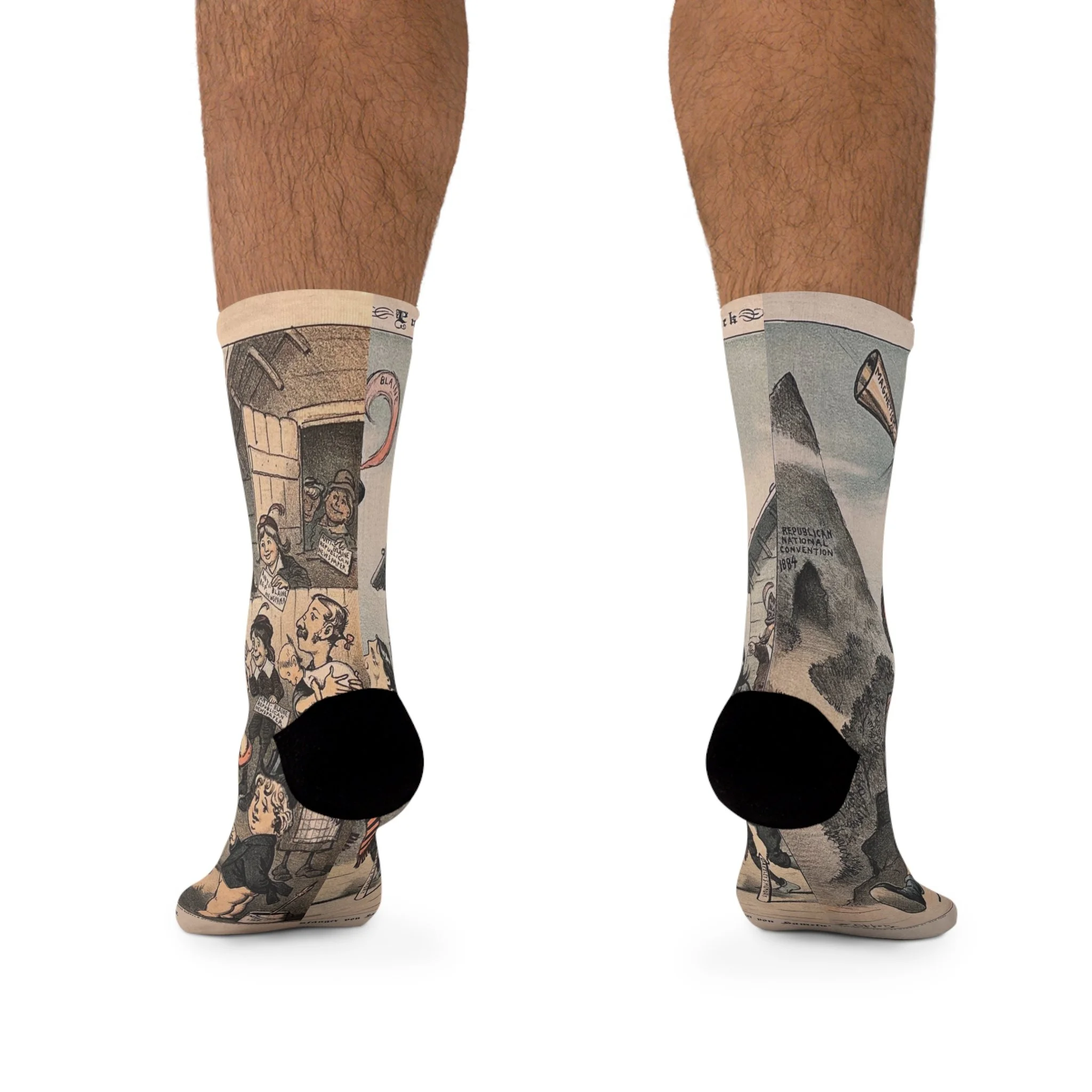
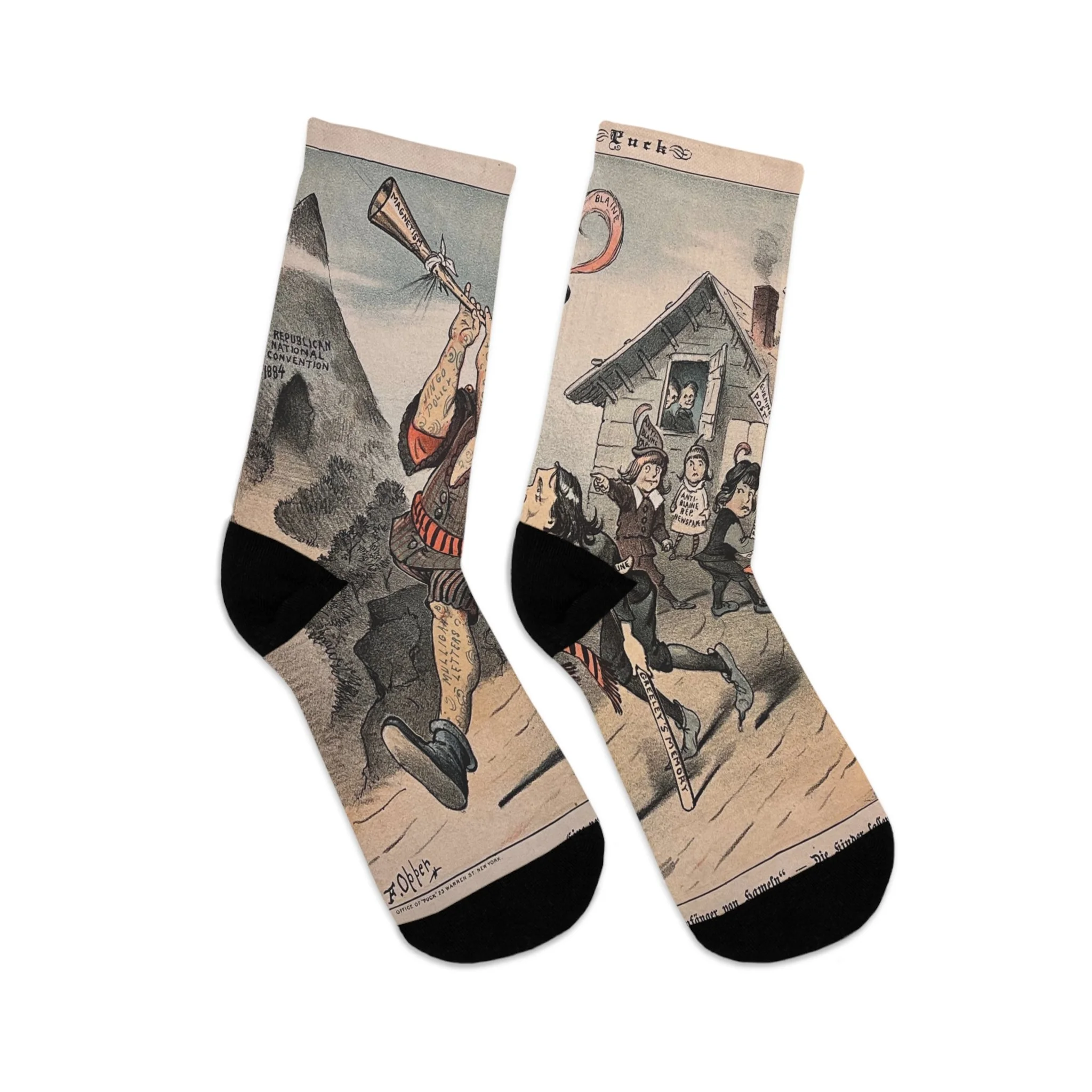
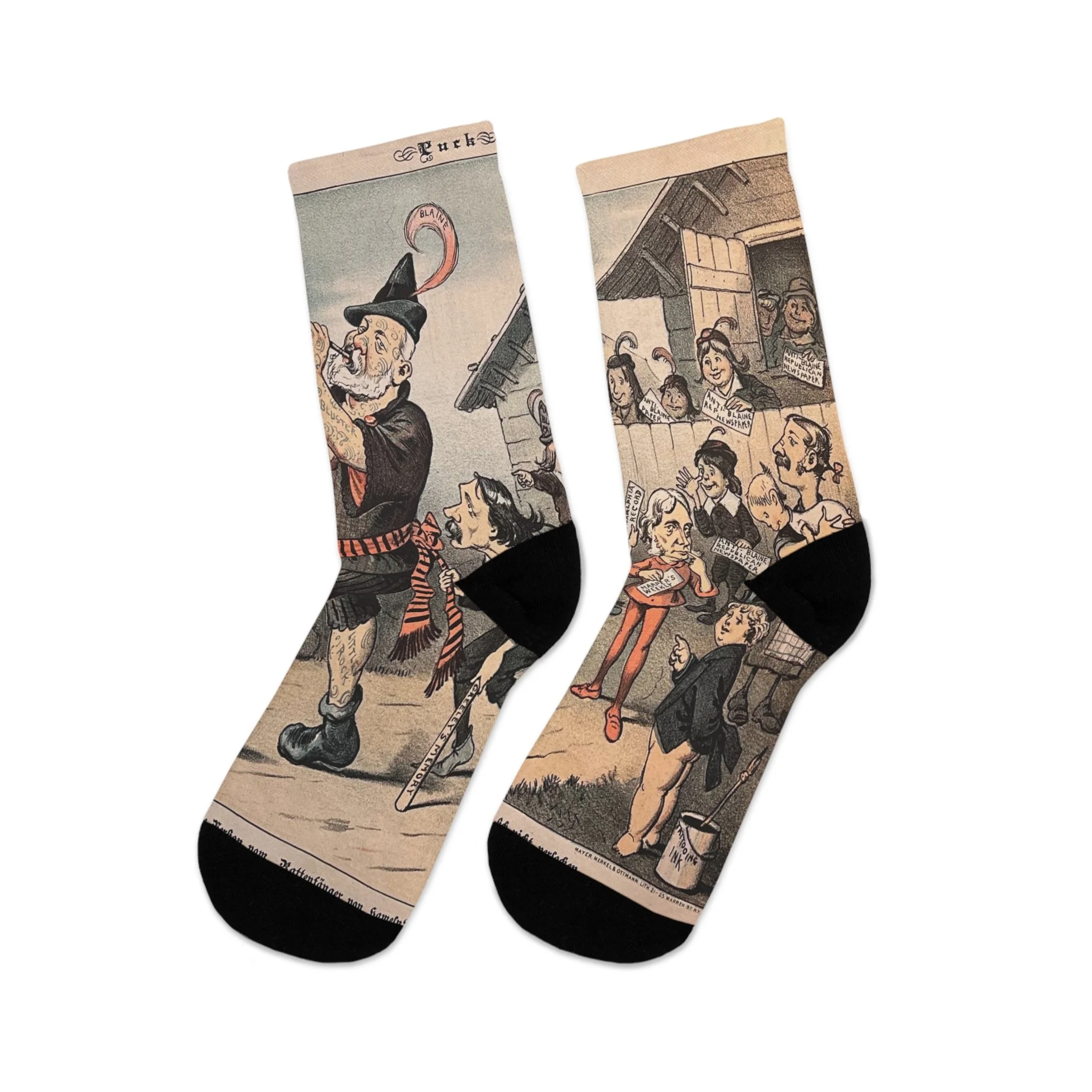
A satire of political demagoguery and the attempted capture of the press.
The image frames influence as performance rather than persuasion, exposing how power tries—and fails—to convert spectacle into obedience. Authority appears confident in its charm, yet unable to command credibility, underscoring the role of resistance in public discourse.
Historical Note
This cartoon appeared in an 1884 issue of Puck magazine and was illustrated by Frederick Burr Opper. It depicts a political figure modeled on the Pied Piper attempting to lure newspaper editors with a flute labeled “Magnetic Influence,” satirizing efforts to manipulate the press during the Republican National Convention.
Crew length | Recycled polyester–cotton blend | All-over print with solid black toe and heel accents
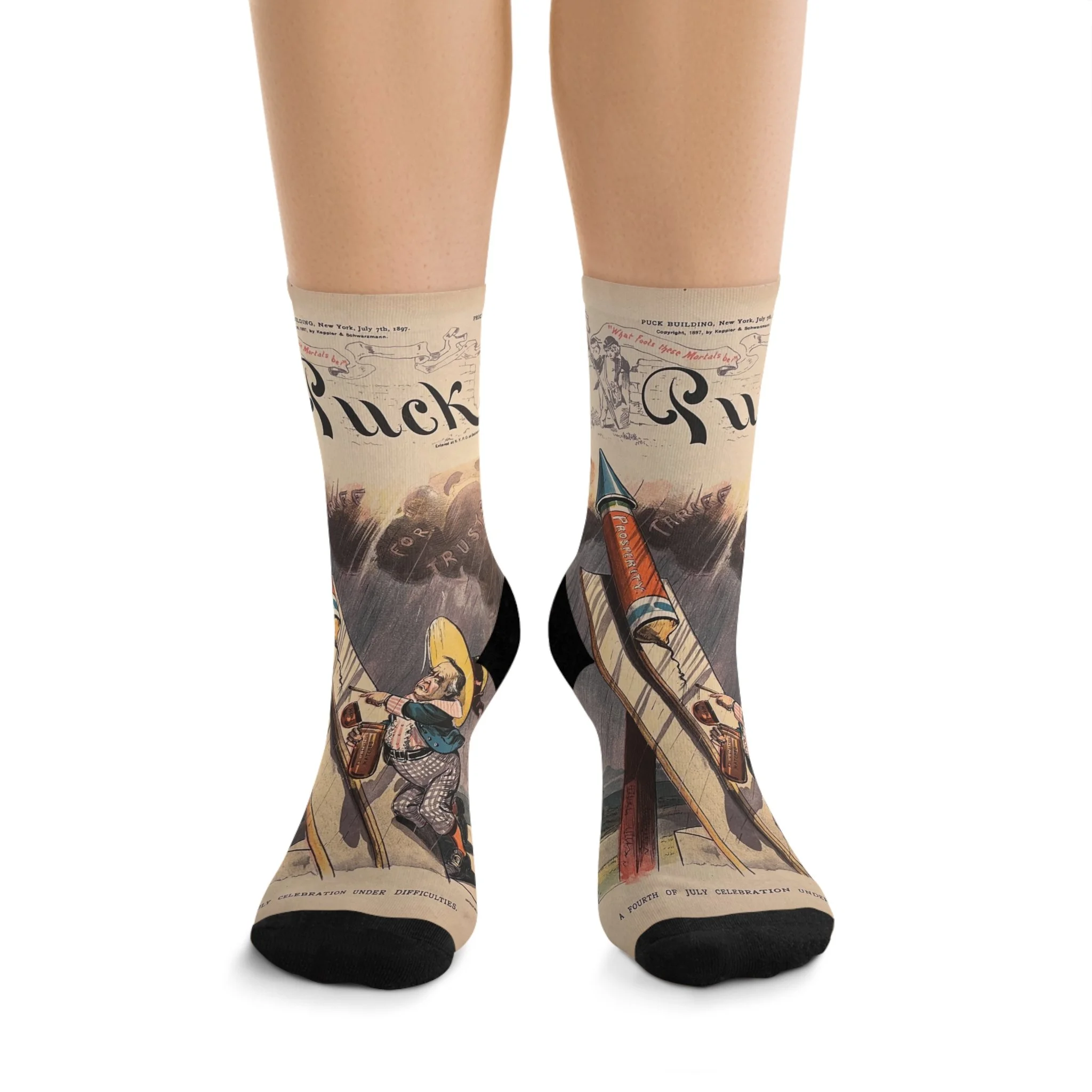
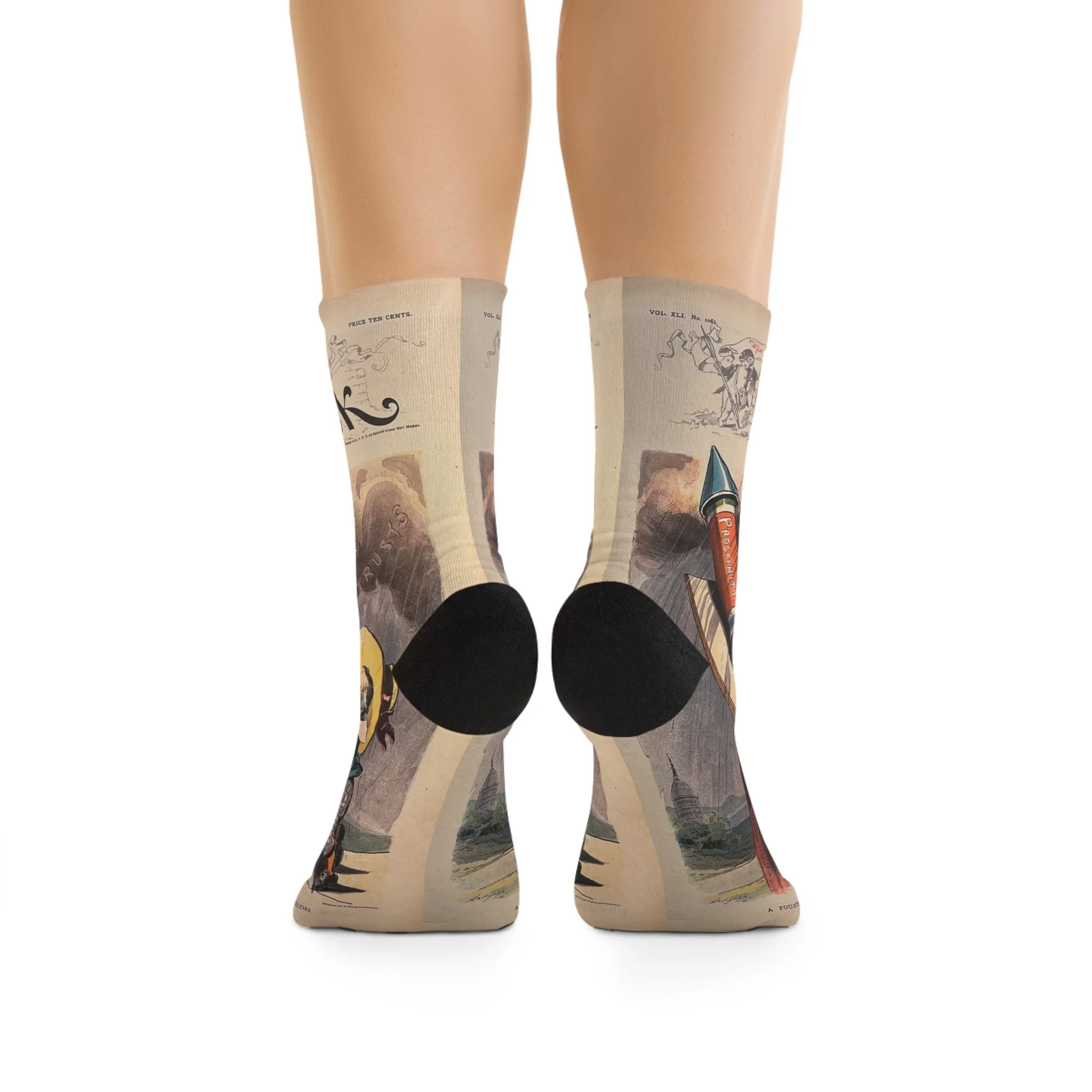
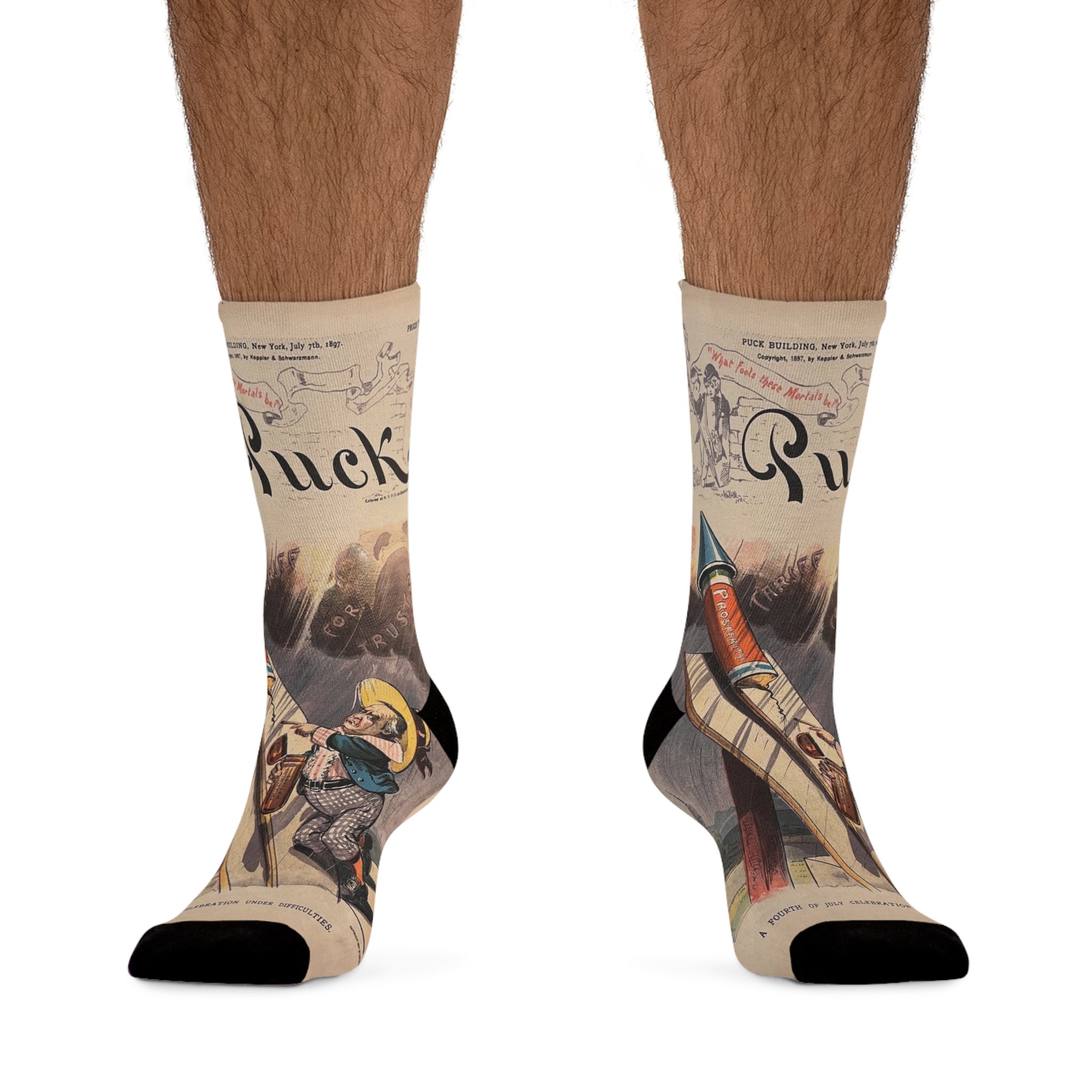
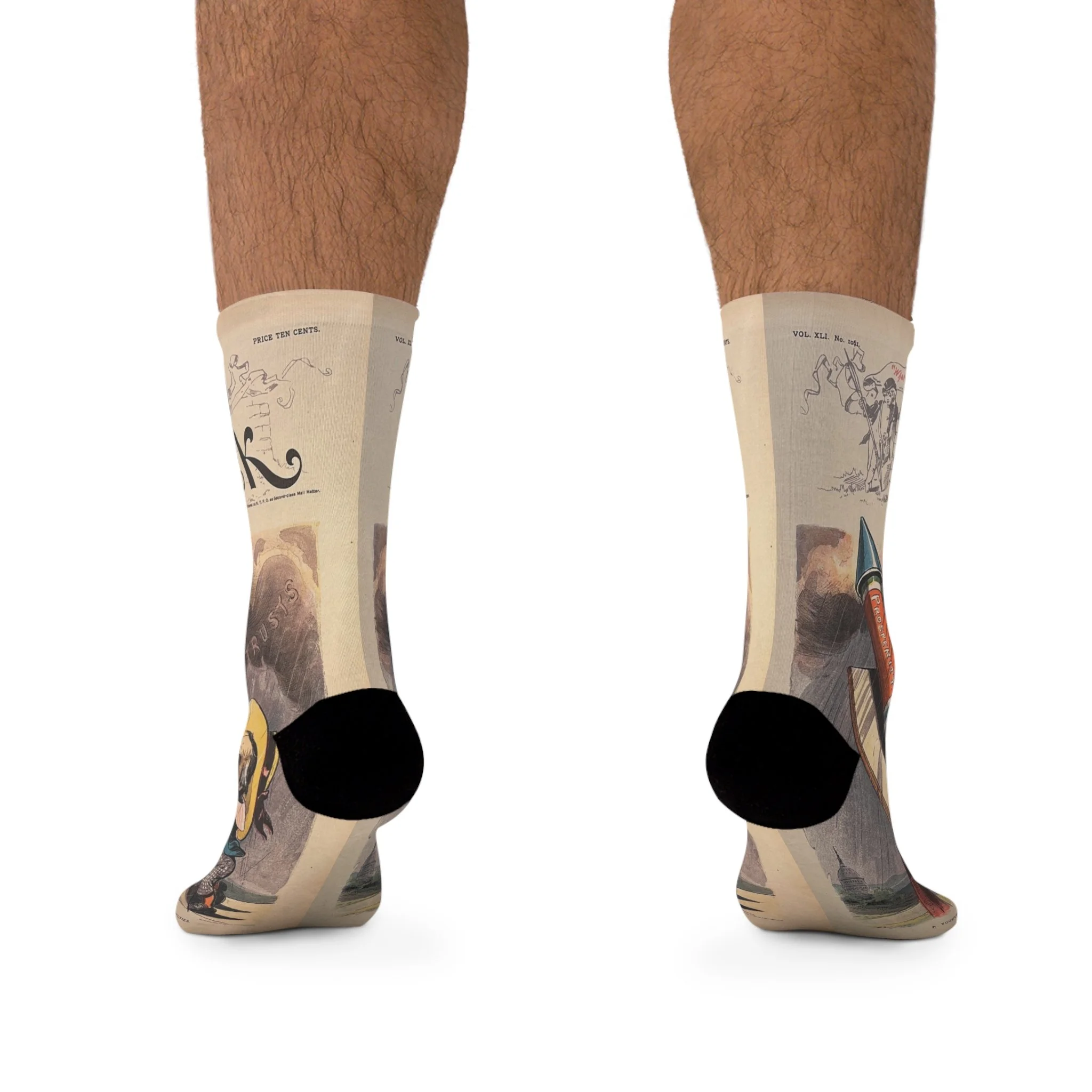
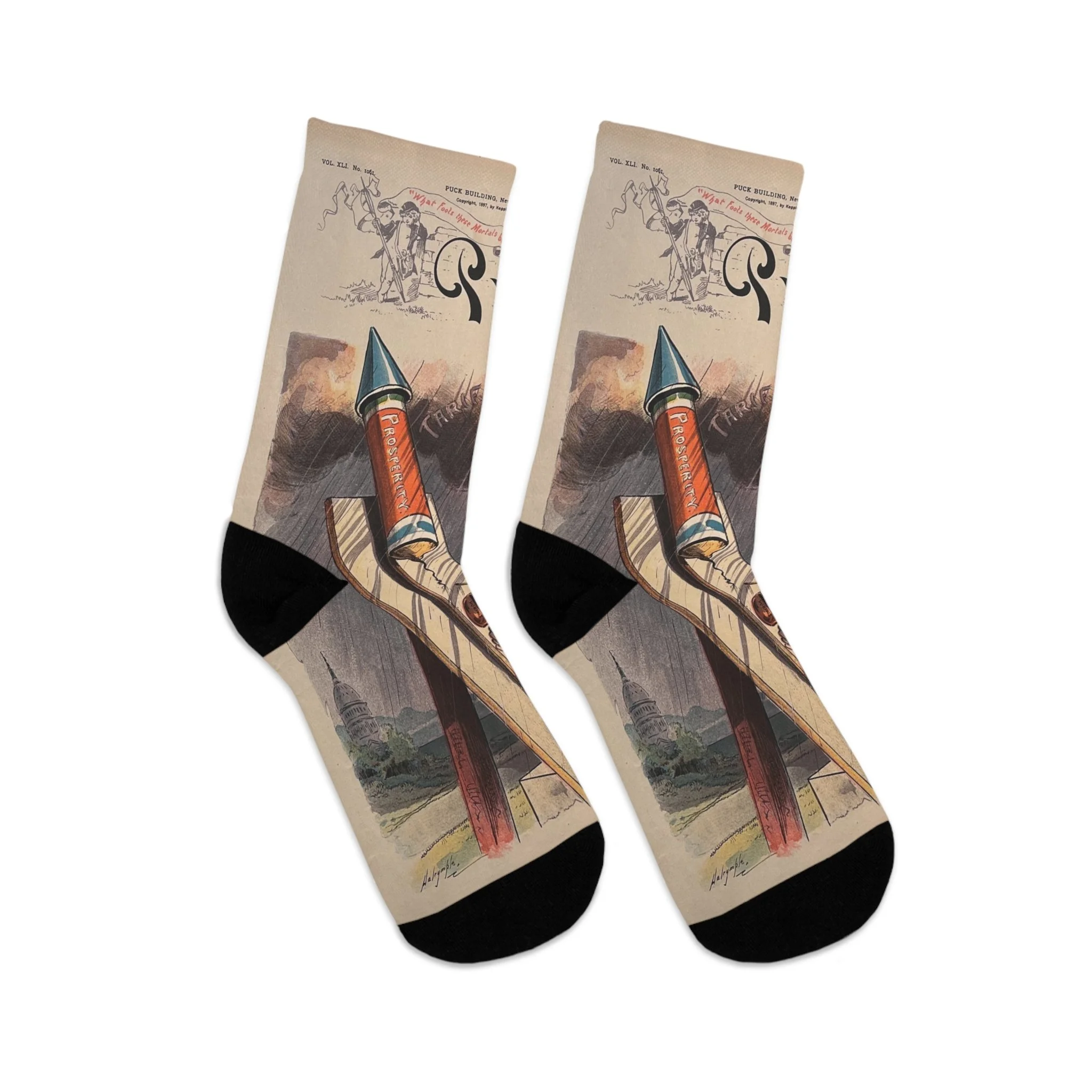
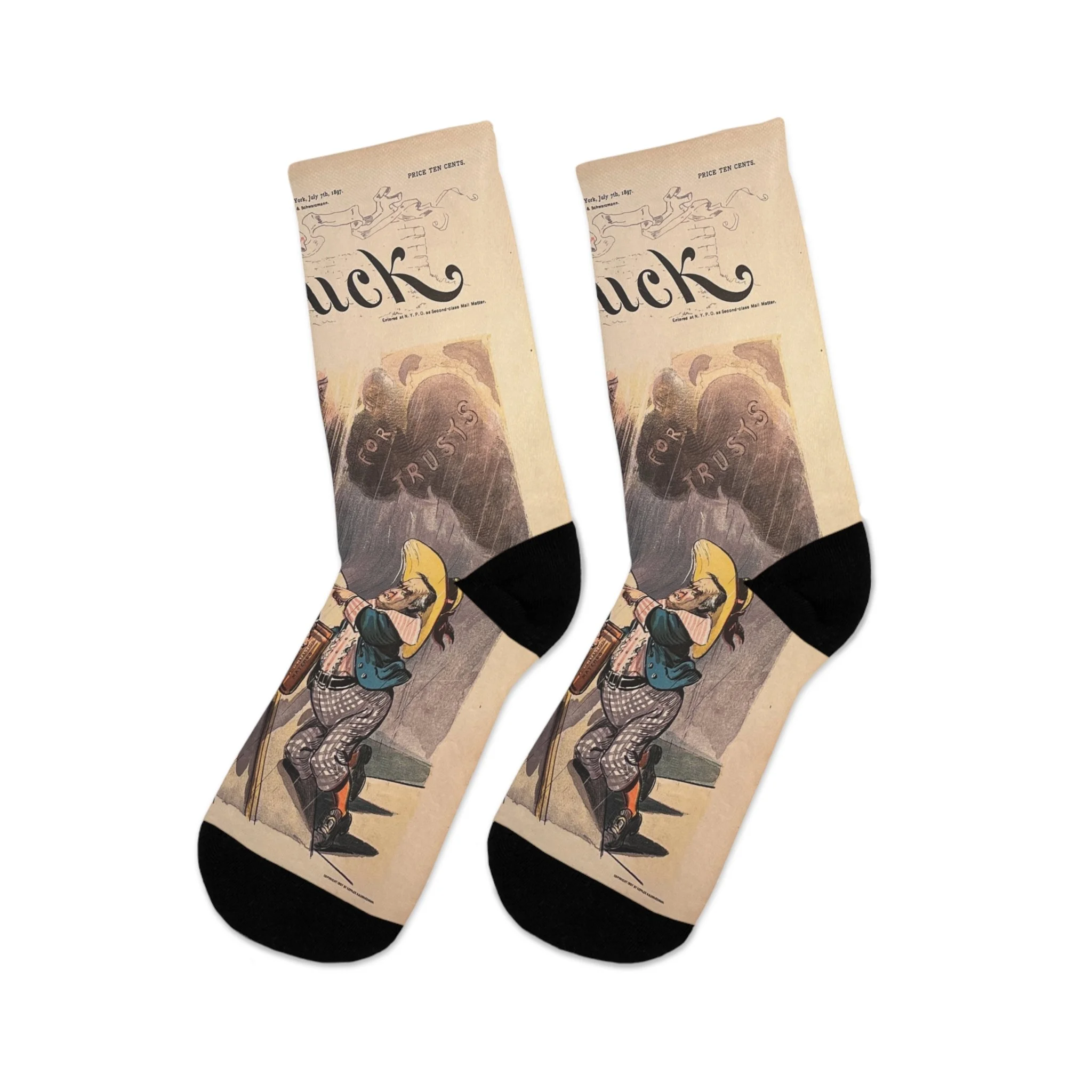
Satire aimed at hollow celebration and the weight of policy on public optimism.
The image presents national pride as a stalled ritual, where promised prosperity struggles to take flight under accumulating constraints. Confidence is shown as ceremonial rather than realized, suggesting that economic policy can dampen collective momentum even in moments meant for unity and renewal.
Historical Note
This cover appeared in an 1897 issue of Puck magazine and was illustrated by Louis M. Dalrymple. It critiques the impact of protectionist policy and concentrated economic power on public life, using patriotic imagery to underscore political strain.
Crew length | Recycled polyester-cotton blend | All-over print with solid black toe and heel accents
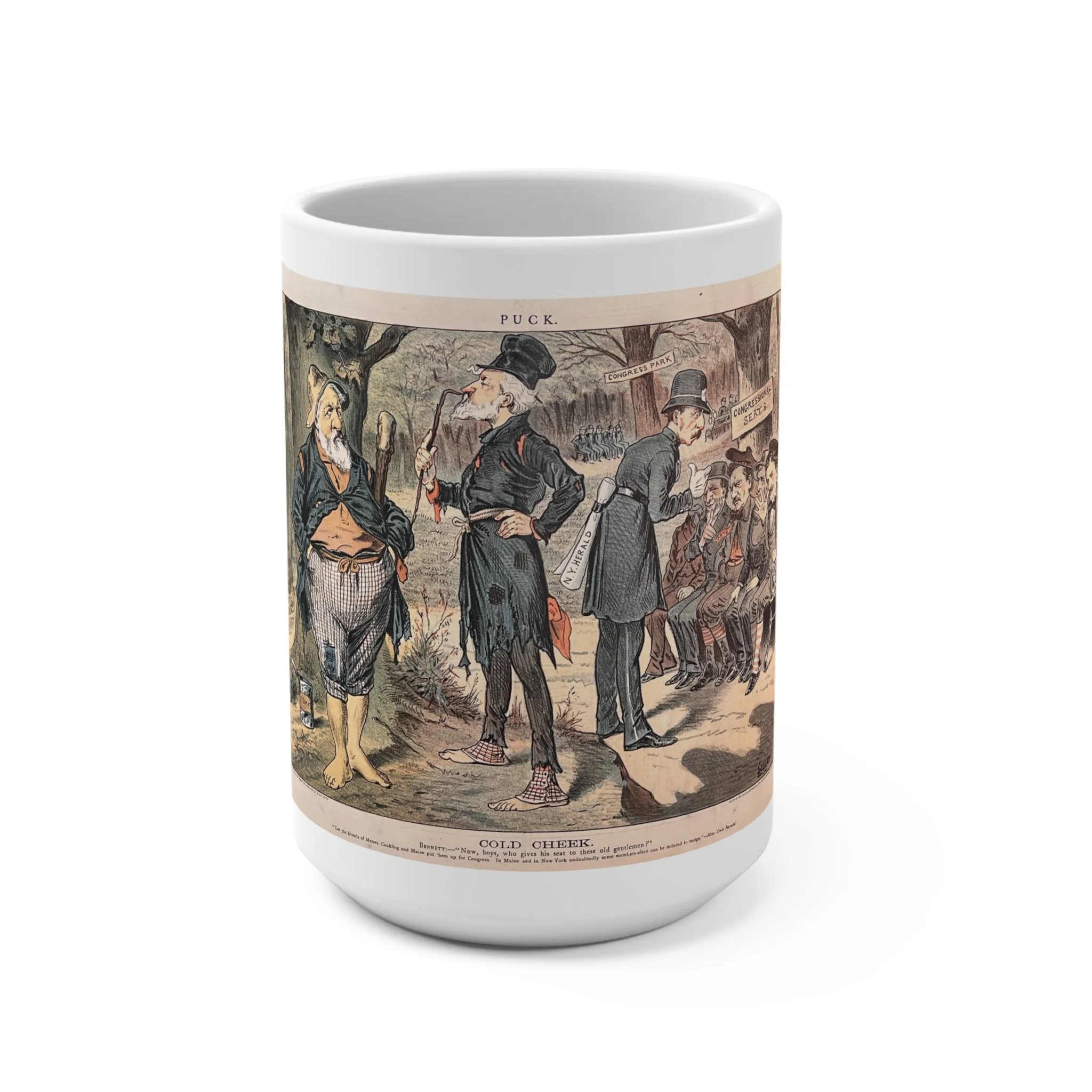
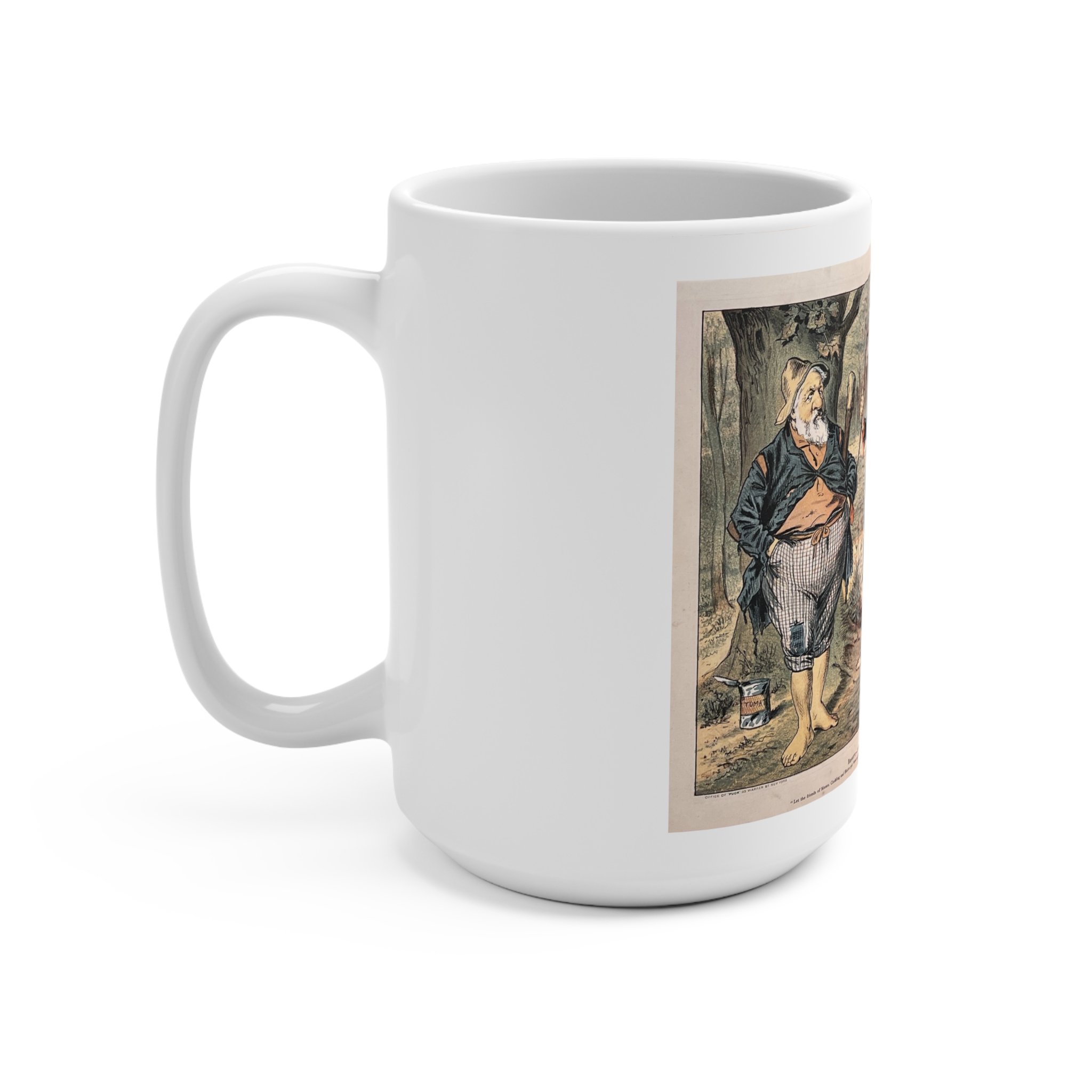
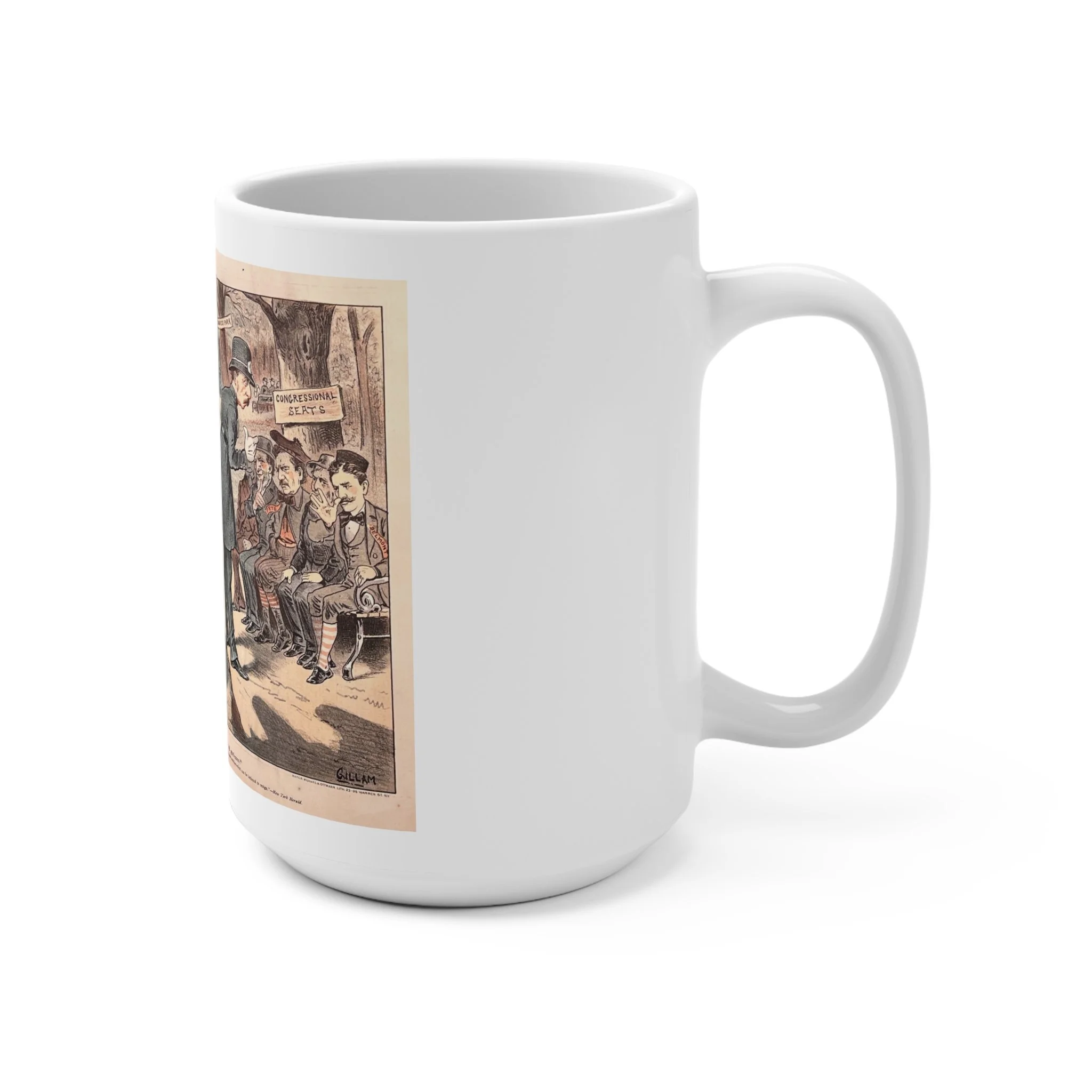
Satire of political access and the transactional culture of patronage.
The image frames public office as something allocated through negotiation rather than merit. Ambition waits in line, legitimacy is contingent, and power circulates through proximity and influence instead of qualification. Governance appears less representative than brokered, exposing how access itself becomes currency.
Historical Note
This cartoon appeared in an 1883 issue of Puck magazine and was illustrated by Bernhard Gillam. It critiques the American patronage system of the late nineteenth century, portraying congressional seats as commodities shaped by political machines and media influence.
Add two mugs to your cart to receive an automatic bundle discount.
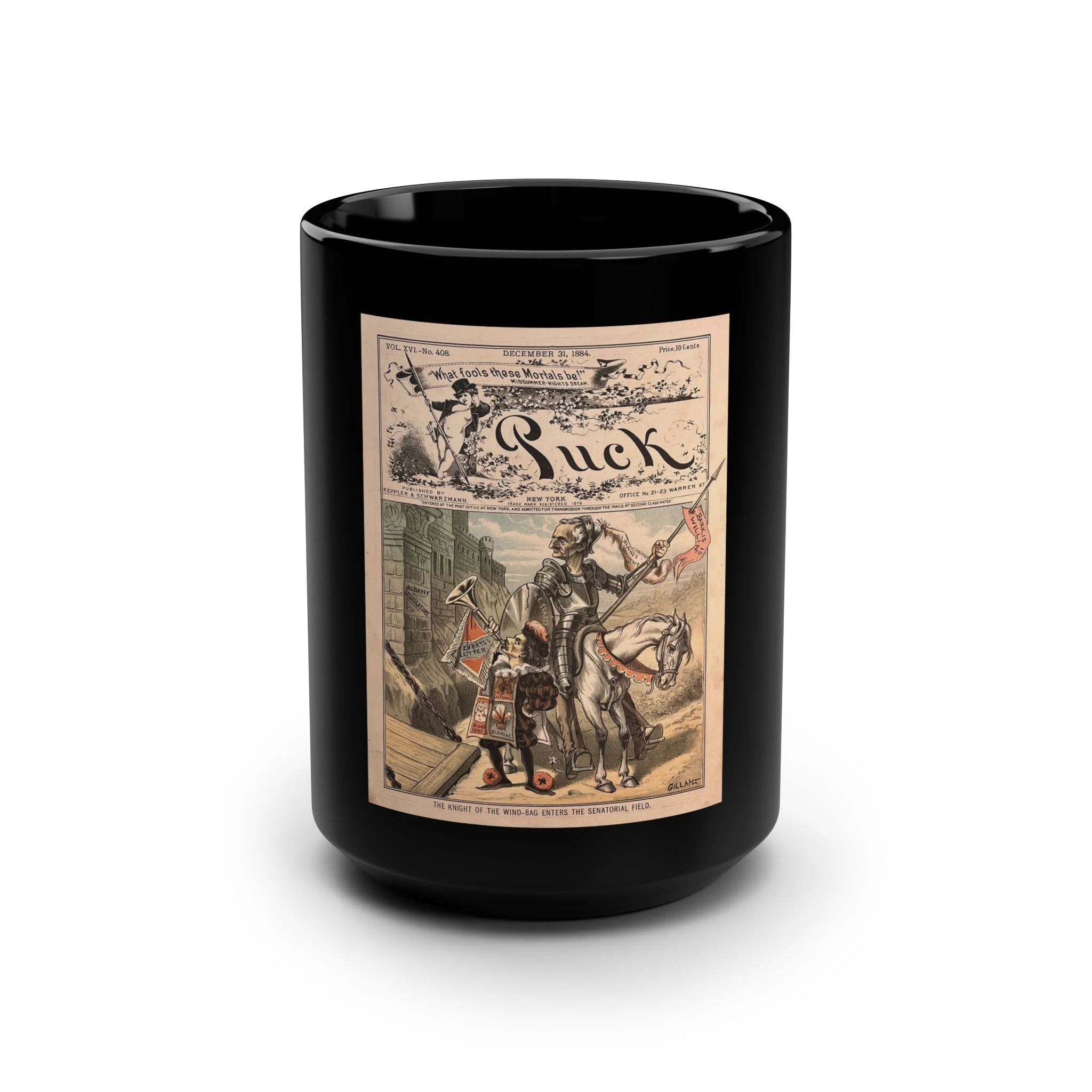
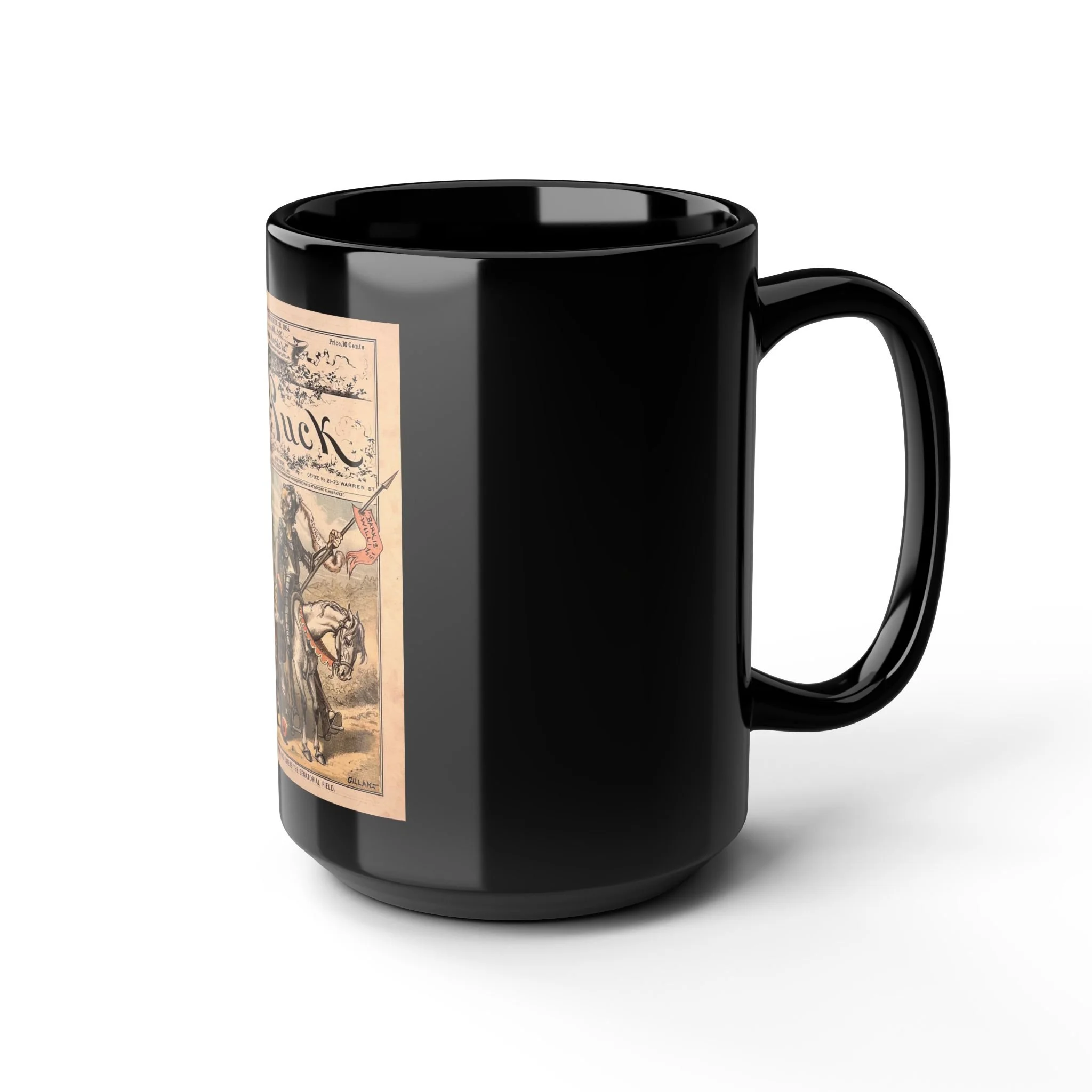
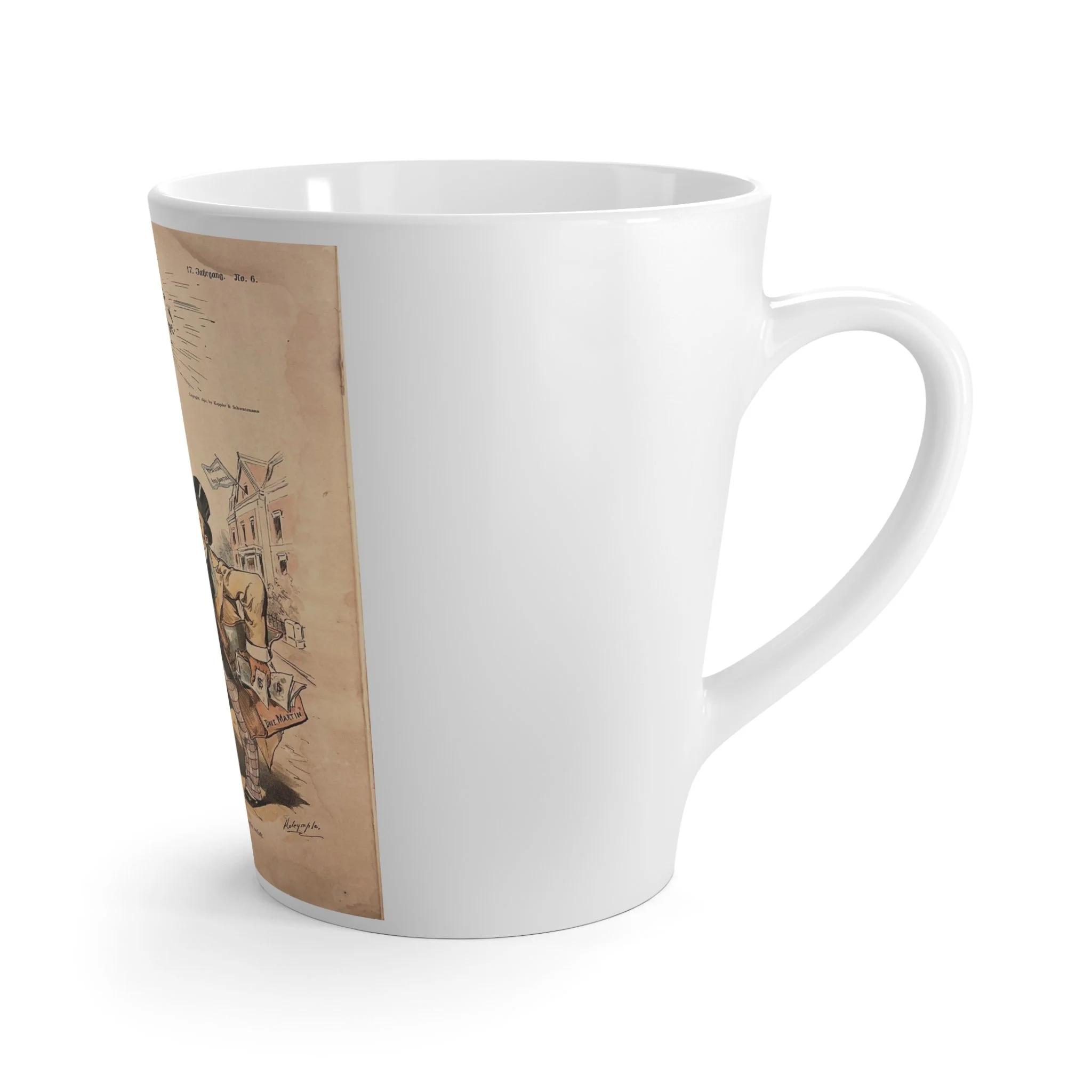
A satirical treatment of political performance and empty display.
When ambition is staged through slogans and props rather than ideas and responsibility, spectacle begins to substitute for substance. That dynamic was already visible in the late nineteenth century—and it has never entirely disappeared.
Historical note:
The Don Quixote-sque cover image comes from an 1884 issue of Puck magazine, illustrated by Bernhard Gillam, a leading Gilded Age political cartoonist known for satirizing corruption, ambition, and political spectacle.
Add two mugs to your cart to receive an automatic bundle discount.
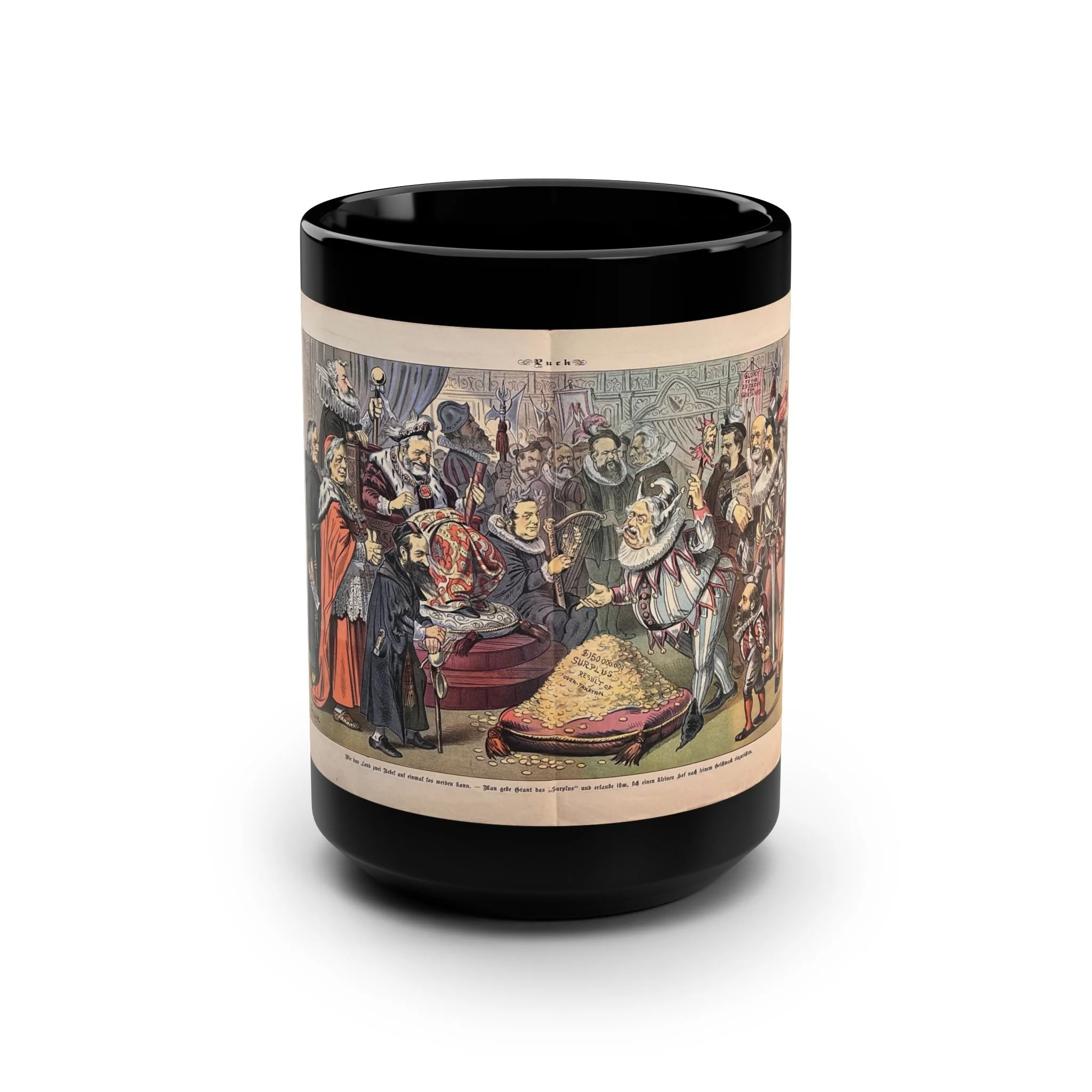
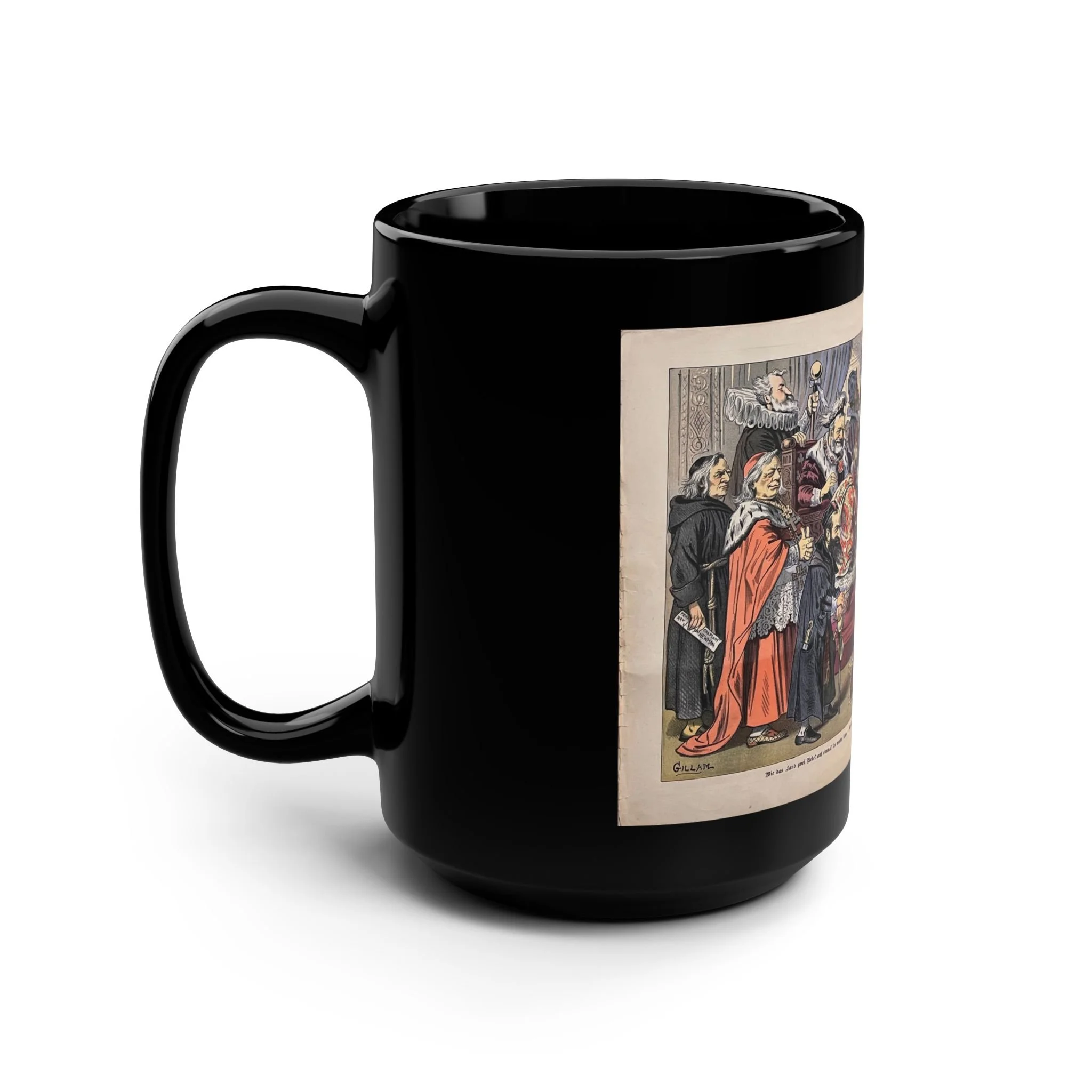
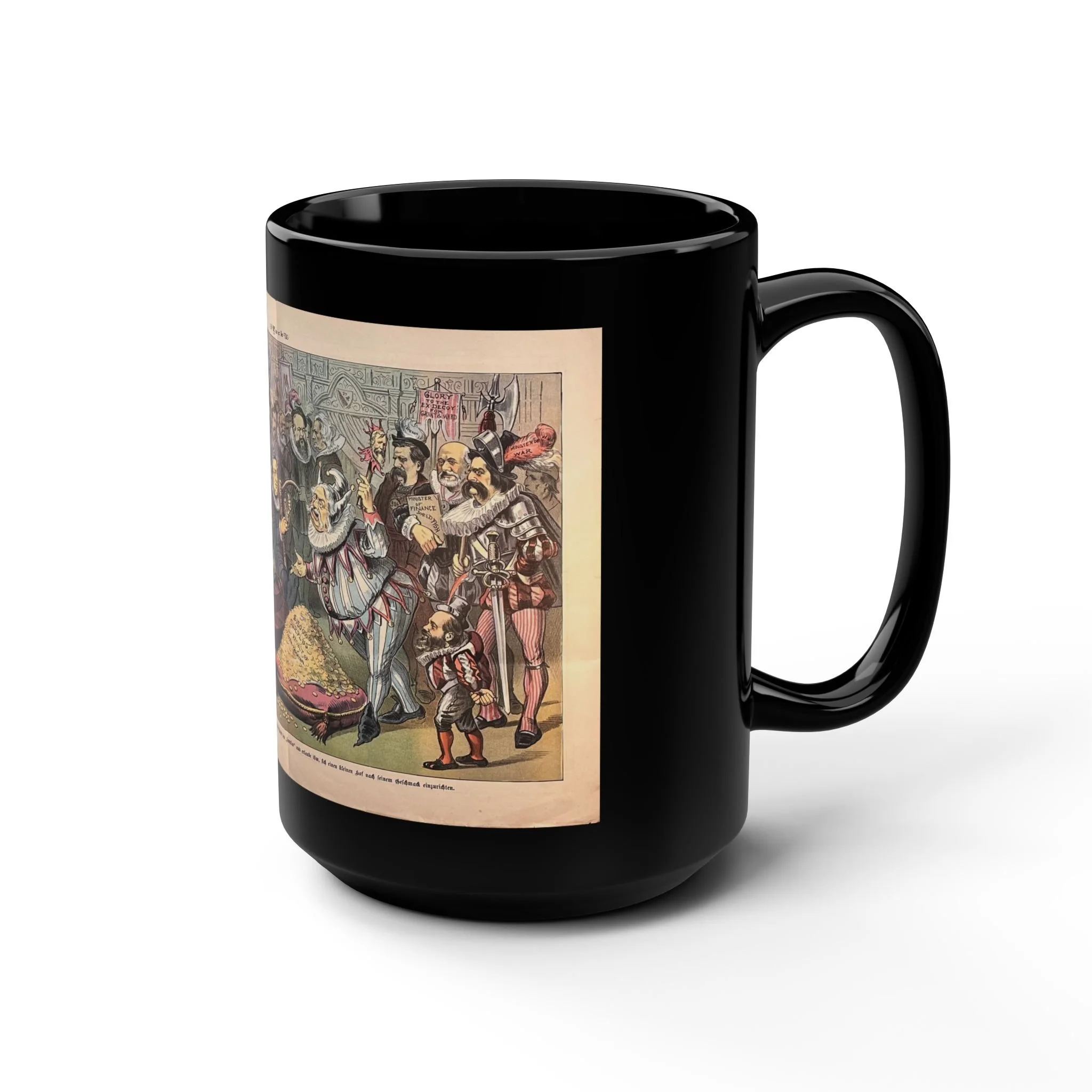
Satire aimed at elite corruption and the ceremonial division of public wealth.
The image presents governance as courtly theater, where authority gathers not to serve but to claim its portion of excess. Power appears ornamental and acquisitive, exposing a political class more invested in managing spoils than representing citizens.
Historical Note
This cartoon appeared in an 1884 issue of Puck magazine and was illustrated by Bernhard Gillam. It depicts politicians as Renaissance courtiers competing over a heap labeled “surplus,” critiquing over-taxation, mismanagement, and the pageantry of elite corruption. The version reproduced here comes from a German-language edition of Puck, which retained the original English captions within the artwork.
Add two mugs to your cart to receive an automatic bundle discount.
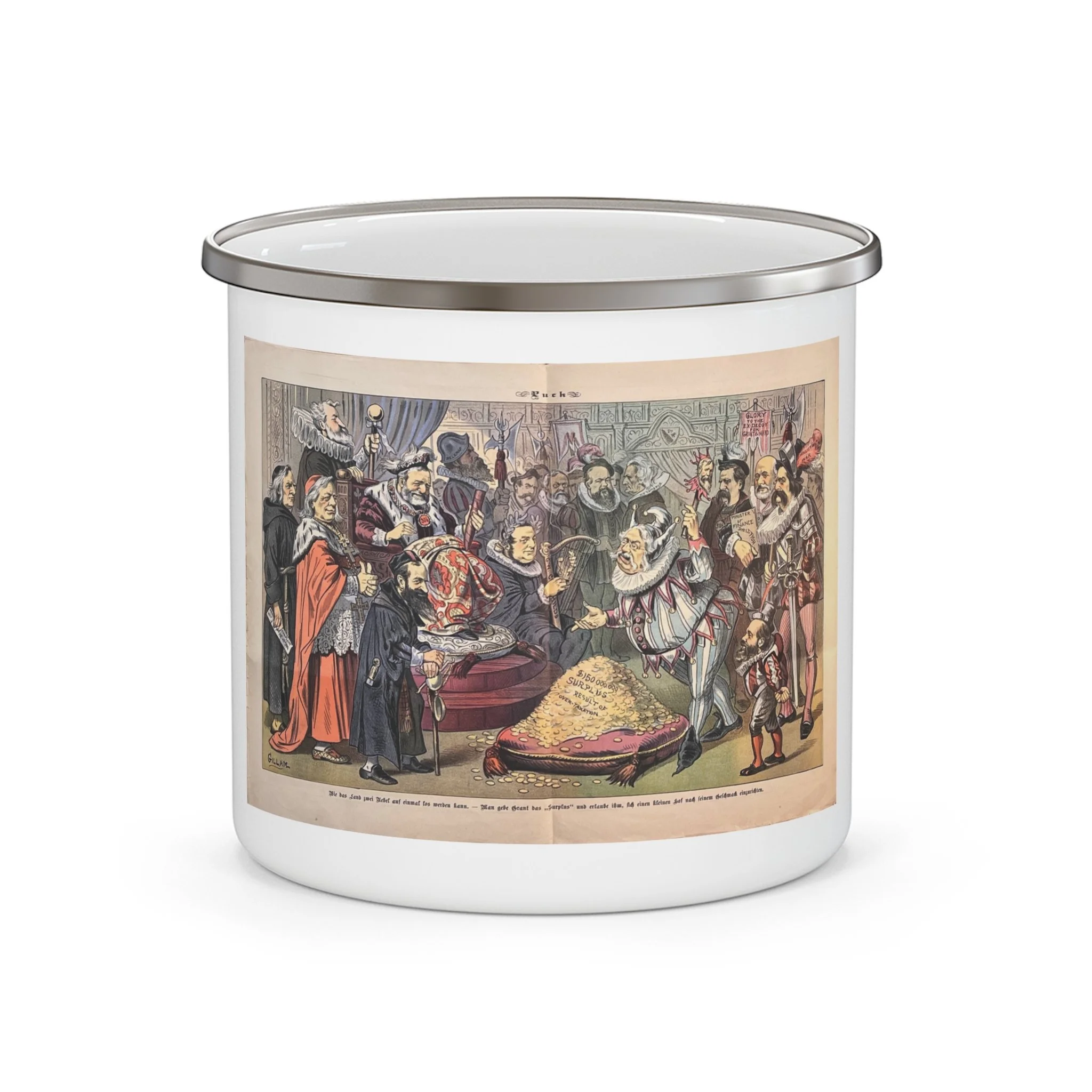
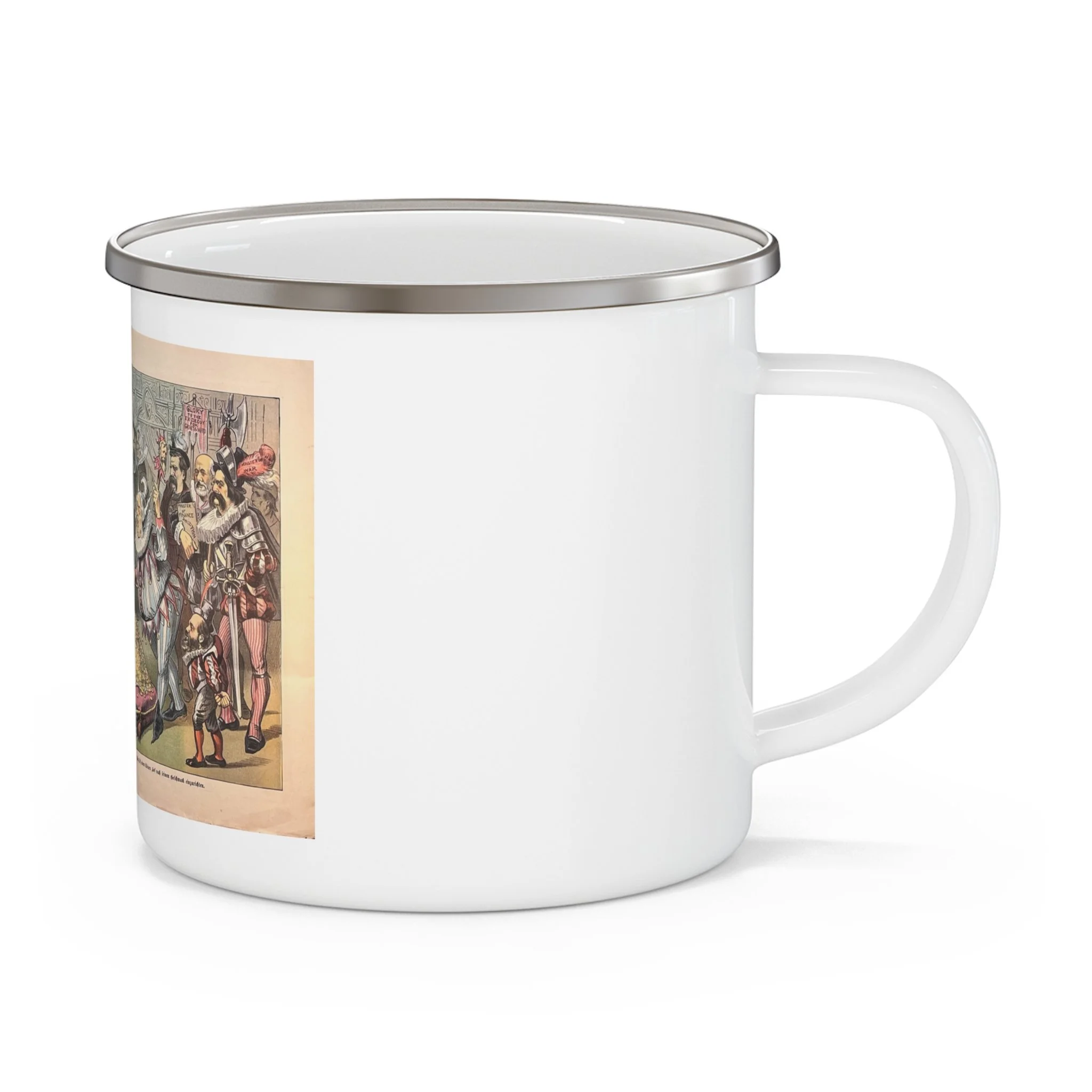
Satire aimed at elite corruption and the ceremonial division of public wealth.
The image presents governance as courtly theater, where authority gathers not to serve but to claim its portion of excess. Power appears ornamental and acquisitive, exposing a political class more invested in managing spoils than representing citizens.
Historical Note
This cartoon appeared in an 1884 issue of Puck magazine and was illustrated by Bernhard Gillam. It depicts politicians as Renaissance courtiers competing over a heap labeled “surplus,” critiquing over-taxation, mismanagement, and the pageantry of elite corruption. The version reproduced here comes from a German-language edition of Puck, which retained the original English captions within the artwork.
Enamel mug | Stainless steel core | Lead- and BPA-free | Hand wash only
Add two mugs to your cart to receive an automatic bundle discount.
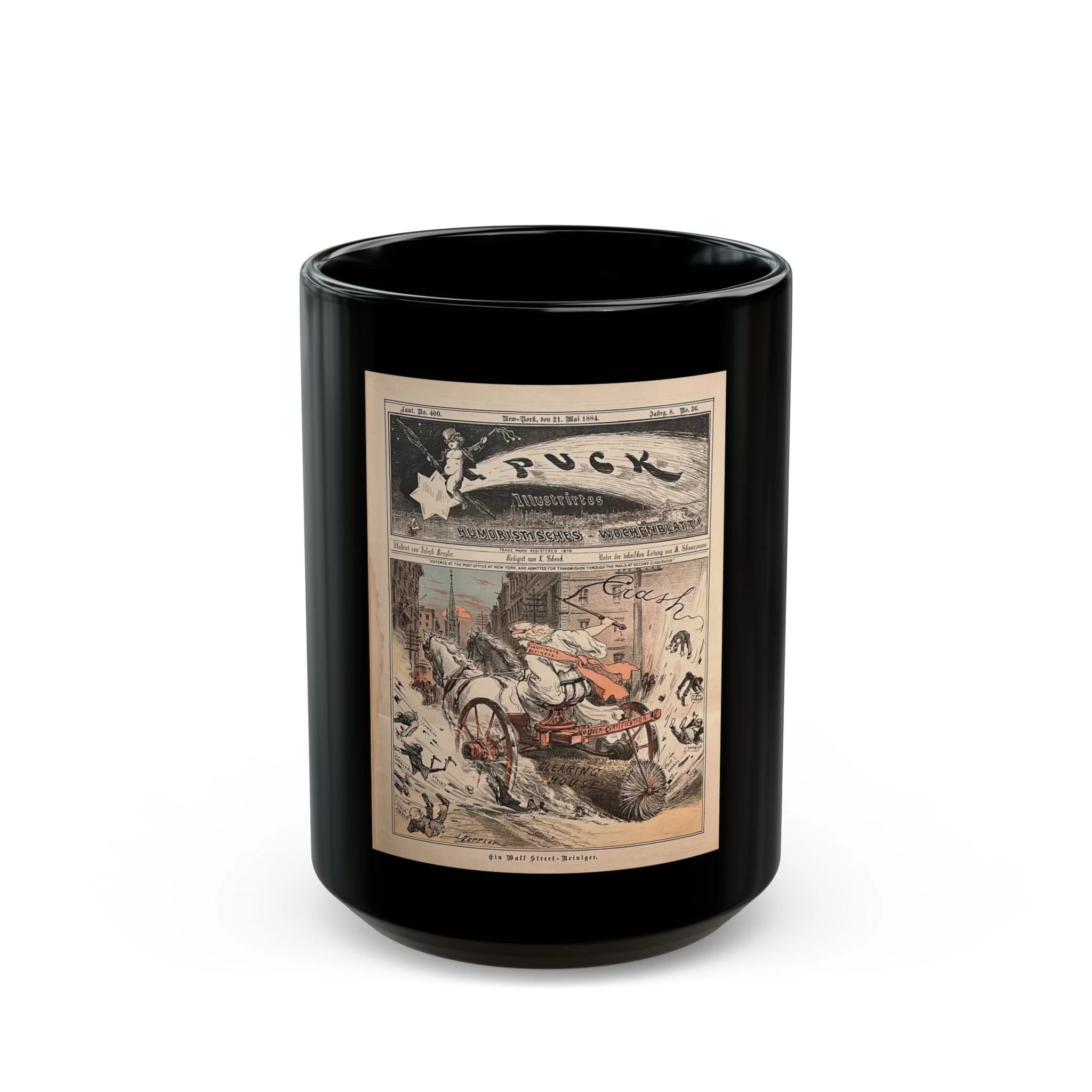

Satire directed at speculative excess and institutional denial.
When markets reward recklessness and those responsible insist on their own innocence, cycles of crisis and erasure repeat themselves. Late-nineteenth-century satire recognized this pattern with clarity—and it has not lost its relevance.
Historical Note
This image appeared in an 1884 issue of Puck magazine and was illustrated by Joseph Keppler. It depicts a “Wall Street cleaner” sweeping gamblers, stock-jobbers, and speculative schemes through the financial district, reflecting contemporary criticism of unchecked speculation and market fraud during the Gilded Age.
Add two mugs to your cart to receive an automatic bundle discount.
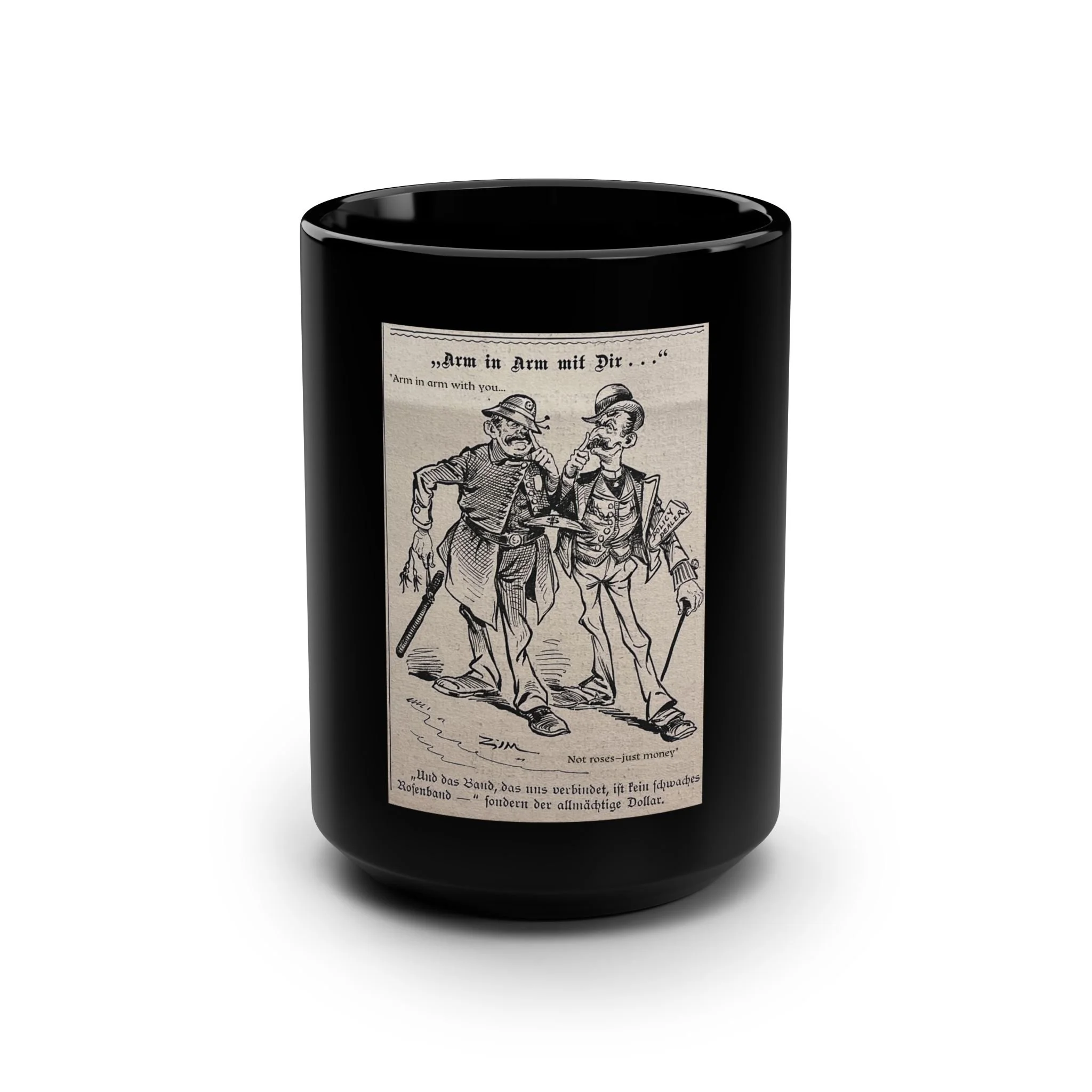
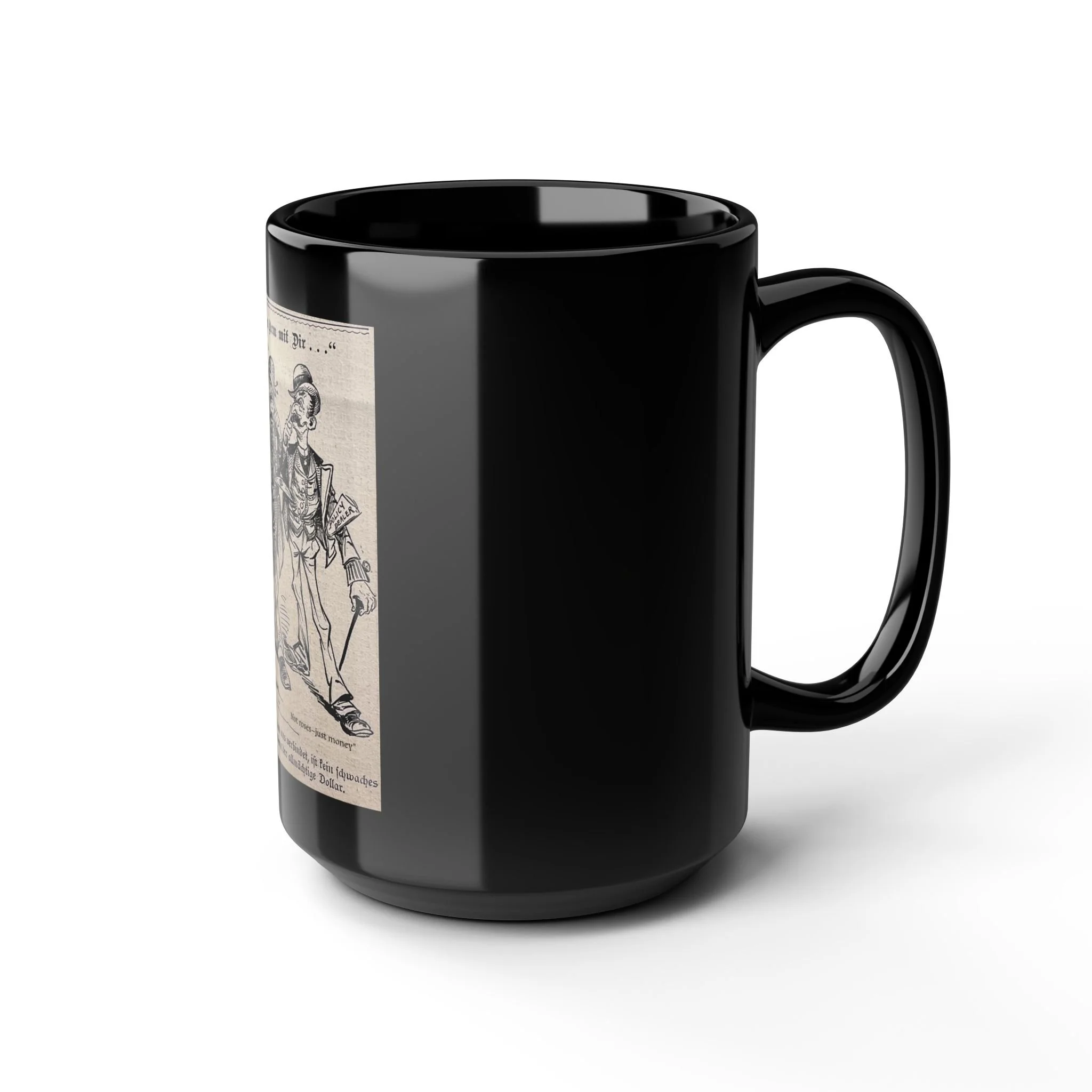
Satire aimed at corruption, collusion, and the quiet normalization of abuse of power.
The image presents authority and vice as companions rather than opposites, bound together by shared interest rather than obligation. Accountability recedes as profit takes the lead, suggesting how public trust erodes when enforcement aligns with exploitation.
Historical Note
This cartoon appeared in an 1884 issue of Puck magazine. It depicts a police officer walking arm in arm with a policy dealer, using irony to critique the relationship between law enforcement and illicit commerce during the Gilded Age.
Add two mugs to your cart to receive an automatic bundle discount.
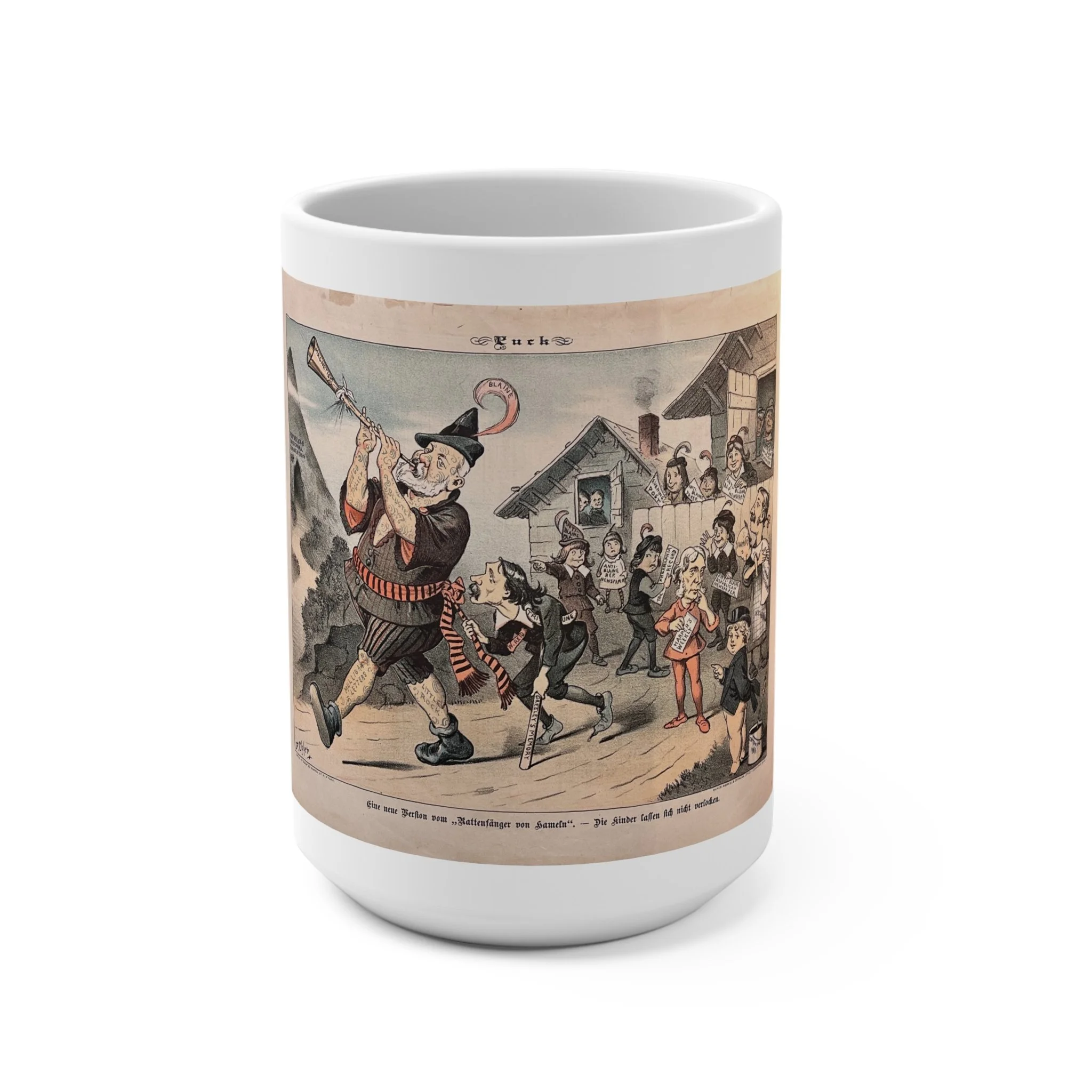
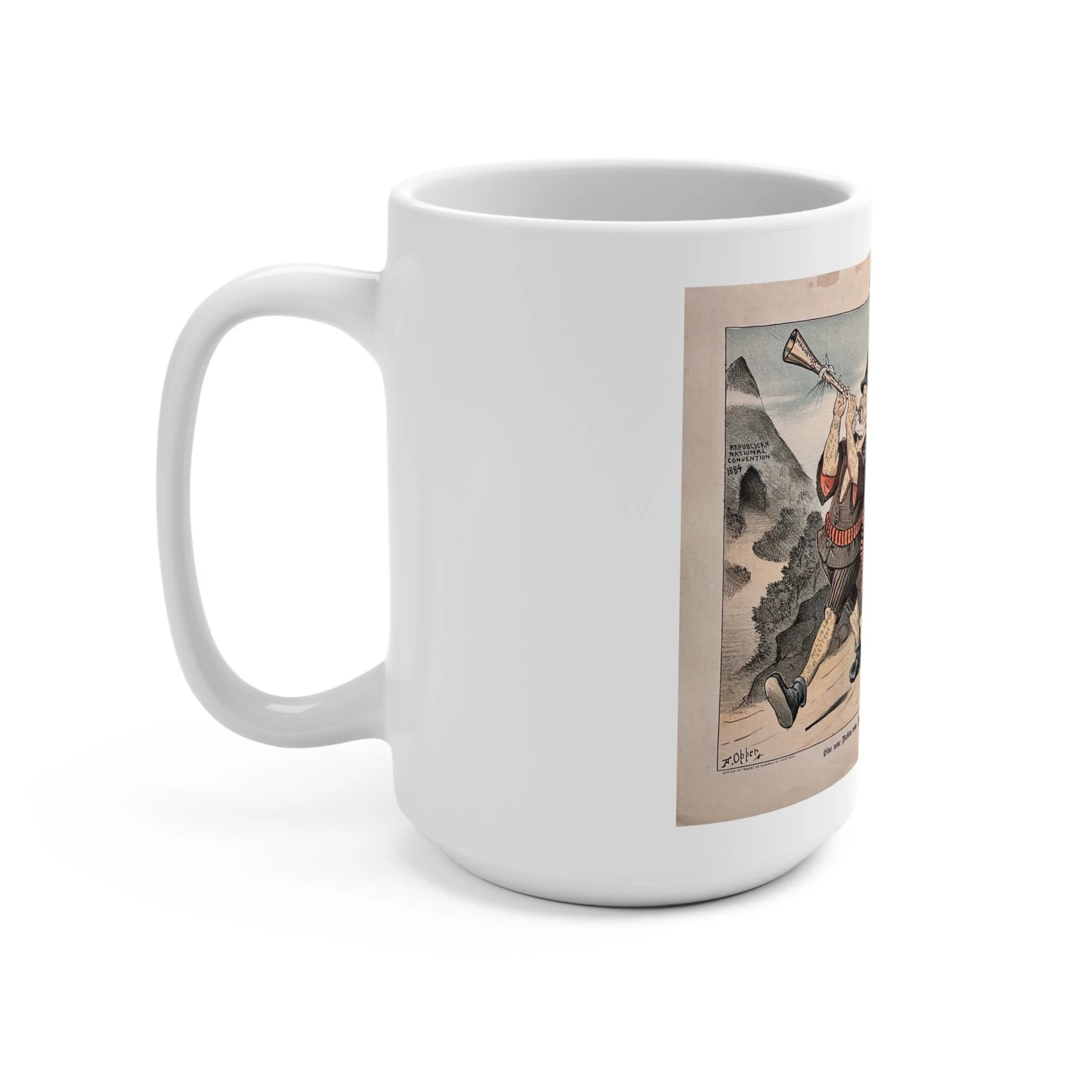

A satire of political demagoguery and the attempted capture of the press.
The image frames influence as performance rather than persuasion, exposing how power tries—and fails—to convert spectacle into obedience. Authority appears confident in its charm, yet unable to command credibility, underscoring the role of resistance in public discourse.
Historical Note
This cartoon appeared in an 1884 issue of Puck magazine and was illustrated by Frederick Burr Opper. It depicts a political figure modeled on the Pied Piper attempting to lure newspaper editors with a flute labeled “Magnetic Influence,” satirizing efforts to manipulate the press during the Republican National Convention.
Add two mugs to your cart to receive an automatic bundle discount.
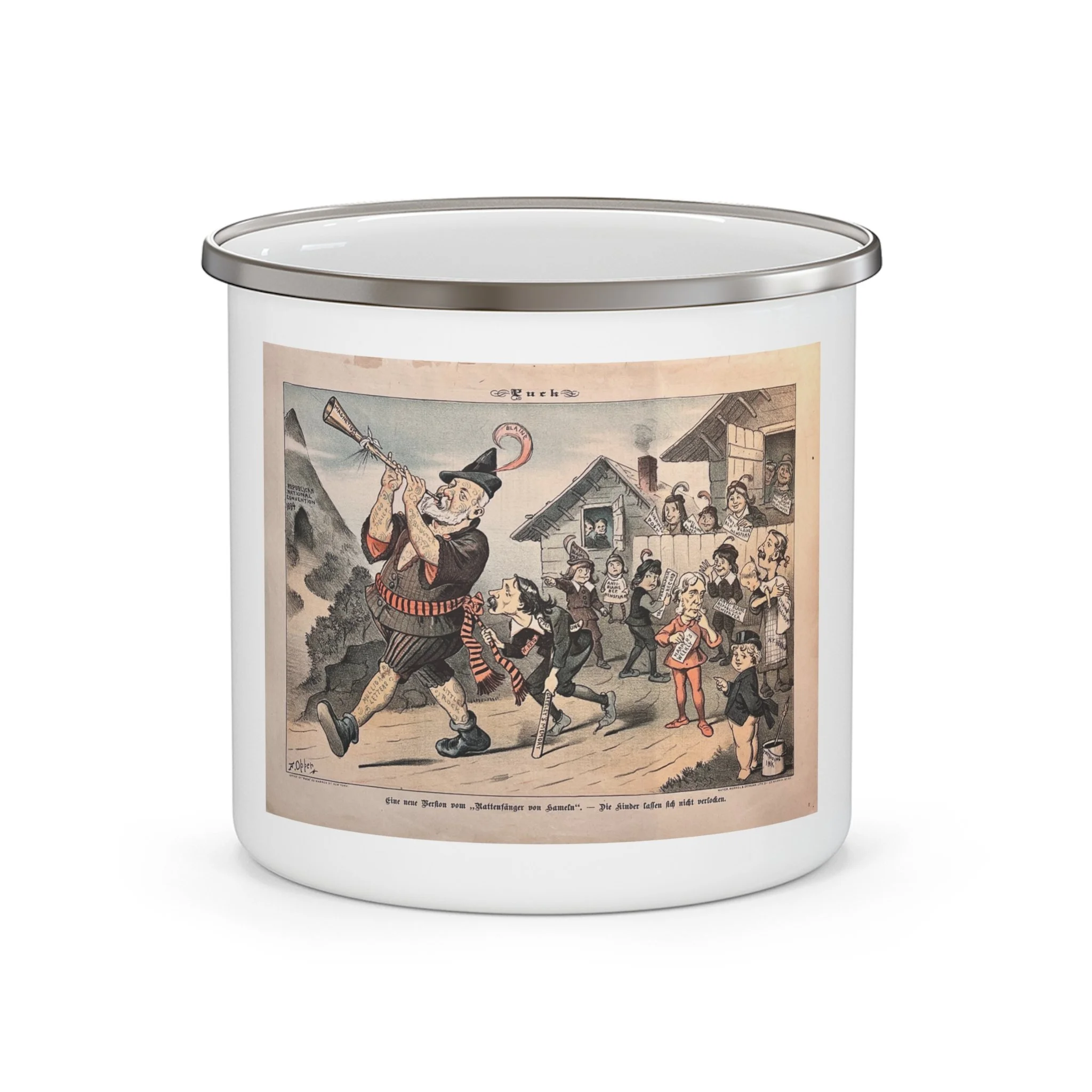
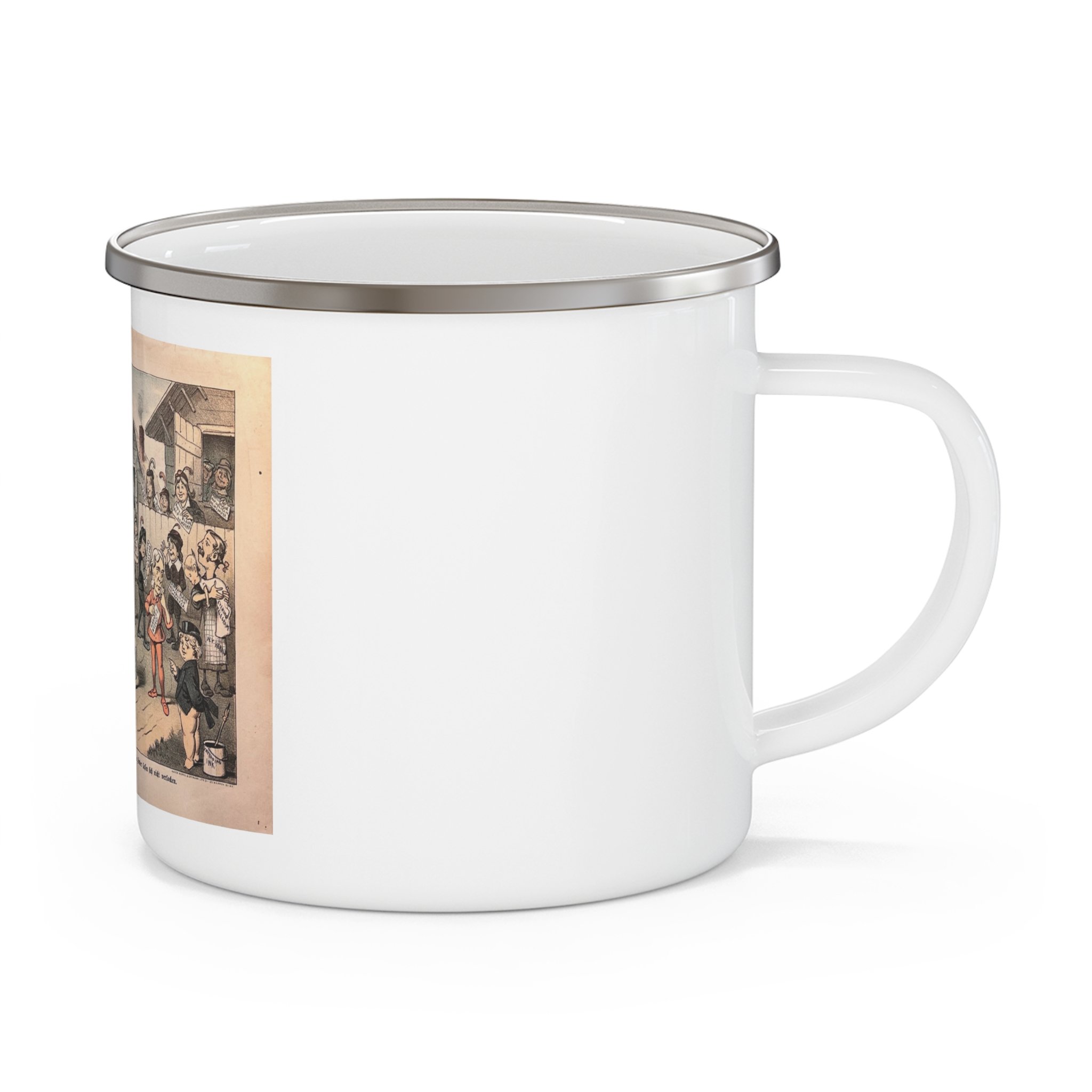
A satire of political demagoguery and the attempted capture of the press.
The image frames influence as performance rather than persuasion, exposing how power tries—and fails—to convert spectacle into obedience. Authority appears confident in its charm, yet unable to command credibility, underscoring the role of resistance in public discourse.
Historical Note
This cartoon appeared in an 1884 issue of Puck magazine and was illustrated by Frederick Burr Opper. It depicts a political figure modeled on the Pied Piper attempting to lure newspaper editors with a flute labeled “Magnetic Influence,” satirizing efforts to manipulate the press during the Republican National Convention.
Enamel mug | Stainless steel core | Lead- and BPA-free | Hand wash only
Add two mugs to your cart to receive an automatic bundle discount.
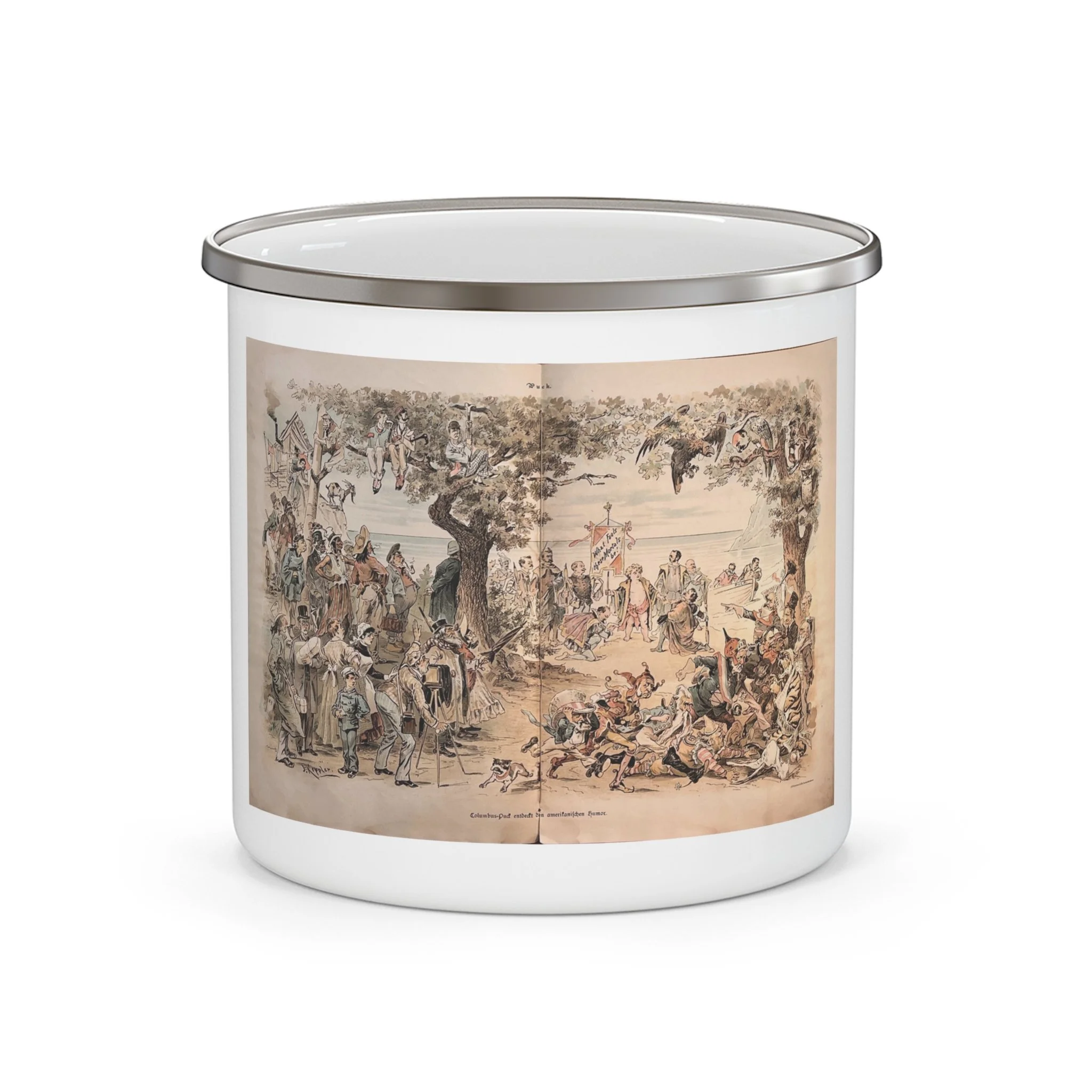
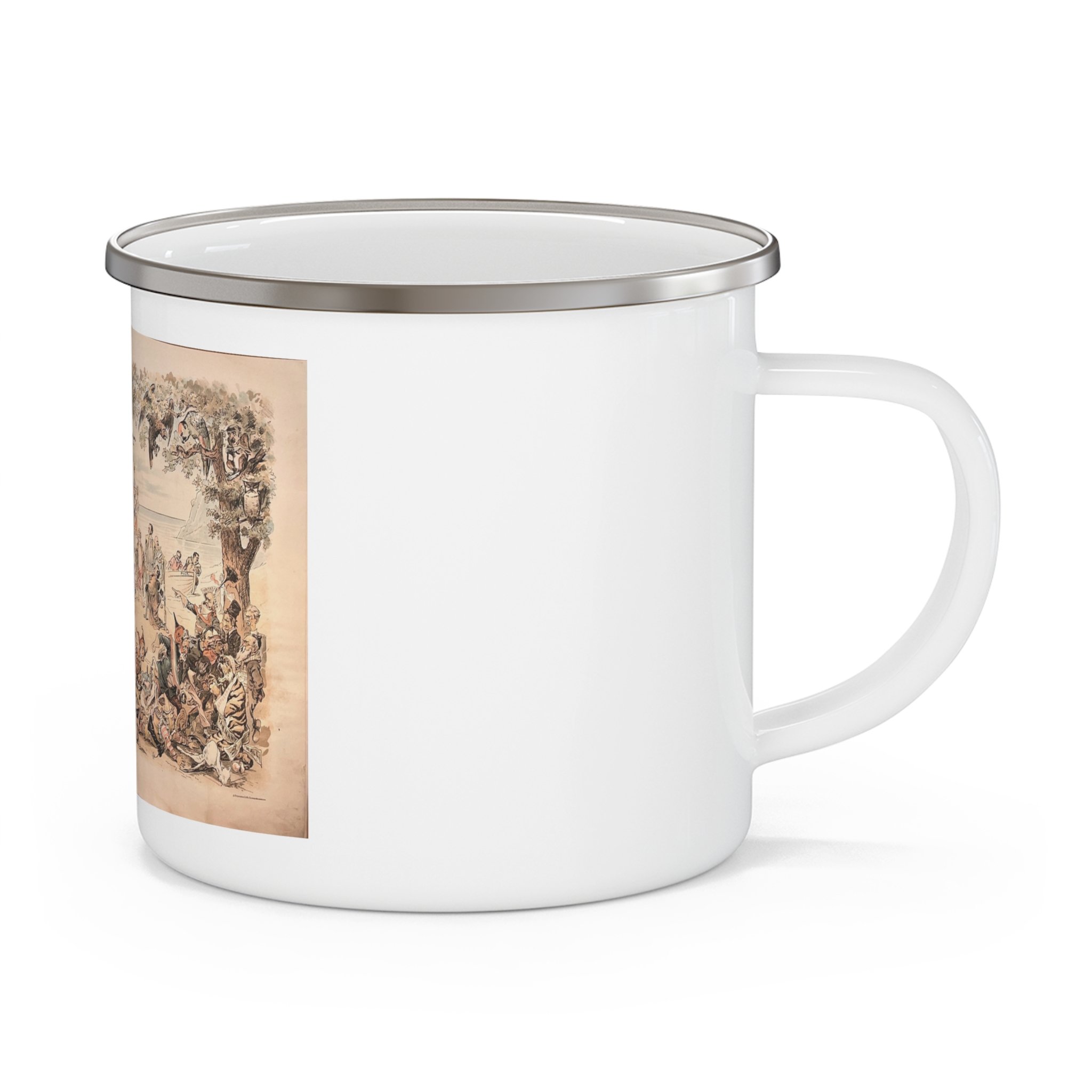
A study of mass participation, public performance, and the instability of collective enthusiasm.
The image presents civic life as a crowded stage, where ambition, humor, and tension coexist without clear hierarchy. Public energy appears expansive and animated, yet precarious—suggesting that national identity is formed as much through spectacle and proximity as through order or consensus.
Historical Note
This two-page illustration appeared in an early 1890s issue of Puck magazine and was illustrated by Joseph Keppler. Known for large ensemble scenes, Keppler used dense composition to explore the performance of power, social diversity, and the contradictions of American public life.
Enamel mug | Stainless steel core | Lead- and BPA-free | Hand wash only
Add two mugs to your cart to receive an automatic bundle discount.
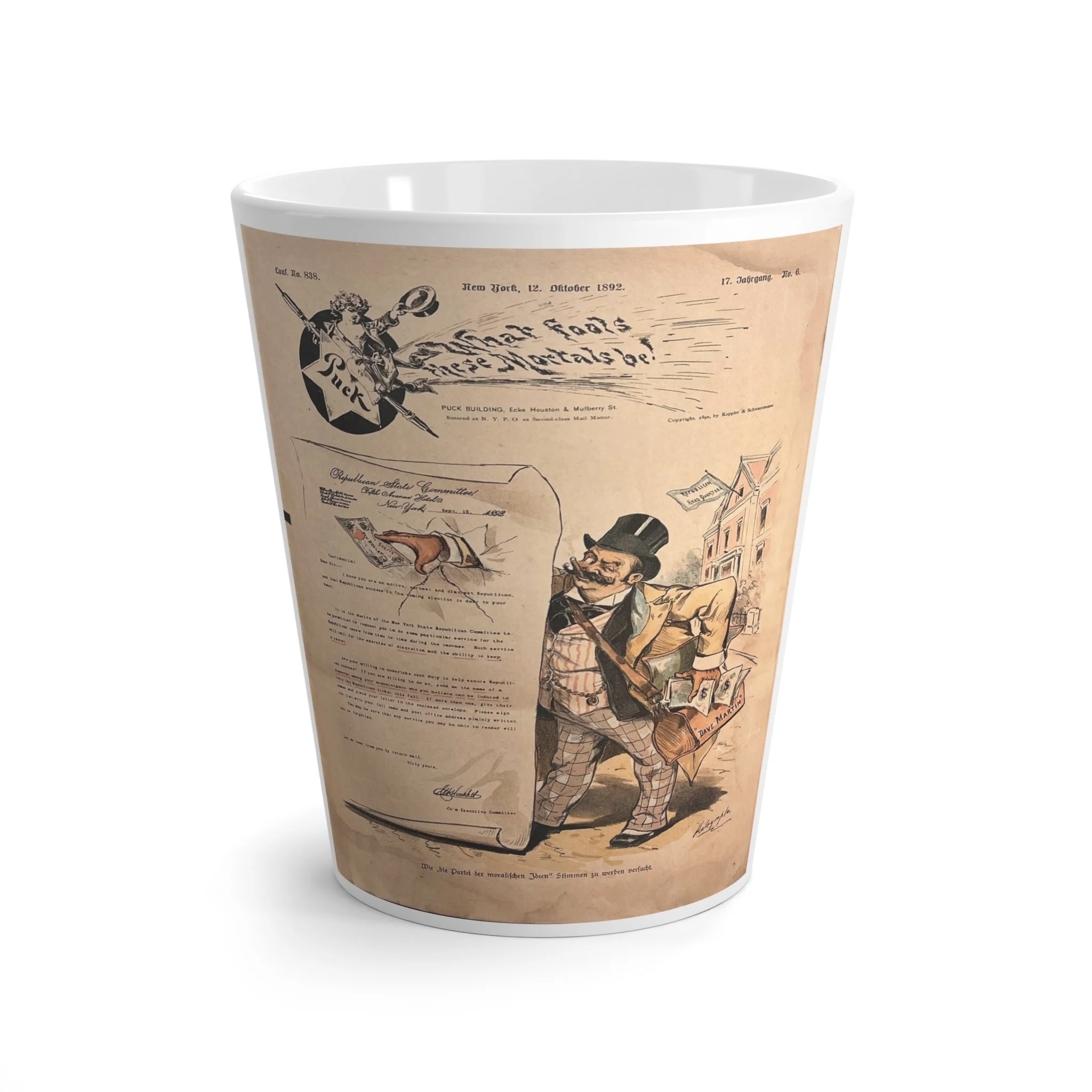
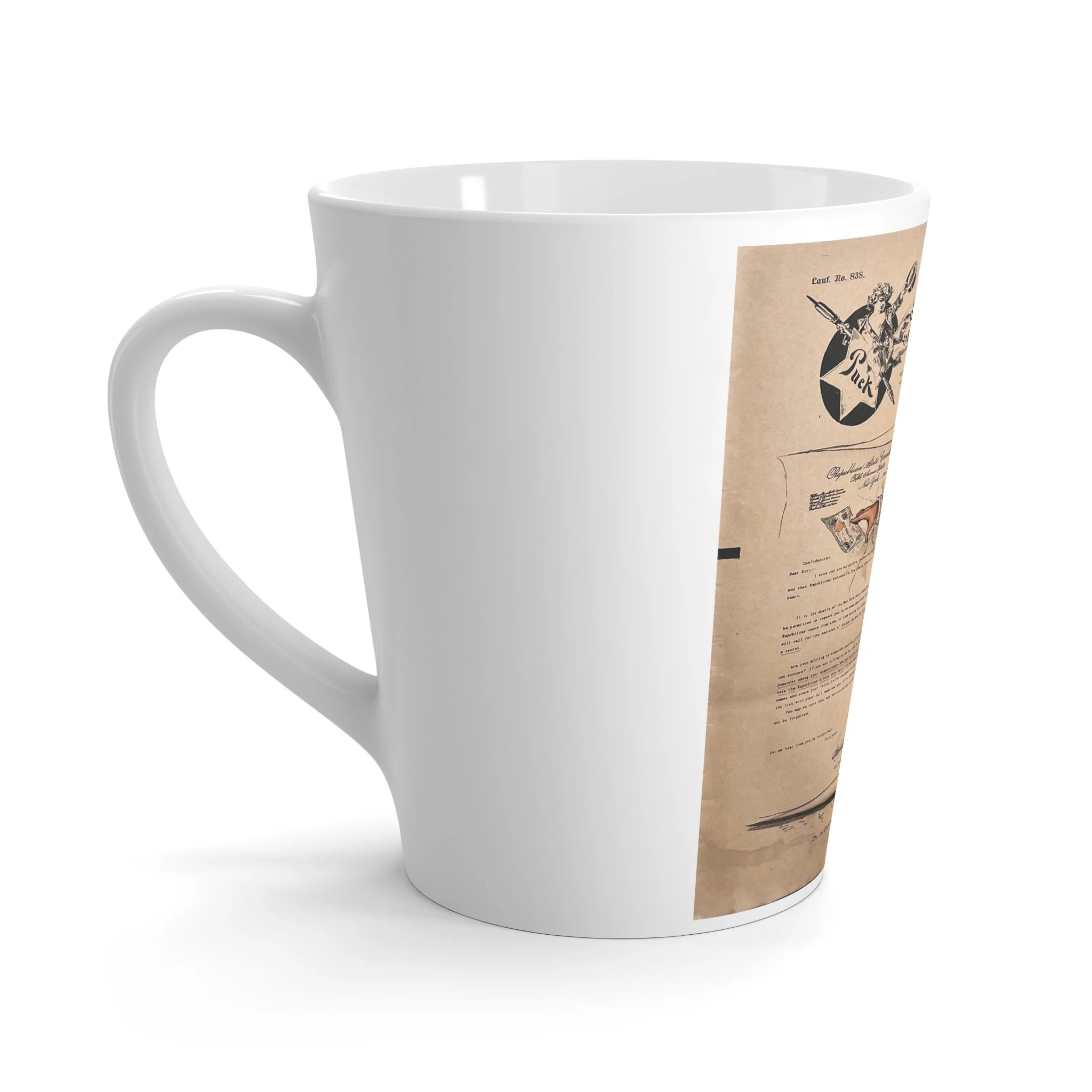
Satire aimed at electoral corruption and the open purchase of political power.
The image presents democracy as something treated like a transaction, where loyalty is bought, secrecy is assumed, and force stands ready as backup. Authority appears confident in its impunity, exposing how insiders normalize fraud when winning matters more than legitimacy.
Historical Note
This cover appeared in an 1892 issue of Puck magazine and was illustrated by Louis M. Dalrymple. It reproduces language from an actual political circular, depicting a party operative openly distributing bribe money to secure votes, and reflects Puck’s sustained critique of fraud, bribery, and authoritarian tactics disguised as moral politics.
Add two mugs to your cart to receive an automatic bundle discount.
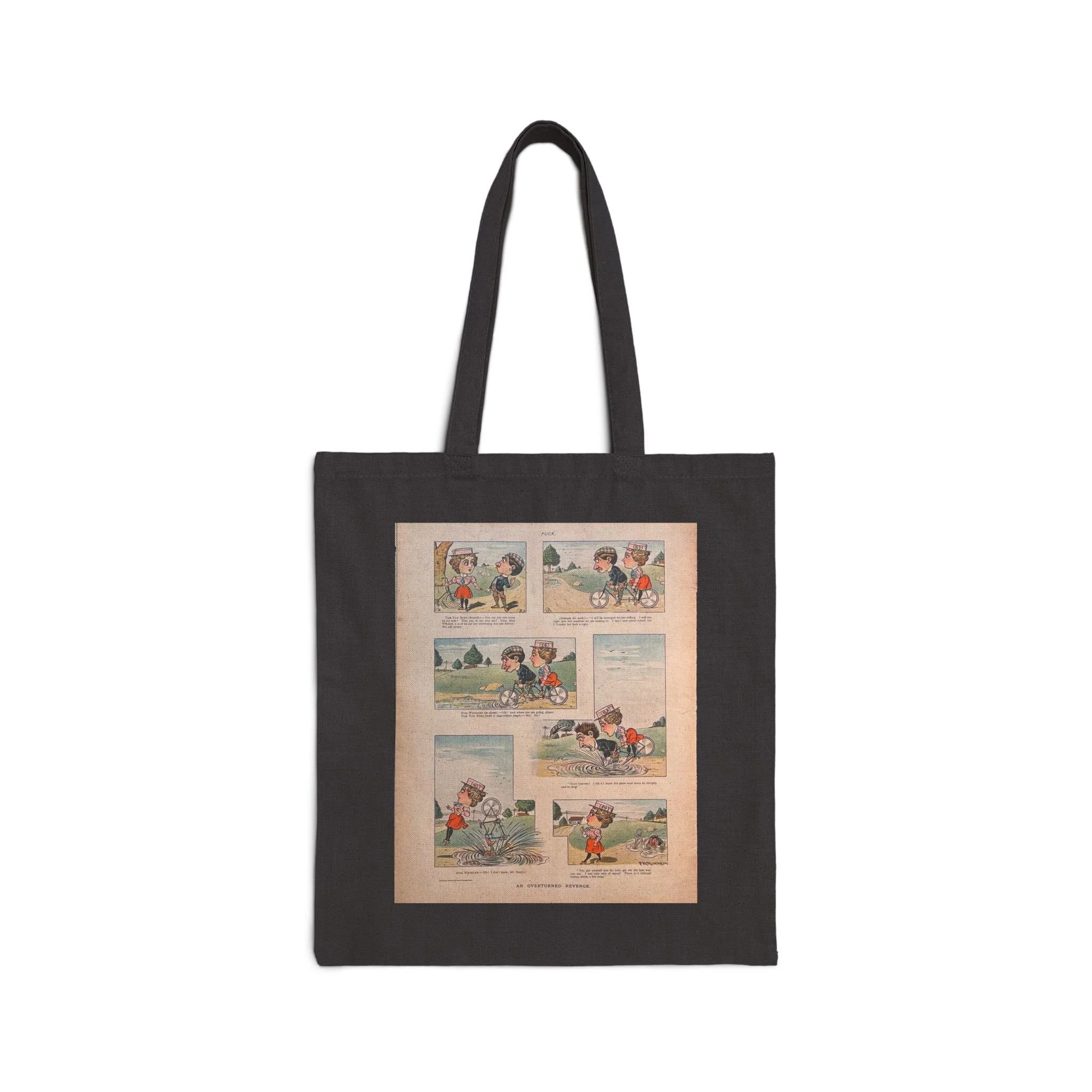


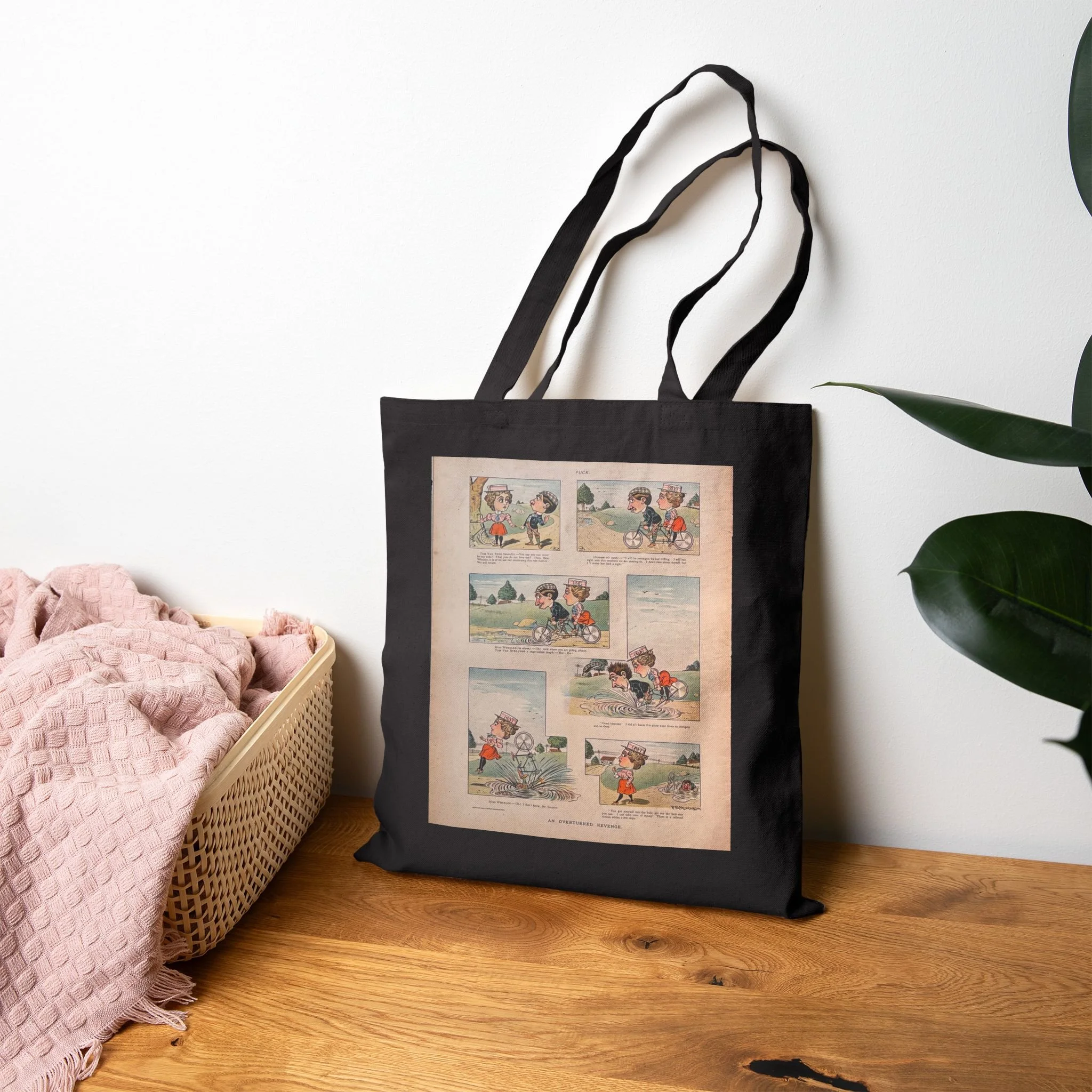
A study in ego, petty scheming, and the predictable collapse of self-assurance.
The image traces how control imagined in advance unravels in motion. Confidence curdles into spectacle as minor cruelty rebounds on its author, exposing how small plans built on vanity so often end in public embarrassment.
Historical Note
This page appeared on July 6, 1898 in Puck and was illustrated by F. M. Howarth. Told across sequential panels, it uses gentle humor to critique overconfidence and the way bravado collapses under its own momentum.
100% heavy cotton canvas | Flat corners and sewn construction with reinforced stitching
No results match your search. Try removing a few filters.