
 Image 1 of 2
 Image 2 of 2
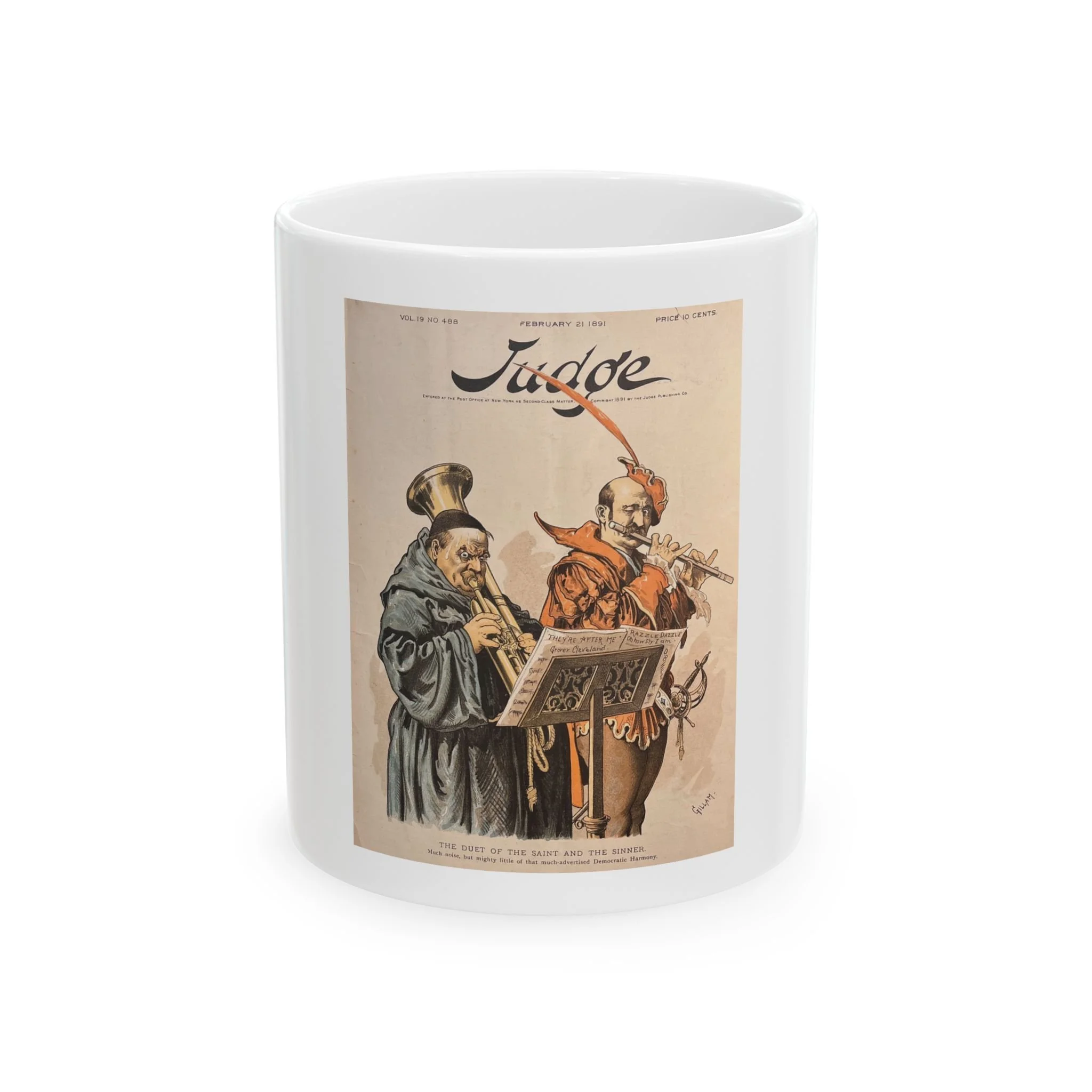
Satire depicting performative unity and the spectacle of incompatible alliance.
The image presents agreement as something staged rather than achieved, where moral opposites are placed side by side and declared harmonious by fiat. Cooperation appears theatrical and unstable, suggesting that proclaimed unity can mask deeper incoherence rather than resolve it.
Historical Note
This cover appeared in an 1891 issue of Judge magazine and was illustrated by Bernhard Gillam. Titled “The Duet of the Saint and the Sinner,” it uses visual contrast to critique political alliances that announce harmony while exposing fundamental contradiction.
Satire depicting performative unity and the spectacle of incompatible alliance.
The image presents agreement as something staged rather than achieved, where moral opposites are placed side by side and declared harmonious by fiat. Cooperation appears theatrical and unstable, suggesting that proclaimed unity can mask deeper incoherence rather than resolve it.
Historical Note
This cover appeared in an 1891 issue of Judge magazine and was illustrated by Bernhard Gillam. Titled “The Duet of the Saint and the Sinner,” it uses visual contrast to critique political alliances that announce harmony while exposing fundamental contradiction.