Pierre-Henri Cami | 1884-1958
Life & Work
Pierre-Henri Cami (1884–1958) was a French humorist, illustrator, and playwright whose career moved fluidly between magazines, theatrical sketches, and comic novels. He began publishing in the early 1910s through Le Petit Corbillard illustré and contributed to a range of Parisian periodicals, including Le Journal, Le Petit Parisien, Excelsior, Paris-Soir, and later L’Illustration, where his weekly feature La Semaine camique appeared in the 1930s.
His early work attracted a substantial readership, and his admirers included figures such as Jacques Prévert and Jean-Jacques Pauvert. Cami developed a distinctive style of short, fast-moving comic pieces built around burlesque situations, improbable reversals, and deliberate breaks with realism. He also created recurring characters whose absurd adventures circulated widely in humor booklets and illustrated editions.
Cami’s illustrated output survives unevenly, and his graphic work is less commonly preserved than his theatrical or literary writing. Nevertheless, the drawings that remain display his characteristic blend of exaggeration and narrative compression, often pairing a caricatural silhouette with rapid, gag-driven dialogue. His versatility across forms—plays, novels, magazine sequences, and comic sketches—situates him within a broader French tradition of early twentieth-century absurdist humor.
Political Focus
Although not overtly political in the partisan sense, Cami’s humor thrived on depicting figures caught in systems larger than themselves: bureaucracy, wartime routine, professional hierarchy, and the pressures of public life. His caricatures highlight the instability and unease of the First World War era, where ordinary logic no longer held and where characters responded to crisis with misdirected ingenuity or cheerful confusion.
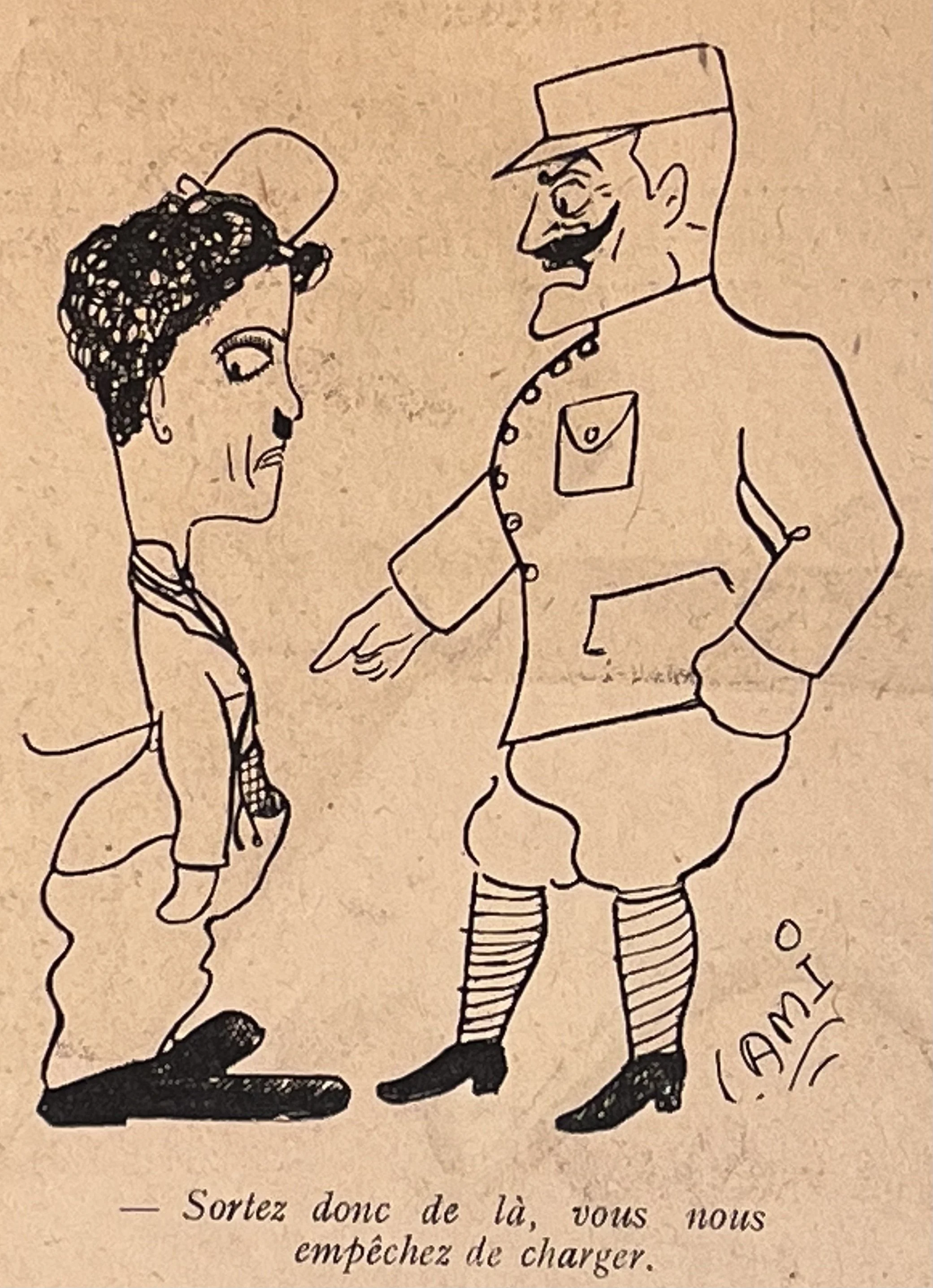
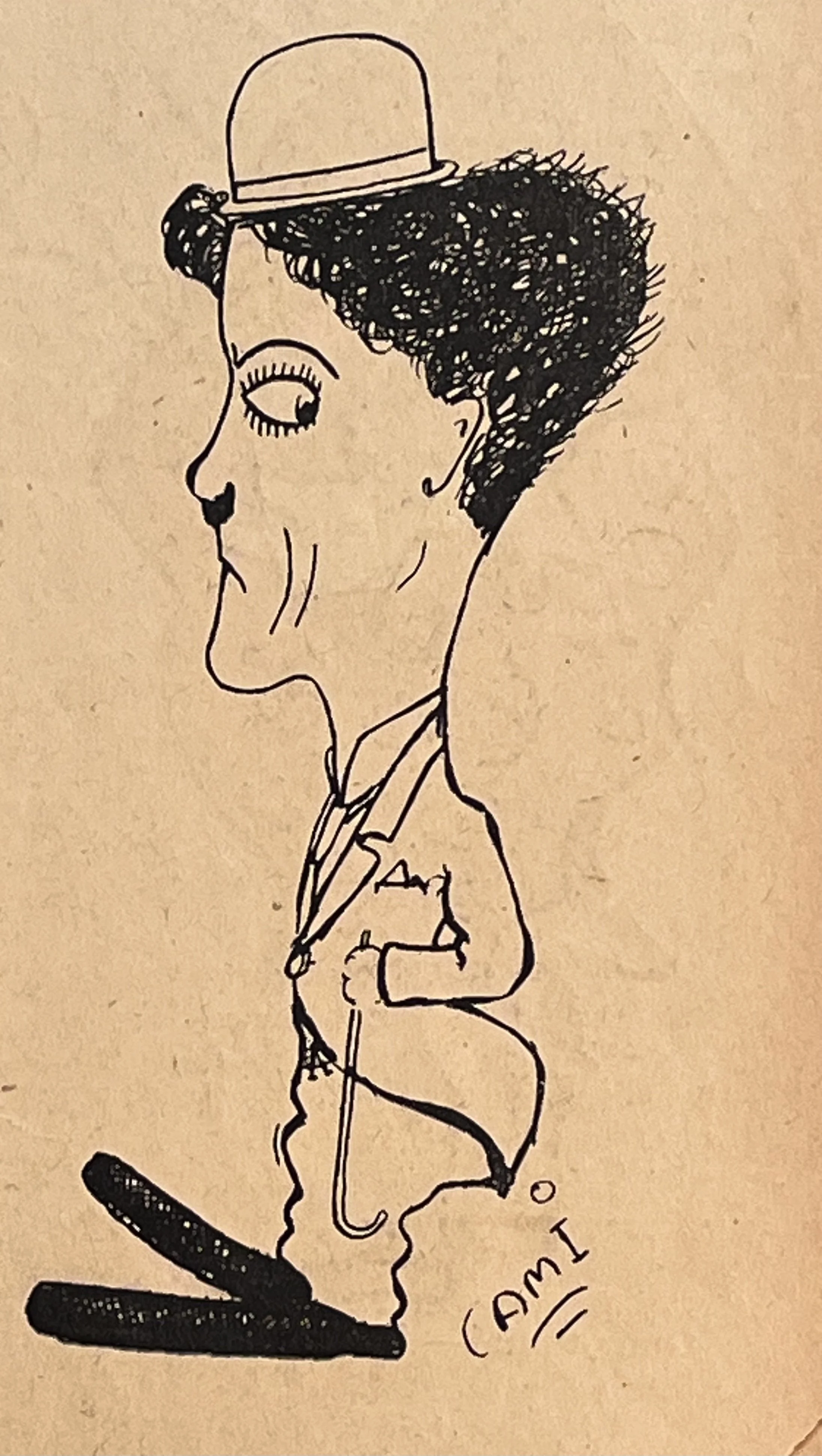
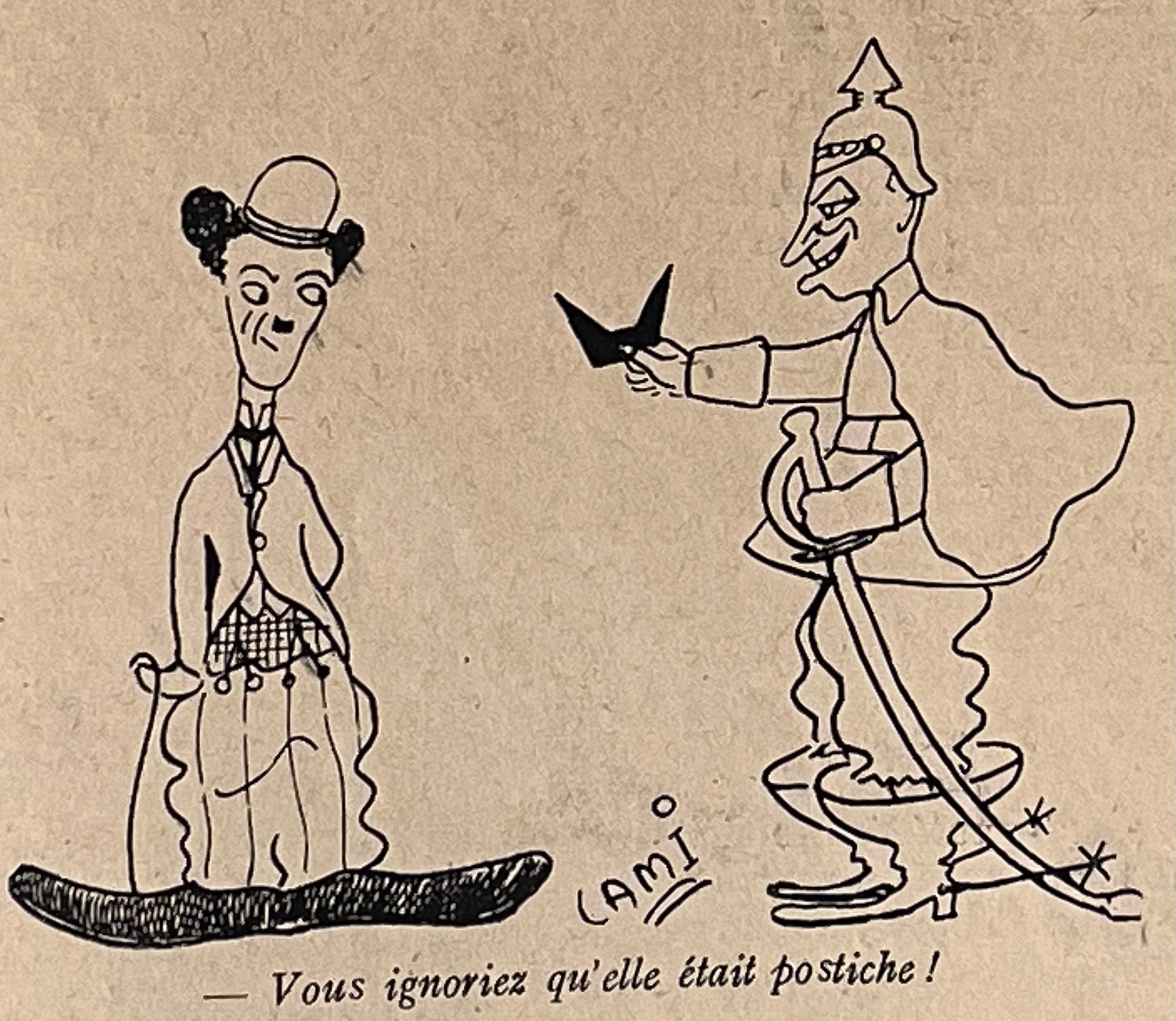
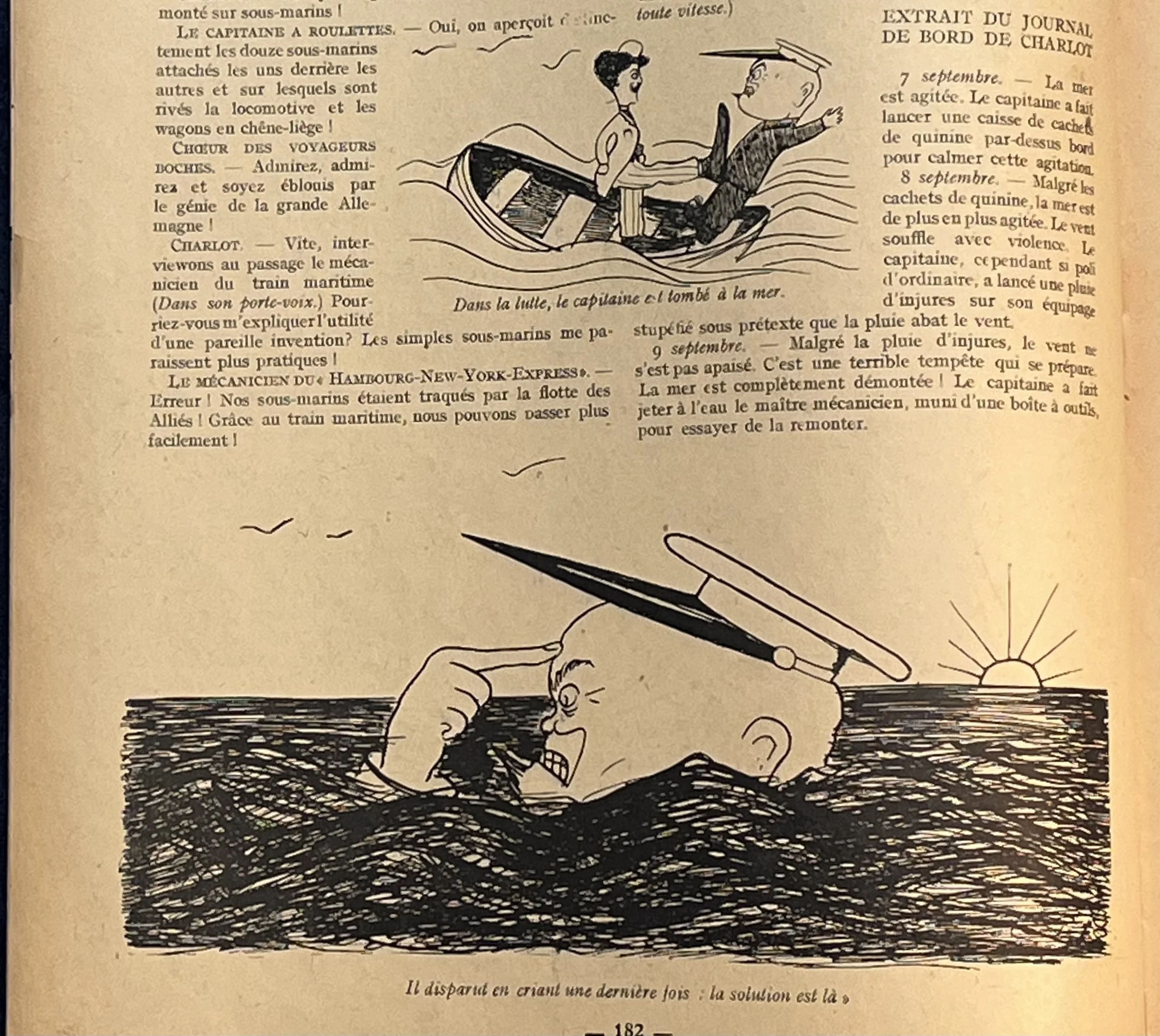
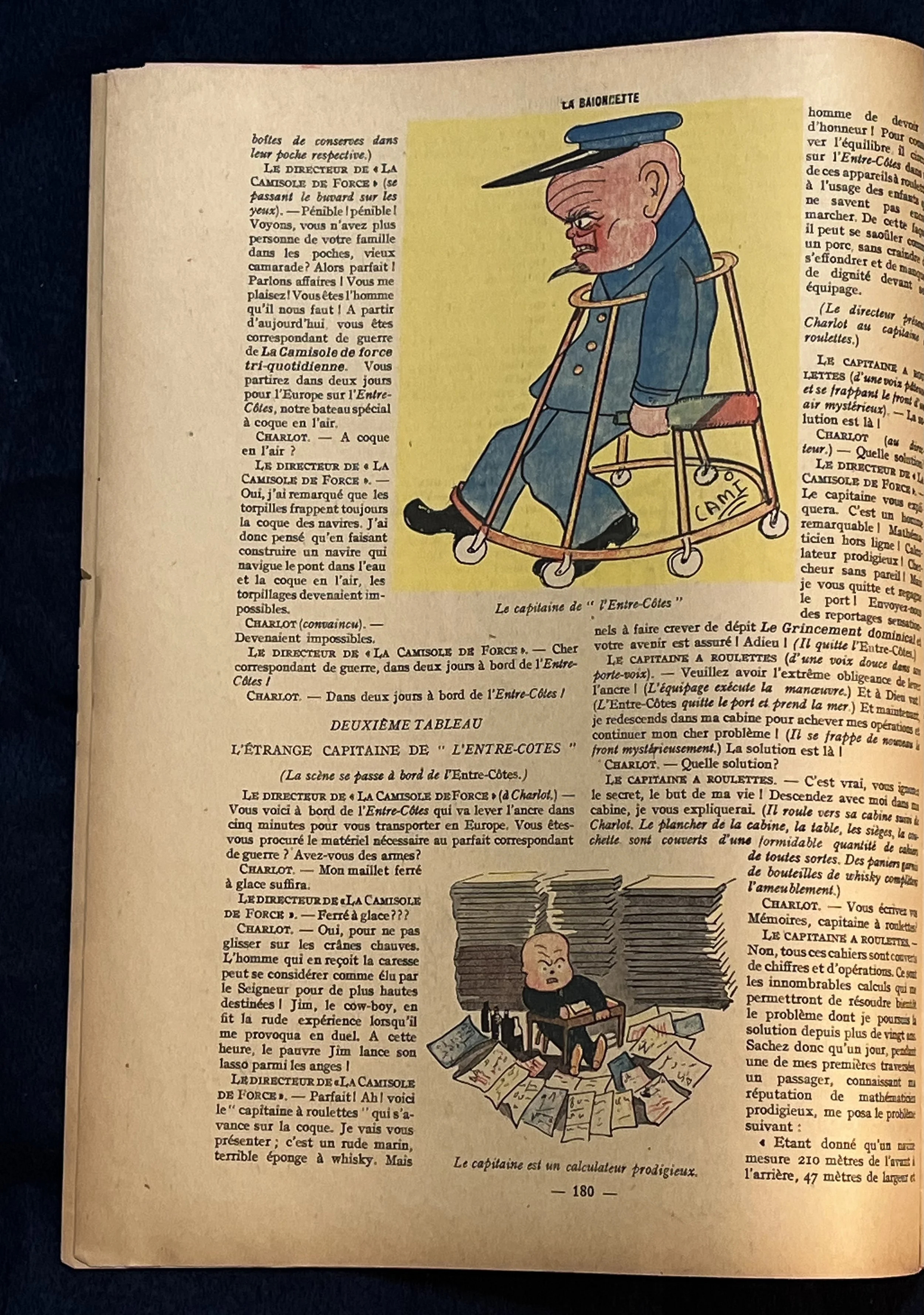
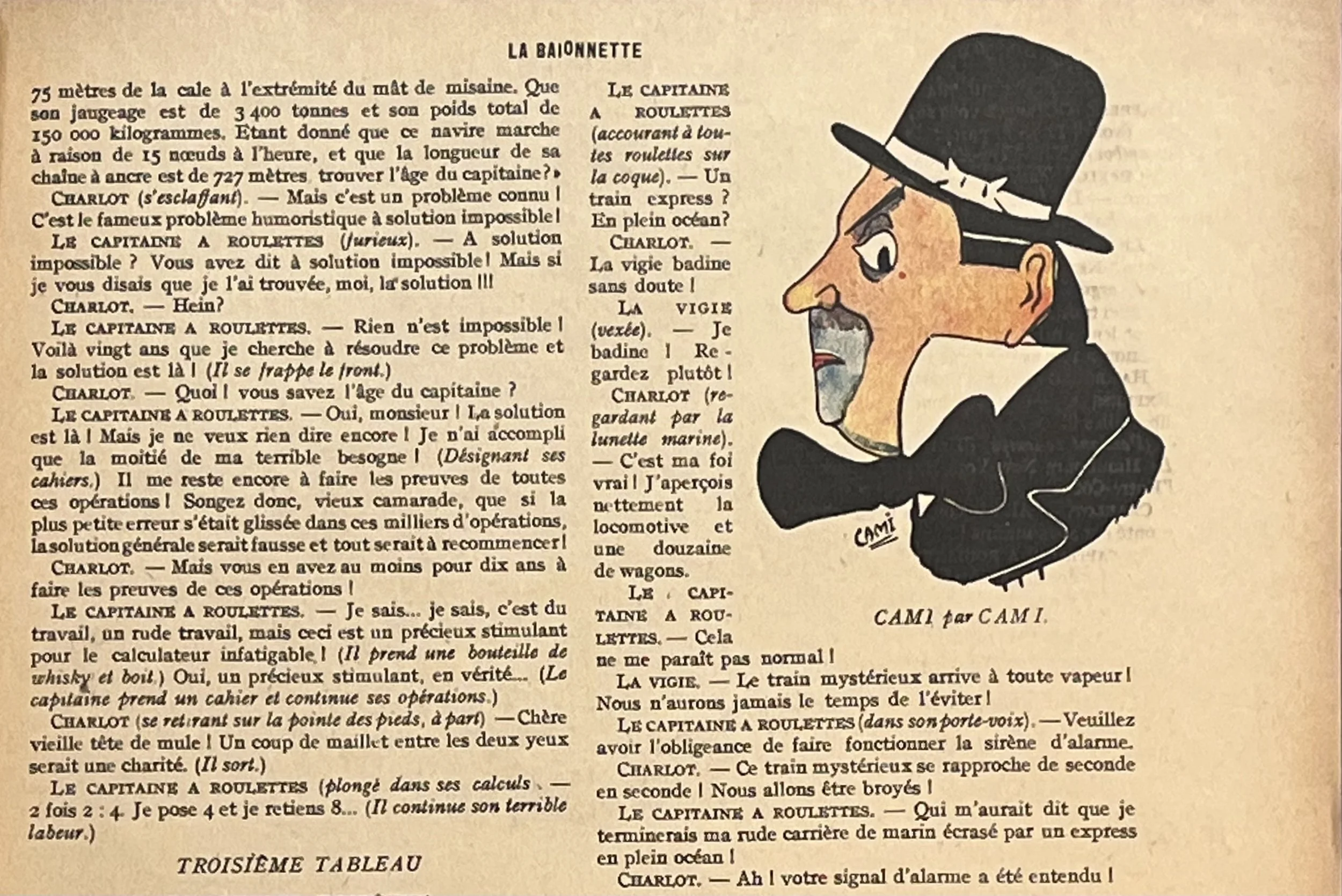
This sensibility is evident in his contributions to La Baïonnette, including the 22 March 1917 issue devoted to “Charlot,” the French name for Charlie Chaplin’s Tramp character. In that number, Cami transforms Charlot into a wandering witness to wartime absurdity, using the figure to reveal the contradictions of military life, improvised authority, and the strain of maintaining levity in a moment of national crisis.
Cami’s work undermines seriousness not through direct political attack but through relentless illogic, exposing how social order can tilt toward the nonsensical under pressure. His characters persist in their tasks despite the world’s contradictions, and their misadventures serve as a commentary on the larger structures shaping their behavior. In this way, Cami’s humor operates less as satire of specific individuals and more as an exploration of how people attempt to navigate institutions, expectations, and crises that defy clear reasoning.