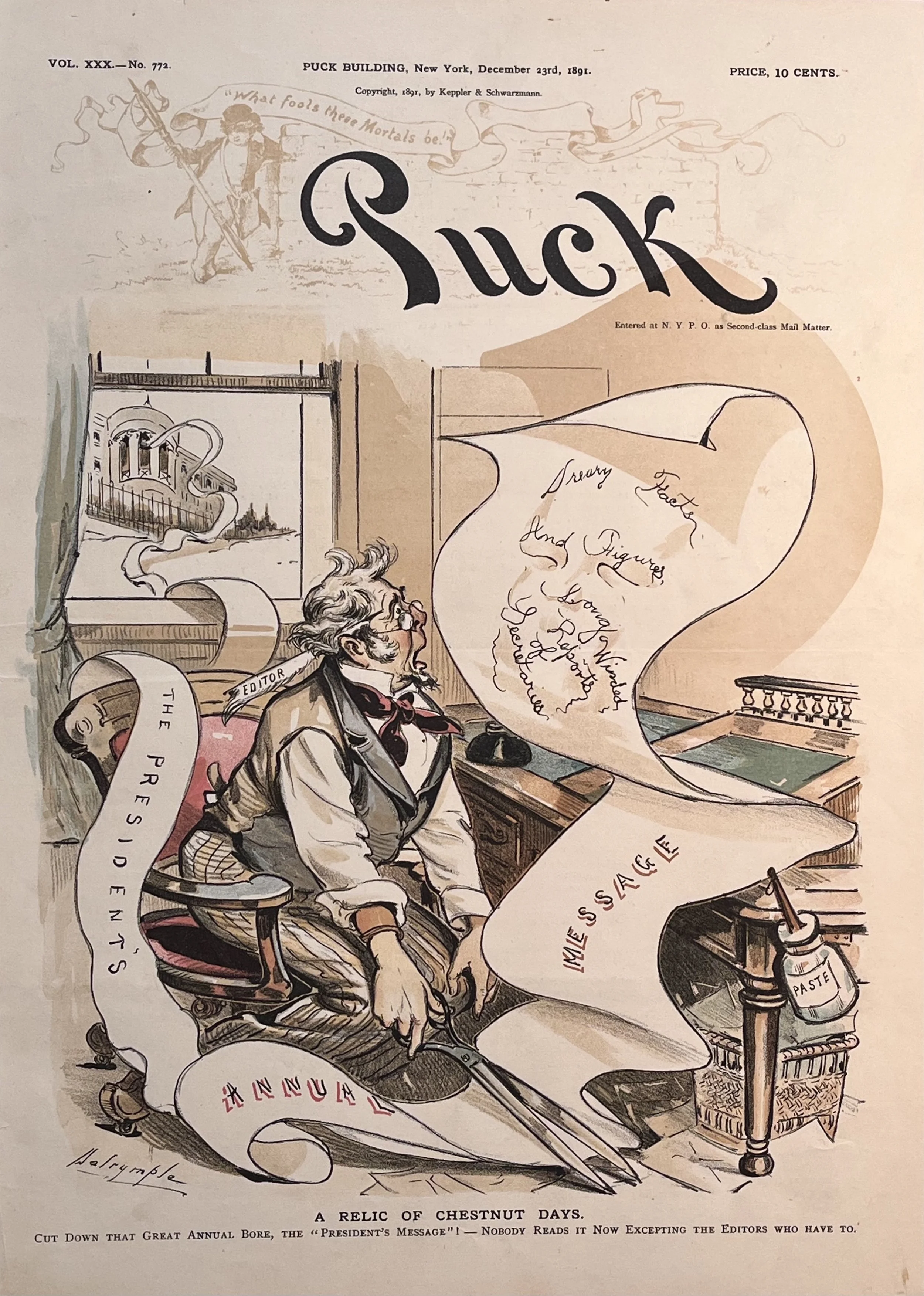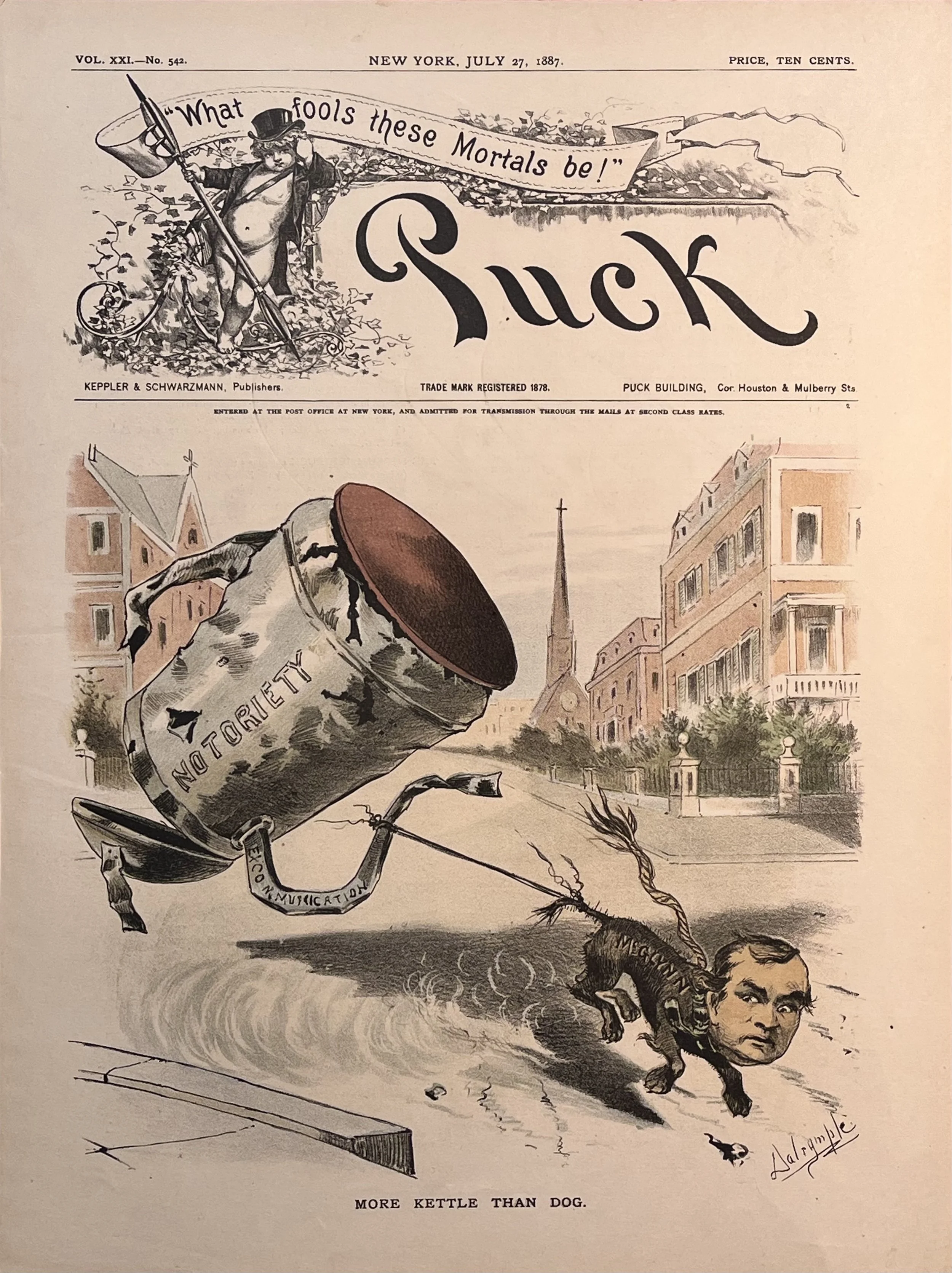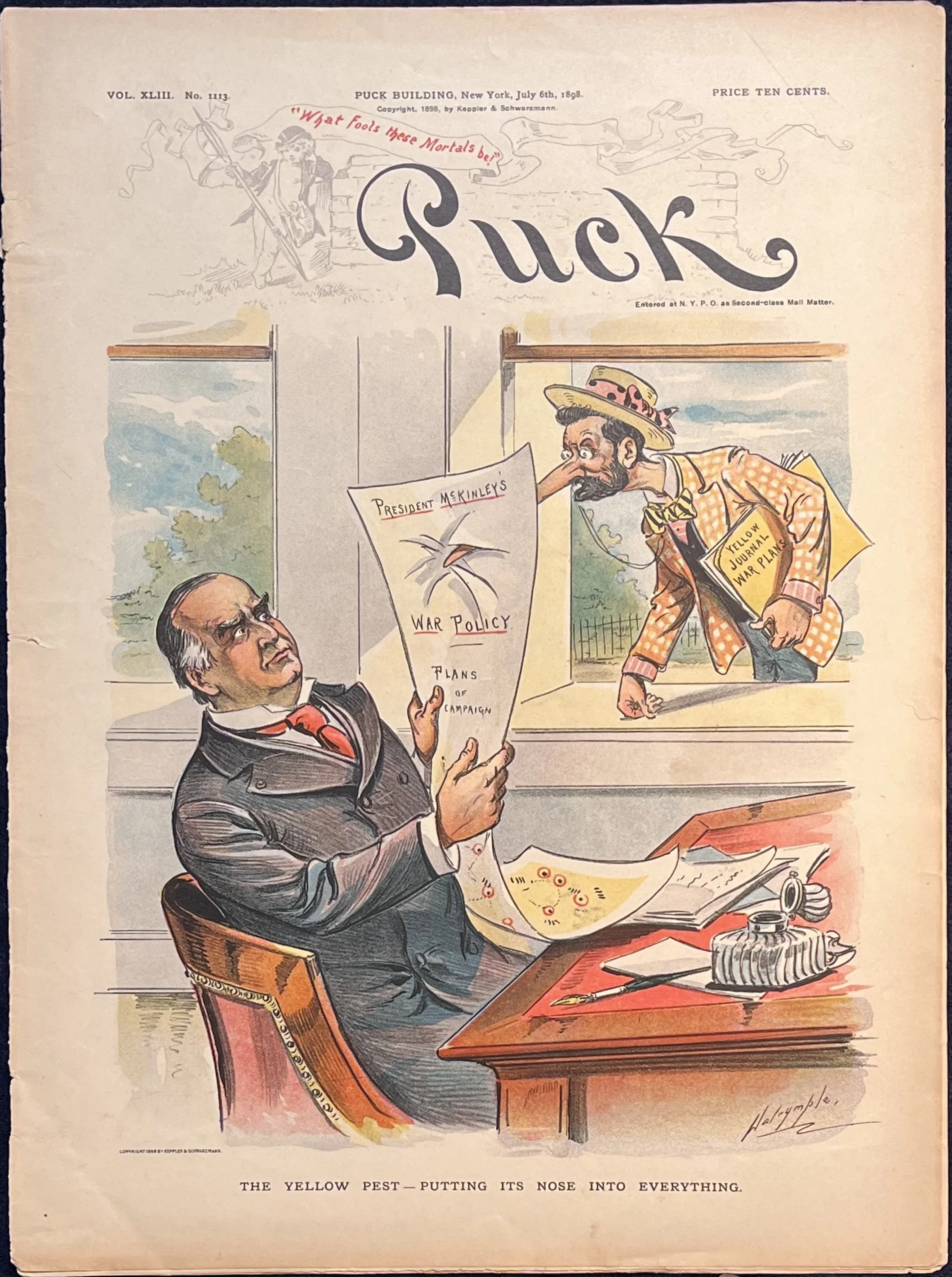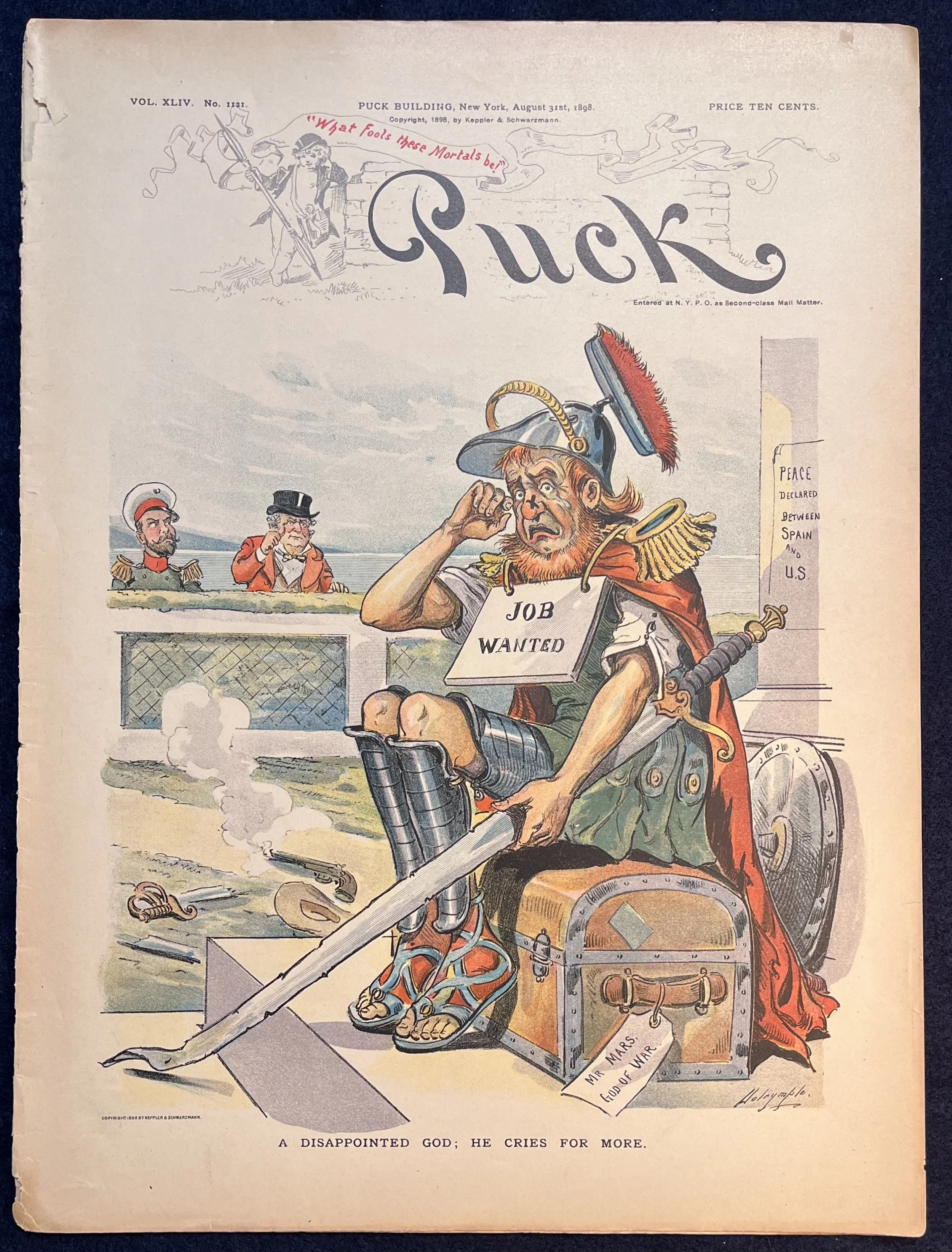
Louis M. Dalrymple | 1866-1905
Life & Work
Louis M. Dalrymple (1866–1905) was an American cartoonist active during the rapid expansion of illustrated political journalism in the late nineteenth century. Born in Cambridge, Illinois, he began drawing professionally at a young age while studying at the Pennsylvania Academy of the Fine Arts and later the Art Students League of New York.
By the mid-1880s, Dalrymple was working for leading illustrated publications, including Judge and Puck. In 1885, he became chief cartoonist for the New York Daily Graphic, placing him at the center of mass-circulation visual news. His career unfolded under intense production demands typical of the period.
Dalrymple’s health declined in the early twentieth century. Contemporary newspapers reported his institutionalization shortly before his death in 1905 at the age of thirty-nine, reflecting the era’s limited understanding of mental illness and the pressures of industrialized media labor.
Political Focus
Dalrymple’s cartoons examined power as performance. His figures—politicians, financiers, and public authorities—are staged as unstable constructions, propped up by symbols, rhetoric, and spectacle rather than substance.
Rather than offering heroic narratives, his work exposes systems: urban expansion, corporate influence, and the theatrical nature of political authority. Compositionally, his images emphasize imbalance and strain, suggesting the costs and contradictions of modern governance.
Within the satirical culture of Judge and Puck, Dalrymple’s drawings contributed to a broader tradition of American skepticism toward concentrated power, treating democratic institutions as fragile and authority as something to be questioned rather than affirmed.